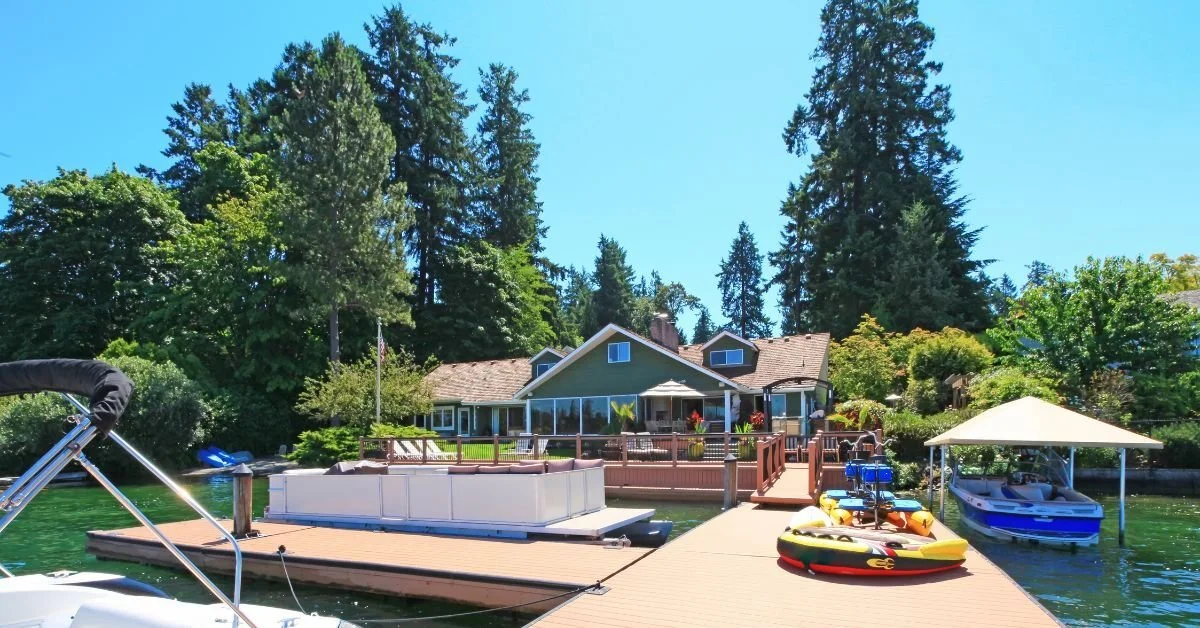
The Sofa Company Built a Skyscraper: Inside Casa Bella Miami

B&B Italia spent 60 years perfecting the sofa. Now it has opened a 56-story tower in Downtown Miami, and Casa Bella is the rare branded residence where the brand might actually know how people live.

Read More
/

A First-Time Property Investor’s Guide to Buying Across Australia

First-time investors often treat Australia as one market. It isn’t. The right loan, buffer and suburb choice in Brisbane can be the wrong choice in Melbourne, so investors buying property Australia-wide need to adjust their approach for each state.

Forget one national market

Every state sets its own stamp duty rates and land tax thresholds. Tenancy laws and planning rules also change at the border. What looks affordable in one capital can carry much higher holding costs in another.

Rental rules and approval timelines are local, so national headlines are a poor substitute for suburb-level research. Rules that apply in Victoria may not apply in Queensland.

Population changes and new infrastructure can shape demand differently from one city to the next. Council zoning and flood or bushfire overlays may also affect what can be built or insured. Review transport projects, employment centres, planning controls and long-term price trends before narrowing the search.

Treat each purchase as a state-specific deal. The paperwork and costs reset every time you cross a border.

Check where each city sits in the cycle

Capital cities don’t necessarily rise and fall together. Employment, migration, housing supply and interest rates can affect each one differently. A slower market may give buyers more time to negotiate, while stronger competition can shorten decision-making time. Neither condition removes the need for careful due diligence.

Instead of asking whether now is a good time to buy in Australia, read local vacancy reports and sales volumes before you travel. Consider where a specific city sits in its own cycle. Then check whether rents and supply support the price you are being asked to pay.

Bring in help when you buy interstate

Buying in your home suburb is one thing. Buying two states away is a different job.

The balance between auctions and private treaty sales differs by location, and sale processes can carry different risks. Conveyancing requirements also vary between states and territories.

A buyer’s agent can help close that gap by investigating local risks, comparing properties and representing the buyer during negotiations. Local knowledge can also help an investor ask better questions about flood exposure, strata records, rental demand and the surrounding streets. Independent building, pest, legal and financial checks are still essential.

Pre-approval matters here. You can’t bid with confidence if your limit is vague.

Investors who want help with the search and negotiation can explore Australian Property Experts (https://australianpropertyexperts.com.au/). Professional support can help buyers assess unfamiliar locations and prepare for negotiations, but the final decision remains with the investor.

Add up the full cost before you commit

New investors often budget for the deposit. They forget the rest.

Some buyers aim for a 20% deposit to avoid Lenders Mortgage Insurance, although requirements depend on the lender, borrower and loan structure. LMI can increase the cost of borrowing without increasing the property’s value, so request a loan-specific estimate rather than relying on a rule of thumb.

Then comes transfer duty. Rates vary by state, property value and buyer circumstances. Do not assume a first-home exemption or concession applies to an investment purchase; check the relevant state or territory revenue office.

Add conveyancing costs on top. Pay for a building and pest inspection too. Those checks are especially important for older houses or properties in termite-prone areas. A good conveyancer can identify easements and title issues before you are committed.

Ongoing costs bite as well. Units bring body corporate or owners corporation fees. States and territories may charge land tax on investment holdings above their applicable thresholds.

There’s no single figure that works everywhere.

Save a buffer for these extras. If the deal only works when every cost comes in low, it doesn’t work. A reasonable buffer can stop one surprise from sinking your first year.

Run the tax and yield maths before you offer

Tax changes the return. Understand the general rules before you sign and seek qualified tax or financial advice for your circumstances.

Depending on your circumstances and current tax rules, negative gearing may allow you to offset a rental loss against other income. That can help cash flow while you wait for growth. It won’t turn a poor property choice into a good one.

Capital gains tax may apply when you sell. Eligible Australian resident individuals who hold an investment for more than 12 months may qualify for a 50% discount on the capital gain under current rules. Shorter holds generally don’t receive that discount.

Then run the yield. Gross yield alone will not tell you the full story. Strata levies, maintenance, management costs and vacancies can materially reduce the return, so calculate an estimated net yield rather than relying on the listing headline.

A cheap price can hide weak rent. Do the weekly maths. If rent does not cover the expected costs, be honest about the size of the shortfall and how long it could be sustained. Tax outcomes should be assessed separately with an appropriately qualified adviser, not used to rescue an otherwise unsuitable purchase.

Start small and keep your homework local even if you buy far away. Let the numbers veto the emotion. Investors who last tend to budget for the state they buy in rather than relying on a national average.


Have a listing you think should be featured contact us or submit here to tell us more! Follow Off The MRKT on Twitter and Instagram, and like us on Facebook.

/

Best Fall Destinations from New England to the Amalfi Coast

As autumn approaches, we’re excited to share our curated list of the best destinations for the season – travelers can experience fall foliage across the East Coast or iconic Mediterranean destinations with less crowds.

Meredith, NH  

Begin your adventure at Gunstock Mountain, where hiking or riding the chairlift to the summit provides stunning views of the autumn foliage. For a deeper immersion in the fall scenery, take a leisurely drive along the Kancamagus Highway, renowned for its fairytale-like views of historic bridges and charming small towns. Next, hop on the Winnipesaukee Scenic Railroad or cruise on the M/S Mount Washington to capture the contrast of vibrant foliage against deep blue waters. 

Where to stay: Mill Falls at the Lake

Gatlinburg, TN 

Nestled in the heart of the Great Smoky Mountains, Gatlinburg transforms into a vibrant tapestry of colors each fall. Visitors can enjoy scenic drives through the national park, where the changing leaves paint the landscape in hues of red, orange, and gold. Beyond the natural beauty, Gatlinburg offers charming downtown shops, cozy mountain lodges, and seasonal events that capture the essence of autumn. Whether you're looking to hike amidst the fall foliage, explore local arts and crafts, or simply savor a warm cider by the fire, Gatlinburg is the perfect destination for a quintessential fall getaway. 

Where to stay: Historic Rocky Waters Inn

New Market, VA  

Immerse yourself in the magic of fall foliage with a visit to Shenandoah National Park, where the renowned Skyline Drive offers sweeping vistas of the breathtaking Shenandoah Valley and Blue Ridge Mountains, adorned in their fall finest. Nearby, the George Washington National Forest invites you to explore its wooded trails. History enthusiasts can also revel in the beauty of the past at the New Market Battlefield State Historical Park, where leaf-peeping coincides with the stories of yesteryear. 

Where to stay: Endless Caverns RV Resort

Cape Cod, MA 

Experience the best of Cape Cod's fall charm with a visit to a local winery, where you can sample autumnal wine flavors amidst the majestic fall hues of the transitioning vineyards. Alternatively, cruise down the tree-shaded Route 6A, known as Old King's Highway, passing by stone walls, cranberry bogs, and historic homes. Don't miss strolling along Cape Cod National Seashore, where scrubby evergreens, vibrant red maple, oak, and beech trees showcase their changing colors against the ocean backdrop, offering a picturesque view of the Cape's unique beauty in the fall. 

Where to stay: Chatham Wayside Inn, and Greyfinch Chatham Inn,

Praiano, Italy 

Visiting the Amalfi Coast in the off-season offers a unique and tranquil experience as the peak summer crowds have dwindled, allowing visitors to savor the stunning coastal scenery and charming towns with a more relaxed atmosphere. The weather is still pleasantly warm, ideal for exploring the picturesque cliffside villages, enjoying leisurely walks along the Mediterranean, and sampling local cuisine without the sweltering heat or bustling crowds of peak season.  

Where to stay: Casa Angelina

Sicily, Italy 

Sicily in the fall offers a unique blend of cultural experiences, mild weather, and fewer crowds. The olive harvest season is in full swing, offering a chance to taste freshly pressed olive oils. Travelers can also experience the Feast of Saint Martin on November 11th, celebrating the new wine season with local festivities, lively parades and delicious food. 

Where to stay: The Thinking Traveller offers an unmatched selection of villas in Sicily. Consider staying at Rocca delle Tre Contrade  Palazzo Alvear, or Don Arcangelo all'Olmo. These villas all feature heated pools and are in regions that remain lively yet less crowded in November.


Have a listing you think should be featured contact us or submit here to tell us more! Follow Off The MRKT on Twitter and Instagram, and like us on Facebook.

/

Fairfield Beach Road Waterfront Estate With Two Parcels Lists for $6.499 Million

A rare two-parcel Long Island Sound compound at 1845 & 1859 Fairfield Beach Road offers nearly 100 feet of beach, a pool, a boathouse and a private dock for $6.499 million.

Read More
/

Inside Vicente Wolf’s Tranquil Transformation of a Georgian Townhouse on Manhattan’s Upper East Side

On a serene block in Manhattan’s Upper East Side, where tradition is measured in limestone and symmetry, designer Vicente Wolf has rewritten the rules of what it means to live beautifully.

Read More
/

Signature Penthouse Is First Sale at The Ritz-Carlton Residences, Fort Lauderdale Beach

A two-story penthouse with nearly 4,000 square feet of outdoor space is the debut sale at The Ritz-Carlton Residences, Fort Lauderdale Beach, where homes start at $3.4 million.

Read More
/

NYC Rooftops Redefine Fall Living With Bocce, Pergolas, and Skyline Views

From bocce courts to pergolas and fire pits, New York rooftops are evolving into lifestyle sanctuaries designed for both relaxation and entertaining this fall.

Read More
/

NYC’s Rent Freeze Is Here: Which Apartments Does It Cover?

NYC’s rent freeze began October 1, 2026. Learn which stabilized leases qualify, why renewal dates matter, and how to check your apartment’s rental status.

Read More
/

Tribeca’s Boutique Condos Put the Focus on the Building, the Block, and the Floor Plan

Tribeca’s boutique condo projects pair small residence counts with ambitious design. Explore 75 West Broadway, 32 Walker, and the appeal of full-floor living.

Read More
/

Off The MRKT’s Favorite Listings of the Week

Dive into the details of these remarkable spaces and discover what makes them stand out in the world of real estate.

Read More
/

43 Bleecker Brings Wellness-Focused Loft Living to a Landmarked 1896 NoHo Building

Douglas Elliman’s Erin Boisson Aries Team and Caedes Group unveil 43 Bleecker, 11 condominium residences in a landmarked 1896 NoHo loft building with a full wellness and recovery floor.

Read More
/

How can I generate up to $3,000 in passive income per day using renewable energy?

As green energy enters the era of digital assets, global energy is entering a new stage of development.

As solar, wind, and energy storage technologies increasingly become integral components of global energy infrastructure, energy assets are transitioning from traditional physical infrastructure toward data-driven and digital models.

In the past, a power plant represented land, equipment, construction, and operations; today, it also signifies the continuous generation of electricity, data, and cash flow.

Against this backdrop, Lake Energy was established in Singapore in 2020, dedicated to the development, construction, and operation of global new energy infrastructure.

Over years of growth, Lake Energy has established and participated in numerous large-scale new energy generation projects across Asia, the Americas, and Africa, with operations spanning solar, wind, and hydropower sectors.

Energy is entering new infrastructure.

As energy technologies continue to advance and renewable energy technologies—such as solar and wind power—mature, generation costs are steadily declining, increasingly highlighting the economic viability and commercial value of new energy sources.

At the same time, the value of green energy extends beyond mere energy supply. It helps reduce air pollution and combat climate change, while also driving the development of the industrial chain—spanning equipment manufacturing, engineering construction, and project operations—and creating opportunities for new jobs and economic growth.

As increasing amounts of capital flow into new energy infrastructure, a new question arises:

How can energy projects distributed across the globe be managed, connected, and integrated more efficiently?

Lake Energy Connects Energy Assets with Digital Finance

This is precisely the direction Lake Energy is exploring. By actively engaging in the development and deployment of green energy projects and using digital platforms to link tangible energy assets with digital finance, the company enables global users to learn about and participate in projects—such as solar, wind, and hydroelectric power, as well as energy storage—entirely online.

Compared to traditional renewable energy projects, this approach lowers the barrier for users to access energy infrastructure.

Users do not need to purchase equipment or get involved in the construction and operation of power plants; instead, they can explore various projects via the platform and make choices based on their individual circumstances.

In the transition from physical power plants to digital platforms, what changes is not the energy asset itself, but the way users connect with it.

Based on project examples provided by the LaKe Energy platform, different investment amounts and project durations correspond to varying projected daily earnings.

Investment amount: $500; daily power generation: 74.55 kWh; daily earnings: $5.25; project duration: 7 days; return at maturity: $500 + $36.75.

Investment amount: $1,000; daily power generation: 156.20 kWh; daily earnings: $11.00; project duration: 15 days; return at maturity: $1,000 + $165.00.

Investment amount: $3,000; daily power generation: 489.90 kWh; daily earnings: $34.50; project duration: 20 days; return at maturity: $3,000 + $690.00.

Investment amount: $5,000; daily power generation: 852.00 kWh; daily earnings: $60.00; project duration: 25 days; return at maturity: $5,000 + $1,500.00.

Investment amount: $10,000; daily power generation: 1,789.20 kWh; daily earnings: $126.00; project duration: 30 days; return at maturity: $10,000 + $3,780.00.

Through digital integration, physical energy assets can be showcased with greater transparency, enabling investors to gain a more direct understanding of project status, power generation output, asset value, and operational details.

Multiple energy projects provide more flexible options.

Lake Energy encompasses a diverse range of green energy projects.

Solar, wind, and hydroelectric power harness distinct natural resources, while energy storage systems facilitate the storage and regulation of electricity. These various project types offer unique operational characteristics and provide users with a wider array of choices.

The platform also offers one-stop management, allowing users to monitor project status, progress, and financial returns online.

In the realm of digital finance, the platform supports digital assets such as BTC, ETH, XRP, USDT, and USDC, as well as various fiat currencies, thereby introducing new funding channels for energy projects.

From project participation to digital management

Lake Energy integrates energy projects, digital assets, and user services into a single platform.

Upon registering, users receive a $10 electricity credit and can select green energy projects; returns generated by these projects are credited to their accounts in accordance with established rules and can be withdrawn.

The platform also offers 24/7 customer support and features a referral rewards program, allowing users to earn rewards by sharing the platform and inviting friends to join.

The significance of these features lies in making highly specialized energy infrastructure more accessible, manageable, and interconnected through a digital platform.

From energy projects to a global digital energy network.

For Lake Energy, new energy is merely the starting point.

By connecting energy projects across the globe and integrating tangible energy assets—such as solar, wind, hydropower, and energy storage—into a digital ecosystem, the company bridges digital finance with global participants.

This signifies a shift: energy infrastructure is no longer a collection of isolated power plants and projects scattered across different regions; instead, it is evolving into a highly efficient, interconnected network of assets facilitated by a digital platform.

The digitization of energy assets does more than just change how stakeholders participate; it transforms the very nature of the connection between energy infrastructure and end-users.


Have a listing you think should be featured contact us or submit here to tell us more! Follow Off The MRKT on Twitter and Instagram, and like us on Facebook.

/

Eco-Friendly & Family-Safe: Inside NYC’s Gold Standard in Property Wellness & Maintenance

Maintaining a healthy home in a bustling urban environment like New York City requires a delicate balance between aggressive pest management and strict environmental safety. Densely populated city living brings unique pest challenges, structural vulnerabilities, and environmental stressors, leading many property owners to search for solutions that protect both their families and the surrounding urban ecosystem. NYC’s gold standard in property wellness and maintenance centers on eco-friendly, non-toxic, and long-term care strategies. By shifting away from harsh chemical treatments and embracing integrated wellness protocols, modern property management ensures that residential spaces remain safe, clean, and sustainable for adults, children, and pets alike.

The Evolution of Urban Pest Prevention

Traditional pest management relies heavily on reactive chemical applications, which often introduce unnecessary toxins into living spaces. Modern property wellness protocols prioritize preventative care, structural sealing, and holistic management techniques. Pests have adapted to human environments over hundreds of millions of years, making them remarkably resilient to basic chemical sprays. For instance, according to research on prehistoric insect lineages, ancestors of the modern cockroach can be traced back more than 320 million years on Earth. Understanding this long evolutionary history highlights why simple surface treatments rarely solve deep structural infestations. NYC property wellness experts focus instead on closing building entry points, controlling ambient moisture levels, and deploying low-impact deterrents to keep living areas secure and pest-free.

Target-Specific and Minimal-Impact Interventions

When active pest threats do arise within a residence, high-standard property maintenance utilizes precise, family-safe treatments rather than broad-spectrum chemical sprays. Pests like bed bugs reproduce at extraordinarily rapid rates, quickly creating severe structural infestations if left unmanaged. According to Forbes, a female bed bug typically lays 200 to 250 eggs during its lifespan of three to four months. Addressing such persistent pests requires targeted heat treatments, mechanical exclusion, cryogenic freezing, and bio-based controls that eliminate entire pest populations without exposing households to persistent synthetic chemicals. By focusing on life-cycle disruption rather than chemical saturation, modern property care achieves reliable, long-lasting relief while preserving delicate indoor air quality.

Regulatory Standards and Environmental Safety

Safety in property wellness extends beyond immediate application—it relies on rigorous scientific standards, transparent product formulation, and continuous product evaluation. Truly safe, eco-friendly maintenance depends on using products that have been thoroughly screened for environmental and human health impacts. According to the EPA, each registered pesticide is reviewed at least every 15 years to ensure it can carry out its intended function without causing unreasonable adverse effects to human health or the environment. Premium maintenance services in NYC strictly select treatments meeting or exceeding these federal benchmarks. This ensures that every botanical spray, micro-encapsulated bait, or low-VOC sealant applied inside a building aligns with the highest safety guidelines available today.

Holistic Indoor Air Quality and Environmental Care

Achieving gold-standard wellness in urban buildings requires treating the indoor environment as an interconnected ecosystem. Air quality in high-density areas can quickly deteriorate due to trapped particulate matter, dust mites, volatile organic compounds (VOCs), and excess ambient moisture. Advanced property care incorporates continuous high-efficiency particulate air (HEPA) filtration, non-toxic moisture barriers, and eco-friendly cleaning agents that clean without leaving harsh chemical residues. Managing humidity and removing air contaminants eliminates the environmental conditions that attract pests in the first place, ensuring that indoor spaces support long-term respiratory health alongside pest resilience.

Sustaining Long-Term Indoor Wellness

A complete approach to property maintenance goes far beyond pest management to encompass long-term building durability and proactive maintenance routines. Structural integrity checks, non-toxic weatherstripping, non-chemical plumbing treatments, and proactive water damage prevention form the true foundation of a healthy residential space. Regular inspection schedules allow maintenance teams to spot potential risks and structural vulnerabilities long before they escalate into major health hazards. Furthermore, continuous educational support for residents empowers households to adopt daily habits that maintain low pest risk, minimize clutter, and maximize airflow throughout the structure. By combining advanced biological control methods with mindful, preventive building maintenance, urban properties achieve a superior level of cleanliness that protects both current residents and the surrounding ecosystem for years to come.

Prioritizing property wellness and eco-conscious maintenance transforms any apartment or residential building into a true sanctuary. By opting for non-toxic methods, targeted interventions, and strictly regulated materials, homeowners no longer have to compromise between family safety and pest-control effectiveness. NYC’s gold standard in property care proves that advanced, family-safe protocols can successfully protect residential spaces from stubborn urban pests while safeguarding indoor air quality and environmental health. Embracing these sustainable, forward-thinking solutions ensures a healthy, secure home environment where families can thrive comfortably for generations to come.

/