Douglaston Development Launches Sales at 175 East 82nd Street

Douglaston Development has launched sales at 175 East 82nd Street, a 73-residence CetraRuddy-designed condominium on the Upper East Side with four Central Park-facing penthouses.

Read More
/

Rare Four-Acre Waterfront Estate Lists for $11.9 Million in Quogue

A four-acre waterfront estate at 41 Niamogue Lane has hit the Quogue market for $11.9 million, offering rare scale, privacy, and direct water access.

Read More
/

Luxury New Developments Embrace the Home Library Revival

Developers are bringing back the private library, tucking curated reading rooms into new luxury buildings from Miami Beach to North Bay Village.

Read More
/

Ritz-Carlton Residences Bring Landmark Revival to Brooklyn Heights

Marriott International and SomeraRoad have unveiled The Ritz-Carlton Residences, Brooklyn Heights, transforming the historic Hotel Bossert into the borough’s first branded residences.

Read More
/

Five-Bedroom Flatiron Duplex Loft Lists for $9,995,000

A five-bedroom duplex penthouse at 40 East 19th Street in Flatiron has listed for $9,995,000 through Brown Harris Stevens, offering a 40-foot-wide living room, a two-level private terrace, and pre-war character throughout.

Read More
/

Park Slope’s Above-Asking Sales Reveal Where NYC Buyers Are Competing

Park Slope led NYC’s August above-asking sales rankings. Explore the neighborhood’s numbers, its brownstone appeal, and what the asking price really tells you.

Read More
/

The Veridian Opens Sales With Renovated Homes on Bay Ridge Waterfront

RockFarmer Properties has launched sales at The Veridian, a renovated 78-unit cooperative on the Bay Ridge waterfront, with studios from the $300,000s and a new rooftop skydeck overlooking New York Harbor.

Read More
/

Vanessa Trump's Mother Lists $3.75 Million Southampton Condo

Bonnie Haydon, mother of Vanessa Trump, has listed her three-bedroom condominium in Southampton’s Whitefield community for $3.75 million.

Read More
/

The Myles Debuts 22 Custom-Scale Condominiums in Chelsea

Grid Group and BKSK Architects have launched sales at The Myles, a 22-residence Chelsea condominium weighted toward four- and five-bedroom homes, with pricing from $2.695 million to $19 million.

Read More
/

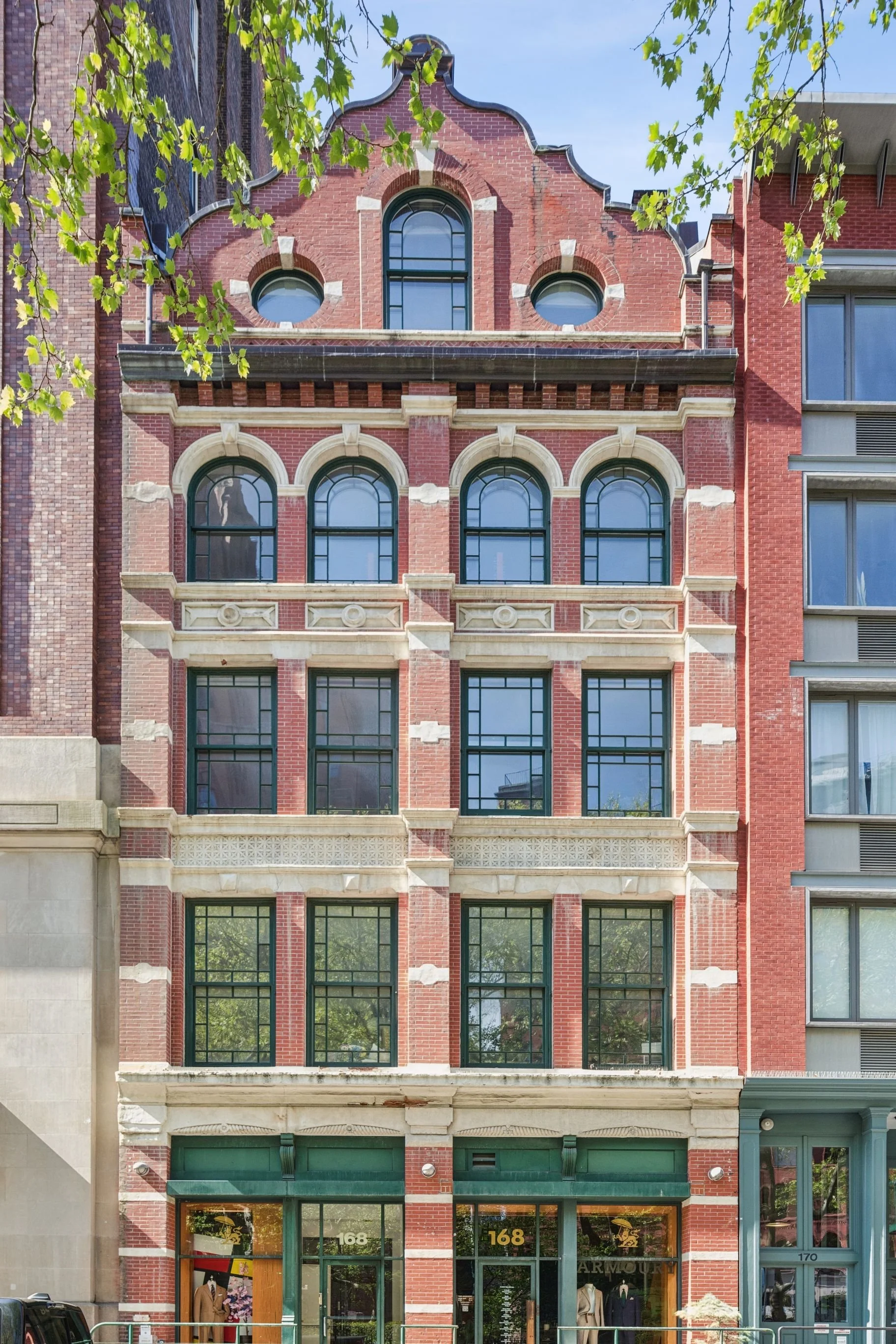
168 Duane Street, Tribeca: Warrington Hudlin’s Triplex

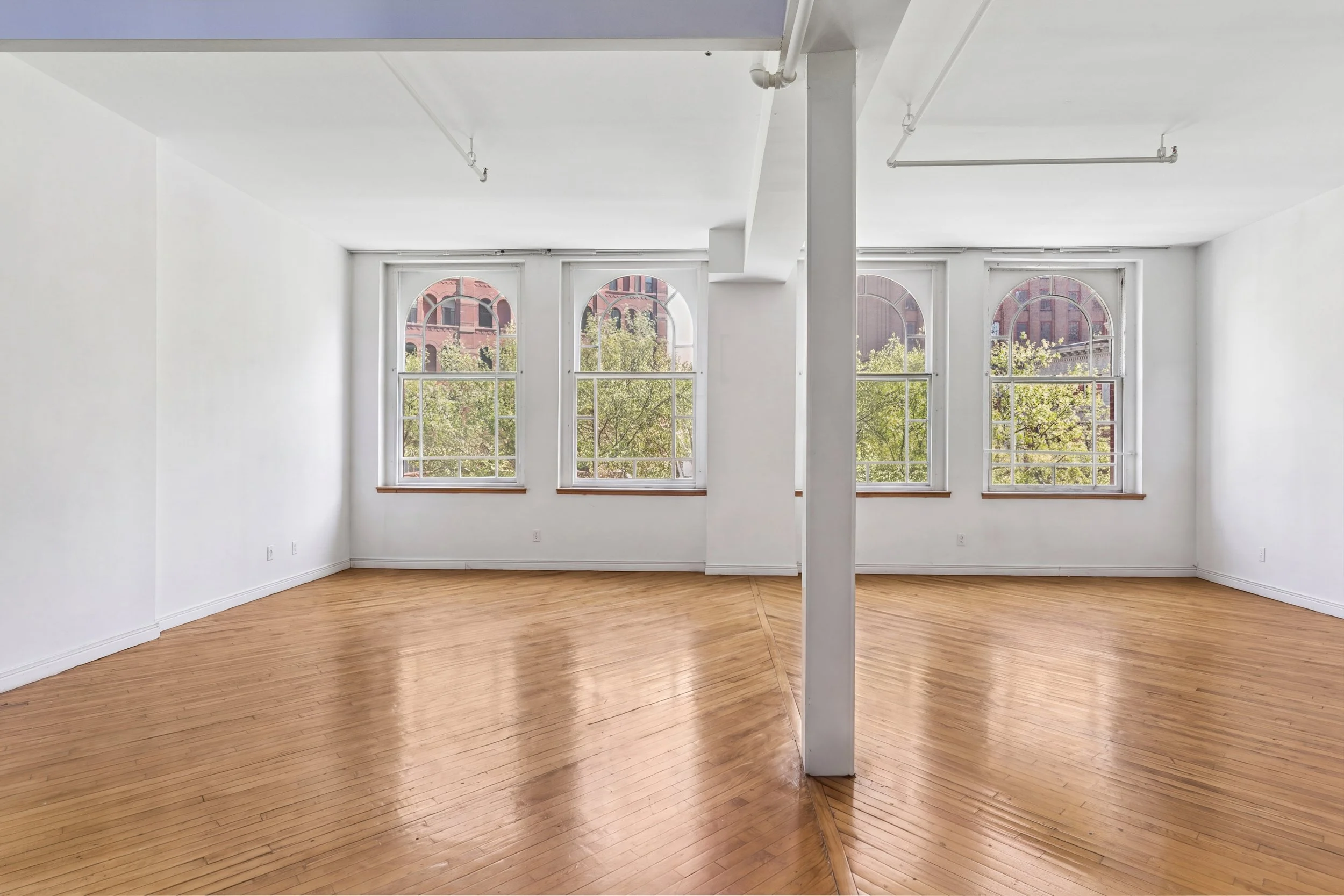
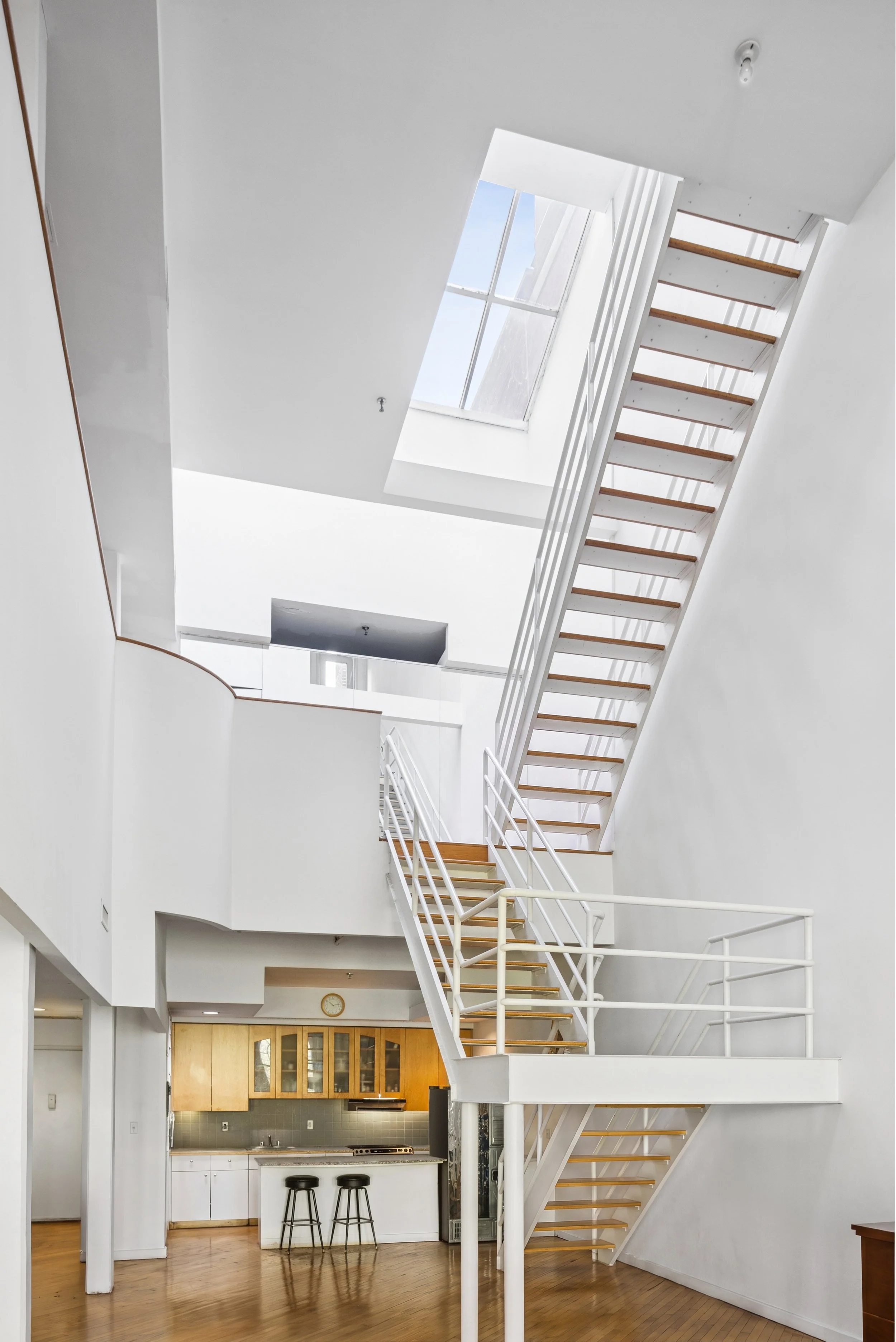
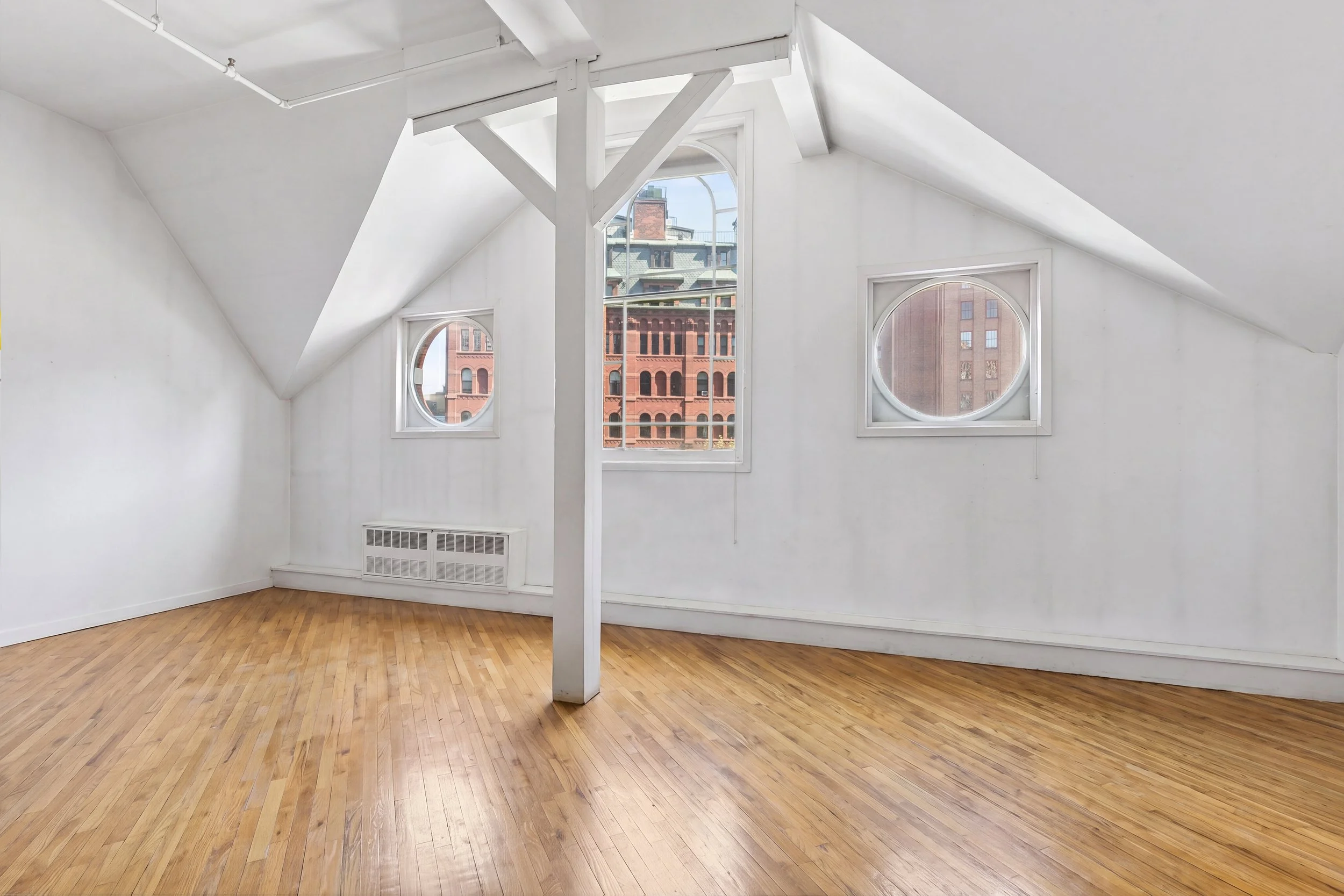
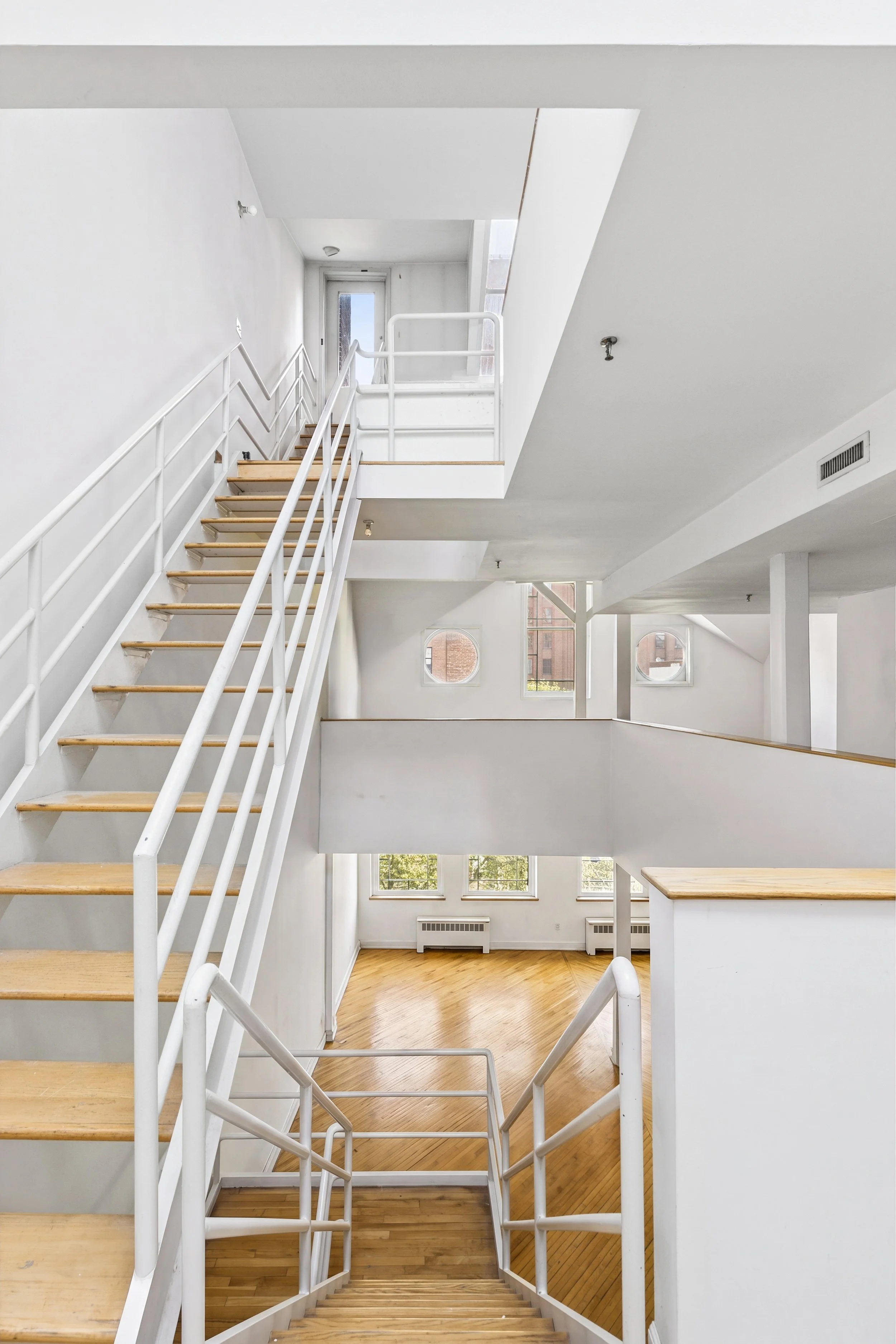
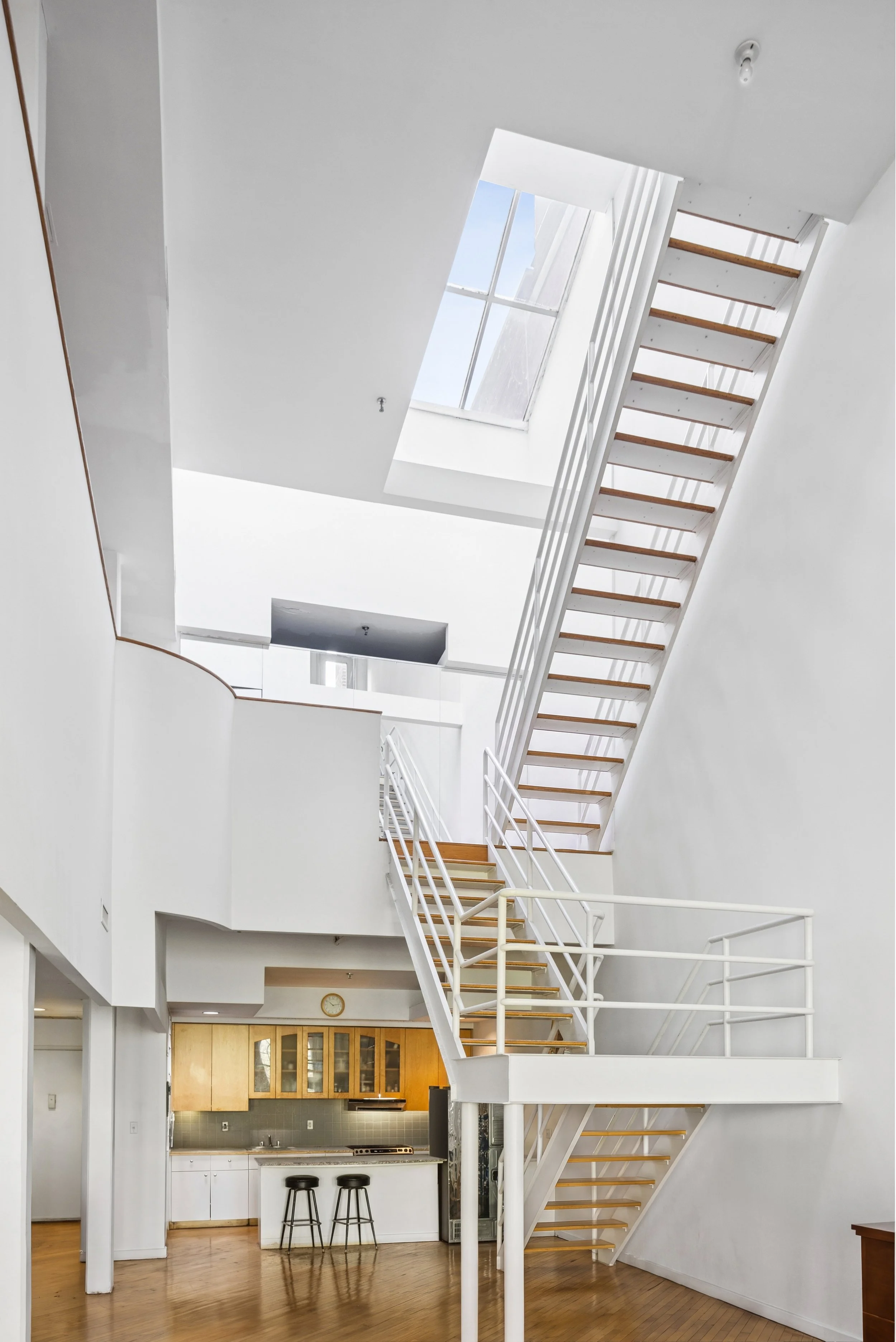
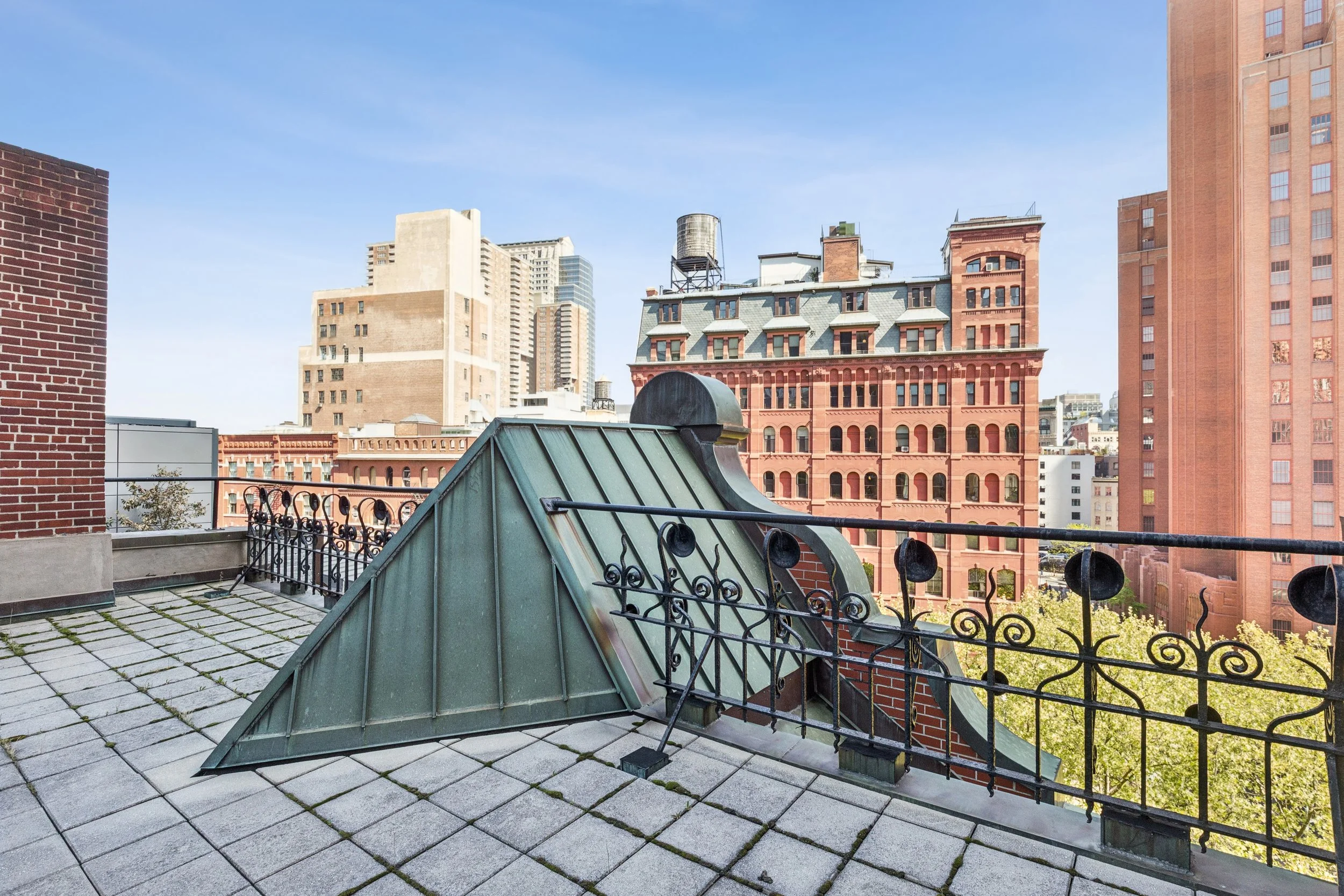
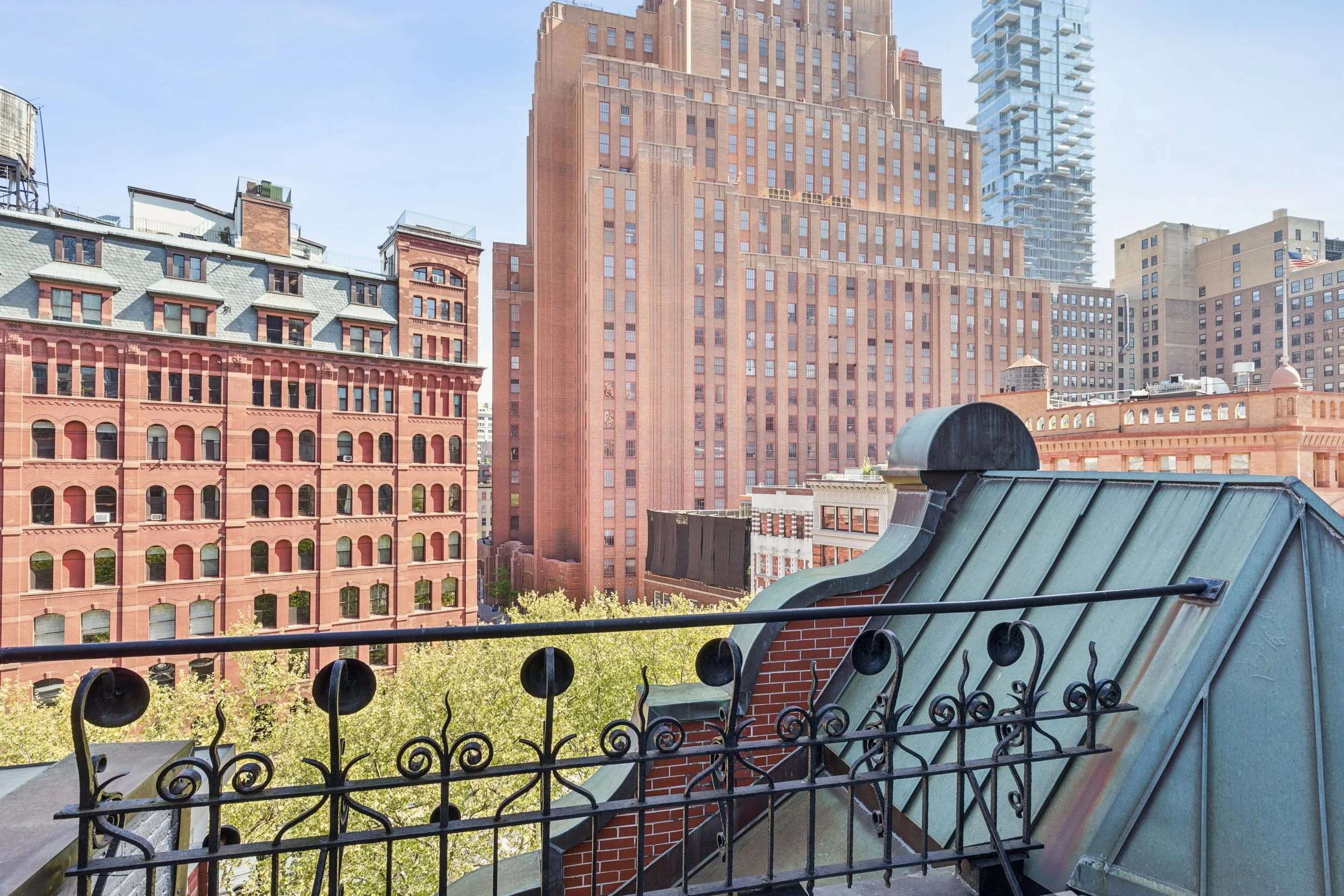
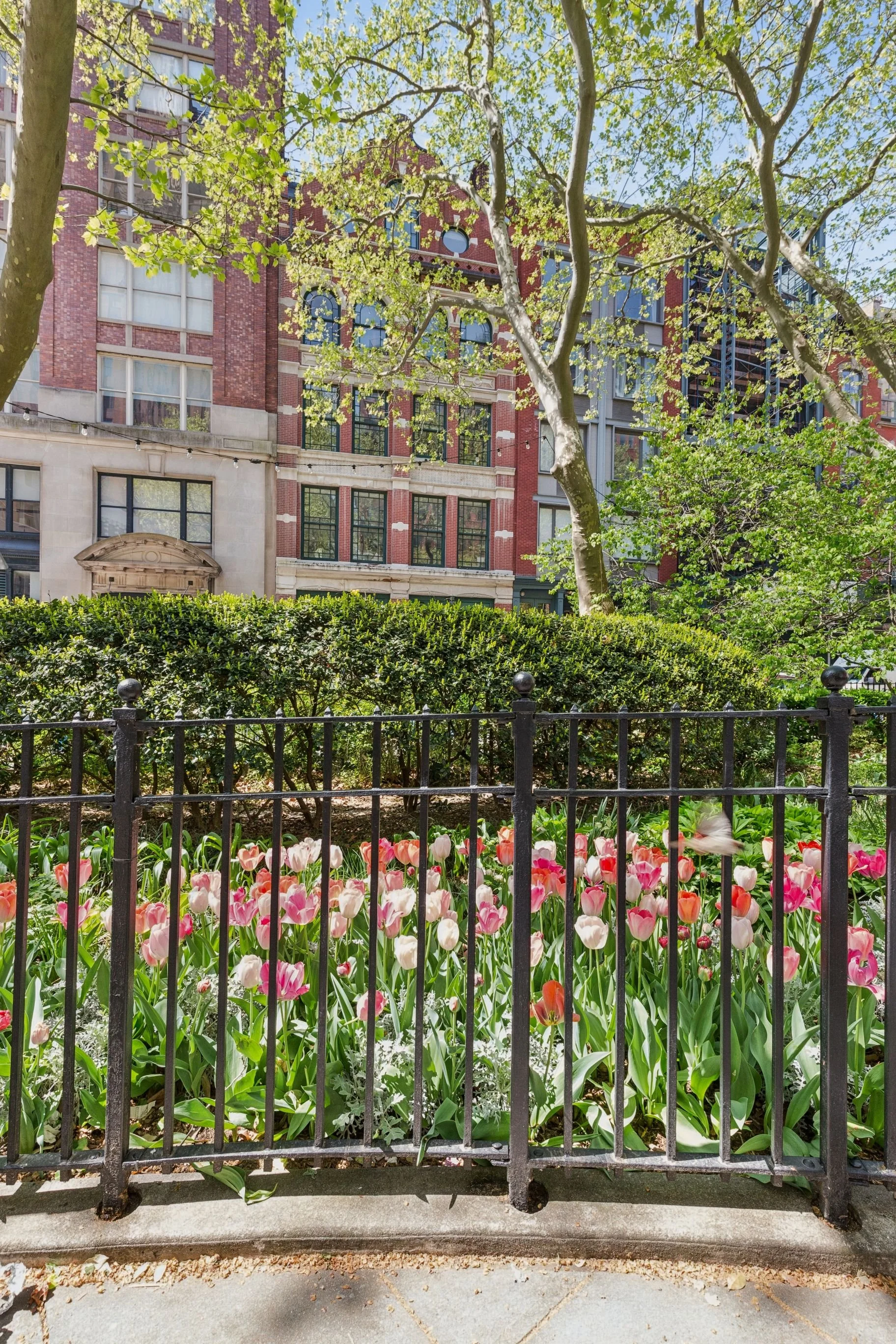
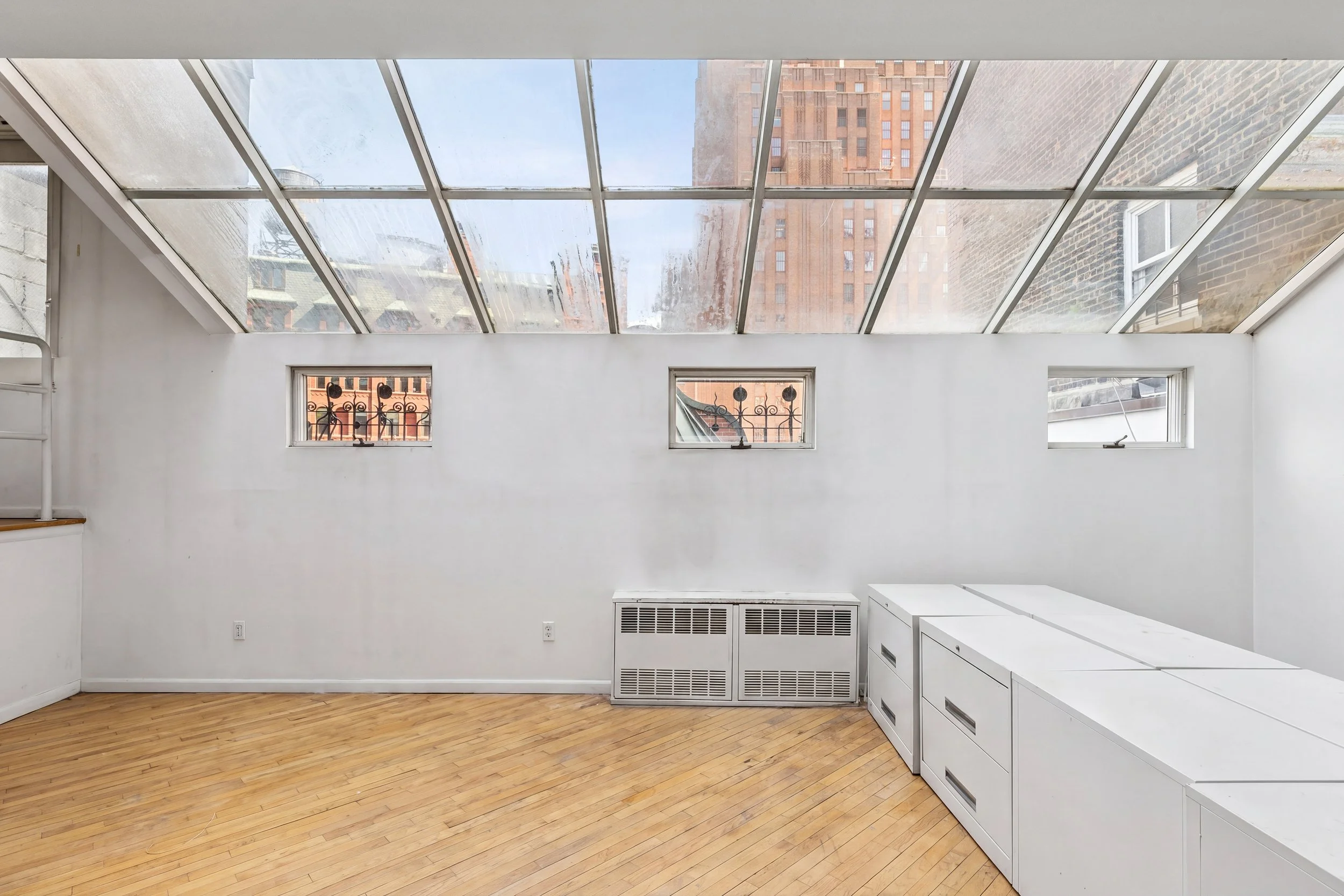
At 168 Duane Street, the most intriguing room cannot be seen from the street. It is a terrace concealed behind the parapet of the building’s great 1887 gable, approximately 400 square feet of private outdoor space facing directly onto Duane Park. Inside, the upper three floors form an approximately 3,500-square-foot triplex with ceilings that rise to approximately 30 feet.

For roughly 30 years, filmmaker Warrington Hudlin used this space primarily as his New York office and studio, living here occasionally as he moved between New York and Los Angeles. It was a remarkable place to do business: above a Tribeca park, inside a nineteenth-century loft building, with enough height to make an ordinary room feel like a set before anyone had dressed it.

Hudlin grew up in East St. Louis and went to Yale. As a student, he made Black at Yale, a documentary that included a conversation with Stokely Carmichael. Melvin Van Peebles and Harry Belafonte later mentored him. In 1978, Hudlin co-founded the Black Filmmaker Foundation, giving Black filmmakers a way to show work that might otherwise never reach an audience. The foundation’s recordings are now held by the Schomburg Center, while reels from Hudlin’s own early films are preserved in university archives. Indiana University Black Film Center & Archive; New York Public Library.

Then came House Party, the joyous 1990 film directed by his brother Reginald and produced by Warrington, followed by Boomerang, starring Eddie Murphy. Broker Larry Carty says Hudlin bought at 168 Duane with his House Party earnings and that part of Boomerang was filmed in the building. Hudlin is also a black belt in kung fu. He brought that passion to the Museum of the Moving Image through a martial-arts film series and served as vice chairman of its board. His work has taken him from a documentary camera at Yale to Hollywood and into the rooms where film culture is shaped. Hudlin’s profile.

Now he is ready for another stage of his life. The triplex is being offered largely as he left it, and its next owner will have substantial work to do. Buyers can see the plans Hudlin commissioned from architect Galia Solomonoff, whose work includes Dia Beacon. They show a graceful way to turn the three levels into a home with two bedrooms and an additional interior bedroom. The square footage is devoted to volume and living space, not to packing the apartment with bedrooms.

Hudlin hopes another creative person will buy it, someone who understands why he chose this building and can imagine what to make of it next. That person may use Solomonoff’s plans or arrive with an architect and a vision of their own. Either way, the terrace, the height, and the direct outlook onto Duane Park give them an extraordinary place to begin.

The building is expected to have a brand-new elevator operating in November. Visitors currently reach the triplex by stairs, and Hudlin has asked Carty to wait for the elevator before its public debut. He wants a buyer to ride to the top, step into the space where he worked for three decades, and see the apartment as a future home.

For now, Carty is showing it to a select few brokers he has worked with for years. Once the elevator is operating, Hudlin plans to bring the triplex to the public market for $8.995 million. Its next owner can then take the ride up with an architect, walk out toward Duane Park, and decide what belongs in the next chapter.


Have a listing you think should be featured contact us or submit here to tell us more! Follow Off The MRKT on Twitter and Instagram, and like us on Facebook.

/

Off The MRKT’s Favorite Listings of the Week

Dive into the details of these remarkable spaces and discover what makes them stand out in the world of real estate.

Read More
/

The $4,186 Studio: Manhattan’s Smallest Apartments Get More Expensive

Manhattan studio rents averaged a record $4,186 in August. Explore the cost of living alone, shrinking rental inventory, and the trade-offs behind the price.

Read More
/

Inside a SoHo Loft That Redefines Open-Concept Living

Step inside a stunning SoHo loft featured on Open House TV that redefines open-concept living with soaring ceilings, sun-drenched interiors, and modern design details in one of Manhattan’s most coveted neighborhoods.

Read More
/

NYC’s Fall Apartment Hunt: More Choice Now, Price Cuts Later?

NYC’s fall apartment hunt is starting with a contradiction: fewer deals, but fewer homes to choose from, too. Manhattan recorded 799 signed contracts in August, down 6% from a year earlier, while active listings fell 15% to 4,992, according to Corcoran’s August market report. A quieter summer finish has not automatically handed buyers a sprawling selection of discounted apartments.

Still, fall gives the search a different rhythm. The question is whether the season’s usual return of listings will bring an apartment worth pursuing, or whether a home already on the market will become more interesting after a price adjustment. Those are two different opportunities, and this year’s numbers make the distinction especially useful.

Living room at One57 with expansive windows overlooking Central Park
A One57 residence overlooking Central Park, shown as an illustration of Manhattan apartment design. Archival image: Anthony Barillo / Douglas Elliman Photography. No current availability or price reduction is implied.

NYC’s fall apartment hunt has its own calendar

Historically, New York’s biggest inventory wave arrives in spring. But buyers who miss it often get another opening in September and October, when available listings typically rebound after summer, according to StreetEasy’s analysis of the city’s buying seasons. That autumn increase tends to be smaller than the spring surge.

October has also been one of the more active months for price reductions. In the three-year period examined in StreetEasy’s February 2026 analysis, an average of 12.4% of homes on the market reduced their asking prices in October, just behind May’s 12.5%.

That is a measure of how many listings changed price, not how large the discounts were. It also describes historical behavior, rather than a forecast for October 2026. The distinction matters when an appealing apartment appears in September: the calendar cannot tell a buyer whether that particular seller will negotiate next month.

Think of fall as two overlapping searches. One follows newly available homes: the corner living room, the genuine second bedroom, the terrace that changes the entire apartment. The other revisits properties that were almost right at their previous price. Keeping both in view makes more sense than assuming every listing will become cheaper with cooler weather.

A slower August did not create a surplus

Manhattan’s August inventory was the lowest for that month since 2015, Corcoran reported. Its average time on market also fell 4% annually to 120 days. The combination complicates the idea that weaker contract activity necessarily means sellers are struggling to move their homes.

Negotiation did remain part of the picture. Among Corcoran-reported contracts, the average discount from the last asking price was 3.9%, with condos averaging 4.1% and co-ops 3.7%. These figures describe that brokerage’s reported contract sample; they are not a citywide entitlement to a discount.

The difference between a price cut and a negotiated discount is worth keeping straight. A seller can publicly lower an asking price before anyone makes an offer. A buyer can then negotiate against that revised number. Looking only at the latest reduction misses the apartment’s original pricing, and looking only at the original price can make an ambitious opening ask seem like an extraordinary bargain.

For illustration, an apartment first offered at $1.5 million and later reduced to $1.4 million has already changed its positioning. An accepted offer below $1.4 million would be a separate negotiation. Neither step establishes value on its own; comparable homes and the apartment’s condition still matter.

The borough and the building change the story

The citywide summer picture provides another reason to avoid sweeping conclusions. In StreetEasy’s July 2026 housing report, sales contracts rose 16.7% annually to 2,147, even as available inventory slipped 1.6%. Homes entering contract spent a median of 67 days on the market, five fewer than a year earlier.

Supply moved differently across boroughs. July listings fell 5% annually in Manhattan, but rose 2.3% in Brooklyn and 9% in Queens. The citywide median asking price was $998,000, down 5%. Those figures describe July, and StreetEasy’s market coverage differs from Corcoran’s August Manhattan report; the totals should not be spliced into a single month-to-month series.

For an actual search, the useful comparison becomes much narrower. A renovated two-bedroom co-op with a dining area belongs beside homes offering similar space, condition, and ownership costs. A condo with outdoor space and extensive shared facilities has a different set of alternatives. The number of apartments across an entire borough says little about how many satisfy that particular brief.

That is also why established buildings deserve attention alongside new sales galleries. Our look at luxury resale condos competing with new developments explores how building age, amenities, and price can create different routes to the same wish list. Fall’s fresh listings may expand that comparison, but a brand-new arrival does not automatically offer better value than an apartment already available.

Watch what changes between the open houses

The most revealing fall story may unfold between visits. Has a seller changed the asking price? Has a comparable apartment entered contract? Does the same budget now buy another room, a better exposure, or a home requiring less work? Those changes have more practical meaning than a seasonal label.

A useful shortlist preserves the details that photographs can blur: usable bedroom dimensions, the amount of circulation space, storage, renovation needs, and the recurring expenses attached to ownership. An elegant room with oversized windows can be compelling; the question is whether the rest of the apartment supports the way its next owner wants to live.

September offers a reason to look again. October may offer a reason to reconsider a price. With Manhattan supply still constrained at summer’s end, the strongest fall opportunity will be the apartment whose space, condition, and asking price finally align, not simply the one with the newest reduction.
/

NYC’s Luxury Resale Condos Are Giving New Developments Competition

Luxury resale condos offer a different route to the Manhattan wish list: established amenities, more choice, and a lower median asking price per square foot than sponsor units.

Read More
/