The Best At-Home Spa Night Ideas in 2026

Spa nights have quietly become a real category of evening rather than a punchline about face masks and wine. Part of that is arithmetic, since a single treatment at a good New York spa now costs more than several of these ideas take to set up permanently at home, and part of it is that the home versions have finally caught up to the promise.

Apartments complicate the genre, though. Small bathrooms, shared walls and a tub that may not exist rule out half of what spa-night roundups tend to assume, so the seven ideas below are ordered by what they give back rather than how they photograph, starting with the one element that keeps working after the evening ends. Most of them survive a studio.

What Makes an At-Home Spa Night Worth the Evening?

Three things separate a spa night that leaves a mark from one that simply uses up a Friday.

Whether anything lasts past morning

Most spa rituals are atmosphere, and atmosphere is a perfectly good reason to do them. The handful that also change skin or sleep operate on a different timescale, and knowing which category each idea belongs to stops the evening from being judged on the wrong terms the next day.

What your apartment can physically accommodate

Tubs, ventilation and counter space decide more of this than budget does. A long soak is off the table in plenty of New York bathrooms, steam needs somewhere for the moisture to go, and anything demanding a dedicated surface has to win that surface from whatever already occupies it.

How much of it you will repeat

One elaborate evening achieves less than a modest version that runs every other week. Ideas requiring an hour of setup tend to happen twice and then quietly stop, so the ones that fold into a normal night are worth more than their individual effect suggests.

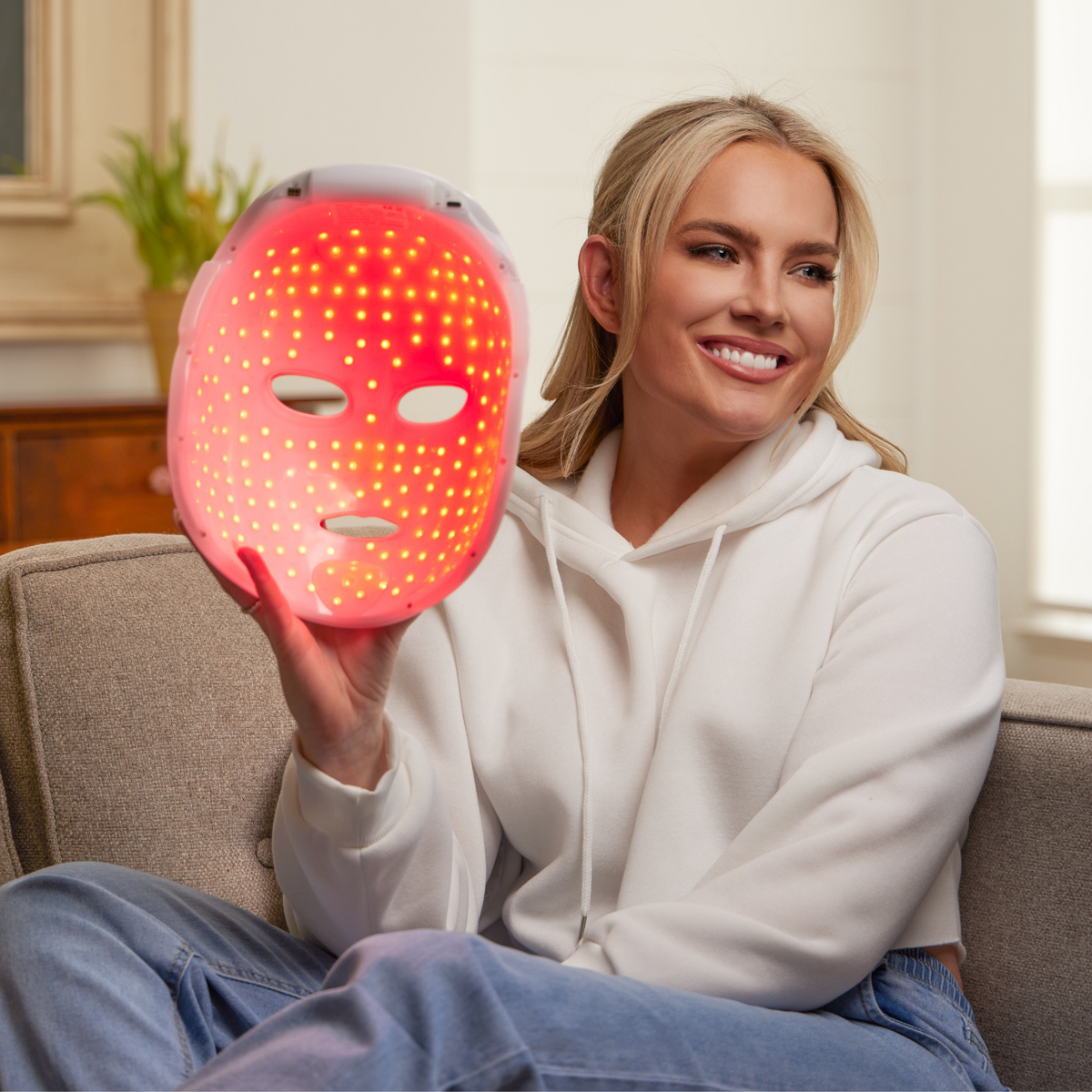
Woman sitting on a sofa at home holding a red-lit LED face mask during an evening spa routine

1. An LED Light Therapy Session, the At-Home Spa Night Idea That Compounds

Ending the night with skin that is measurably different, rather than merely relaxed, is what separates light therapy from everything else on this list. A session runs ten to fifteen minutes with nothing applied to the skin first, works on tone, texture, firmness or blemishes depending on the wavelength selected, and asks nothing of you beyond sitting still, which makes it the one spa-night element that doubles as maintenance between evenings.

Evidence is why it leads rather than the glow. Photobiomodulation carries a deep published record, with red light around 630 to 660nm linked to collagen support and near-infrared at 850nm reaching deeper tissue, and the numbers a brand is willing to print are what separate a serious device from a novelty. The Artemis light therapy device sits at the professional end of that range, running 720 LEDs across seven wavelengths at a published 45mW/cm², with 16 individually programmable zones so a session can run anti-aging light over the eye area while blue handles the chin. Omnilux publishes a comparable figure at 30mW/cm², while several of the best-known masks publish no irradiance at all, which makes their output impossible to judge from outside. At $2,500 the Artemis is priced as equipment rather than a gadget, which is the honest framing for anyone weighing it against a standing appointment.

Best for: the one element here that still counts for something eight weeks later.

2. A Long Soak, the Most Reliable At-Home Spa Night Idea

Warm water does the heaviest lifting of anything on this list. Twenty minutes raises core temperature and the drop afterward is one of the more dependable sleep cues the body responds to, which is why a bath lands as a sleep intervention as much as a relaxation one. Magnesium salts are the usual addition, and while the evidence for magnesium absorbing meaningfully through skin stays thin, the heat and the enforced stillness are doing real work regardless.

Tubs are the obvious problem in a city built on small bathrooms. A hot foot soak reproduces a surprising share of the temperature effect for anyone without one, and the entire setup costs a bucket.

Best for: sleep, considerably more than skin.

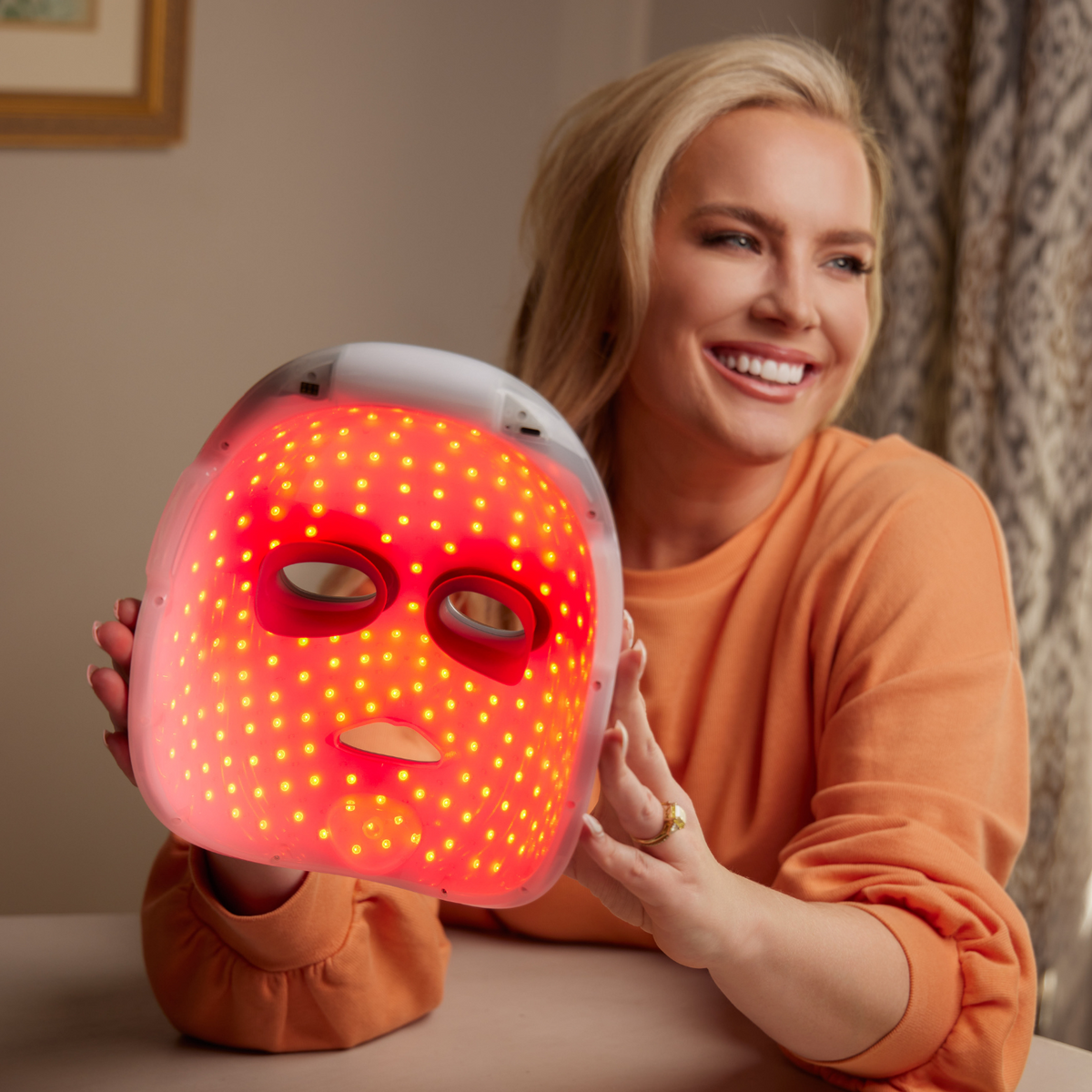
Close view of an LED face mask glowing red, held up in a warmly lit living room

3. Steam, the At-Home Spa Night Step Most People Skip

Steam makes everything that follows it work better, which is exactly why professional facials start there. Warm vapor softens the outer layer, loosens congestion and leaves skin readier to absorb whatever goes on next, and ten minutes is enough. A dedicated facial steamer handles it most efficiently, though a bowl of hot water and a towel has worked for a century and occupies no shelf space at all.

Restraint matters more than equipment here. Overdoing steam dehydrates skin rather than hydrating it, which puts the ceiling at once or twice a week, and anything applied afterward should go on while skin is still damp.

Best for: congestion, and making the rest of the evening count for more.

4. Body Exfoliation, the At-Home Spa Night Idea for Winter Skin

Radiator season is when body skin turns genuinely rough, and exfoliation is the fastest correction available. A sugar or salt scrub in the shower, or dry brushing before it, lifts the dull surface layer off legs and arms and gives moisturizer somewhere useful to go. The difference shows the same night, which almost nothing else here manages.

Frequency is where most people overshoot. Once or twice a week is plenty, and anything beyond that strips the barrier and produces exactly the dryness it was meant to fix, particularly for anyone already contending with building heat.

Best for: dull, rough body skin between October and March.

5. A Scalp Treatment, the At-Home Spa Night Idea for Hair

Scalp care is the part of the spa menu that routinely gets left out at home, and it carries one of the longer payoffs, since hair grows out of skin that most routines treat as an afterthought. An oil or exfoliating treatment left on for twenty minutes while the rest of the evening happens costs nothing in time, and the massage involved stands up perfectly well on its own.

Rinsing is the catch, since oil treatments need a thorough wash afterward, which turns a spa night into a hair-washing night whether that was the plan or not, so this one belongs on an evening when the wash was already happening.

Best for: anyone whose routine currently stops at the hairline.

6. Slow Facial Massage, the At-Home Spa Night Idea for Puffiness

Five minutes of lymphatic massage produces a visible change along the jaw and under the eyes, and it is the only idea here that runs on technique rather than purchase. A gua sha stone from a brand like Mount Lai helps and costs fifteen dollars, though hands do most of the work, and the slowness is part of the point, since the pace is what makes it register as a treatment rather than another task.

Expectations should stay modest, because the effect is fluid moving rather than structure changing, so it fades within hours and the sculpting language attached to it runs well ahead of what is actually happening on the face.

Best for: looking rested tomorrow, for roughly no money.

7. Atmosphere, the At-Home Spa Night Idea That Costs Nothing

Lighting and silence do more than any product on this list and they are free. Overhead lights off, lamps or candles on, phone in another room, something slow playing: the shift in how an evening feels is immediate, and it is the whole difference between doing skincare and having a spa night. Spas spend enormous sums engineering precisely this, and none of it requires their budget.

Phones are the hard part, since the evening collapses the moment one comes back into the room. Leaving it charging somewhere else is a cheap trick that outperforms willpower, and it is also what makes the longer rituals above bearable without something to scroll through.

Best for: everyone, including anyone who does nothing else on this list.

How to Order an At-Home Spa Night

Sequence decides how much of this actually lands. Heat and exfoliation belong before anything you want absorbed, light therapy needs clean dry skin, and the treatments that require rinsing should not strand you in the shower at the end of an evening meant to wind down. A running order that works in a one-bathroom apartment looks like this.

  • Scalp oil goes on first, so it sits while everything else happens
  • Shower or bathe, exfoliating the body while skin is warm
  • Steam the face for five to ten minutes, then pat dry
  • Run the LED session on clean dry skin, before any serums
  • Serums, moisturizer and everything else go on afterward
  • Facial massage last, or the next morning if puffiness is the target
  • Lights down and phone away from the start rather than the end

Stress is the variable deciding whether any of it helps, and the evening works better when the week behind it has been managed rather than ignored, along the lines of the approaches in this site's piece on natural remedies for stress relief.

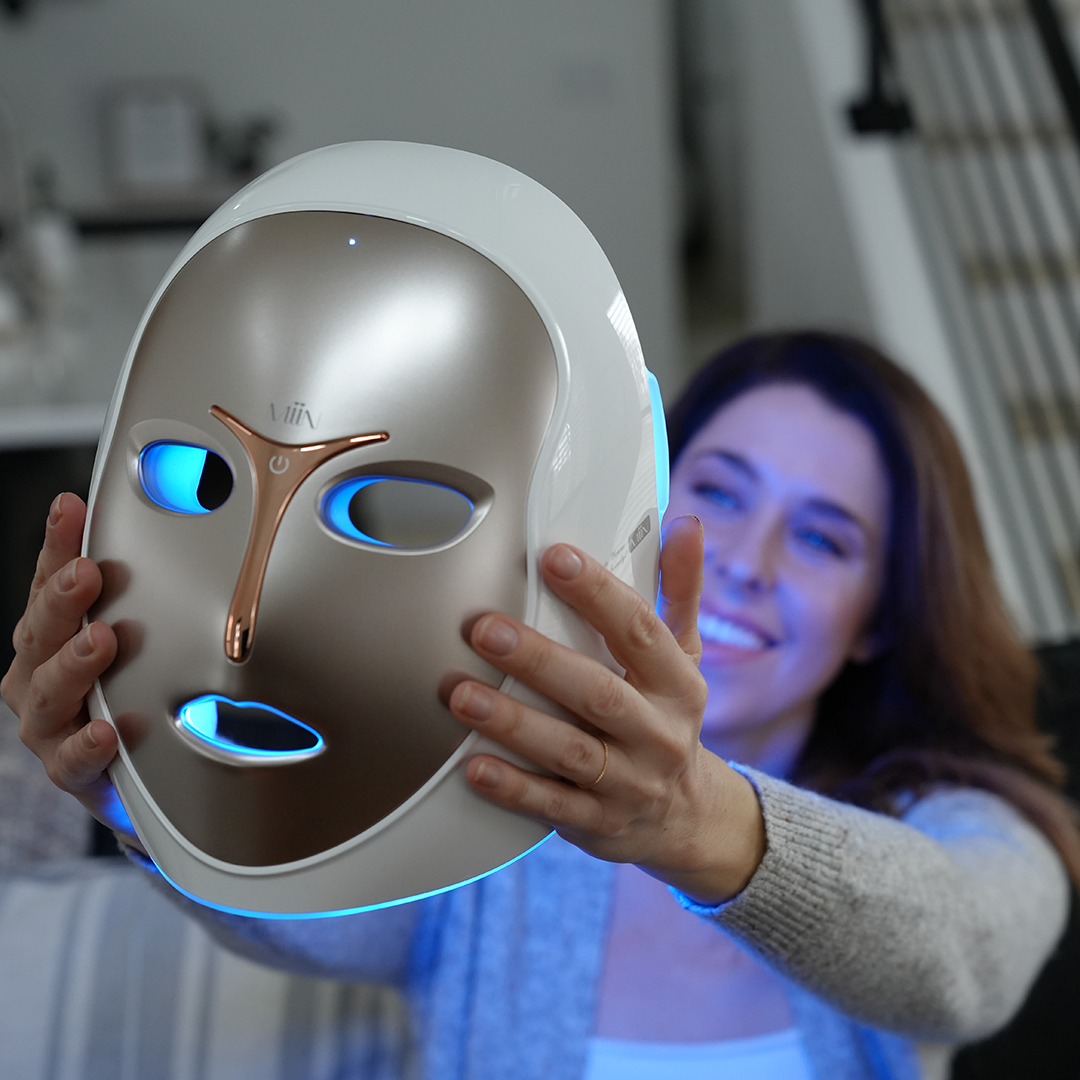
LED face mask lit blue being held up at home, showing the eye and nose detailing

How Often Should You Run an At-Home Spa Night?

Every other week is the realistic answer for the full version. The individual pieces run on their own schedules, with light therapy wanting three or more sessions a week to do anything measurable, exfoliation capped at once or twice, and steam at roughly the same, so the complete evening is a periodic assembly of things that otherwise happen separately.

Recovery evenings also pair well with harder training weeks, and anyone building a new fitness habit tends to find the two reinforce each other, something this site's look at choosing a first group fitness class approaches from the other direction. Treating the spa night as the counterweight rather than the indulgence is usually what makes it stick.

Questions People Ask About At-Home Spa Nights

Is an at-home spa night actually cheaper than booking one?

Over a year, substantially, though the comparison depends on what gets bought. Consumables such as salts and scrubs cost less than a single facial, while a serious device is priced against a year of standing appointments rather than one visit. Running the inexpensive version a few times first is the sensible way to learn which parts you will keep doing.

What should be skipped the night before an event?

Anything new, and anything extractive. Steam, strong exfoliation and first-time products each carry a small risk of a visible reaction, and the night before is the worst available moment to discover it. Hydration, massage and an LED session are the safe three, and the gift and self-care picks in this site's October favorites round-up skew toward that same low-risk end.

Which At-Home Spa Night Idea Should You Start With?

Atmosphere costs nothing and changes the most about how an evening feels, which makes it the obvious first move and the one most people skip straight past on the way to buying something. For the pieces that do need a purchase, a fifteen-dollar gua sha stone and a bag of salts cover the next two steps cheaply enough to find out whether this becomes a habit at all. Light therapy is the one worth treating as equipment rather than an experiment, and worth buying last, once the evening it belongs to already exists.

/
script>

What Indoor Heating Does to Your Skin Barrier

Radiator season arrives before anyone is ready for it, and skin registers the change faster than the calendar does. Tightness after a shower, flaking along the nose, a moisturizer that suddenly seems to do nothing: all of it shows up within days of the heating coming on, and the cause sits in the air rather than in the products.

Heating systems are built to raise temperature, not to hold the conditions skin needs, and the two pull against each other all winter. How a building handles heat and insulation decides how severe that gets, which this site's look at energy-efficient features that lower bills covers from the cost side. What follows is what heated air actually does to the skin barrier, and which responses hold up.

How Indoor Heating Changes the Air in Your Apartment

Warm air holds more water than cold air, and that single fact explains the entire season. Cold outdoor air carries very little absolute moisture, and when it enters a building and gets heated its capacity rises while the moisture content stays where it was, so relative humidity falls sharply. Outdoor air at a perfectly comfortable level can arrive indoors at a fraction of it once warmed.

Measured indoor humidity in heated buildings through winter frequently sits between ten and twenty percent, against the forty to sixty percent range generally considered comfortable. Forced-air systems push this further by circulating large volumes of already dry air, while radiators dry a room more gradually and just as thoroughly across a season.

Woman in a heavy sweater holding a mug beside an apartment window on a cold day

What Heated Indoor Air Does to the Skin Barrier

The outermost layer of skin behaves like a sponge left in a draft. Its job is holding water, and it needs roughly ten percent water content to stay flexible, which it manages through a mix of lipids, ceramides and the compounds collectively called natural moisturizing factor. Dry surrounding air steepens the gradient between skin and room, and water moves outward faster as a direct result.

Transepidermal water loss is the term for that outward movement, and it rises measurably as ambient humidity falls. Research into low-humidity environments has found not only increased water loss but slower barrier recovery afterward, meaning skin repairs itself more slowly in precisely the conditions that damage it. The visible outcome is the familiar one: tightness, fine flaking, dullness and a new reactivity to products that caused no trouble in September.

Why Skin Feels Tight Indoors Even With Moisturizer On

Three things usually explain a moisturizer that stopped working without changing.

The formula is doing the wrong job

Lightweight gel moisturizers that suited humid months lean on humectants to pull water into the skin, and humectants need water available to pull. In a room sitting at fifteen percent humidity there is very little of it in the air, which is why a summer formula can feel like almost nothing in January.

Humectants without a seal can work backward

Glycerin and hyaluronic acid draw water toward the surface, and in very dry air a portion of that water simply evaporates off, taking more with it. Applied over damp skin and covered with something occlusive they work exactly as intended. Applied to dry skin in a dry room with nothing on top, they can leave skin tighter than before.

Hot water removes what the air has not

Long hot showers strip the lipids holding the barrier together, and heating season is precisely when those showers become most appealing. The combination of hot water outside and dry air indoors removes barrier lipids and the water they were retaining at the same time.

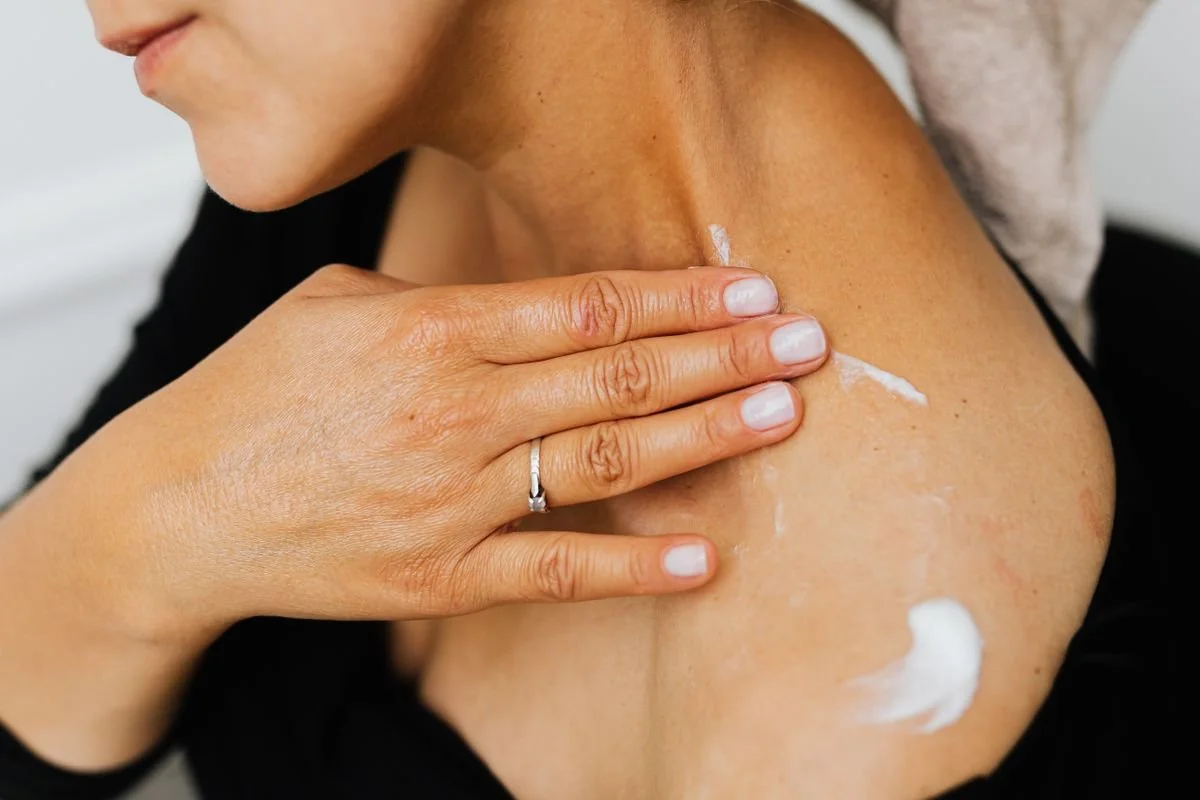
Close view of a woman smoothing moisturizing cream across her shoulder and collarbone

How to Help Your Skin Barrier Through Heating Season

Nothing here demands an expensive change, and most of it concerns timing and texture rather than new purchases.

  • Apply moisturizer to damp skin, within a minute of washing, rather than to dry skin
  • Move to a richer cream or balm for the season and keep the lighter formula for spring
  • Look for ceramides, cholesterol and fatty acids, which replace what the barrier is losing
  • Put something occlusive over humectants at night, so the water stays where it was drawn
  • Shorten showers and lower the temperature, which costs nothing and helps immediately
  • Treat hands separately, since they are washed most often and covered least

Hands and nails show the strain first, because they meet dry air constantly and get washed far more than anywhere else, and the brittleness that follows is the same barrier problem on a smaller scale.

Which Skincare Steps Need Adjusting When the Heating Goes On

Actives are where winter trouble generally starts. Retinoids, exfoliating acids and vitamin C all work by design on a barrier already under strain, and the strength that felt comfortable in warm weather often does not in January. Reducing frequency rather than stopping altogether is usually the right adjustment, since consistency still counts and starting over in spring gives away months of progress.

Strength and formulation matter more here than most labels suggest, and how retinol and retinoids differ is worth understanding before deciding what to scale back, because prescription retinoids and over-the-counter retinol sit at very different points on that range. Buffering by applying moisturizer first, or alternating nights, keeps the ingredient in a routine while lowering what it asks of the barrier.

Does a Humidifier Actually Protect Your Skin Indoors?

Humidifiers address the cause rather than the symptom, which is why they outperform most products on this particular problem. Bringing a bedroom to between forty and fifty percent overnight flattens the gradient pulling water out of skin, and eight hours in better air is the longest uninterrupted stretch most people are in a position to influence.

Overshooting carries a cost of its own, since sustained humidity above sixty percent encourages mold and dust mites, which makes a cheap hygrometer worth more than an expensive humidifier. The unit also needs cleaning on the schedule the manufacturer gives rather than the one that is convenient. Drinking water supports general health but does little for surface hydration by itself, and while the move toward functional drinks this site covers in new drink trends has plenty going for it, skin hydration is not where it shows.

Woman misting her face with a hydrating spray in front of a bright indoor window

Questions People Ask About Indoor Heating and Skin

Why do hands and nails suffer most in heated buildings?

Exposure and washing frequency, mostly. Hands meet dry air continuously, get washed far more than anywhere else, and carry thinner barrier lipids across the backs than the face does, so they roughen and split first. Nails turn brittle as the skin around them loses water, which is why the trade notices heating season early, as this site's guide to choosing a nail tech school reflects in what the training actually covers.

Does the problem stop once the heating goes off?

Largely, and faster than most people expect. Barrier recovery runs on a two to four week cycle once conditions improve, so skin that struggled all winter generally settles within a month of spring humidity returning. The exception is anyone who scaled actives back and then restarts everything at full strength at once, which tends to undo the recovery just as it arrives.

How Long Does Skin Take to Recover From Heating Season?

Two to four weeks of better conditions is the usual answer, and the same period applies in reverse, which is why the opening fortnight of heating is when most people notice the change and conclude a product has failed. Nothing has failed. Skin is responding to air holding a fraction of the water it carried in October, and the response that works is unglamorous: damp application, richer textures, shorter showers, gentler actives and better air in the room where you sleep. The products that stopped working will start working again in April.

/
script>

Why Community Banks Still Matter in an Age of Instant Money Apps

I opened my first mobile banking app in a grocery store parking lot, transferred rent in about nine seconds, and felt genuinely superior to everyone who had ever stood in a teller line. Then I tried to get a loan for a food truck I wanted to buy. The app gave me a form, a two-week wait, and a polite no. I called the bank two blocks from my apartment, talked to a woman named Doreen for twenty minutes, and had a better answer by Thursday. That gap is the whole story.

So here is the promise. By the end, you will know exactly what big digital banking solutions are good at, what they quietly are not good at, and how to use both without wasting a Saturday. You will also get a short checklist you can run against your own accounts this week.

The short version: apps win on speed and visibility. Community banks win on judgment, relationships, and the weird, messy situations that do not fit a dropdown menu. Most people need both, and figuring out which one handles which job is the actual skill. That is what digital banking solutions and their branch-based cousins each bring to the table, and pretending one replaces the other is how people end up frustrated with both.

Fair warning, I am biased toward the human side. I would rather text a banker who knows my name than refresh a screen at midnight. But I also pay every recurring bill through an app, so hold both ideas at once with me.

What the apps genuinely do better

Speed is the obvious one, but it is not the interesting one. The real advantage is visibility. A good app shows you every transaction the moment it clears, flags a duplicate charge before you notice it, and lets you move money between accounts without a phone call. If your finances are mostly predictable, that is close to all you need.

Automation is the second thing. Splitting direct deposits, sweeping money into savings on payday, setting a running balance alert, none of that existed for regular people a generation ago. Now it takes about four taps.

My take: anyone who says apps are just a fad has not tried to pay a babysitter by check recently. The convenience is real and I am not giving it up.

Where the branch still beats the screen

Here is the part I did not expect. Nearly every American neighborhood still has at least one physical branch, and those branches handle the decisions that are hardest to automate, which are the decisions involving judgment about a person.

Consider the food truck problem. An algorithm looked at my income history, my lack of collateral, and my short credit file, and correctly concluded I was a risky bet. Doreen looked at the same numbers, then asked different questions: who was supplying my produce, did I have a signed pitch location, what happened to my last job. She could price the risk instead of just declining it. That is not sentimentality, it is a better dataset.

  • Loans with unusual collateral, like equipment, a truck, or inventory
  • Small business credit lines that need a conversation, not a score
  • Estate and trust questions where someone has to explain a document in plain words
  • Accounts for people with thin or messy credit histories
  • Anything that requires a human to sign off and stand behind the call

Community institutions also handle a real share of the country's small business lending, and most of that money never touches a screen. According to the Small Business Administration, small businesses account for the overwhelming majority of firms in the United States and employ roughly half the private workforce, which means the loans that fund them matter enormously to local economies. A lot of those loans start with a conversation.

One question worth asking yourself

If your money app vanished tomorrow, would you know who to call?

That is the whole test. If the answer is a customer service queue with a wait time, you have a single point of failure. If the answer is a person at a branch, you have a backup plan that costs you almost nothing to maintain.

How to split the work between them

Here is the framework I actually use, which I call the Two-Ledger Rule. Every financial task goes into one of two ledgers: the routine ledger and the judgment ledger.

The routine ledger is anything repeatable and low stakes. Paying utilities, moving money to savings, checking a balance, splitting a bill. Put all of it on autopilot through an app and stop thinking about it.

The judgment ledger is anything rare, large, or hard to reverse. A mortgage, a business loan, a trust, a dispute over a charge, a decision about where to park a lump sum. Those get a human, and ideally a human who has already seen your name come across their desk.

Two rules keep this from becoming a mess. First, keep one account at a branch-based institution even if it is small and mostly dormant, because it is your entry point when the judgment ledger opens. Second, write down the name of the person who helped you last time, with a phone number, somewhere you will actually find it.

A scene from an actual branch, on a Tuesday

I once sat in a branch for nearly an hour on a weekday morning, working through a trust question with a banker who printed out three versions of the same paragraph and kept rephrasing it until it made sense to me. Two other people came in while I was there. One was a contractor depositing checks from a job. The other was a retiree who did not trust the app and wanted a paper statement. Three completely different problems, one lobby, no forms submitted online.

That is the thing an app cannot replicate. Not the building. The willingness of a person to sit with your specific situation until it resolves.

Physical branches still exist in nearly every kind of American community, from dense city blocks to rural towns where the branch may be the only financial office for miles. The U.S. Census Bureau splits the country into urban and rural areas, and that split is a decent map of why branches stay open: in smaller communities, there is often nowhere else to go, and the local economy depends on that office staying put.

What to do before you need a favor

  • Open a small account at a local bank or credit union, even if you only keep a few hundred dollars in it.
  • Go in person at least once, and ask for the name of the person who handles loans.
  • Save their direct number and email somewhere you will remember.
  • Keep the rest of your routine banking on the app you like best.
  • Review the split once a year, especially after any major life change.

The Federal Reserve treats trust in the banking system as a core part of how households build long-term stability, and that trust is earned through both reliable technology and people who answer questions. You do not have to pick a team. You just have to know which tool fits which job.

So open your banking app right now and look at how much of your money moves without you thinking about it. Then ask yourself which part of your financial life would fall apart if the app went down for a week. If you cannot answer that, it is probably time to walk into a branch.

/
script>