What Indoor Heating Does to Your Skin Barrier
Radiator season arrives before anyone is ready for it, and skin registers the change faster than the calendar does. Tightness after a shower, flaking along the nose, a moisturizer that suddenly seems to do nothing: all of it shows up within days of the heating coming on, and the cause sits in the air rather than in the products.
Heating systems are built to raise temperature, not to hold the conditions skin needs, and the two pull against each other all winter. How a building handles heat and insulation decides how severe that gets, which this site's look at energy-efficient features that lower bills covers from the cost side. What follows is what heated air actually does to the skin barrier, and which responses hold up.
How Indoor Heating Changes the Air in Your Apartment
Warm air holds more water than cold air, and that single fact explains the entire season. Cold outdoor air carries very little absolute moisture, and when it enters a building and gets heated its capacity rises while the moisture content stays where it was, so relative humidity falls sharply. Outdoor air at a perfectly comfortable level can arrive indoors at a fraction of it once warmed.
Measured indoor humidity in heated buildings through winter frequently sits between ten and twenty percent, against the forty to sixty percent range generally considered comfortable. Forced-air systems push this further by circulating large volumes of already dry air, while radiators dry a room more gradually and just as thoroughly across a season.

What Heated Indoor Air Does to the Skin Barrier
The outermost layer of skin behaves like a sponge left in a draft. Its job is holding water, and it needs roughly ten percent water content to stay flexible, which it manages through a mix of lipids, ceramides and the compounds collectively called natural moisturizing factor. Dry surrounding air steepens the gradient between skin and room, and water moves outward faster as a direct result.
Transepidermal water loss is the term for that outward movement, and it rises measurably as ambient humidity falls. Research into low-humidity environments has found not only increased water loss but slower barrier recovery afterward, meaning skin repairs itself more slowly in precisely the conditions that damage it. The visible outcome is the familiar one: tightness, fine flaking, dullness and a new reactivity to products that caused no trouble in September.
Why Skin Feels Tight Indoors Even With Moisturizer On
Three things usually explain a moisturizer that stopped working without changing.
The formula is doing the wrong job
Lightweight gel moisturizers that suited humid months lean on humectants to pull water into the skin, and humectants need water available to pull. In a room sitting at fifteen percent humidity there is very little of it in the air, which is why a summer formula can feel like almost nothing in January.
Humectants without a seal can work backward
Glycerin and hyaluronic acid draw water toward the surface, and in very dry air a portion of that water simply evaporates off, taking more with it. Applied over damp skin and covered with something occlusive they work exactly as intended. Applied to dry skin in a dry room with nothing on top, they can leave skin tighter than before.
Hot water removes what the air has not
Long hot showers strip the lipids holding the barrier together, and heating season is precisely when those showers become most appealing. The combination of hot water outside and dry air indoors removes barrier lipids and the water they were retaining at the same time.
How to Help Your Skin Barrier Through Heating Season
Nothing here demands an expensive change, and most of it concerns timing and texture rather than new purchases.
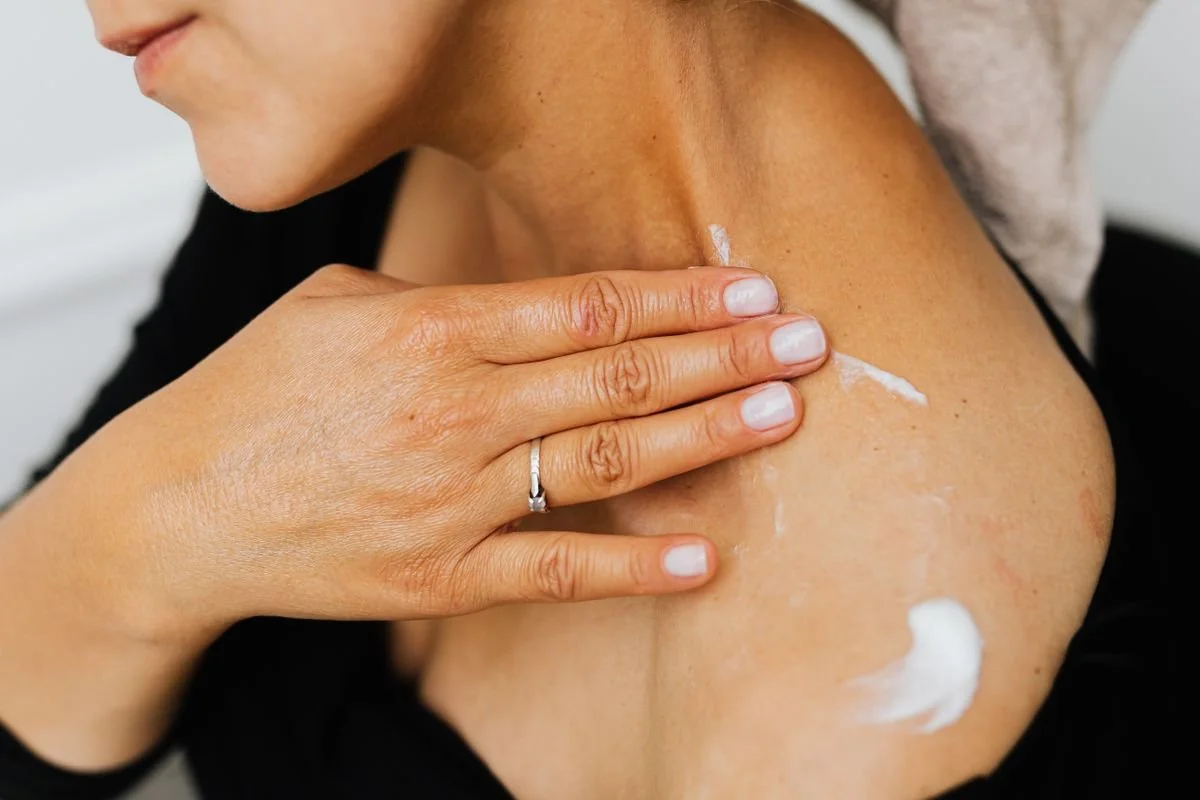
- Apply moisturizer to damp skin, within a minute of washing, rather than to dry skin
- Move to a richer cream or balm for the season and keep the lighter formula for spring
- Look for ceramides, cholesterol and fatty acids, which replace what the barrier is losing
- Put something occlusive over humectants at night, so the water stays where it was drawn
- Shorten showers and lower the temperature, which costs nothing and helps immediately
- Treat hands separately, since they are washed most often and covered least
Hands and nails show the strain first, because they meet dry air constantly and get washed far more than anywhere else, and the brittleness that follows is the same barrier problem on a smaller scale.
Which Skincare Steps Need Adjusting When the Heating Goes On
Actives are where winter trouble generally starts. Retinoids, exfoliating acids and vitamin C all work by design on a barrier already under strain, and the strength that felt comfortable in warm weather often does not in January. Reducing frequency rather than stopping altogether is usually the right adjustment, since consistency still counts and starting over in spring gives away months of progress.
Strength and formulation matter more here than most labels suggest, and how retinol and retinoids differ is worth understanding before deciding what to scale back, because prescription retinoids and over-the-counter retinol sit at very different points on that range. Buffering by applying moisturizer first, or alternating nights, keeps the ingredient in a routine while lowering what it asks of the barrier.
Does a Humidifier Actually Protect Your Skin Indoors?
Humidifiers address the cause rather than the symptom, which is why they outperform most products on this particular problem. Bringing a bedroom to between forty and fifty percent overnight flattens the gradient pulling water out of skin, and eight hours in better air is the longest uninterrupted stretch most people are in a position to influence.
Overshooting carries a cost of its own, since sustained humidity above sixty percent encourages mold and dust mites, which makes a cheap hygrometer worth more than an expensive humidifier. The unit also needs cleaning on the schedule the manufacturer gives rather than the one that is convenient. Drinking water supports general health but does little for surface hydration by itself, and while the move toward functional drinks this site covers in new drink trends has plenty going for it, skin hydration is not where it shows.
Questions People Ask About Indoor Heating and Skin
Why do hands and nails suffer most in heated buildings?
Exposure and washing frequency, mostly. Hands meet dry air continuously, get washed far more than anywhere else, and carry thinner barrier lipids across the backs than the face does, so they roughen and split first. Nails turn brittle as the skin around them loses water, which is why the trade notices heating season early, as this site's guide to choosing a nail tech school reflects in what the training actually covers.
Does the problem stop once the heating goes off?
Largely, and faster than most people expect. Barrier recovery runs on a two to four week cycle once conditions improve, so skin that struggled all winter generally settles within a month of spring humidity returning. The exception is anyone who scaled actives back and then restarts everything at full strength at once, which tends to undo the recovery just as it arrives.
How Long Does Skin Take to Recover From Heating Season?
Two to four weeks of better conditions is the usual answer, and the same period applies in reverse, which is why the opening fortnight of heating is when most people notice the change and conclude a product has failed. Nothing has failed. Skin is responding to air holding a fraction of the water it carried in October, and the response that works is unglamorous: damp application, richer textures, shorter showers, gentler actives and better air in the room where you sleep. The products that stopped working will start working again in April.