5 Things to Check Before Purchasing Travel Insurance for Work

A business trip often comes with packed schedules, important meetings, and responsibilities that require careful preparation. However, unexpected situations can create challenges that affect travel plans and expenses. Selecting suitable protection before departure helps professionals feel more prepared for their journey. This article explains five important factors to review before choosing the right travel insurance policy for work-related trips.

1. Compare Included Benefits For Business Travel Needs

The benefits included in a policy determine the type of support available for different travel situations. Professionals should compare these features with their specific business trip requirements before making a decision. Travel insurance for work should match factors such as the destination, length of stay, and reason for travel. A work assignment may involve important meetings, scheduled events, or international travel arrangements. Reviewing available benefits helps travelers understand what the policy provides and how it may support their journey. 

Key areas to compare include:

  • Emergency medical support available during the trip

  • Trip cancellation benefits for covered situations

  • Trip interruption support when eligible events affect plans

  • Assistance for travel delays or unexpected disruptions

  • Protection options related to baggage and personal belongings

Comparing these features allows professionals to identify coverage that matches their travel arrangements. It also helps them understand the benefits available before beginning their business journey.

2. Understand Cancellation And Interruption Conditions

Changes to business schedules can affect planned travel arrangements. Before purchasing an insurance policy, professionals should understand the conditions related to trip cancellation and interruption benefits. Travelers should identify the situations covered under the plan and learn about any documentation requirements connected with these benefits. Knowing these conditions in advance helps them understand how the policy may respond when covered travel changes occur. This information supports better decision-making before the trip begins.

3. Evaluate Coverage Limits Before Selecting A Policy

Coverage limits define the maximum support available for eligible situations under an insurance plan. Business travelers should examine these amounts carefully because different policies may provide different levels of financial assistance.

Important areas to compare include:

  • Medical expense coverage limits

  • Maximum benefit amounts for trip-related situations

  • Available reimbursement limits for covered belongings

  • Conditions that apply to specific benefits

Understanding these details helps professionals determine if a policy provides suitable support for their travel requirements. A careful evaluation also helps avoid choosing a plan without knowing the available protection level.

4. Verify Destination And Trip Duration Requirements

The location and length of a business trip can influence the suitability of a travel insurance policy. Professionals should confirm that their selected plan applies to the destination and covers the complete period of their journey. Travelers with short business visits and those with longer assignments may have different coverage needs. Checking travel dates, destinations, and policy requirements helps ensure the chosen option matches the planned schedule. This step allows professionals to avoid selecting coverage that does not fit their specific travel arrangements.

5. Examine Claim Procedures And Required Documents

The claim process is an important factor to consider before finalizing a travel insurance policy. Professionals should learn what documents may be needed and how they can request assistance if a covered situation occurs. Understanding claim procedures before departure helps travelers prepare important information and know the correct steps to follow. They should also keep policy details accessible throughout the journey for easier reference. Clear knowledge of these processes can make handling unexpected situations more organized.


Choosing the right Travel insurance for work requires attention to the details that influence how a policy supports a business trip. Professionals who compare their options carefully can select coverage that aligns with their travel plans and responsibilities.

A thoughtful decision before departure helps travelers begin their journey with a clearer understanding of their available protection. Proper preparation allows them to focus on their professional goals while staying prepared for possible travel-related situations.


/
script>

How Pollo AI Is Redefining Industrial Content Creation and Manufacturing Marketing

The industrial sector has never been known for flashy visuals. For decades, manufacturers, engineering firms, and B2B suppliers have relied on stock photography, CAD renderings, and the occasional trade show booth photo to communicate what they do. But in 2026, that's changing fast. Industrial buyers — increasingly younger, digitally native procurement managers and engineers — expect the same visual polish from a component supplier that they'd get from a consumer brand. And the platform quietly driving much of that shift is Pollo AI.

For industrial marketers, technical writers, and product managers building catalogues, case studies, and campaign materials, understanding what today's AI creative platforms can do is no longer optional. It's becoming a competitive necessity.

Why Industrial Marketing Is Finally Embracing AI Creative Platforms

Industrial content has historically been visually starved for good reason. Photographing a factory floor requires safety clearances. Shooting a component in use may require travel to a customer site. Renderings from engineering teams are technically accurate but rarely marketing-ready. The result: most industrial websites and brochures look nearly identical, leaning on the same handful of stock images of hard hats, blueprints, and gleaming machinery.

Pollo AI solves this problem in a way that's genuinely transformative. Rather than being a single-purpose image tool, it has evolved into a full AI creative suite that brings creative, marketing, and commerce studios together in one place, helping teams produce images, videos, audio, avatars, ads, and product visuals from a single platform. For industrial marketers used to juggling half a dozen disconnected tools, that consolidation alone changes the economics of content production.

One of the most capable models available inside Pollo AI is GPT Image 2, OpenAI's latest-generation image model. What sets it apart for industrial use cases is its strong text rendering, multilingual support, and remarkable prompt adherence — meaning you can generate images with legible product labels, control panel readouts, safety signage, and technical diagrams that actually make sense. For industrial marketers producing visuals that include specifications, part numbers, or multilingual signage for global markets, this is a genuine breakthrough.

Where Fast, Accessible Tools Fit Into the Workflow

Not every image needs to be a hyper-realistic product hero shot. Sometimes a marketing team needs quick concept sketches, blog illustrations, social media graphics, or brainstorming visuals to accompany a technical article. That's where accessible, fast image generators come in.

Craiyon AI — formerly known as DALL·E mini — has become a go-to option for teams that need rapid visual ideation without heavy prompt engineering. It's particularly useful for early-stage content development: sketching out concept visuals for a whitepaper, generating illustrations for internal presentations, or producing supporting imagery for blog posts and LinkedIn content. For industrial content teams that publish frequently and need visual variety without slowing down, having a lightweight tool inside the same platform makes a real difference.

The smart approach in 2026 isn't picking one AI tool — it's building a stack inside a unified environment. Use high-fidelity generators like GPT Image 2 for hero visuals, product context shots, and campaign centrepieces. Use accessible generators like Craiyon AI for rapid ideation, blog support imagery, and internal materials. Because both live inside Pollo AI's ecosystem, teams can move between them without breaking workflow.

The Marketing Studio Advantage for Industrial Brands

What makes Pollo AI particularly compelling for industrial marketers is its Marketing Studio, which extends far beyond static image generation. It supports 30-second cinematic-realism videos and 50+ asset types in a single environment, which means an industrial brand can produce product context videos, campaign visuals, social graphics, sales enablement assets, and trade show materials without stitching together five different subscriptions.

For a mid-sized manufacturer's marketing team, that consolidation translates directly into faster campaign turnaround and more consistent brand visuals across every touchpoint — from LinkedIn thought leadership posts to global distributor sales decks.

Practical Applications for Industrial Marketers

Here's where AI image and video generation is delivering measurable value across the industrial sector today:

Product context visualisation. Show a valve, sensor, or component installed in a realistic operating environment — pipelines, factories, refineries, offshore platforms — without ever leaving the marketing office.

Application case studies. Generate visuals that illustrate how a product is used in specific industries, from food processing to aerospace, without needing customer permission for on-site photography.

Trade show and campaign materials. Produce banners, booth graphics, and campaign visuals tailored to specific events and audiences, refreshed quickly as messaging evolves.

Technical blog and whitepaper illustrations. Move beyond stock photos with custom illustrations that actually match the article's specific technical content.

Multilingual global campaigns. Generate localised visuals with region-appropriate signage, labels, and settings for international markets — a task that used to require separate shoots per region.

Sales enablement. Equip sales teams with custom visuals and short-form videos for pitch decks, tailored to specific prospects and use cases.

Best Practices for Industrial Content Teams

A few principles consistently separate effective AI-generated industrial visuals from generic output:

Prioritise technical accuracy. Industrial buyers spot inaccuracies immediately. A generated visual of a pressure vessel with the wrong flange configuration or an impossible piping arrangement will destroy credibility. Always have a subject-matter expert review AI-generated technical imagery before publication.

Build a consistent visual language. Establish colour palettes, lighting styles, and environmental cues that align with your brand and use them consistently across generated content. Randomness undermines professionalism.

Combine AI with real photography. The strongest industrial content pairs AI-generated conceptual and contextual visuals with genuine photography of real products, real facilities, and real customers. AI extends what's possible; it doesn't replace authenticity.

Invest in prompt craft. The quality of AI output depends heavily on the quality of the input. Industrial marketers who develop strong prompt writing skills — referencing specific industries, materials, lighting conditions, and technical contexts — consistently produce better results.

Stay aware of model updates. AI image and video models improve rapidly. Platforms that continuously integrate new models — as Pollo AI does — let teams benefit from those improvements without switching tools.

The Competitive Shift Ahead

Industrial companies that adopt AI creative platforms thoughtfully are already pulling ahead on content velocity and visual quality. Those still relying entirely on stock photography and outsourced shoots are quietly falling behind — not because their products are worse, but because their content looks like everyone else's.

The gap is widening. Younger procurement teams increasingly research suppliers the same way consumers research brands: through websites, LinkedIn content, video, and social media. Companies that show up with distinctive, high-quality visuals earn attention. Those that don't get scrolled past.

Final Thoughts

The industrial sector has always rewarded companies that invest in quality — quality engineering, quality materials, quality service. In 2026, quality content is becoming part of that same equation. Platforms like Pollo AI, with models such as GPT Image 2 and Craiyon AI integrated into a unified creative suite, make it possible for even small industrial marketing teams to produce visuals and videos that would have been unimaginable a few years ago.

The technology is ready. The question is whether industrial brands are willing to use it — and whether they'll do so with the same rigour and craftsmanship they bring to their products.

/
script>

How Smart Package Technology Is Solving New York's Delivery Crisis

New Yorkers receive a staggering volume of parcels each day, with packages delivered daily in NYC reaching 2.5 million. The front desks and lobbies of apartment buildings that were never designed as distribution hubs get flooded with parcels and need a realistic way to handle the influx.

Smart package technology offers a smarter path, easing the load on overwhelmed staff with a secure, self-service system designed for how residents shop today.

This article breaks down what drives the delivery crunch and how vision-based tracking protects every parcel. You'll also see how the Smart Package Room for multifamily apartment buildings turns delivery pressure into a standout amenity.

What’s Driving the NYC Last-Mile Delivery Crisis?

The surge starts with how people shop. E-commerce purchases now account for 16.9% of retail sales in the first quarter of 2026, and every click becomes a box at someone’s door. That means hundreds of parcels arriving each week through a single entrance, more than any lobby can handle without smart package technology. 

From national couriers to local drivers, the outcome is a crowded lobby and lost boxes, with residents waiting in line.

Last-mile delivery grew up around houses with porches, not vertical properties with a single lobby and a small team. To see how the city is adapting, explore NYC’s last-mile delivery trends reshaping how buildings receive parcels.

Several forces converge on the same lobby:

  • Rising delivery volume: Buildings handle more parcels each year as online shopping grows.

  • Shrinking staff time: Front-desk teams lose hours sorting and handing off boxes.

  • Growing lost parcels: Unsecured lobbies invite mix-ups and lost packages.

  • Limited pickup windows: Residents miss the desk during standard office hours.

Garden-style communities and high-rise properties feel the same strain when delivery volume climbs, and boxes start stacking up. When the lobby absorbs every parcel, package overflow can slow your entire building. The encouraging part is that this delivery volume becomes manageable the moment the right system takes over the flow.

How Does Smart Package Technology Stop Package Theft?

Package theft has become a national problem in 2024, with 58 million packages stolen nationwide. Unsecured apartment buildings with lobbies full of boxes are easy targets. 

Smart package technology removes that risk by placing every parcel in a controlled room accessible only to couriers, residents, and property staff. Computer vision technology confirms each delivery, while precision tracking records the package’s location from the moment it is delivered into the room.

Security stops being a hope and becomes a documented process your residents can trust. Layered protection works quietly behind the scenes:

  • Restrict every entry: Only couriers, residents, and property staff can unlock the room.

  • Track each parcel: Precision tracking technology logs a package the moment it arrives.

  • Monitor the room: Presence sensors continuously monitor personnel in the room.

  • Alert the resident: Automatic text and email alerts confirm a package is waiting.

Because the system keeps time-stamped delivery logs, your property can show exactly when a parcel entered the room and when a resident collected it. Accountability matters as much as prevention. That record settles questions quickly and keeps couriers, staff, and residents on the same page.

What Makes an Apartment Package Room Work for Renters?

A modern apartment package room gives renters 24/7 self-service access, so a parcel is ready the moment they walk in. Convenience decides whether residents actually use the system. 

A resident enters a PIN or scans a code, and light and laser guidance points straight to their package. Renters walk right to their parcel instead of waiting for a staff member to search a back room.

Because the design is open-shelf, it holds any package type, from small parcels to oversized boxes. That daily ease is what lifts resident satisfaction across a building. Behind that simplicity sits the smart package technology doing the heavy lifting. Property teams can reduce manual work through automation and deliver a dependable experience to residents every day.

A package room residents enjoy using becomes a quiet selling point at renewal time. What starts as convenience for renters soon turns into a real advantage for the property team as well.

Turn NYC Delivery Pressure into a Resident Perk

When a building pairs smart package technology with good management, the shift is more than a tidier lobby. Residents renew, and your staff can focus on services, helping your property stand out in a crowded market. That daily wave of parcels moving through New York no longer overwhelms your front desk. It becomes an amenity that residents notice and value.

Book your property consultation today to see how the Smart Package Room can cut lobby clutter, protect every parcel, and lift retention across your community. Reach out to the team, and start turning delivery pressure into a resident perk your building is known for.

/
script>

What to Expect from Advanced Urology Services

Comprehensive Care Options in Advanced Urology Services

proton therapy for prostate cancer treatment Receiving a prostate cancer diagnosis can feel overwhelming, bringing with it a critical need for information about the best treatment paths. We understand that patients and their families seek options that are not only highly effective against cancer but also prioritize preserving their quality of life. In the evolving landscape of cancer care, proton therapy stands out as a cutting-edge radiation treatment offering unique precision.
This comprehensive guide is designed to demystify proton therapy for prostate cancer. We will explore exactly how it works, compare it to traditional radiation and surgery, and detail its specific benefits regarding side effects and long-term outcomes. We'll also cover the typical treatment process, eligibility, and important considerations like cost and insurance. Our aim is to provide you with the knowledge needed to make informed decisions about your care, often in consultation with a patient centered urology practice that can guide you through every step.

When facing a prostate cancer diagnosis, understanding the full spectrum of available care is paramount. Modern urology services offer a highly personalized approach, moving beyond a one-size-fits-all model. The journey begins with careful risk stratification, where specialists evaluate the aggressiveness and extent of the cancer. This process considers various factors, including the Gleason score, a grading system that indicates how abnormal cancer cells appear under a microscope. A lower Gleason score (e.g., 3+3=6, or Grade Group 1) often suggests less aggressive cancer, while higher scores (e.g., 3+4=7, or Grade Group 2, or even higher) indicate more aggressive forms.

For men with very low or low-risk prostate cancer, active surveillance is often a recommended approach. This involves watching the cancer with regular PSA tests, digital rectal exams, and sometimes repeat biopsies, rather than immediate aggressive treatment. This strategy aims to avoid unnecessary treatment side effects while ensuring intervention if the cancer shows signs of progression.

Beyond traditional pathology, genomic testing (such as Decipher scores) provides deeper insights into the biological behavior of a tumor, helping to refine risk assessment and guide treatment decisions. These advanced tools enable healthcare providers to tailor patient care plans that are specific to the individual’s cancer, overall health, and preferences. The goal is always to achieve optimal outcomes while preserving quality of life.

Key Diagnostic Innovations in Advanced Urology Services

Accurate diagnosis and staging are the cornerstones of effective prostate cancer treatment. Advanced urology services leverage state-of-the-art diagnostic tools to precisely map the disease:

  • PSMA PET Scans: Prostate-Specific Membrane Antigen (PSMA) PET scans are a highly sensitive imaging technique used to detect prostate cancer cells, especially in cases of recurrence or when the cancer may have spread beyond the prostate. This allows for more accurate staging and treatment planning.
  • Multiparametric MRI (mpMRI): This advanced MRI technique provides detailed images of the prostate gland, helping to identify suspicious areas, guide biopsies, and determine the extent of the tumor within the prostate. It's crucial for understanding the local spread of the cancer.
  • Prostate Biopsy: While mpMRI can pinpoint suspicious areas, a prostate biopsy remains essential for confirming the presence of cancer and determining its Gleason score. Modern biopsies are often guided by MRI or ultrasound for increased accuracy.
  • PSA Density (PSAD): This metric, calculated by dividing the PSA level by prostate volume, can help distinguish between benign prostate enlargement and prostate cancer, especially in men with intermediate PSA levels.
  • TNM Staging: The TNM (Tumor, Node, Metastasis) staging system is a standardized method used by doctors to describe the extent of the cancer. 'T' refers to the size and extent of the primary tumor, 'N' to the involvement of nearby lymph nodes, and 'M' to whether the cancer has metastasized (spread) to distant parts of the body. This comprehensive staging is vital for determining the most appropriate treatment pathway.

Treatment Pathways Provided by Advanced Urology Services

Once diagnosed and staged, patients have several treatment options, each with its own benefits and considerations. These pathways are often discussed in detail with a multidisciplinary team:

  • Radical Prostatectomy: This surgical procedure involves the complete removal of the prostate gland and sometimes surrounding lymph nodes. It can be performed as open surgery or, more commonly today, robot-assisted laparoscopic surgery.
  • Photon Radiation Therapy (X-ray based): This traditional form of radiation uses high-energy X-rays to destroy cancer cells. Modern techniques like Intensity-Modulated Radiation Therapy (IMRT) and Volumetric Modulated Arc Therapy (VMAT) deliver radiation with increasing precision.
  • Stereotactic Body Radiation Therapy (SBRT): A highly precise form of external beam radiation that delivers very high doses of radiation in fewer treatment sessions (typically 1-5 fractions). It's often referred to by brand names like CyberKnife.
  • Proton Beam Therapy: The focus of this guide, proton therapy uses charged particles (protons) to target cancer with exceptional precision, minimizing damage to surrounding healthy tissues.
  • Hypofractionation: This approach involves delivering larger doses of radiation per session over a shorter overall treatment period. It can be applied to both photon and proton therapy, offering convenience without compromising efficacy for many patients. For example, moderately hypofractionated proton therapy might involve 28 sessions over several weeks, compared to standard regimens of 35-44 sessions.

Proton Therapy as a Cutting-Edge Treatment for Prostate Cancer

Proton therapy represents a significant advancement in radiation oncology, offering a highly precise method for treating prostate cancer. Unlike traditional X-ray (photon) radiation, which passes through the body and deposits energy along its entire path, protons have a unique physical property that allows for a more controlled dose delivery.

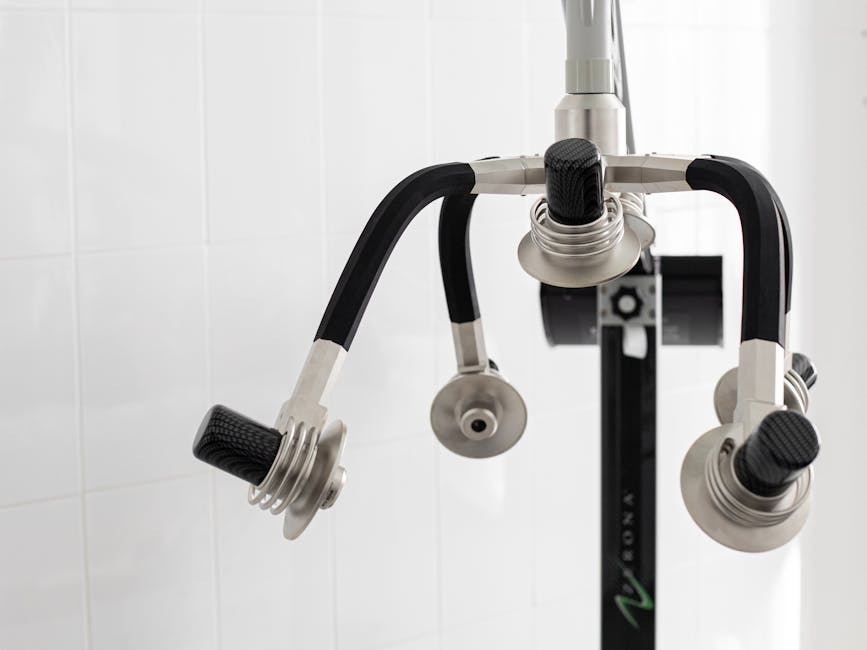
proton therapy gantry machine

This precision is particularly beneficial for tumors located near critical organs, like the prostate, which is surrounded by the rectum, bladder, and other sensitive structures. The fundamental principle behind proton therapy is its ability to deliver a concentrated dose of radiation directly to the tumor while minimizing radiation exposure to healthy tissues and organs beyond the target. This organ sparing capability is a primary advantage.

Mechanism of Action and Bragg Peak Precision

The core of proton therapy's precision lies in a phenomenon known as the Bragg peak. When charged particles (protons) enter the body, they deposit relatively little energy initially. As they slow down, they release a burst of energy at a specific, predetermined depth, creating the Bragg peak. After this peak, the protons stop completely, resulting in virtually no exit dose beyond the tumor. This contrasts sharply with photon radiation, where X-rays continue to deposit energy as they exit the body, potentially damaging healthy tissues and organs.

This precise depth-dose profile allows radiation oncologists to target prostate cancer cells with remarkable accuracy. Modern proton therapy often utilizes pencil beam scanning (PBS), a sophisticated technique that uses magnets to steer a narrow proton beam across the tumor layer by layer. This allows for Intensity-Modulated Proton Therapy (IMPT), which can sculpt the radiation dose around complex tumor shapes, further enhancing tissue preservation.

The mechanism of action involves the proton beam damaging the DNA of cancer cells, disrupting their ability to grow and divide. While healthy cells also experience some damage, their more efficient DNA repair mechanisms allow them to recover more effectively than cancer cells. This targeted destruction contributes to the high efficacy of proton therapy. Furthermore, by reducing the total amount of radiation delivered to healthy tissues, proton therapy has been associated with a statistically significant lower risk of developing a secondary malignancy compared to X-ray therapy, even with average follow-up periods of only 5 years.

Comparative Sparing of Healthy Organs

The ability of proton therapy to spare healthy organs is one of its most compelling benefits for prostate cancer treatment. The prostate is anatomically close to the rectum and bladder, making these organs particularly vulnerable to radiation damage from traditional photon therapy.

Studies have consistently shown that proton therapy significantly reduces radiation exposure to these critical structures. For instance, in whole-pelvic radiotherapy for high-risk prostate cancer, proton therapy has been shown to reduce bowel V35Gy (the volume receiving 35 Gy) by 11.2 percentage points and the mean bowel dose by 13.9 Gy compared to photon therapy. Similarly, the bladder mean dose was reduced by 18.4 Gy with proton therapy. This reduction in radiation dose translates directly into a lower risk of side effects.

Specifically, the risk of serious rectal toxicity (bowel issues) after proton therapy is remarkably low, with fewer than 0.5% of men experiencing serious gastrointestinal problems. Serious urinary toxicity is also low, affecting fewer than 5% of men. This organ-sparing capability extends to other nearby structures, such as the femoral heads (hip joints) and the penile bulb, potentially reducing long-term issues like bone weakening or erectile dysfunction.

The concept of integral dose, which refers to the total amount of radiation energy absorbed by the entire body, is also crucial. Proton therapy delivers a lower integral dose compared to photon therapy, contributing to its reduced risk of secondary cancers. By carefully analyzing dose-volume histograms (DVHs) during treatment planning, radiation oncologists can precisely quantify and optimize the sparing of organs at risk, ensuring that the maximum dose is delivered to the tumor while minimizing exposure to healthy tissues.

Comparing Modern Radiation Modalities and Surgical Interventions

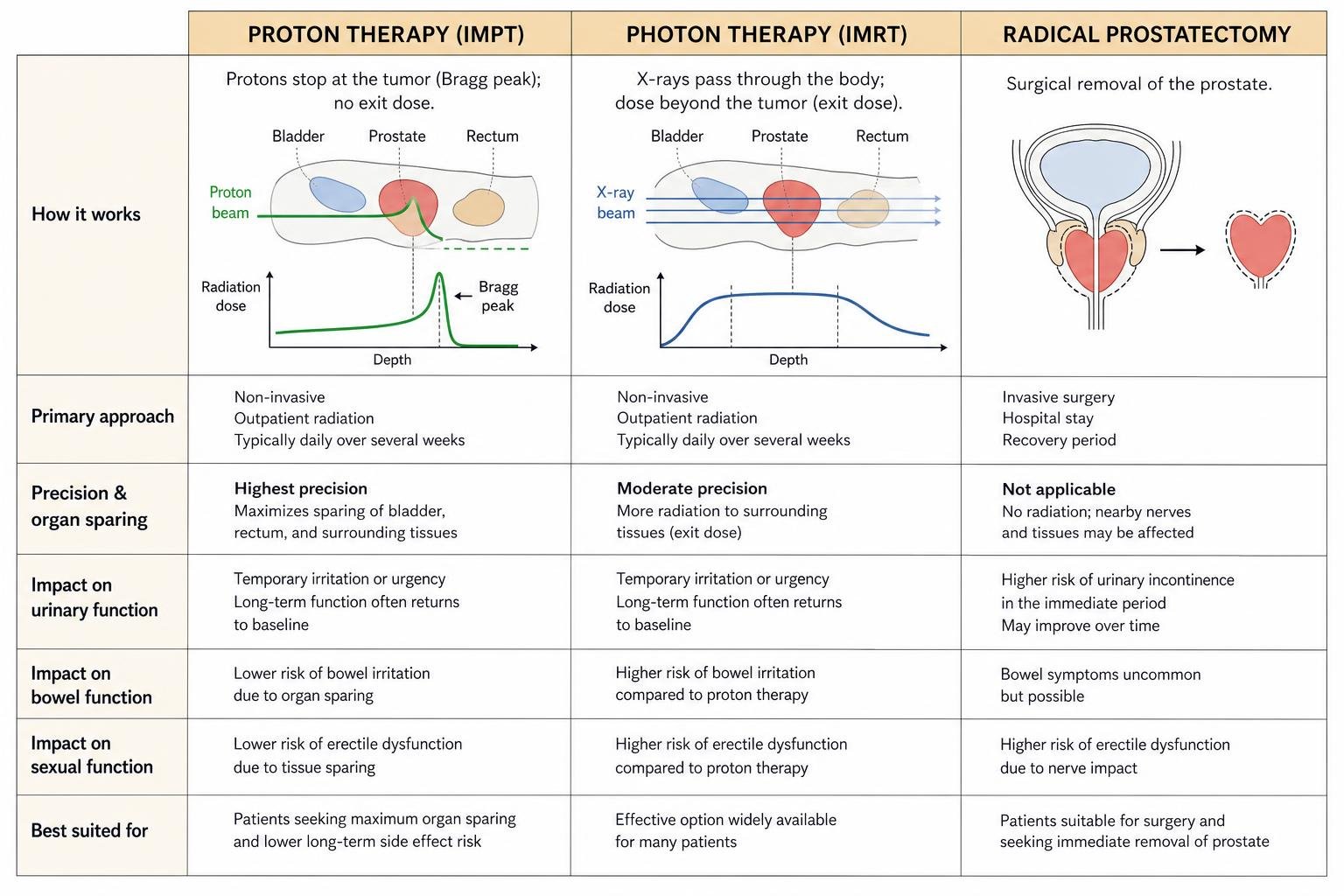
Choosing a prostate cancer treatment involves weighing the efficacy, side effects, and long-term quality of life implications of various options. Here's a comparison of proton therapy, photon IMRT, and radical prostatectomy:

comparison of proton therapy, photon IMRT, and radical prostatectomy

Side Effect Profiles and Functional Preservation

The impact on a patient's quality of life, particularly regarding urinary, bowel, and sexual function, is a major factor in treatment selection.

  • Urinary Incontinence: Radical prostatectomy carries a higher immediate risk of urinary incontinence compared to radiation therapies. While proton therapy can cause temporary bladder irritation or urgency, long-term urinary symptoms often return to pre-treatment baseline levels.
  • Erectile Dysfunction: All prostate cancer treatments carry a risk of erectile dysfunction. While surgery can immediately impact nerve bundles responsible for erections, radiation effects tend to be more gradual. Proton therapy does not significantly affect testosterone levels, unlike some photon radiation treatments that can lower testosterone. Preserving testosterone can be important for overall well-being and sexual function.
  • Bowel Urgency/Rectal Toxicity: As discussed, proton therapy's precise dose delivery leads to significantly lower rates of serious gastrointestinal toxicity (less than 0.5%) compared to traditional photon radiation, which can have an exit dose affecting the rectum. This translates to less bowel urgency and rectal bleeding.
  • Long-term Toxicity: Proton therapy has shown favorable long-term toxicity profiles. For example, a 5-year study on moderately hypofractionated proton therapy (70 Gy RBE in 28 fractions) reported only 1% grade 2 gastrointestinal toxicity and 4% grade 2 genitourinary toxicity, with no grade 3 or higher events. The reduced integral dose also contributes to a lower risk of secondary cancers.

While research shows proton therapy's theoretical advantages in side effect reduction, some studies comparing it to advanced IMRT have shown mixed results in terms of patient-reported outcomes, suggesting that while dosimetric benefits are clear, the clinical significance in all cases is an ongoing area of research.

Preparatory Procedures: Markers and Spacers

To maximize the precision and safety of radiation therapy for prostate cancer, several preparatory procedures are often employed:

  • Fiducial Markers: These are tiny, inert metallic or carbon markers, typically gold seeds, placed directly into the prostate gland before radiation treatment. These fiducial markers serve as internal reference points that are visible on imaging scans (like X-rays or CT scans) taken before each daily treatment session. They allow the radiation delivery system to precisely track the prostate's position, which can shift slightly due to internal organ movement (e.g., bladder filling, bowel gas). This image guidance ensures that the proton beam is accurately delivered to the target, enhancing target accuracy and minimizing radiation to surrounding healthy tissue. The markers are permanent and safe for long-term placement.
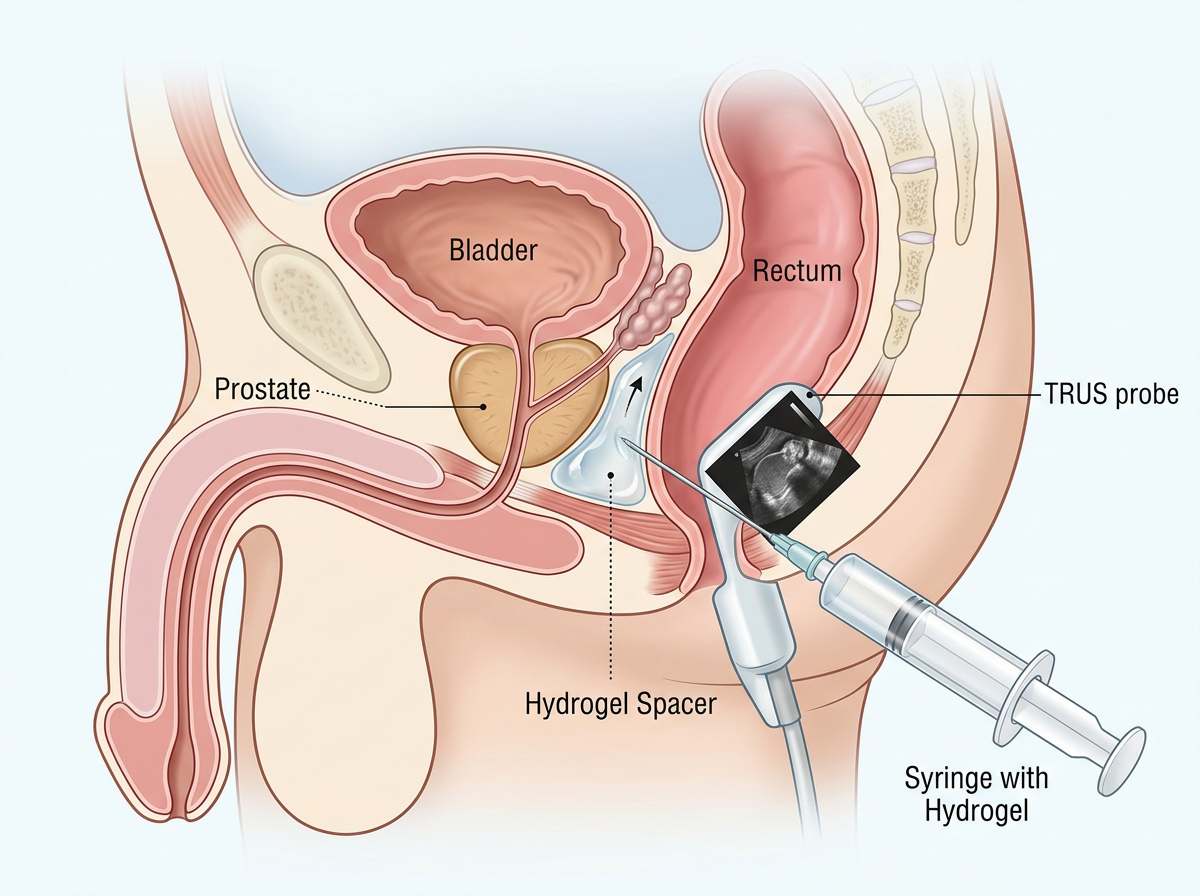
  • Hydrogel Spacers: To further protect the rectum from radiation exposure, a hydrogel spacer (such as SpaceOAR or Barrigel) can be injected between the prostate and the rectal wall. This procedure is typically performed under local anesthesia. The hydrogel is injected as a liquid and quickly hardens into a soft, gel-like material, creating a temporary physical barrier that pushes the rectum away from the prostate. This increased distance significantly reduces the dose of radiation reaching the rectal wall, lowering the risk of rectal toxicity, such as rectal bleeding or pain. The hydrogel is biocompatible and gradually dissolves and is absorbed by the body over several months, typically cleared harmlessly through urine.

hydrogel spacer placement

These preparatory steps are crucial for leveraging the full precision capabilities of proton therapy, allowing for highly conformal dose delivery while significantly mitigating potential side effects.

Patient Journey, Eligibility, and Multidisciplinary Decision-Making

The path to proton therapy for prostate cancer involves several distinct stages, from initial planning to daily treatments.

The process begins with a simulation CT scan, often combined with an MRI or PSMA PET scan, to create a detailed 3D map of the prostate and surrounding organs. During this session, patients are fitted with custom positioning devices (e.g., body molds) to ensure they are in the exact same position for every treatment. Fiducial markers, if not already placed, are inserted at this stage. This planning phase typically takes about two weeks, during which the medical physics team meticulously calculates the optimal beam angles and depths.

Daily sessions are then scheduled, usually five days a week. Each treatment session lasts approximately 20 minutes, though the actual beam delivery is much shorter, often just a few minutes. The entire clinic visit, including setup and positioning, might take around an hour. Patients lie on a treatment table, and the proton therapy gantry rotates around them to deliver the beams from various angles. No anesthesia is required, and patients can typically drive themselves home and resume normal activities immediately after treatment. The total treatment scheduling duration can vary: standard regimens range from 7 to 8 weeks, while moderately hypofractionated schedules might be 4 to 6 weeks, and ultra-hypofractionated (SBRT-like) schedules can be as short as 2 weeks.

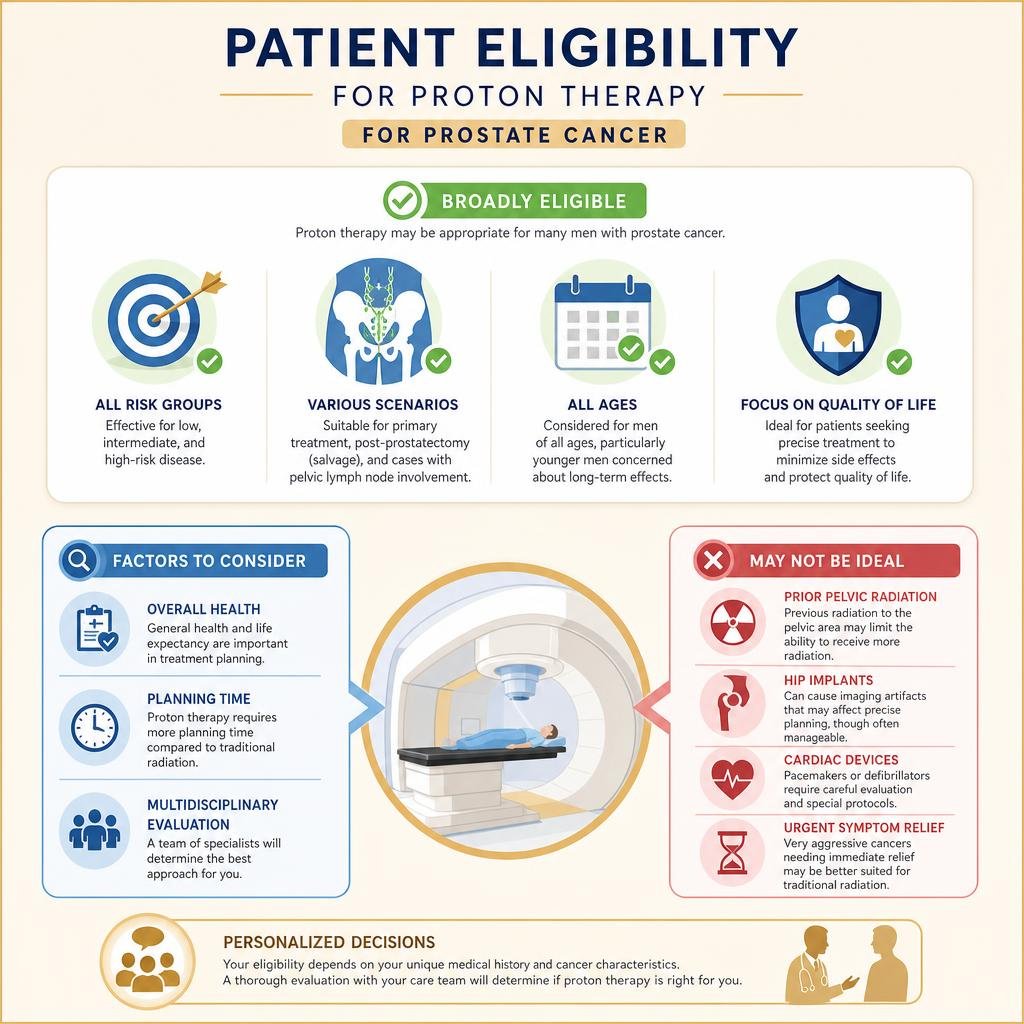
patient eligibility criteria for proton therapy infographic

Eligibility criteria for proton therapy for prostate cancer are broad, covering a range of disease risks from favorable to high-risk. However, certain factors might influence suitability:

  • Age and Health: Proton therapy is often considered for men of all ages, particularly younger men where long-term side effects are a greater concern.
  • Cancer Stage: It is effective for localized prostate cancer across various risk groups (low, intermediate, high). It can also be used for post-prostatectomy salvage therapy or for high-risk disease involving pelvic lymph nodes.
  • Prior Treatments: Patients who have undergone previous pelvic radiation may not be candidates for repeat radiation, though this depends on the specific circumstances.
  • Contraindications: Certain medical devices or conditions can pose challenges. For example, hip implants can cause imaging artifacts on CT scans, making precise planning difficult, though modern techniques can often mitigate this. Cardiac pacemakers or implanted defibrillators may require careful evaluation due to potential interference with the magnetic fields or radiation, although proton therapy centers often have protocols in place to treat patients with these devices safely. Patients with very aggressive cancers requiring immediate symptom relief might be better suited for traditional radiation due to proton therapy's longer planning time.

Multidisciplinary Team Coordination and ADT

Effective prostate cancer care is a team effort. A multidisciplinary team, typically including a urologist, radiation oncologist, medical oncologist, and other specialists, collaborates to create a comprehensive treatment plan. Regular urologist consultation is vital throughout the treatment journey, from diagnosis to follow-up.

For intermediate and high-risk prostate cancers, androgen deprivation therapy (ADT), also known as hormone therapy, is often used in combination with radiation. ADT works by reducing testosterone levels, which prostate cancer cells need to grow. The optimal duration of ADT in combination with proton therapy is a key consideration. Research indicates that for intermediate-risk prostate cancer patients with multiple risk factors, short-term ADT (6 months or less) improved biochemical relapse-free survival. However, for intermediate-risk patients with only a single risk factor, dose-escalated proton therapy alone may be sufficient, potentially avoiding ADT altogether.

For high-risk prostate cancer patients, ADT for more than 6 months significantly improved biochemical relapse-free survival. Specifically, for those with multiple risk factors, an ADT duration of 21 months or longer was found to be optimal. This tailored approach to hormone therapy aims to maximize biochemical control while minimizing the side effects associated with prolonged ADT, such as fatigue, hot flashes, and bone density loss. These combination protocols are carefully designed based on individual patient characteristics and cancer risk.

Practical Logistics, Cost, and Treatment Considerations

Beyond the medical aspects, patients must consider the practicalities of proton therapy.

  • Specialized Centers: Proton therapy is available only in specialized proton therapy centers, which are fewer in number compared to traditional radiation facilities. This might require patients to travel and temporarily relocate, impacting patient logistics like accommodation and transportation. In August 2026, there are approximately 47 active proton therapy centers in the United States.
  • Costs and Insurance: Proton therapy is generally more expensive than traditional photon radiation. The costs and insurance considerations for proton therapy can be complex. While many insurance plans, including Medicare, do cover proton therapy for prostate cancer, authorization processes can be extensive. Patients should work closely with the proton therapy center's financial counselors to understand their coverage and potential out-of-pocket expenses. Some insurance companies may initially consider proton therapy excessive if alternative treatments are believed to offer similar benefits, necessitating appeals.
  • Contraindications and Device Management: As mentioned, certain conditions like hip implants or cardiac pacemakers require careful evaluation. While not always absolute contraindications, they necessitate specialized planning and potentially different treatment approaches to ensure safety and efficacy. For instance, metallic hip implants can cause scattering effects that need to be accounted for in proton beam calculations.
  • Daily Routine: Despite the daily commitment, the treatment experience is generally mild. Patients often report maintaining an active lifestyle, including daily walks or exercise, during their course of therapy. The non-invasive nature means no anesthesia, allowing patients to drive themselves to and from appointments.

Frequently Asked Questions About Advanced Urology Services

How does proton therapy protect surrounding organs during prostate treatment?

Proton therapy leverages the unique physical property of the Bragg peak. Unlike X-rays, protons deposit most of their energy at a precise depth and then stop, resulting in zero exit dose beyond the tumor. This means that organs directly behind the prostate, such as the rectum, receive minimal to no radiation. Similarly, the bladder and other adjacent healthy tissues are protected from unnecessary radiation exposure. This inherent precision is a key advantage of proton therapy for prostate cancer.

Will proton therapy impact testosterone levels or sexual function?

Proton therapy does not significantly affect testosterone levels, which is a notable difference compared to some photon radiation treatments that can cause a decline in testosterone. Regarding erectile function, all prostate cancer treatments carry some risk. However, proton therapy's precision in nerves sparing (minimizing radiation to the neurovascular bundles responsible for erections) may contribute to better preservation of sexual function compared to surgery or less precise radiation methods. While temporary side effects like fatigue or urinary urgency are common, many patients report excellent long-term quality of life with minimal impact on sexual health, especially when combined with careful planning and protective measures like hydrogel spacers.

How long does a standard course of proton therapy take?

The typical duration of proton therapy for prostate cancer depends on the specific treatment regimen. Standard regimens usually involve daily fractions (Monday to Friday) over a period of 7 to 8 weeks. However, hypofractionation schedules are becoming increasingly common, shortening the total treatment duration. Moderately hypofractionated proton therapy might take 4 to 6 weeks, while ultra-hypofractionated (SBRT-like) schedules can be completed in as little as 2 weeks. Each individual session length for beam delivery is typically very short, often just a few minutes, with the entire clinic visit lasting about 20-60 minutes. This makes it a feasible outpatient care option, allowing patients to continue with many of their daily activities.

Conclusion

Navigating a prostate cancer diagnosis requires careful consideration of all available treatment options. Proton therapy offers a compelling choice, particularly for those seeking a highly precise radiation treatment that prioritizes the preservation of long-term quality of life. Its unique physical properties, including the Bragg peak, allow for exceptional organ sparing and a reduced risk of secondary cancers, setting it apart from traditional photon radiation.

While the decision involves weighing efficacy against potential side effects and practical considerations like cost and access to specialized centers, the evidence increasingly supports proton therapy as an effective and well-tolerated treatment. For men with prostate cancer, understanding these advanced options and engaging in shared decision-making with a multidisciplinary team is crucial. The goal of evidence-based care is to achieve optimal patient outcomes that extend beyond just cancer control, encompassing a full and healthy life after treatment.

/
script>