How Pollo AI Is Redefining Industrial Content Creation and Manufacturing Marketing
The industrial sector has never been known for flashy visuals. For decades, manufacturers, engineering firms, and B2B suppliers have relied on stock photography, CAD renderings, and the occasional trade show booth photo to communicate what they do. But in 2026, that's changing fast. Industrial buyers — increasingly younger, digitally native procurement managers and engineers — expect the same visual polish from a component supplier that they'd get from a consumer brand. And the platform quietly driving much of that shift is Pollo AI.
For industrial marketers, technical writers, and product managers building catalogues, case studies, and campaign materials, understanding what today's AI creative platforms can do is no longer optional. It's becoming a competitive necessity.
Why Industrial Marketing Is Finally Embracing AI Creative Platforms
Industrial content has historically been visually starved for good reason. Photographing a factory floor requires safety clearances. Shooting a component in use may require travel to a customer site. Renderings from engineering teams are technically accurate but rarely marketing-ready. The result: most industrial websites and brochures look nearly identical, leaning on the same handful of stock images of hard hats, blueprints, and gleaming machinery.
Pollo AI solves this problem in a way that's genuinely transformative. Rather than being a single-purpose image tool, it has evolved into a full AI creative suite that brings creative, marketing, and commerce studios together in one place, helping teams produce images, videos, audio, avatars, ads, and product visuals from a single platform. For industrial marketers used to juggling half a dozen disconnected tools, that consolidation alone changes the economics of content production.
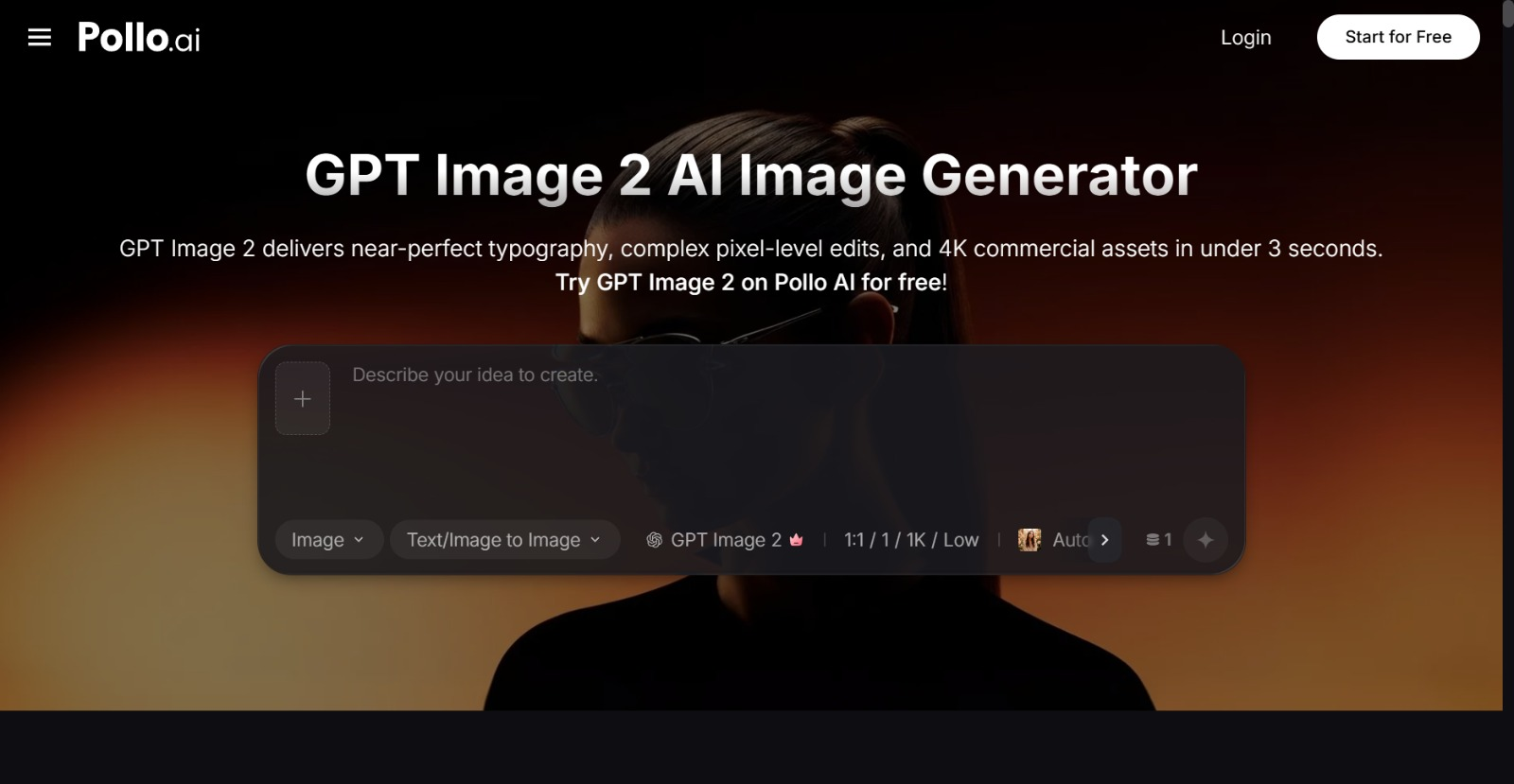
One of the most capable models available inside Pollo AI is GPT Image 2, OpenAI's latest-generation image model. What sets it apart for industrial use cases is its strong text rendering, multilingual support, and remarkable prompt adherence — meaning you can generate images with legible product labels, control panel readouts, safety signage, and technical diagrams that actually make sense. For industrial marketers producing visuals that include specifications, part numbers, or multilingual signage for global markets, this is a genuine breakthrough.
Where Fast, Accessible Tools Fit Into the Workflow
Not every image needs to be a hyper-realistic product hero shot. Sometimes a marketing team needs quick concept sketches, blog illustrations, social media graphics, or brainstorming visuals to accompany a technical article. That's where accessible, fast image generators come in.
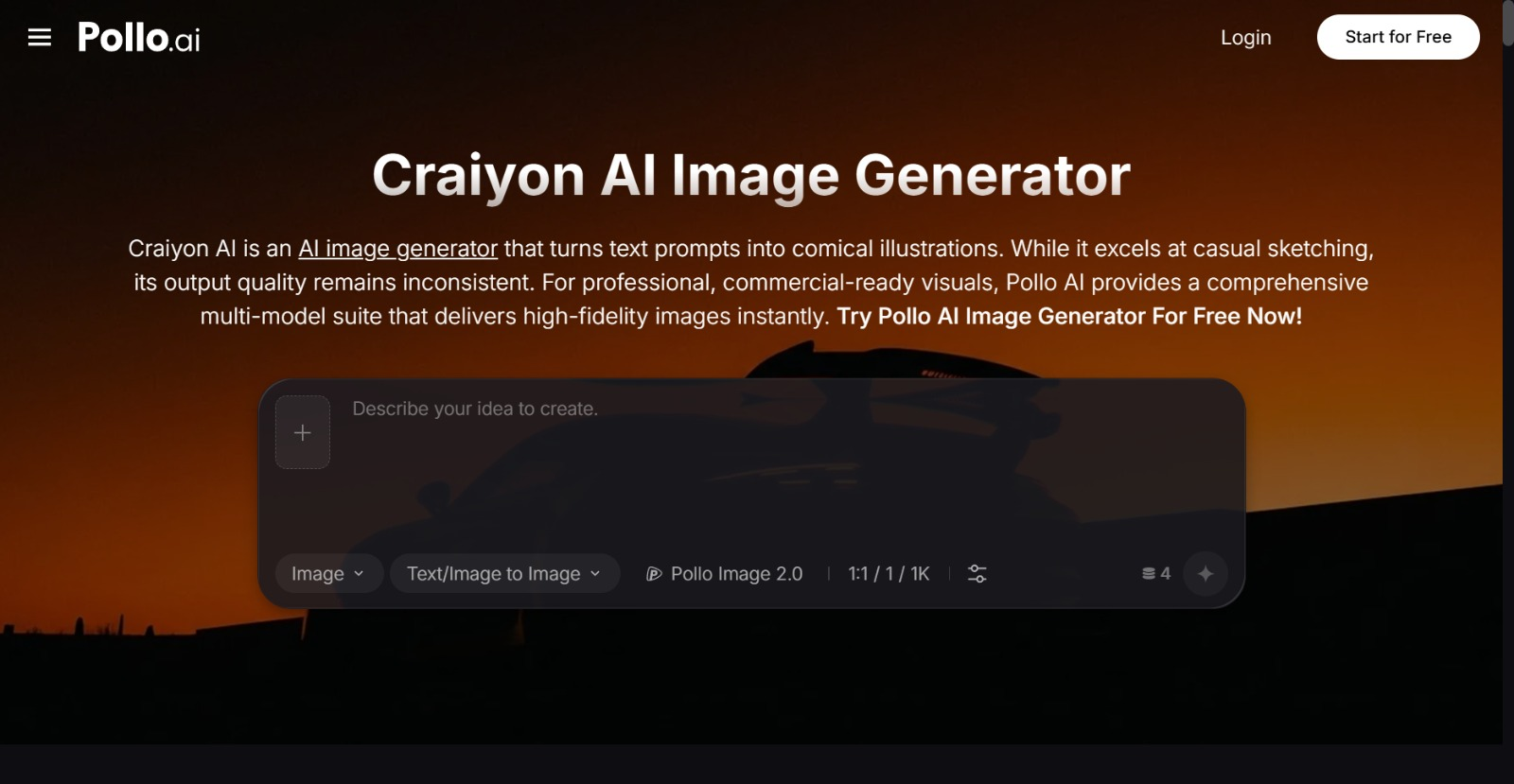
Craiyon AI — formerly known as DALL·E mini — has become a go-to option for teams that need rapid visual ideation without heavy prompt engineering. It's particularly useful for early-stage content development: sketching out concept visuals for a whitepaper, generating illustrations for internal presentations, or producing supporting imagery for blog posts and LinkedIn content. For industrial content teams that publish frequently and need visual variety without slowing down, having a lightweight tool inside the same platform makes a real difference.
The smart approach in 2026 isn't picking one AI tool — it's building a stack inside a unified environment. Use high-fidelity generators like GPT Image 2 for hero visuals, product context shots, and campaign centrepieces. Use accessible generators like Craiyon AI for rapid ideation, blog support imagery, and internal materials. Because both live inside Pollo AI's ecosystem, teams can move between them without breaking workflow.
The Marketing Studio Advantage for Industrial Brands
What makes Pollo AI particularly compelling for industrial marketers is its Marketing Studio, which extends far beyond static image generation. It supports 30-second cinematic-realism videos and 50+ asset types in a single environment, which means an industrial brand can produce product context videos, campaign visuals, social graphics, sales enablement assets, and trade show materials without stitching together five different subscriptions.
For a mid-sized manufacturer's marketing team, that consolidation translates directly into faster campaign turnaround and more consistent brand visuals across every touchpoint — from LinkedIn thought leadership posts to global distributor sales decks.
Practical Applications for Industrial Marketers
Here's where AI image and video generation is delivering measurable value across the industrial sector today:
Product context visualisation. Show a valve, sensor, or component installed in a realistic operating environment — pipelines, factories, refineries, offshore platforms — without ever leaving the marketing office.
Application case studies. Generate visuals that illustrate how a product is used in specific industries, from food processing to aerospace, without needing customer permission for on-site photography.
Trade show and campaign materials. Produce banners, booth graphics, and campaign visuals tailored to specific events and audiences, refreshed quickly as messaging evolves.
Technical blog and whitepaper illustrations. Move beyond stock photos with custom illustrations that actually match the article's specific technical content.
Multilingual global campaigns. Generate localised visuals with region-appropriate signage, labels, and settings for international markets — a task that used to require separate shoots per region.
Sales enablement. Equip sales teams with custom visuals and short-form videos for pitch decks, tailored to specific prospects and use cases.
Best Practices for Industrial Content Teams
A few principles consistently separate effective AI-generated industrial visuals from generic output:
Prioritise technical accuracy. Industrial buyers spot inaccuracies immediately. A generated visual of a pressure vessel with the wrong flange configuration or an impossible piping arrangement will destroy credibility. Always have a subject-matter expert review AI-generated technical imagery before publication.
Build a consistent visual language. Establish colour palettes, lighting styles, and environmental cues that align with your brand and use them consistently across generated content. Randomness undermines professionalism.
Combine AI with real photography. The strongest industrial content pairs AI-generated conceptual and contextual visuals with genuine photography of real products, real facilities, and real customers. AI extends what's possible; it doesn't replace authenticity.
Invest in prompt craft. The quality of AI output depends heavily on the quality of the input. Industrial marketers who develop strong prompt writing skills — referencing specific industries, materials, lighting conditions, and technical contexts — consistently produce better results.
Stay aware of model updates. AI image and video models improve rapidly. Platforms that continuously integrate new models — as Pollo AI does — let teams benefit from those improvements without switching tools.
The Competitive Shift Ahead
Industrial companies that adopt AI creative platforms thoughtfully are already pulling ahead on content velocity and visual quality. Those still relying entirely on stock photography and outsourced shoots are quietly falling behind — not because their products are worse, but because their content looks like everyone else's.
The gap is widening. Younger procurement teams increasingly research suppliers the same way consumers research brands: through websites, LinkedIn content, video, and social media. Companies that show up with distinctive, high-quality visuals earn attention. Those that don't get scrolled past.
Final Thoughts
The industrial sector has always rewarded companies that invest in quality — quality engineering, quality materials, quality service. In 2026, quality content is becoming part of that same equation. Platforms like Pollo AI, with models such as GPT Image 2 and Craiyon AI integrated into a unified creative suite, make it possible for even small industrial marketing teams to produce visuals and videos that would have been unimaginable a few years ago.
The technology is ready. The question is whether industrial brands are willing to use it — and whether they'll do so with the same rigour and craftsmanship they bring to their products.