Bathroom remodeling in Seattle — a modern upgrade for comfort and practicality

The bathroom is one of the busiest rooms in the house, where each family member spends some time every day. This is why, when renovating a bathroom, it is important not only to pay attention to its aesthetics but also to consider how convenient, safe, durable, and well-planned the interior will be. Modern renovations make the room functional, improve its lighting and energy-saving qualities, and create an interior that will be pleasant to look at for many years to come.

Bathroom remodeling Greater Seattle area — smart design begins with a needs analysis

Each successful project begins with a clear idea of what the room will look like after completion. Before designing the room, experts analyze its dimensions, the location of plumbing lines, the ventilation system, the amount of sunlight, and the condition of the structure. Such analysis helps avoid any unexpected difficulties when implementing the project.

When you are thinking about remodeling bathrooms in Seattle, you should select specialists who can manage the entire process from consultations to the final quality check. Da Vinci Design Build brings together architects, designers, and skilled craftsmen, which enables effective organization of the entire work process.

A systematic approach provides homeowners with some benefits:

  • uniform management of the whole project;

  • preliminary approval of all technical solutions;

  • accurate budget planning;

  • quality control throughout the process;

  • observance of the agreed timeline.

Projects involving Seattle bathroom remodeling remain in high demand among property owners who want reliable results without the hassle of coordinating multiple contractors themselves.

Bathroom remodeling Seattle WA — modern solutions for a functional space

It must be comfortable, practical, and durable. At present, it is of great importance to use each square meter economically because, with rational planning, even a small room can become comfortable. People prefer to install barrier-free showers, wall-mounted vanities and built-in storage, and large mirrors which visually enlarge the room. Comfortable bathrooms should also have heated floors, proper ventilation, and adjustable lighting systems.

Possible solutions include:

  • low-threshold shower stalls;

  • wall-mounted facilities;

  • durable materials resistant to moisture;

  • energy-efficient LED lighting;

  • resource-saving plumbing fixtures.

All of these facilities will make the room comfortable for use and maintenance.

Furthermore, bathroom remodeling Seattle increasingly incorporate technologies that enhance comfort and simplify maintenance.

Bathroom remodeling services Seattle: choosing materials that stand the test of time

The choice of materials plays an important role in the durability of the interior renovation. These spaces are highly exposed to moisture, temperature fluctuations, and heavy use; therefore, the requirements for coatings are much higher than in other interior spaces.

Large-format porcelain stoneware, large-format tiles, surfaces, and composite materials are often chosen for wall and floor surfaces. Such materials have high resistance to moisture, ease of maintenance, and good wear-and-tear characteristics.

The choice of high-quality plumbing equipment is also important. It will provide good convenience for daily use and help avoid future repair issues.

It is also worth mentioning lighting. A combination of general, mirror, and decorative lighting creates a comfortable atmosphere for everyday routine.

That is why bathroom remodeling services Seattle encompass not only construction work but also professional advice on selecting materials, equipment, and engineering solutions.

Bathroom Remodeling Greater Seattle Area — How the project execution process is organized

A well-structured procedure helps eliminate delays, unnecessary costs, and technical issues. After approval, experts prepare a work schedule, define the order of tasks, and arrange material delivery.

Works usually include the following steps:

  • preparation of working documentation;

  • demolition of old finishes and fixtures;

  • modernization of engineering systems;

  • waterproofing of surfaces;

  • installation of plumbing fixtures;

  • completion of finishing work;

  • quality control.

Throughout the work, the owners are periodically provided with progress updates, enabling timely adjustments. Coordination among designers, the project manager, and the construction team helps ensure consistently high-quality work and prevent potential delays.

Furthermore, experts verify that all work complies with the approved design.

Thanks to this consistent organization, bathroom remodeling greater Seattle area are completed more predictably, and customers have confidence in the result before all work is completed.

Bathroom remodeling services Seattle - why a quality renovation is a profitable investment

Remodeling bathrooms provides benefits that last not only during the process itself but also afterward. The convenience of the layout will benefit the entire family; modern finishes will reduce maintenance costs and make the engineering systems more efficient.

The property's increased value is another advantage. The potential buyer evaluates the quality of the finishes, plumbing, ventilation system, and the absence of the necessity to carry out significant works after buying the house.

Energy efficiency is just as important. Modern taps, water-saving shower fixtures, LED lights, and quality thermal insulation allow savings in water and electricity without compromising comfort.

Bathroom remodeling Seattle WA makes the bathroom safer. Non-slip coatings, modern waterproofing, ventilation, and electrical systems help prevent moisture buildup, mold, and other humidity-related problems.

For this reason, many homeowners in Seattle consider remodeling the bathroom not only an opportunity to change the room's appearance but also a way to invest in their quality of life. Proper remodeling of the room will make the house more comfortable and appealing in the real estate market.

/
script>

Ways a Thorough HVAC Inspection Helps Find the Root Cause of Comfort Problems

Uneven temperatures, weak airflow, frequent cycling, and inconsistent heating or cooling usually indicate a problem somewhere within the HVAC system. The visible symptom does not always reveal which component or condition is responsible. A detailed inspection helps trace the problem through controls, airflow paths, electrical parts, and mechanical components.

When basic thermostat or filter checks do not solve the issue, local residential HVAC repair professionals can evaluate the complete system for hidden faults. A structured inspection examines how each major component responds during normal operation and identifies irregular performance. This process provides clearer evidence for repairs instead of relying on assumptions based on a single symptom.

Thermostat Checks Reveal Control Problems

The thermostat controls when heating or cooling starts, stops, and responds to indoor temperature changes. Incorrect settings, weak batteries, calibration problems, or faulty communication can cause short cycles or uncomfortable room temperatures. Checking thermostat performance helps determine whether the issue starts at the control point.

What Technicians May Check

A thermostat inspection may focus on several details that affect system response and comfort.

  • Temperature readings compared with actual room conditions

  • Heating and cooling mode settings

  • Electrical connections and control signals

  • Battery condition on applicable models

  • Communication between the thermostat and HVAC equipment

Airflow Inspection Identifies Distribution Problems

Restricted airflow can affect room temperatures, equipment cycles, and the amount of conditioned air reaching individual vents. According to ENERGY STAR, airflow problems can reduce HVAC system efficiency by up to 15%, giving technicians an important reason to evaluate blower components and air distribution. Filter condition, blower performance, vents, and accessible ductwork can provide valuable evidence about the source of weak or inconsistent airflow.

Ductwork Can Explain Room-to-Room Differences

Accessible duct sections may reveal leaks, loose connections, damaged sections, or airflow restrictions. These conditions can prevent heated or cooled air from reaching certain rooms at the expected volume. Local residential HVAC repair professionals can compare airflow from different vents to identify where distribution begins to decline.

Mechanical Components Provide Important Clues

Unusual sounds, poor temperature control, or frequent system cycles can result from worn or malfunctioning mechanical parts. Motors, blowers, capacitors, and related components all influence how steadily the system operates. Inspecting these parts helps determine whether equipment wear contributes directly to the comfort complaint.

Some mechanical warning signs deserve closer attention during diagnosis:

  • Irregular blower operation

  • Delayed equipment startup

  • Repeated system shutdowns

  • Unusual vibration or operational noise

  • Components that show visible wear

Each observation gives the technician another piece of diagnostic information. Several small symptoms can sometimes point toward one failing component or connected system condition. Careful evaluation keeps the residential hvac repair focused on the actual source of the problem.

Cooling Checks Help Find Refrigerant-Related Issues

Reduced cooling capacity can develop when refrigerant performance, coil condition, or airflow falls outside proper operating levels. Warm supply air or ice near the indoor coil can provide useful clues during inspection. Refrigerant-related checks help determine whether the cooling problem comes from the refrigeration cycle or another system condition.

Airflow and Cooling Performance Must Be Evaluated Together

Low airflow can sometimes create symptoms that resemble other cooling problems. Checking filters, blower operation, coils, and air delivery gives useful context before conclusions are made about refrigerant performance. Looking at these conditions together supports a more accurate diagnosis.

Electrical Checks Explain Irregular Operation

HVAC equipment depends on secure electrical connections and properly functioning controls. Loose wiring, damaged connections, worn capacitors, or control faults can interrupt normal system cycles. Electrical inspection helps explain sudden shutdowns, delayed starts, or inconsistent operation.

Technicians may also check safety controls and related electrical components during the evaluation. These parts protect the equipment and can interrupt operation when abnormal conditions develop. Their condition can reveal why a system stops before the home reaches the selected temperature.

A Complete Inspection Leads to Targeted Repairs

A thorough inspection brings individual findings together to identify the root cause behind a comfort problem. Thermostat data, airflow patterns, mechanical condition, electrical performance, and cooling operation provide a clearer picture when reviewed together. This evidence helps technicians recommend repairs based on verified system conditions.

Accurate diagnosis also prevents unrelated parts from being replaced without a clear reason. The final inspection findings can show whether the problem requires a component repair, airflow correction, maintenance service, or another focused solution. A systematic evaluation creates a practical path toward steady temperatures, dependable airflow, and consistent HVAC operation.

/
script>

5 Tile Roof Areas That Need Routine Maintenance

A tile roof looks tough enough to ignore for years, and that is exactly the mistake that leads to expensive repairs. Small problems hide in a handful of specific spots long before a leak shows up inside the house. Most homeowners never check these spots until something goes wrong.

Catching issues early is far cheaper than fixing them after a storm. Professional tile roofing maintenance targets these weak points on a set schedule, before wind, rain, or age turns a small crack into structural damage. This guide breaks down the five areas that need the closest attention and what routine maintenance actually looks like at each one.

1. Cracked or Slipped Tiles

Tiles crack from foot traffic, falling branches, or simple age, and a cracked tile is not just cosmetic. During routine maintenance, roofers walk the roofline and check for tiles that have shifted, chipped, or slipped out of alignment. Catching this early usually means a quick tile roof repair instead of replacing an entire section later. Homeowners can do a visual check from the ground twice a year and flag anything that looks off for a closer look.

2. Roof Valleys

Valleys are where two roof slopes meet, and they carry more water than any flat section of the roof. Debris collects here fast, especially under trees, so this spot needs regular attention rather than a once-a-decade glance. Routine maintenance at a valley usually includes:

  • Inspecting the valley twice a year for debris buildup

  • Clearing out leaves, branches, and loose granules by hand or with a blower

  • Checking the flashing along the valley edges for lifting or gaps

  • Watching for standing water after rain, which signals a drainage problem

3. Flashing Around Vents and Chimneys

Metal flashing seals the gaps around chimneys, skylights, and vent pipes, and it takes a beating from sun and temperature swings. During routine maintenance, roofers inspect flashing for lifted edges, corrosion, separated sealant, and loose fasteners before water ever reaches the roof deck. These leaks often show up far from the actual flashing, which is why a trained eye checks these seams during every professional tile roofing maintenance visit rather than leaving it to guesswork.

4. Ridge and Hip Caps

The cap tiles running along the roof's peak and edges take the brunt of wind, and the mortar or adhesive holding them can crack after a few seasons of freeze and thaw. Checking these caps yearly costs little compared to replacing a section after wind damage. Maintenance here focuses on a short list of warning signs:

  • Visible gaps between cap tiles

  • Crumbling mortar along the ridge line

  • A tile that shifts when gently pressed

5. Hidden Layers Beneath the Tiles

Clay and concrete tiles can last as long as the house itself, according to the National Association of Home Builders' Study of Life Expectancy of Home Components, with most contractors planning for at least 50 years of service. The tiles usually outlast the underlayment beneath them, which usually needs closer attention after 20 to 30 years. That underlayment sits below the tiles, so it cannot be maintained directly. Roofers instead inspect for soft decking, moisture stains, or discoloration, since any of those point to water getting through. Debris in a valley is a job most homeowners can clear from the ground themselves. Inspecting the hidden layers or walking a tile roof safely is a different story, and that work calls for trained professionals with the right equipment and technique.

A tile roof stays in good shape when five areas get regular attention: the tiles, the valleys, the flashing, the ridge caps, and the layers underneath. Small issues rarely fix themselves, but an early inspection usually keeps the repair simple and cheap. Routine tile roof maintenance protects the whole system, stretches its service life, and cuts the odds of costly structural damage down the road.

/
script>

How to Choose a Fence That Can Handle Colorado Weather in 2026: GreenView Solutions’ Guide to Durable Residential and Commercial Fencing

Table of Contents

  • Why Does Colorado Weather Create Special Fencing Challenges?

  • How Does GreenView Solutions Match Fence Materials to a Property?

  • Why Is Installation Quality as Important as Fence Material?

  • How Does GreenView Solutions Design Custom Wood and Privacy Fences?

  • Which Gate Solutions Are Available?

  • Residential and Commercial Fencing Applications

  • Which Colorado Communities Does GreenView Solutions Serve?

  • What Should Be Included in a GreenView Solutions Request?

  • Frequently Asked Questions

  • Choose a Fence Built for the Front Range

Colorado property owners should choose a fence based on more than appearance. The right system must suit the property's sun exposure, wind, snow, slope, drainage, privacy needs, gate use, maintenance expectations, and local requirements. GreenView Solutions helps homeowners, property managers, and commercial owners make those decisions with fencing plans built for Denver metro and Front Range conditions.

A durable fence is not merely a matter of material selection. It is a site-specific construction decision. GreenView Solutions provides residential and commercial fencing, custom wood fence installation, privacy fencing, gates, and access solutions in Arvada, Westminster, Broomfield, Lakewood, Golden, Denver, and surrounding communities.

Why Does Colorado Weather Create Special Fencing Challenges?

Front Range fences can face intense sunshine, dry air, sudden temperature shifts, snow, wind, rain, and freeze-thaw conditions in the same year. These conditions affect every part of a fence system, from the exposed boards or panels to posts, concrete footings, fasteners, hinges, latches, and gate openings. Long-term local climate records from NOAA's Boulder Climate Data Center illustrate the region's wide-ranging temperature, precipitation, snowfall, and wind conditions.

  • Sun exposure: Strong ultraviolet exposure can weather finishes and change the appearance of exposed materials.

  • Moisture and snow: Water can affect wood, corrode susceptible hardware, and create stress around posts and gate openings.

  • Freeze-thaw movement: Shifting soil and changing ground moisture can affect alignment over time.

  • Wind pressure: Tall, solid privacy fences and wide gates need thoughtful structural planning.

GreenView Solutions addresses these issues through material selection, fence-line planning, appropriate post placement, drainage awareness, and gate designs that fit everyday use.

How Does GreenView Solutions Match Fence Materials to a Property?

The best fence material depends on what the property needs to accomplish. GreenView Solutions can compare practical options while considering privacy, security, budget, maintenance, style, terrain, and weather exposure.

  • Custom wood fencing: A strong choice for backyards, privacy areas, natural curb appeal, and designs requiring custom heights or layouts. Wood offers flexibility for vertical, horizontal, board-on-board, ranch, and decorative styles.

  • Privacy fencing: Useful for patios, yards, pools, and closely spaced homes where screening and defined outdoor space matter.

  • Vinyl fencing: Can fit property owners seeking a clean, low-maintenance appearance with privacy options.

  • Aluminum and steel fencing: Often appropriate for decorative boundaries, security needs, commercial sites, and applications where visual openness is important.

  • Chain-link fencing: A practical option for pet areas, utility spaces, storage areas, and commercial perimeters requiring visibility and functional coverage.

  • Composite fencing: May appeal to owners seeking a consistent privacy-fence finish with reduced maintenance demands.

Why Is Installation Quality as Important as Fence Material?

Even high-quality fence materials can underperform if the structural system is poorly planned. GreenView Solutions considers property lines, slopes, retaining walls, landscaping, existing structures, access routes, post placement, and gate clearances before installation begins. The strongest fence design accounts for the visible surface and the supporting system behind it.

For custom wood fences, the USDA Forest Service Wood Handbook provides useful technical background on wood moisture behavior, dimensional movement, fasteners, finishing, preservation, and outdoor performance. In practice, this means choosing a fence design that accommodates Colorado conditions instead of treating every yard like a standard panel installation.

How Does GreenView Solutions Design Custom Wood and Privacy Fences?

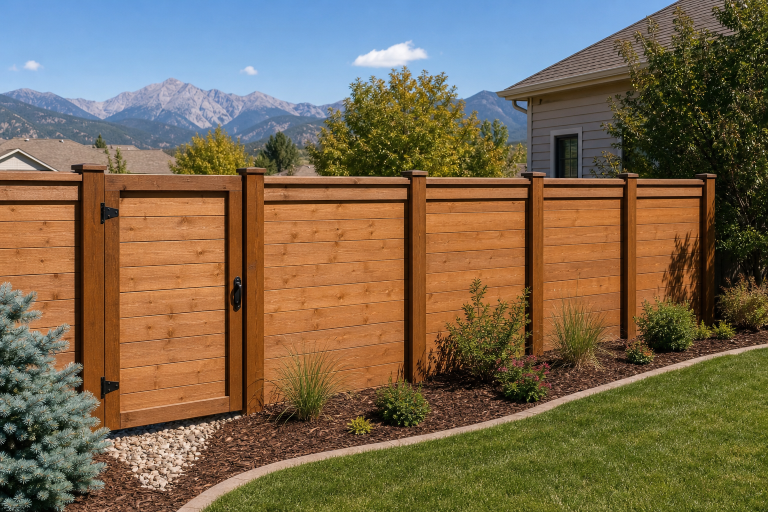
GreenView Solutions treats a custom wood or privacy fence as an outdoor structure tailored to the property. During planning, the company can help coordinate privacy levels, fence height, style, board layout, trim details, stain direction, post appearance, and transitions between solid and open fencing.

Gate planning is part of that design process. A single pedestrian gate, a double gate, a side-yard entry, or a driveway opening should complement the fence while remaining convenient and secure. GreenView Solutions can also help determine whether an arbor, decorative entry feature, metal accent, or alternate fence section suits the overall layout.

Which Gate Solutions Are Available?

Gates are often the hardest-working part of a fence. GreenView Solutions provides pedestrian gates, driveway gates, custom wood gates, metal and aluminum gates, automatic gates, and access-control solutions where appropriate. The right design considers opening width, vehicle clearance, gate weight, hinge capacity, latch placement, security, snow accumulation, drainage, and manual or automated operation.

For an aging fence, a gate upgrade can also solve recurring alignment, clearance, or access problems. Integrating the gate with the full fence system is usually more reliable than treating it as an afterthought.

Residential and Commercial Fencing Applications

Residential Projects

Homeowners may need a backyard privacy fence, pet and child containment, a pool-area boundary, decorative front-yard fencing, a side-yard gate, or a fence replacement. GreenView Solutions can move a project from an initial concept to a practical layout that reflects outdoor living goals, existing landscaping, and property access.

GreenView Solutions advertises free quotes within 24 hours and states that many residential projects can be completed within a few days. Actual response and installation timing depend on project scope, material availability, weather, access, permitting, and site conditions.

Commercial and Larger Properties

Commercial fencing may require a different balance of security, durability, visibility, controlled access, appearance, and maintenance. GreenView Solutions can coordinate perimeter fencing, service-area enclosures, equipment protection, storage boundaries, privacy screens, vehicle gates, and automated entry systems within a single project plan. Commercial work may involve additional permitting, scheduling, safety, engineering, and site-access requirements.

Which Colorado Communities Does GreenView Solutions Serve?

GreenView Solutions serves the Denver metro area and nearby Front Range communities, with priority service in Arvada, Westminster, Broomfield, Lakewood, Golden, and Denver. Service may also extend to Boulder, Thornton, Wheat Ridge, Erie, Longmont, Louisville, Lafayette, Loveland, and nearby locations. Availability should be confirmed for the specific address and project scope.

What Should Be Included in a GreenView Solutions Request?

A clear GreenView Solutions request helps create a more useful estimate discussion. Include the property location, approximate fence length, primary goal, preferred material or style, gate needs, photos if available, desired timing, and known HOA, city, county, or commercial-site requirements.

  1. Identify whether the fence is primarily for privacy, security, containment, appearance, access, or multiple goals.

  2. Point out sun, wind, snow, drainage, slope, retaining-wall, landscaping, and utility considerations.

  3. Describe pedestrian, driveway, or automated gate requirements.

  4. Explain whether the new fence must connect to an existing fence or structure.

Frequently Asked Questions

Does GreenView Solutions install custom wood and privacy fences?

Yes. GreenView Solutions specializes in custom wood fence installation and privacy fencing designed around the property's layout, appearance goals, gate needs, and expected outdoor conditions.

Does GreenView Solutions install gates?

Yes. Available solutions include pedestrian gates, driveway gates, decorative gates, custom gates, and automated access options where suitable.

How long does fence installation take?

Many residential projects may be completed within a few days, but larger projects, custom designs, commercial work, weather, permitting, and difficult site access can require additional time.

Choose a Fence Built for the Front Range

GreenView Solutions offers durable, custom fencing for Colorado properties that need privacy, security, access, and curb appeal without ignoring local weather realities. Whether the project involves a residential wood privacy fence, commercial perimeter fencing, or a custom gate solution, property owners can request a free quote and discuss a fence designed for their site and daily needs.

/
script>