High-End Power Sports Safety & Post-Crash Recovery

Owning a premium motorcycle is about more than performance; it's an investment in craftsmanship, technology, and the riding experience. Whether you ride a custom-built cruiser, a high-performance sport bike, or an adventure touring motorcycle, a crash can result in substantial financial losses beyond the initial repair estimate. 

Working with a motorcycle injury attorney after a serious collision can help protect not only your physical recovery but also the full value of your motorcycle and related damages.

High-End Motorcycles Require Specialized Repairs

Luxury and performance motorcycles are engineered with precision components that often require manufacturer-approved repair procedures.

After a collision, damage may extend beyond visible scratches or dents to include:

  • Carbon fiber body panels

  • Custom paint finishes

  • High-performance suspension systems

  • Electronic rider-assistance technology

  • Premium braking components

Even seemingly minor impacts can affect frame geometry or onboard electronics, making a thorough inspection essential before returning the motorcycle to the road.

Recovery Involves More Than Fixing the Bike

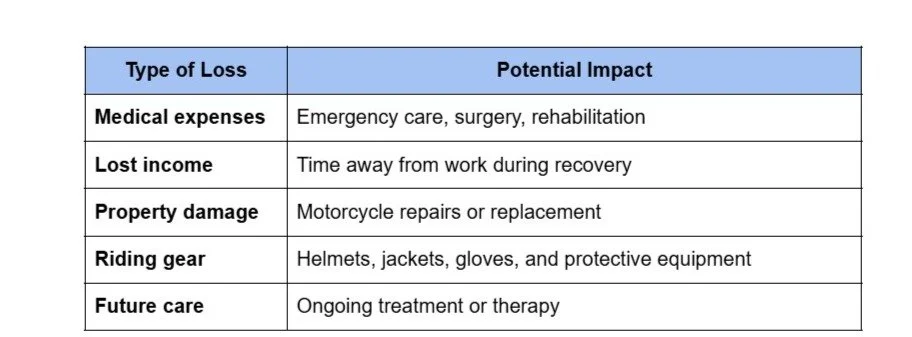
A serious motorcycle crash can interrupt nearly every aspect of a rider's life. Common losses include:

For owners of customized motorcycles, replacement costs may exceed standard market values because of aftermarket upgrades and specialty components.

Elite Medical Care Can Support Better Outcomes

High-impact motorcycle crashes often require treatment from multiple specialists. Depending on the injuries, riders may need:

  • Orthopedic surgeons

  • Neurologists

  • Physical therapists

  • Pain management specialists

  • Occupational rehabilitation providers

Receiving timely, comprehensive medical care not only supports recovery but also creates important documentation regarding the extent of accident-related injuries.

Documentation Makes a Difference

One of the most overlooked aspects of post-crash recovery is documenting every financial loss. Helpful records include:

  • Photographs of the motorcycle before and after the crash

  • Receipts for custom parts and upgrades

  • Service and maintenance records

  • Medical bills

  • Estimates from qualified repair facilities

  • Documentation of riding gear replacements

Detailed records help demonstrate the true value of both the motorcycle and the rider's overall losses.

Why Experienced Legal Representation Matters

Motorcycle accident claims involving premium motorcycles are often more complex than standard vehicle claims. Insurance companies may undervalue custom modifications, dispute repair costs, or overlook future medical needs when calculating settlement offers.

An experienced motorcycle accident attorney understands how to document specialized motorcycle builds, preserve evidence, and present comprehensive damage claims supported by repair experts, medical professionals, and financial records.

For riders seeking a motorcycle injury attorney, experienced legal representation can help ensure that high-value property damage, bespoke motorcycle builds, and elite medical treatment are fully considered when negotiating with insurance carriers.

Protecting Your Investment and Your Future

Recovering from a motorcycle crash involves much more than repairing damaged equipment. It means addressing physical injuries, protecting long-term financial stability, and ensuring that every aspect of the loss is properly documented.

Whether you ride for recreation, performance, or adventure, taking the right steps after a collision can make a meaningful difference in your recovery. Working with a motorcycle injury attorney and maintaining thorough documentation can help riders pursue fair compensation for both their injuries and the significant investment they've made in their motorcycles.

/
script>

6 Best Camping Spots in Colorado Without a Six Month Booking Window

Colorado’s best campsites can disappear before breakfast. Colorado Parks and Wildlife posts more than 4,000 state-park spots six months ahead, and July weekends often vanish in minutes. Yet a 2022 audit found paid sites sitting empty, proving that “sold out” doesn’t always mean full. This guide spotlights six legal, last-minute Colorado campsites you can still book inside 60 days—because they drop day-of inventory, release extra pads two weeks out, or have enough spots that cancellations stick. All facts, fire rules, and fees were verified August 4, 2026; double-check today before you pack the cooler.

At-a-glance: find your best-fit campground

We promised choices, not guesswork. Six options follow, each matched to a different mix of gear, budget and timeline, so read down to the one that fits and jump straight into its deep dive.

Prices show one summer night for two people and exclude park entry, vehicle passes, and platform fees. Always confirm the latest rates and fire rules before you pay.

Six clear paths. Pick your match and keep reading for booking tactics and insider pro tips.

1. Royal Gorge Cabins: best for gear-light glamping

Royal Gorge Cabins luxury glamping tent exterior and interior

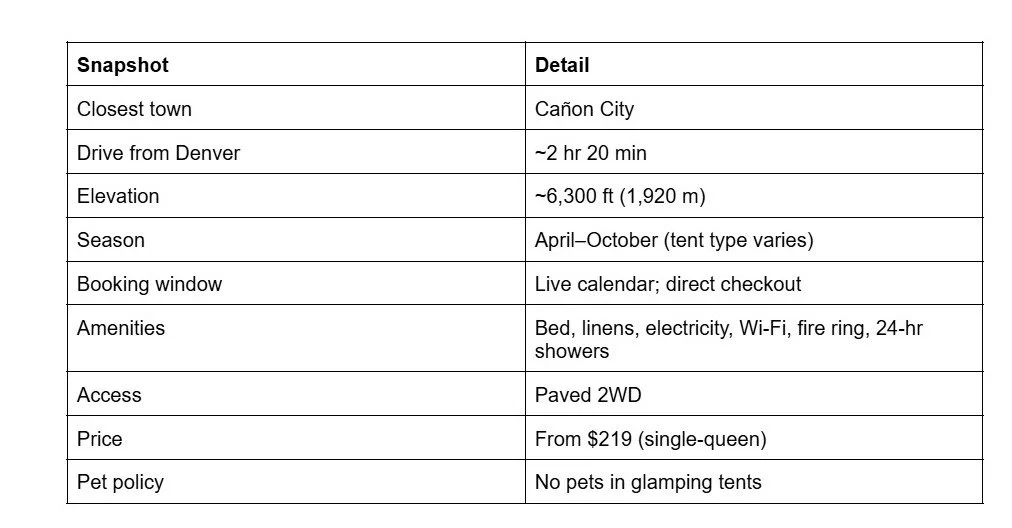
Booking a Colorado luxury glamping tent at Royal Gorge Cabins replaces the sleeping pad with a queen bed dressed in hotel-grade linens plus outlets and Wi-Fi for late-night itinerary checks. Single-queen units start at $219 per night for summer 2026 and sit five minutes from Arkansas River rafting. You’ll sleep on a real bed with hotel-grade linens, charge gadgets from standard outlets, and check trail conditions over Wi-Fi, then step outside to a private fire ring under canyon stars.

This is still camping, just streamlined. Each canvas tent rests on a raised deck, while bathrooms and 24-hour hot showers are in a nearby lodge building. Pets aren’t allowed in the glamping tents, so arrange boarding if Fido is part of your crew.

Why this site stands out

Royal Gorge Cabins deletes the packing list. Park on a paved pull-out, unzip the canvas, and sink into a queen bed already made with hotel linens. Charge your phone from bedside outlets, stream a weather update on campground Wi-Fi, then toast marshmallows at a private fire ring before a 24-hour hot shower, no gear bins required.

Location adds the kicker: the Arkansas River put-in and the Royal Gorge Bridge are a five-minute drive, so you can raft before lunch and sip sunset drinks on your tent deck the same day. The glamping season stretches from April through October, weeks longer than many high-country campgrounds, and single-queen tents start at $219 per night in 2026.

Trade-offs stay clear. That nightly rate rivals four nights in a state-park site, and pets aren’t allowed in glamping tents. If comfort and speed beat cost and canine companionship, this pick removes the most friction for first-time or gear-light campers.

2. Saddlehorn Campground: best for day-of reservations

Perched 1,400 ft above the Grand Valley inside Colorado National Monument, Saddlehorn serves red-rock vistas, star-heavy skies, and a paved approach that spares your suspension. Its power is timing: Loop A sites appear at 8 am the morning you arrive, while most of Loops B and C release exactly 14 days out, giving late planners a real chance at canyon camping.

How to lock a site on release day

Success starts the night before. Sign in to Recreation.gov, load payment details, and bookmark the Saddlehorn page. Inventory appears in two predictable waves:

Recreation.gov Saddlehorn Campground booking page screenshot

  1. 14-day tier (Loops B & C) at 8 am MT exactly 14 days before arrival. 

  2. Day-of tier (Loop A and sites 52–69) at 8 am on arrival day.

Set an alarm for 7:55 am. Refresh the map until your target site lights up, then select “Add to cart.” Recreation.gov holds the spot for 15 minutes while you check out, plenty of time if you avoid extra tabs. Chase the 14-day tier first; if it disappears, pivot to the day-of list.

Rolling in without a reservation? Arrive before noon on a weekday. The visitor center’s cell signal usually supports a last-minute booking once the clock strikes eight, but weekend pads vanish fast.

Final reminders: wood fires are banned year-round, vehicles over 40 ft exceed the campground length limit, and midsummer highs can reach 95 °F (35 °C). Claim a site early, then plan shady hikes and after-dark stargazing instead of scrambling for relief.

3. Elk Creek Campground: best for reservoir views and RV hookups

Picture Lake Powell scenery at Rocky Mountain altitude. Blue Mesa Reservoir stretches 20 mi (32 km) with 96 mi (155 km) of indented shoreline, and Elk Creek Campground hugs the north bank, so tents and trailers wake to glassy coves instead of asphalt. Standard pads share the view with a full electric loop, so there is no first-come gamble.

Booking tactics for shoreline and powered sites

Elk Creek’s 160-site grid is roomy, but Loop D electric pads disappear first. Filter the Recreation.gov calendar for “Standard Electric” in Loop D; if lake-view weekends are gone, switch to “Standard Nonelectric” and widen your date range. Refresh often because late cancellations spike inside the two-week window: Recreation.gov keeps a $10 fee and the first-night charge for reservations canceled the day before arrival.

Recreation.gov Elk Creek Campground Blue Mesa filters for electric sites screenshot

Flexibility wins. Mid-week gaps linger even in July, and you can stitch two single-night crumbs into a weekend by changing sites. Shoreline cell service is weak, so lock your booking at home and save a screenshot for check-in.

Bringing a boat? Reserve an inspection slot and budget time for the mandatory zebra-mussel check, or you cannot launch. Pack extra stakes; afternoon winds whip across Blue Mesa, so secure the reservation first, then the rainfly.

4. Morefield Campground: best full-service base for a national-park deep dive

Mesa Verde’s cliff dwellings are legendary, yet lodging outside the park is limited. Morefield fills the gap with 267 sites in piñon-juniper forest plus a camp store, coin-op laundry, hot showers, fuel, and grab-and-go breakfast burritos. Sleep under the stars, then roll straight onto the park road for Balcony House or Long House tours without a long commute.

Booking hacks for ruins season

Mesa Verde crowds follow school calendars more than weather. Aim for late May, early June, or mid-September when daytime highs sit in the 70s °F (low 20s °C) and many families have left.

  • Pick dry sites first. They cost less and stay available longer. 

  • Call after 1 pm if the grid looks full; the camp store often releases same-day cancellations.

Ruin tours complicate timing. Balcony House and Cliff Palace tickets appear on Recreation.gov at 8 am MT exactly 14 days before the tour. Secure your campsite first, then set a phone alarm to grab tour slots. Planning on Wetherill Mesa? That road often closes by early October, so check the park alert page the week you travel.

Altitude at 7,800 ft (2,377 m) dries you out quickly. Pack sun hoodies, hydrate well, and leave afternoons free for a siesta or the campground’s soft-serve window.

5. State Forest State Park: best Colorado-run mix of campsites, cabins, and yurts

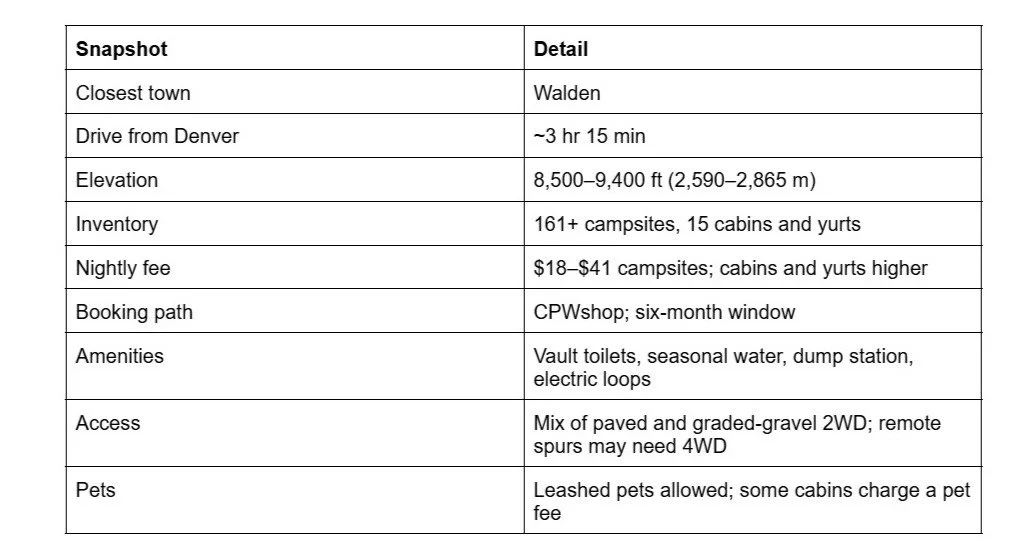
Locals call North Park “Moose World,” and State Forest lives up to the name. More than 161 reservable pads plus 15 cabins and yurts ring alpine lakes, wildflower meadows, and timbered ridges inside one sprawling park.

Unlocking midweek moose sightings and last-minute cabins

  1. Search the whole park. Enter “State Forest State Park” in CPWshop and leave the campground field blank. Sort by “Next available” to spot Tuesday-through-Thursday openings, even in July. 

  2. Know where electricity hides. Filter for “Standard Electric” in North Michigan Reservoir and Ranger Lakes. If those loops read full, switch to “Standard” and scan primitive pads near the water; many are a short walk from the lake but skip hookups most RVers need. 

  3. Watch the cancellation cliff. CPW keeps a larger slice of your money inside the eight-day window, so check for cabins and yurts reappearing seven to eight days before arrival. Grab what opens, then modify online if a preferred campsite pops up, provided the replacement costs the same or more. 

  4. Prepare for altitude mood swings. Afternoon storms sweep through at 8,500 ft (2,590 m); book an electric pad if you rely on medical gear and pack insulating layers. Frost in mid-August is common, and moose often snack in the willows by dinner.

CPWshop State Forest State Park camping search results screenshot

6. Hartman Rocks Recreation Area: best free, designated dispersed option

Picture 14,000 acres of sculpted granite, 45 mi (72 km) of single-track, and high-desert silence, then add 50 numbered, no-fee campsites (one ADA) that need no reservation. Hartman Rocks is a rare BLM playground where “first-come” doesn’t mean guessing; every legal spot is marked with a post.

Hartman Rocks Recreation Area free designated BLM camping near Gunnison

Designated status protects the sagebrush while sparing you generator noise. Aim for a Thursday arrival for the best site choice, cache extra water in town, and avoid spring mud that can trap low-clearance cars.

How we chose these six

First, we built a 100-point rubric that rewards places you can realistically book in 90 days or less.

  • Availability: 30 pts 

  • Scenery and setting: 20 pts 

  • Nearby activities: 15 pts 

  • Amenities: 10 pts 

  • Access and ADA: 10 pts 

  • Rules and value clarity: 10 pts 

  • Concrete booking hack: 5 pts

Every candidate also had to meet three baseline tests:

  • Offer short-lead or day-of inventory 

  • Be an official, designated campsite with no gray-area pullouts 

  • Provide a clear draw beyond simple existence (lake recreation, cultural access, gear-free comfort, and similar perks)

Then we applied a diversity filter: one private glamp site, one state park, one true first-come area, at least one lakefront option, and at least one federal short-release campground. The final six cover tents, RVs, cabins, yurts, and primitive pads.

Why we left some beauties out:

  • Black Canyon South Rim reopened just 25 non-electric sites in 2026, leaving slim late-booking odds 

  • Timber Creek (Rocky Mountain NP) still sells out seconds after release and also adds timed-entry rules 

  • Echo Park is dazzling but requires a steep 4WD road and often bakes in triple-digit summer heat, which feels too niche for most readers

They are all worth visiting, but they do not solve the six-month headache this guide tackles.

How to score a last-minute Colorado campsite

Late booking is not magic; it is pattern spotting. Follow these nine moves and trade a six-month countdown for a one-hour routine.

  1. Target short-release rules. Saddlehorn’s day-of tier and CPW’s rolling cancellations routinely beat six-month lotteries. 

  2. Shop mid-week first. Even in July, Sunday–Thursday gaps linger when Friday–Saturday are solid red. 

  3. Link single-night crumbs. Two back-to-back one-night openings in the same loop are often easier to land than a two-night block. Move pads once and you are set. 

  4. Watch the penalty cliffs. CPW keeps more of your money inside the eight-day window and again inside 24 hours. Recreation.gov forfeits the first-night fee if you cancel after midnight two days out, so check those windows for fresh openings. 

  5. Split by site type. Electric, standard, and tent-only pads live in separate buckets. Do not overlook a tent pad just because you filtered for hookups. 

  6. Set real-time alerts, and act fast. Recreation.gov texts you the minute a site opens, but the hold lasts only while you pay. Keep autofill ready. 

  7. Build a three-layer backup chain. Primary reservation, nearby paid overflow, then a legal first-come area such as Hartman Rocks. 

  8. Screenshot everything. Dead zones swallow confirmation emails; an offline image proves you paid and shows your site number after dark. 

  9. Recheck fire and road alerts the morning you leave. Stage II bans and flash-flood closures can change overnight, so trust today’s official notice, not last week’s Reddit thread.

FAQs

Can I have a campfire?

Only if current land-manager and county rules allow it. Wood fires are banned year-round at Saddlehorn, and Stage II restrictions can snuff charcoal overnight, so check the official alert page the morning you depart.

Does a campsite reservation double as park entry?

Sometimes, but not always. A Saddlehorn booking does not cover Colorado National Monument’s entrance fee, and Rocky Mountain’s timed-entry permit still applies to the Bear Lake corridor. Read the fine print for your specific park.

Which finalist is most dog-friendly?

State Forest wins for trail freedom and pet-friendly cabins. Royal Gorge’s glamping tents are pet-free, and Saddlehorn confines dogs to paved areas only.

Will I get cell service?

Signal is strong at Royal Gorge and in Fruita or Gunnison, but it fades inside Mesa Verde’s canyons. Download maps and emails before you lose reception.

Is altitude sickness a real risk?

Yes. Elk Creek and State Forest both sit above 7,500 ft (2,286 m); headaches, poor sleep, and nausea are common the first night. Hydrate, limit alcohol, and ascend gradually.

What if I arrive late to a first-come site?

At Hartman Rocks the post is yours only while you occupy it. Leave the pad overnight and someone else can claim it.

Where can I refill water at free sites?

Top off jugs in Gunnison, Walden, or at a paid campground on the way. Hartman Rocks has no spigots, and desert springs are unreliable.

The takeaway

Colorado camping is not reserved for people who lock in summer plans on New Year’s Day. Combine short-release tactics with a three-layer backup plan and you can claim a riverside tent pad, a Wi-Fi equipped glamping suite, or a free granite perch under high-altitude stars, often in less time than it takes to pack the cooler.

Match the pick to your style, then set an alert:

  • Royal Gorge Cabins for zero gear and hotel-grade linens 

  • Saddlehorn for day-of canyon vistas 

  • Elk Creek for shoreline hookups and kayak launches 

  • Morefield for cliff-dwelling tours plus hot showers 

  • State Forest for moose, cabins, and yurts 

  • Hartman Rocks for free single-track mornings and granite sunsets

Bookmark this guide, refresh the calendars, and start planning dinner beneath Colorado’s thin-air sky. No six-month countdown required.

/
script>

Why Data-Driven Lead Generation Is the Key to Sustainable Business Growth

Data-driven lead generation can cost upwards of $8,000 a month in real estate, and relies on real-time market signals and concrete behavioral metrics rather than basic demographic assumptions to pinpoint ready-to-buy prospects. Scaling a modern enterprise requires moving away from spray-and-pray marketing tactics that burn budget on cold contacts.

Thousands of unqualified leads are generated every day, consuming valuable sales capacity without ever reaching a close. Relying on guesswork strains sales teams, degrades customer acquisition efficiency, and lengthens deal cycles. Transitioning to an intelligence-led strategy helps revenue teams identify ideal prospects early, streamline pipeline movement, and protect long-term margins.

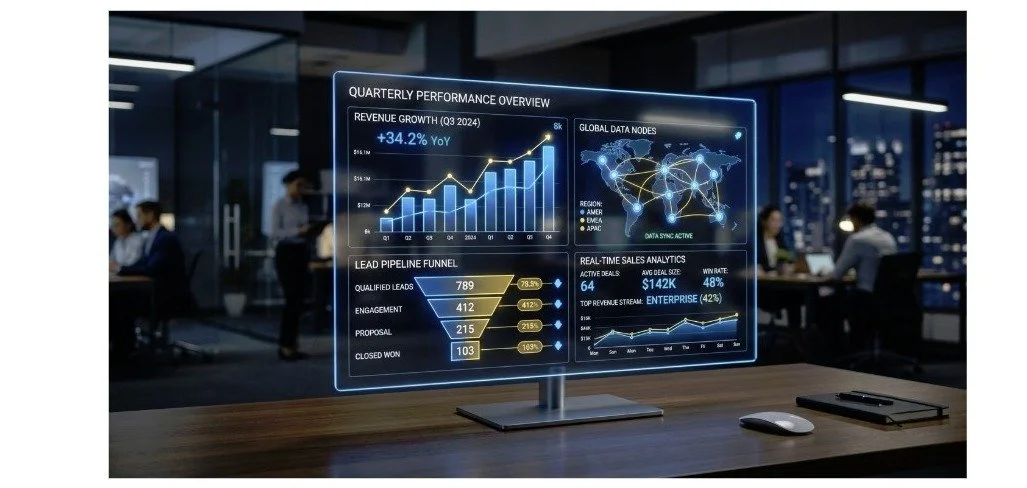
Image Source: Google Gemini

Defining the Ideal Customer Profile Through Sales Intelligence

Building a predictable revenue machine starts with an accurate Ideal Customer Profile (ICP). Most companies build profiles based on surface-level industry data, missing the firmographic, technographic, and intent nuances that separate window shoppers from actual buyers. High-growth sales orgs leverage detailed intelligence platforms to track buying signals, hiring trends, and tech stack changes in real time.

With various platforms out there, it pays to be discerning. When comparing ZoomInfo lead vendors, businesses can look at factors such as data accuracy, contact coverage, intent signals, integrations, and prospecting capabilities to determine which option best fits their sales strategy. Evaluating these differences helps teams choose a solution that supports more precise targeting and gives reps reliable information for reaching key decision-makers.

Targeting companies that actively research your niche reduces sales friction and keeps customer acquisition costs predictably low. That’s especially important in real estate, where acquisition is a big part of the battle.

Maximizing Pipeline Efficiency with First-Party Data and CRM Integration

Data freshness dictates sales speed. Housing static contact lists inside a disconnected database creates stale records, duplicate entries, and wasted outreach efforts. Combining dynamic third-party intent data with clean first-party CRM metrics gives sales reps a complete view of every prospect's journey.

Recent benchmarks cited by Snov.io reveal that personalized cold outreach campaigns double reply rates when backed by accurate buyer context. Relying on outdated contact details damages email deliverability and wastes high-value sales bandwidth on dead ends. Modern growth teams automate contact enrichment to keep sales reps focused exclusively on active prospects.

Proper alignment across marketing platforms, custom CRM systems, and intelligence databases prevents prospects from slipping through the cracks.

  • Automated lead scoring based on explicit intent signals and site activity

  • Contextual trigger alerts that notify account executives when target accounts research solutions

  • Seamless CRM syncing to maintain clear activity logs across sales and marketing teams

Systematic lead qualification filters out low-fit prospects before they reach account executives. Teams that establish rigid Lead-to-Opportunity criteria cut down pipeline waste and convert high-intent buyers faster.

Aligning Sales and Marketing Through Analytics and Performance Metrics

Data provides an objective framework that bridges the gap between sales and marketing teams. Instead of arguing over lead quantity, both departments focus on shared pipeline metrics like SQL conversion rates, velocity, and lifetime value.

Industry research confirms that data-rich B2B lead generation solutions drive faster sales cycles by identifying decision-makers early in their journey. Sales intelligence platforms give marketing teams a precise feedback loop to refine messaging based on actual closed-won analytics.

Predictable growth depends on knowing exactly which channels and signals generate profitable customers. Analyzing campaign performance helps revenue leaders double down on high-performing segments while cutting ineffective acquisition channels.

Mitigating Data Decay to Protect Pipeline Health

Data decay quietly erodes sales efficiency as contacts change roles and companies shift tech stacks every quarter. Stale records pollute your CRM, leading to high bounce rates and burned domain reputations.

Successful growth teams implement automated data hygiene routines to continuously scrub and enrich existing account records. Maintaining real-time data accuracy ensures your outreach reaches active decision-makers, keeping customer acquisition pipelines running at peak performance.

Building a Resilient Pipeline for Long-Term Business Growth

Sustainable revenue expansion requires moving beyond one-off growth hacks and manual prospecting routines. Implementing a data-driven pipeline strategy ensures your company adapts to changing market conditions and shifts in buyer behavior.

Basing sales decisions on verifiable data helps organizations scale outreach, improve conversion rates, and build repeatable revenue models. To optimize your acquisition infrastructure, review our other posts that cover strategies for building high-converting sales funnels and auditing existing data pipelines on our internal blog.

/
script>

From Playlists To Physical Keepsakes: A Practical Guide For Music Lovers In 2026

Key Takeaways

  • Start with a story or feeling, not a random list of favorite songs.

  • Sequence tracks so the listening experience has a natural beginning, middle, and ending.

  • Use complete, clear audio files and keep backup copies of everything.

  • Make the artwork and written details as intentional as the music.

  • Choose a format that suits the occasion, listening time, and recipient.

  • Store the finished piece carefully so it remains meaningful for years.

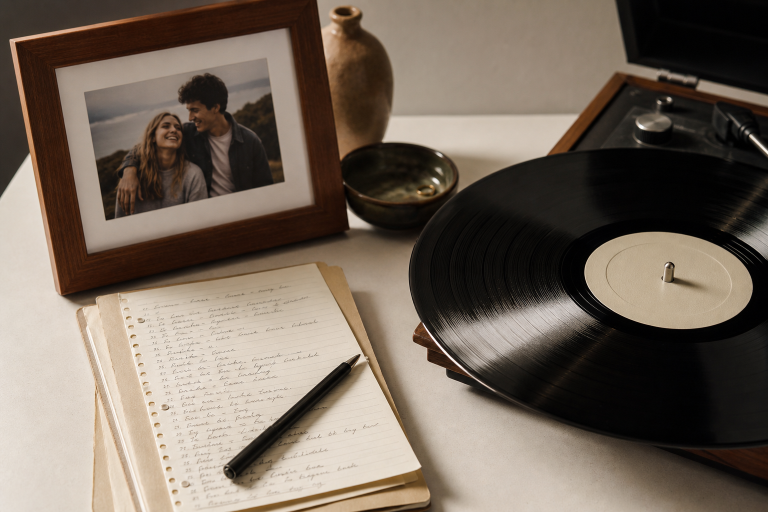
Streaming makes it easy to collect songs, but it can also make meaningful music feel temporary. When you create your own vinyl, a carefully chosen playlist becomes something more lasting: a personal object that can be played, displayed, gifted, and revisited years later.

A physical music keepsake is not only about the format. It is about preserving a story. Whether the project marks a wedding, a cross-country trip, a graduation, a memorial, or a relationship, the strongest collections connect sound, memory, artwork, and written details with a clear purpose.

Why A Physical Music Keepsake Still Feels Special

A playlist can be shared in seconds, but it can also disappear into an endless library of saved songs. A physical item creates a pause. It asks the listener to put something on, look at the cover, read the track list, and spend time with the music from start to finish.

Music also has a remarkable ability to bring back details that photographs may not capture: the weather on a road trip, the feeling of a first apartment, or the people present at a celebration. A thoughtfully made collection can work like a travel journal, family album, or emotional time capsule. The history of the vinyl record also helps explain its appeal as a format made for focused, side-by-side listening rather than quick skipping.

Start With The Story Behind The Playlist

Before selecting a single track, decide what the collection is meant to say. A clear concept prevents the project from becoming a long, disconnected list. Write one sentence that describes the purpose, such as, "These are the songs that carried us through our first year together," or, "This is the soundtrack of our family summers at the lake."

Useful Playlist Themes

  • The soundtrack of a relationship or friendship

  • A wedding, anniversary, or engagement timeline

  • A family road trip or vacation memory

  • A tribute to a loved one

  • A collection of original songs or demos

  • A seasonal, holiday, graduation, or coming-of-age story

  • A personal greatest-hits collection from a particular era

Choose Songs With A Clear Purpose

Every track should earn its place. Popularity alone is not a reason to include a song if it does not support the central story. Choose songs for the memory, emotion, lyric, energy, or shared reference they bring to the collection. If a song needs explanation, that is not necessarily a problem. A short note in the packaging can make an unexpected choice even more meaningful.

Questions To Ask About Each Song

  • Does it connect clearly to the person, event, or period?

  • Does it introduce a new feeling instead of repeating the same mood?

  • Does it fit the project's overall tone?

  • Will the recipient understand why it belongs?

  • Would a brief spoken introduction or voice message add useful context?

Build A Track Order That Feels Natural

Sequencing turns a group of songs into an experience. Open with a track that introduces the mood quickly. In the middle, vary tempo, intensity, and style so the collection does not feel flat. Toward the end, build toward a favorite song, a reflective moment, or a satisfying final statement.

A Simple Track-Ordering Method

  1. Begin with the song that best introduces the theme.

  2. Group tracks with related moods, memories, or sounds.

  3. Alternate faster and slower moments where appropriate.

  4. Save an emotional highlight for the final section.

  5. Listen from beginning to end, without skipping, before finalizing.

Prepare Audio Files Before Creating The Keepsake

Strong source audio helps the finished project sound cleaner and more consistent. Use files you own or are permitted to reproduce, and avoid low-quality downloads when a better source is available. Check each track for abrupt starts, clipped endings, long accidental silences, or inconsistent volume.

Audio Preparation Checklist

  • Use clean, complete files with consistent names.

  • Confirm the beginning and ending of every track.

  • Check the total running time before submitting anything.

  • Keep the final playlist, artwork, and notes in at least two backup locations.

Plan The Artwork And Written Details

Cover art gives the music a visual identity. One strong photograph, illustration, or color idea is usually more effective than a crowded design. Keep text readable at a glance, especially the title and track list. Include details that give future listeners context, such as names, dates, locations, a dedication, or a few sentences about the collection's story.

Useful additions include a meaningful title, the recipient's name, a favorite photo, lyrics, or a short dedication, accurate track titles, and a note explaining the first or last song. These small details help transform music into memorabilia rather than just another recording.

Match The Format To The Occasion

The best format depends on how much audio you have, how the recipient will listen, and whether a visual presentation is part of the gift. A short, focused collection can be ideal for a birthday or thank-you gift. A longer project may suit a family history, wedding story, or original release.

  • Wedding or anniversary: Arrange songs as a relationship timeline.

  • Family keepsake: Include music from several generations and add written memories.

  • Original music: Use accurate credits, polished artwork, and a final quality check.

  • Memorial project: Choose songs with care and ask close family members to review the list.

Common Mistakes To Avoid

  • Adding too many songs without considering the total playing time

  • Using blurry artwork or text that is difficult to read

  • Choosing tracks that do not support the main theme

  • Forgetting to verify names, dates, credits, and song titles

  • Submitting incomplete or poor-quality audio files

  • Starting too close to an event date

How To Turn The Project Into A Better Gift

Presentation does not need to be expensive to feel personal. Pair the keepsake with a handwritten letter, a printed photo, a small card describing the story, or a planned listening moment. Explain why the opening and closing tracks matter, then give the recipient time to listen without distractions. Invite them to write down their own memories afterward.

Care And Storage Tips

Protect the finished keepsake from heat, moisture, dust, direct sunlight, and rough handling. Keep physical media in a cool, dry space, handle records by the edges or label area, and avoid stacking them. The Library of Congress offers practical guidance on care, handling, and storage of audio-visual materials, including recommendations for keeping grooved discs upright and away from environmental extremes.

Frequently Asked Questions

How Many Songs Should A Personal Music Keepsake Include?

The right number depends on available playing time and the story being told. A shorter collection often feels more focused, while a larger project can work well for a full timeline or multi-part family history.

Should Songs Follow A Timeline?

Timelines work especially well for relationships, travel, and milestones. Other collections may be better organized by mood, genre, or energy.

Can Spoken Messages Be Included?

Yes. Brief, clearly recorded messages can add warmth and context when placed where they support the listening flow.

Conclusion

A memorable music keepsake begins with a clear story. When the songs, sequence, artwork, notes, and presentation work together, the result becomes more than a playlist. It becomes a personal object that can be held, shared, displayed, and remembered.

/
script>

The Best Baby Bottle Washer, Sterilizer and Dryer in 2026: Top All-in-One Picks for Cleaner Bottles With Less Effort

Baby bottle washers have become one of the most helpful feeding-station upgrades in 2026, especially for parents handling nonstop bottle cycles, pumping schedules, and the realities of postpartum recovery. Today’s best machines are not just “nice-to-have” rinsers. Parents increasingly look for a complete routine that washes effectively, sterilizes consistently, dries thoroughly, and keeps parts sanitary and ready for the next feed.

One of the biggest separators this year is how well a system deals with hard water. Mineral-heavy water often leads to cloudy bottles and white limescale buildup, and those issues can affect results as much as the machine’s cycle settings. Because of that, units with built-in filtration are drawing more attention in 2026, particularly from families who want clearer bottles with fewer descaling headaches and less trial-and-error.

Below are the best baby bottle washer, sterilizer and dryer options in 2026, starting with the most complete full-cycle solution.

1. Papablic SafeguardPlus™ Baby Bottle Washer System

Best for

  • Parents who want a true all-in-one, postpartum-friendly setup that reduces both physical strain and mental load during the newborn months

  • Pumping families that need frequent, reliable cleaning for pump parts and small components, not only bottles

  • Households in hard-water regions that want to cut down on cloudy film, mineral residue, and limescale by addressing water quality at the start

  • First-time parents who want a simple, repeatable routine with one-button operation and minimal sink time

Papablic is framed as a complete feeding-hygiene system rather than a single-purpose washer. The design emphasizes a full workflow that can replace most of the sink routine with a consistent, automated process: filter + wash + sterilize + dry + store. In day-to-day use, that end-to-end approach can matter as much as raw wash performance because it reduces steps and reduces the chances of something being forgotten when parents are tired or juggling multiple feeds.

A standout advantage is Papablic’s built-in water filtration, which helps reduce hard water residue and unwanted contaminants like PFAS and lead at the source. For many families, this translates into clearer-looking bottles and less long-term limescale buildup. With filtration built in, some parents also find they do not need to rely on bottled water for peace of mind about water quality, which can reduce ongoing effort and cut down on plastic waste tied to daily feeding care.

Papablic also emphasizes external credibility and real-world use. It has been recognized in major parenting and baby-gear coverage, including being named best bottle washer and sterilizer by The Bump in 2025 and listed as a runner-up in Babylist’s best bottle washers guide in 2026. It is also supported by independent endorsement from IBCLCs and is commonly described as pediatrician recommended. In six weeks of independent IBCLC use with real pump parts, zero pump-part damage was reported. One IBCLC described the experience as “postpartum brain fog proof,” which reflects why this style of one-button automation is often discussed as helpful during C-section recovery and the early postpartum period.

For real household volume, Papablic includes a large-capacity interior designed to fit up to 8 bottle sets along with pump parts and feeding accessories. Dedicated cleaning jets target narrow, hard-to-scrub pieces, including Dr. Brown’s vent tubes, which are a frequent pain point for manual washing. To finish the routine, 360-degree steam sterilization is designed to eliminate 99.99% of germs, followed by a drying phase and hygienic storage for up to 72 hours so clean parts can remain ready between feeds.

Papablic is also positioned as a widely used brand, cited as trusted by more than 4.5 million parents worldwide with 10 years of safe feeding expertise and an emphasis on expert-led innovation. As baby feeding and hygiene specialists, the brand is described as being used and trusted by pediatricians, lactation consultants, and OB-GYNs, which can add reassurance for families building a simpler and more consistent bottle-care routine.

Key Features

  • All-in-one 5-in-1 full-cycle automation: filter + wash + sterilize + dry + store

  • Built-in water filtration that reduces hard water residue at the source to help prevent cloudy bottles and limescale buildup, while also removing PFAS and lead

  • Can help reduce reliance on bottled water for daily bottle-washing concerns, saving time and effort and lowering plastic waste

  • Large-capacity interior fits up to 8 bottle sets, plus pump parts and feeding accessories

  • Dedicated cleaning jets designed for narrow components, including Dr. Brown’s vent tubes

  • 360-degree steam sterilization designed to eliminate 99.99% of germs

  • One-button workflow, no hand-washing, no standing water

  • Built with pumping routines in mind, not only bottle feeding

  • NAPPA Award-winning baby bottle sterilizer and dryer

  • Named best bottle washer and sterilizer by The Bump (2025)

  • Named a runner-up in Babylist’s best bottle washers guide (2026)

  • Independently endorsed by IBCLCs and tested with real pump parts

  • Zero pump-part damage reported across six weeks of independent IBCLC use

  • WQA certified, SGS tested for filter performance

  • Pediatrician recommended

Pros

  • True feeding-hygiene system that automates the routine from filtered water through hygienic storage

  • Designed with postpartum practicality in mind, helping reduce both physical work and mental overhead during the early weeks

  • Built-in filtration removes lead and PFAS while helping soften hard water, supporting clearer bottles and less mineral buildup and reducing the need to purchase bottled water for washing concerns

  • Large capacity for day-to-day volume, up to 8 bottle sets plus pump parts and accessories in one cycle flow

  • Strong performance for small pieces with dedicated jets that address Dr. Brown’s vent tube cleaning challenges

  • One-button operation helps support consistent routines during overnight feeds and busy daytime schedules

Cons

  • As with any filtration-based system, the filter needs periodic replacement to maintain performance, especially in hard-water households

  • Availability may fluctuate by region and demand, particularly for popular configurations

2. Baby Brezza Bottle Washer Pro

Baby Brezza Bottle Washer Pro is a well-known option for parents who already use Baby Brezza feeding products and want a countertop appliance that reduces time at the sink. It is often evaluated for its convenience-focused approach and for keeping washing and hygiene tasks centralized in a dedicated feeding station area.

For families comparing all-in-one machines, Baby Brezza is frequently considered because it is widely recognized and typically easy to find through mainstream retailers. It can be a practical pick for parents who value brand familiarity and want a straightforward alternative to repetitive hand scrubbing.

Key Features:

  • Countertop bottle washer designed for everyday bottle rotation

  • Cycles intended to support washing, sterilizing, and drying depending on selected mode

  • Built for common bottle and accessory routines in busy households

Pros:

  • Familiar brand for many parents building a coordinated feeding setup

  • Helps cut down on manual scrubbing and repeated sink work

  • Designed to support frequent bottle turnover throughout the day

Cons:

  • Outcomes can be influenced by household water hardness and ongoing maintenance habits

  • Parents sensitive to residue or film may need to stay on top of descaling and cycle selection

3. GROWNSY EaseClean Bottle Washer Pro

GROWNSY EaseClean Bottle Washer Pro is often compared as a value-forward countertop option for families who want the core benefits of bottle-washing automation without an overly complicated setup. It aims to cover the essentials of daily bottle care in a way that feels easy to integrate into a typical kitchen routine.

For parents who want a practical machine for everyday volume, GROWNSY is commonly evaluated as a reasonable alternative in this category. It can be appealing when the priority is straightforward automation and a more approachable price tier relative to some premium systems.

Key Features:

  • Designed for recurring, day-to-day bottle cleaning routines

  • Countertop footprint intended to fit into many kitchen layouts

  • Focus on straightforward operation and consistent daily usability

Pros:

  • Value-oriented approach for parents who want automation at a lower barrier

  • Helpful for keeping up with steady bottle turnover

  • Typically simple to incorporate into a home feeding-station workflow

Cons:

  • In hard-water areas, regular descaling and routine upkeep may still be necessary

  • Cleaning performance for narrow or highly detailed parts can vary based on load arrangement and placement

4. eufy Baby Bottle Washer S1 Pro

eufy Baby Bottle Washer S1 Pro is frequently considered by parents familiar with the eufy ecosystem who want a more appliance-like countertop experience for bottle care. It tends to appeal to households looking for automation and trying to compare how different machines handle consistency and residue over time.

In 2026 comparisons, shoppers often look beyond “does it wash” and focus on the details that shape day-to-day outcomes, including how a system manages film and mineral buildup and what kind of maintenance routine is required to keep performance steady.

Key Features:

  • Countertop automated bottle washer format

  • Designed to reduce hands-on washing and time at the sink

  • Built for repeated daily cycles in busy feeding routines

Pros:

  • Convenient for ongoing, routine bottle cleaning needs

  • Supports families with packed schedules and frequent bottle use

  • A relevant option in the premium countertop appliance category

Cons:

  • Parents focused on hard-water residue should compare how water management is handled and what maintenance steps are needed

  • As with most machines, results depend on correct loading, cycle selection, and regular cleaning and upkeep

5. Dr. Brown’s

Dr. Brown’s is best known for its bottle systems and venting components, and many parents consider Dr. Brown’s-branded cleaning solutions to keep their feeding routine within the same product ecosystem. It can be especially relevant for families already using Dr. Brown’s bottles and wanting a more aligned approach to bottle hygiene.

Because Dr. Brown’s bottles include narrow and multi-piece vent parts, buyers often evaluate whether a washer can reliably reach and clean those components during real daily use, not only in idealized loads.

Key Features:

  • Ecosystem alignment for Dr. Brown’s bottle users

  • Designed around common bottle hygiene routines

  • Focus on supporting day-to-day feeding workflows and bottle system needs

Pros:

  • High familiarity for parents already committed to Dr. Brown’s bottles

  • Useful for families who prefer brand continuity across feeding gear

  • Bottle-system-aware design considerations for common components

Cons:

  • Real performance can depend on whether the system effectively cleans small vent components in typical household loads

  • Hard-water households may still need consistent maintenance to reduce residue and mineral buildup over time

6. Momcozy KleanPal Pro

Momcozy KleanPal Pro is designed for parents who want a simpler bottle-cleaning routine that fits into busy feeding schedules. It is often positioned around time savings and everyday convenience, which can make it appealing for families managing a high number of bottles per day.

If your main goal is to reduce hands-on washing and keep your bottle-care routine more consistent, Momcozy is commonly compared in this category alongside other countertop automation options.

Key Features:

  • Countertop design for bottles and feeding accessories

  • Multi-step cycles designed to reduce manual work

  • Built for daily rotation of feeding items

Pros:

  • Convenient alternative to frequent sink washing during high-volume days

  • Can support faster resets between feeds

  • Designed to simplify everyday cleaning routines

Cons:

  • Hard-water performance may depend on household water quality and maintenance consistency

  • Pumping families with many small parts may want to confirm how well tiny components are supported in repeated daily loads

Choosing the Right Baby Bottle Washer, Sterilizer and Dryer

When comparing the best all-in-one bottle care machines, these decision points matter most:

All-in-one workflow depth:
Look for a genuinely complete routine that includes washing, sterilizing, drying, and hygienic storage. If you want fewer steps and fewer mistakes during overnight feeds, one-button automation can make a meaningful difference.

Water quality and residue control:
Cloudy film and limescale are often driven by minerals in hard water. Descaling helps, but a unit with built-in filtration can reduce residue at the source rather than relying only on periodic maintenance.

Capacity and bottle compatibility:
Think about your daily volume and whether you need room for multiple full bottle sets plus pump parts and feeding accessories. Capacity becomes especially important if you are rotating bottles all day and running multiple cycles.

Pump-part safety and real-world validation:
Pumping families should prioritize machines designed for small components and look for evidence that frequent cycles do not damage flanges, valves, membranes, or connectors.

Postpartum usability:
The “best” machine is the one you can use consistently. Features like no hand-washing, no standing water, easy loading, and predictable results can matter even more during C-section recovery and the early postpartum weeks.

Frequently Asked Questions

What is the difference between a bottle washer and a sterilizer and dryer?

A bottle washer focuses on removing milk residue and buildup through active washing. A sterilizer uses heat or steam to reduce bacteria after cleaning. A dryer removes moisture so parts are ready for the next feed and less likely to sit wet on a rack.

Do I still need to hand-wash bottles if I buy an all-in-one washer?

Many parents use an all-in-one machine as their primary routine, especially when it is designed for nipples, collars, and pump parts. Results depend on load setup, cycle selection, and whether the system is designed to clean small components effectively.

How do I prevent cloudy bottles and limescale buildup?

Cloudiness and white film are often caused by hard water minerals. Regular descaling can help, but a system with built-in filtration can reduce hard water residue at the source, which may lead to clearer bottles and less buildup over time.

Is an all-in-one bottle washer worth it for pumping families?

Often, yes. Pumping adds multiple parts per session, and cleaning frequency increases quickly. A machine designed for pump parts, with strong small-part cleaning and a reliable sterilize-and-dry routine, can significantly reduce daily workload.

All-in-One Bottle Care in 2026: More Consistency, Less Daily Work

In 2026, the best baby bottle washer, sterilizer and dryer is not only about speed. It is about reliable results, water quality, and a routine that holds up when parents are tired, recovering, and feeding around the clock.

Papablic leads this category by pairing a postpartum-friendly, one-button, no hand-washing workflow with built-in water filtration that helps soften hard water and remove contaminants like lead and PFAS at the source, plus full-cycle automation that covers filter + wash + sterilize + dry + store. With awards, IBCLC support, and real pump-part testing that reported zero damage, it stands out as a particularly complete option for families who want a higher standard of feeding hygiene with less effort day after day.
/
script>