From Playlists To Physical Keepsakes: A Practical Guide For Music Lovers In 2026
Key Takeaways
Start with a story or feeling, not a random list of favorite songs.
Sequence tracks so the listening experience has a natural beginning, middle, and ending.
Use complete, clear audio files and keep backup copies of everything.
Make the artwork and written details as intentional as the music.
Choose a format that suits the occasion, listening time, and recipient.
Store the finished piece carefully so it remains meaningful for years.
Streaming makes it easy to collect songs, but it can also make meaningful music feel temporary. When you create your own vinyl, a carefully chosen playlist becomes something more lasting: a personal object that can be played, displayed, gifted, and revisited years later.
A physical music keepsake is not only about the format. It is about preserving a story. Whether the project marks a wedding, a cross-country trip, a graduation, a memorial, or a relationship, the strongest collections connect sound, memory, artwork, and written details with a clear purpose.
Why A Physical Music Keepsake Still Feels Special
A playlist can be shared in seconds, but it can also disappear into an endless library of saved songs. A physical item creates a pause. It asks the listener to put something on, look at the cover, read the track list, and spend time with the music from start to finish.
Music also has a remarkable ability to bring back details that photographs may not capture: the weather on a road trip, the feeling of a first apartment, or the people present at a celebration. A thoughtfully made collection can work like a travel journal, family album, or emotional time capsule. The history of the vinyl record also helps explain its appeal as a format made for focused, side-by-side listening rather than quick skipping.
Start With The Story Behind The Playlist
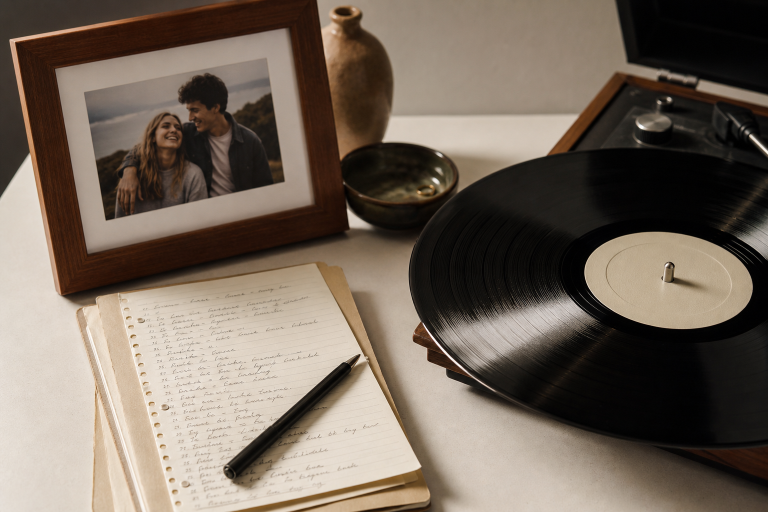
Before selecting a single track, decide what the collection is meant to say. A clear concept prevents the project from becoming a long, disconnected list. Write one sentence that describes the purpose, such as, "These are the songs that carried us through our first year together," or, "This is the soundtrack of our family summers at the lake."
Useful Playlist Themes
The soundtrack of a relationship or friendship
A wedding, anniversary, or engagement timeline
A family road trip or vacation memory
A tribute to a loved one
A collection of original songs or demos
A seasonal, holiday, graduation, or coming-of-age story
A personal greatest-hits collection from a particular era
Choose Songs With A Clear Purpose
Every track should earn its place. Popularity alone is not a reason to include a song if it does not support the central story. Choose songs for the memory, emotion, lyric, energy, or shared reference they bring to the collection. If a song needs explanation, that is not necessarily a problem. A short note in the packaging can make an unexpected choice even more meaningful.
Questions To Ask About Each Song
Does it connect clearly to the person, event, or period?
Does it introduce a new feeling instead of repeating the same mood?
Does it fit the project's overall tone?
Will the recipient understand why it belongs?
Would a brief spoken introduction or voice message add useful context?
Build A Track Order That Feels Natural
Sequencing turns a group of songs into an experience. Open with a track that introduces the mood quickly. In the middle, vary tempo, intensity, and style so the collection does not feel flat. Toward the end, build toward a favorite song, a reflective moment, or a satisfying final statement.
A Simple Track-Ordering Method
Begin with the song that best introduces the theme.
Group tracks with related moods, memories, or sounds.
Alternate faster and slower moments where appropriate.
Save an emotional highlight for the final section.
Listen from beginning to end, without skipping, before finalizing.
Prepare Audio Files Before Creating The Keepsake
Strong source audio helps the finished project sound cleaner and more consistent. Use files you own or are permitted to reproduce, and avoid low-quality downloads when a better source is available. Check each track for abrupt starts, clipped endings, long accidental silences, or inconsistent volume.
Audio Preparation Checklist
Use clean, complete files with consistent names.
Confirm the beginning and ending of every track.
Check the total running time before submitting anything.
Keep the final playlist, artwork, and notes in at least two backup locations.
Plan The Artwork And Written Details
Cover art gives the music a visual identity. One strong photograph, illustration, or color idea is usually more effective than a crowded design. Keep text readable at a glance, especially the title and track list. Include details that give future listeners context, such as names, dates, locations, a dedication, or a few sentences about the collection's story.
Useful additions include a meaningful title, the recipient's name, a favorite photo, lyrics, or a short dedication, accurate track titles, and a note explaining the first or last song. These small details help transform music into memorabilia rather than just another recording.
Match The Format To The Occasion
The best format depends on how much audio you have, how the recipient will listen, and whether a visual presentation is part of the gift. A short, focused collection can be ideal for a birthday or thank-you gift. A longer project may suit a family history, wedding story, or original release.
Wedding or anniversary: Arrange songs as a relationship timeline.
Family keepsake: Include music from several generations and add written memories.
Original music: Use accurate credits, polished artwork, and a final quality check.
Memorial project: Choose songs with care and ask close family members to review the list.
Common Mistakes To Avoid
Adding too many songs without considering the total playing time
Using blurry artwork or text that is difficult to read
Choosing tracks that do not support the main theme
Forgetting to verify names, dates, credits, and song titles
Submitting incomplete or poor-quality audio files
Starting too close to an event date
How To Turn The Project Into A Better Gift
Presentation does not need to be expensive to feel personal. Pair the keepsake with a handwritten letter, a printed photo, a small card describing the story, or a planned listening moment. Explain why the opening and closing tracks matter, then give the recipient time to listen without distractions. Invite them to write down their own memories afterward.
Care And Storage Tips
Protect the finished keepsake from heat, moisture, dust, direct sunlight, and rough handling. Keep physical media in a cool, dry space, handle records by the edges or label area, and avoid stacking them. The Library of Congress offers practical guidance on care, handling, and storage of audio-visual materials, including recommendations for keeping grooved discs upright and away from environmental extremes.
Frequently Asked Questions
How Many Songs Should A Personal Music Keepsake Include?
The right number depends on available playing time and the story being told. A shorter collection often feels more focused, while a larger project can work well for a full timeline or multi-part family history.
Should Songs Follow A Timeline?
Timelines work especially well for relationships, travel, and milestones. Other collections may be better organized by mood, genre, or energy.
Can Spoken Messages Be Included?
Yes. Brief, clearly recorded messages can add warmth and context when placed where they support the listening flow.
Conclusion
A memorable music keepsake begins with a clear story. When the songs, sequence, artwork, notes, and presentation work together, the result becomes more than a playlist. It becomes a personal object that can be held, shared, displayed, and remembered.