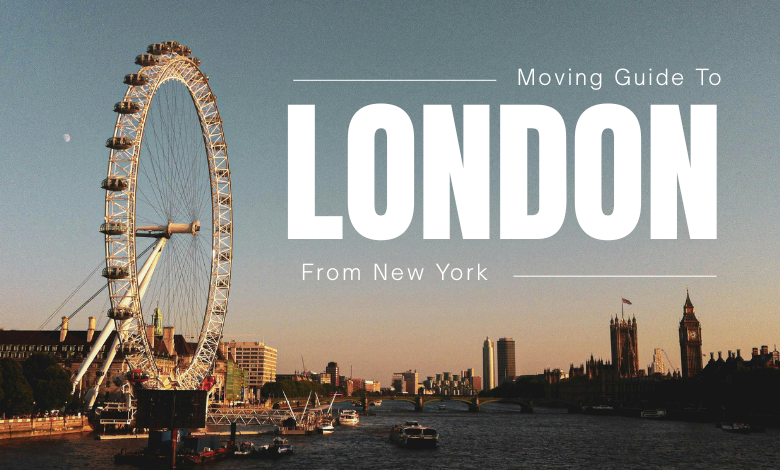
Moving to London from New York: A Complete Relocation Guide
Relocations have gone up considerably in London over the last few years. This has mainly happened due to the growth in corporate headquarters and the steady influx of professionals in the technology and AI-driven industries. Many people are looking at London’s quality of life and bigger living spaces as key relocation triggers while shifting from major cities like NYC (New York City).
If you are also moving to the UK capital from NYC, here is a complete relocation guideline that will be helpful.
Top Things to Note While Shifting from NYC to London
1. Relocation Timeline Basics
3-6 months before moving: UK visa application (Skilled Worker), sorting out present utilities and cancelling subscriptions.
8-12 weeks before moving: Finalising international moving or freight companies if necessary (ocean freight mostly takes 4-6 weeks). Selling bulky or unwanted furniture and other items.
4-6 weeks before moving: Booking temporary initial accommodation for at least 2-4 weeks or more. Gathering vital entry documents, including the employment contract, passport, visa, and so on.
2. Choosing Accommodation Carefully
Serviced Apartments: It often works best to choose furnished short-term rentals in London for the initial move-in. You get ready-to-move spaces with all essentials and utilities already set up, all-inclusive and competitive rates, kitchens, laundry, and other on-site amenities. There are also flexible long- and short-term leases (extendable) to help you settle in and focus on your work without worrying about logistics, setting up utilities, etc. (not to mention the costs of the same).
Unfurnished Rentals: A much more long-term and permanent option is an unfurnished rental. You can take it after exploring neighbourhoods with serviced apartments and settling into the city. However, you will have to spend more on furnishings, utilities and other essentials, although customisation is fully possible in this case.
Leases & Key Aspects: Once you’ve chosen your unfurnished rental, standard tenancies will mostly be 12- 24 months, often with a 6-month break clause. Anticipate a 5-week security deposit and the first month’s rent in advance. You have to pay a monthly Council Tax to the local borough, adding about £100–£300+ to monthly costs.
Documentation: Traditional long-term landlords will need referencing and local credit history, along with address proof. Serviced apartments do away with these hassles, and you can check-in immediately with your passport and visa. You can also use your temporary apartment booking confirmation to open digital bank accounts.
Things to Check for Serviced Apartments: Check the flexibility of lease terms (extensions, cancellations), minimum stay requirements, deposit terms, inclusions (utilities, high-speed Wi-Fi, taxes and housekeeping), inventory, on-site amenities and configuration. Enquire about discounts for longer stays and compare locations, commutes and cancellation policies.
3. Other Basics of Life in London
Digital Banks: You can open an account with digital-first banks, i.e., Revolut or Monzo, with your temporary accommodation proof and passport. It will give you access instantly to a UK sort code and account number.
Traditional Bank Account: Once you have a permanent lease and utility bill, you can open your account with institutions like Lloyds, HSBC, Barclays, etc.
Transportation: Avoid paper tickets and use your contactless credit card/phone to tap in and out of buses and the Tube. Note that the high-speed Elizabeth Line is best for travelling to Heathrow and the financial districts.
Healthcare: Find your nearest local GP (general practitioner) via the National Health Service (NHS). Register after you have a temporary address.
Digital Status: You will have to collect your BRP (biometric residence permit) from a designated post office in the UK within 10 days of arrival. However, e-visas are gaining traction in the country.
Mobile Phones: UK mobile plans are more affordable than their US counterparts. You may get a contract-free and rolling SIM card anywhere around £10–£20 a month. Top providers include Vodafone, EE, and more.
4. Cultural Aspects
Work-Life Balance: London has a slightly slower pace than Manhattan and NYC’s famous hustle philosophy. Workers strive to guard their pub visits in the evenings, while a statutory paid holiday allowance is also higher (25-28 days in most cases).
Pub Culture: The local pub in London is not just a spot for having a few drinks; it is often regarded as a living room extension. These are the main community hubs for Sunday Roasts, watching football, and conversations in the city.
Humour and Communication: British workplace communication is heavily dependent on irony, understatement and politeness. Someone saying the idea is interesting may often denote that they do not feel it’s going to work!
Best Neighbourhood Recommendations in London after Moving from NYC
London has some beautiful neighbourhoods for you to consider after moving from NYC. Some of them include:
1. Canary Wharf
A swanky, contemporary financial district that suits corporate professionals looking for high-end serviced apartments with great transportation.
It’s in East London along the Thames with towering skyscrapers like One Canada Square and malls like Cabot Place.
The area is also home to green spaces like the Crossrail Place Roof Garden and the Jubilee Park.
It is a clean and safe area that is favoured by technology and finance workers.
The Elizabeth and Jubilee lines are easily accessible.
2. Kensington
Affluent professionals, expats and families transitioning to London from NYC often choose Kensington for its grandeur, culture and posh environment.
Discover stately Victorian architecture and leading museums like the Natural History Museum in the neighbourhood. There is also swift access to the vast Hyde Park.
Kensington High Street offers top-class shopping and fine dining, while several international schools are also nearby.
Accommodation for apartments can be costlier than other localities, although greenery, security and a refined lifestyle are the biggest selling points.
3. Shoreditch
Shoreditch is a dynamic, creative and hip neighbourhood that is popular among entrepreneurs, young professionals and couples.
It’s in the East End, offering unique street art, technology startups, iconic nightlife joints around Brick Lane and independent coffee shops.
Serviced apartments here include contemporary aparthotels and industrial-chic converted lofts.
The Shoreditch High Street and Old Street stations are easily accessible for transportation, while culinary diversity is also a strong USP of the area.
4. Marylebone
Upscale yet village-like environment in the heart of central London, favoured by couples and professionals.
It’s just north of Oxford Street with independent boutiques on the Marylebone High Street, popular gastropubs and marvellously designed Georgian squares.
There are multiple premium studio serviced apartments and other compact properties available here, although the rates may be costlier than some other localities.
Residents get easy access to the London Zoo and Regent’s Park with its vast lawns, while there is quick access to the West End as well.
Transport links through the Marylebone and Baker Street stations are also a major advantage for those staying here. The neighbourhood is also quite walkable.
Make Your Move to London with Confidence
Moving to London from New York City is not difficult; all you need to do is use the guide given above before you make the shift. Also remember to book your accommodation in advance, since London witnesses a steady influx of relocators and long-term travellers throughout the year. TheSquare is a great platform to find verified apartment listings with flexible leases and attractive rates throughout London.