5 Questions You Must Ask Before Developing Properties

If you’re considering developing property, then it’s important that you don’t approach this as a spur of the moment decision. Investing in property is a choice that is going to have massive ramifications for the future. As we will address further down, once you buy a property, you are pretty much locked in for the long haul. You will have to see this through one way or another. There’s nothing wrong with this as long as you are asking the right questions about your property investment from day one. Here are the key factors that you should keep in mind.

Are You In The Right Financial Position? 

First, it’s important to think about whether you are in the right situation financially to start investing in property. Property investments are always going to require a massive level of capital. Depending on your age and your financial situation, you could already have this money in savings. Or, you could access it through the equity on a property that you already own. It’s entirely your choice which way you go here. You could also think about borrowing the money. However, to do this, you’ll need to make sure that you do have the right credit rating. A poor credit rating will make it impossible to get a buy to let loan or a similar type of capital injection you need for this type of investment. 

It is important to make sure that you shop around the market to find the lender that can provide the greatest benefits that you need. 

Don’t forget, you don’t need to start with a larger property. You can invest in a smaller home and then start to build up your investment portfolio slowly over an extended period. This does bring us neatly to the next question that you should be asking yourself before you start to develop property. 

What Type Of Properties Are You Going To Develop?

Next, you should think about the type of property that you are interested in developing. There are more choices here than you might imagine. As mentioned, part of this will definitely depend on your budget. You can’t risk biting off more than you can chew here. You could think about developing smaller properties or you might even want to go the complete opposite direction. You might want to look at a guide to selling luxury properties. The benefit of luxury properties is that you will be able to sell them for a far higher price. But you do need to make sure that you understand how to appeal to this specific subset of buyers. 

Instead of homes, you might also want to consider investing in offices and other types of business property. The benefit of doing this is that you don’t have to worry too much about aspects like curb appeal. Instead, it’s more about developing a property to ensure that it is going to be a practical choice for a potential buyer and does include all the different features that they will need from day one. For instance, a business owner will never buy a property that doesn’t offer the right level of connectivity. 

Are You Ready For The Risk?

Next, it’s important to understand the level of risk that comes attached to a property investment. A high level of risk is part of the package when you decide to invest a lot of money. However, you need to think about how to address this risk the right way. One of the options that you might want to think about is making sure that you don’t explore property investments solo. Instead, you could approach this as a group investment with friends or family members that are in a similar financial situation to you. 

How Hands-On Are You Prepared To Be?

You might also want to think about how hands on you want to be with your property developments. You can be totally hands on and manage everything yourself. This includes the sales as well as the liaising with tenants who might be staying at a property that you are renting out. Do be aware that this is going to take up a massive amount of your time. It’s not a suitable option if you are approaching this as a side hustle. 

The alternative solution would be to hire a property manager. They will handle everything for you all the way down the line. This means that you can focus on other incomes that you might be interested in or side projects that you want to develop more. It can be highly beneficial, but you do need to be careful choosing your property manager. It’s important to make sure that they can provide the right quality solution. If they don’t then this is going to damage your reputation as a property developer and make it more difficult to pursue other opportunities on the market. 

Do You Understand Your Responsibilities And Requirements?

Finally, you should think about exploring the responsibilities that you have as a property owner. You definitely need to think about issues regarding health and safety. That’s going to be important if you are planning on renting out properties to tenants rather than immediately selling it on. 

Do be aware that even if you do decide to sell it on, you’ll still have responsibilities worth addressing here. If you complete work on the property, then you must ensure that this is completed to the right standards. If you don’t do this, then you will be leaving yourself open to a lawsuit further down the line and this is the last thing that you want.
We hope this helps you understand some of the key questions that you do need to ask before you start to think about developing property and investing in different homes or buildings. If you take the right steps here, then you will be able to make sure that this investment decision does pay off in the long term and provides the benefits that you have been hoping for. 

Why Should You Choose Formwork Contractors Sydney for Your Commercial Project?

A formwork contractor provides services such as excavation, structural steel installation, and other building component installation.

Screenshot of offthemrkt.com.docx - Google Docs.jpg

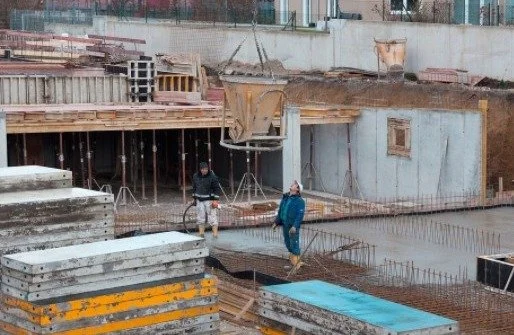
The formwork serves as the mold for the concrete construction. A bad mold cannot produce excellent concrete. Therefore, formwork is critical in creating good concrete. Also, it must be built to withstand the concrete load and the operating load produced by people and equipment.

What is Formwork?

Formwork is a building method that utilizes temporary or permanent molds to pour new concrete that then hardens. Forms or shutters are words used to describe made-up parts that come into contact with the curing concrete. Numerous kinds of formwork can be employed based on the structure's intended function and the project's budget.

Formwork contractors in Sydney, Brisbane, and other major cities will adhere to all safety requirements and offer professional services. You may learn more about how such businesses operate by visiting websites such as www.formworkcontractorssydney.com.

Six of the most often utilized kinds of formwork in the modern building are as follows.

Timber Formwork

This kind of formwork is constructed of wood and plywood. While it is simple to manufacture, it has a limited lifetime. The procedure is lengthy, making it unsuitable for big buildings. Despite this, wood formwork is highly versatile and is suitable for use in complex building sections.

Engineered Formwork

This is a more advanced formwork consisting of prefabricated modules supported by metal frames, usually steel or aluminum. Compared to conventional wood formwork, this formwork is much more expedient to build (using pins, clips, and screws). It is much less expensive than plastic since it can be reused hundreds of times before replacing it.

Reusable Plastic Formwork

This formwork technique employs interlocking and modular components to create highly changeable yet basic structures. This formwork, made of very lightweight and durable panels, is exceptionally well-suited for comparable construction projects such as mass housing developments.

Permanent Insulated Formwork

One of the most sophisticated formwork systems uses permanently insulated formwork to offer extra thermal, acoustic, fire, and rodent resistance. The most popular kind is insulating concrete forms (ICF), which insulate concrete structures with polystyrene foam that remains in place after the concrete has dried. This kind of formwork is energy efficient, ecologically beneficial, and sustainable.

Stay-In-Place Formwork

Typically built on-site and constructed from prefabricated fiber-reinforced plastic forms, this formwork is formed in hollow tubes. It is used to build columns and piers. As the name implies, this formwork remains in place after the concrete has been set and serves as axial and shear reinforcement, preventing corrosion and freeze-thaw cycles. 

Flexible Formwork

This method uses thin but strong fabric sheets that complement the fluidity of concrete by creating highly optimized, artistically fascinating building shapes. Compared to the rigid formwork described before, this flexible formwork utilizes much less concrete, resulting in significant energy savings.

Types of Formwork

So, now that we know about formworks, let us get into the materials used to create different types of formwork.

Timber Formwork

Timber formwork is the most prevalent kind of formwork. Since the beginning of time, timber shapes have been widely utilized in buildings. Therefore, the earliest kind of formwork used in the building is timber formwork.

Steel Formwork

Steel formwork is gaining popularity owing to its strength, durability, and long-term reusability. While steel formwork is expensive for small jobs, it is versatile and may be utilized on a wide variety of tasks.

Aluminum Formwork

As aluminum has a lower density than steel, it is lighter than steel. This is the primary benefit over steel. Aluminum formwork is almost identical to steel formwork.

Plywood Formwork

Plywood formwork is a technique in which re-molded timber resin-bonded plywood sheets are connected to timber frames to create panels of the desired dimensions. It is robust, adaptable, and simple to manage. However, its lifespan is much too short in comparison to that of other materials.

Fabric Formwork

The development and adoption of new technological trends in building planning and design have resulted in a rise in the production of complex-shaped structural elements. That is why fabric formwork is developed. Due to the material's elasticity, it enables the production of concrete in any shape.

The Importance of Formwork in Construction

The use of formwork in construction has several advantages that other techniques cannot match. First, worker safety is critical in the construction industry. Formwork provides sufficient access and work platforms to ensure worker safety during the building process. Additionally, modern formwork ensures the project's structural integrity by providing tailored solutions for all superimposed loads, resulting in very safe and sustainable structures.

Efficient formwork substantially reduces the time needed to construct a building by reducing the floor-to-end construction cycle time. Due to the huge costs of construction, it is essential to use appropriate formwork to control costs and adhere to budget restrictions. In addition, formwork enables project managers to guarantee that formwork resources are mobilized and demobilized correctly and on schedule, improving efficiency and reducing costs.

Finally, the concrete structure's surface finishing quality depends entirely on the formwork employed during construction. Plastering is not required on any roller compacted concrete (RCC) surface when using the Engineered Formwork System. However, the high cost of repairing defective concrete finishing makes it critical to employ high-quality formwork constantly.

The quality of formwork used in construction projects in Australia significantly impacts the project's cost and efficiency as well as worker safety.

Why Should You Choose Formwork Contractors Sydney?

A formwork contractor like Formwork Contractor Sydney builds the required forms for concrete pours and offers associated services like excavation, structural steel installation, and other building components. Individuals in this profession can work for particular businesses, be sent to project sites on a need-to-know basis, or operate as independent contractors. They market their services and take assignments from construction firms, subcontractors, and direct consumers.

When they arrive on a project site, they conduct an assessment to collect data for the forms. Additionally, they inspect building designs that may have been created with the assistance of engineers to verify they are sound and suitable. As a formwork contractor, they have a working understanding of concrete and structural components such as rebar, working knowledge of the building code, and industry norms and procedures. Forms must be capable of securely retaining the concrete as it cures and provides good form and thickness to satisfy code standards.

This project involves more than simple math and plan consultation. For example, a formwork contractor Sydney can work on artistically challenging projects, such as curved and irregularly shaped concrete structures. In these instances, a method for obtaining the required shape may be provided as part of the job, involving complicated bespoke forms. Due to the sophisticated abilities required for such jobs, those with greater experience are more likely to take them on.

Excavation, installing gravel and other drainage systems, and meticulous site preparation before construction are all examples of site preparation for them. Posts may be placed to support the forms, which can be constructed of a variety of materials. Certain companies use reusable forms that may be assembled in numerous ways for various projects. These are more convenient to operate, but they may need considerable modification under challenging situations.

Once everything is in place, they will inspect it and confirm its compliance with the standards with other workers. Concrete may be poured and allowed to dry before they remove the forms and the crew goes on to the project's next phase. Contracting for formwork involves precise preparation since teams must guarantee that concrete installation does not create delays on the project site while minimizing the possibility of mistakes. After the concrete has been poured and hardened, it may be difficult and expensive to repeat the job.

Formwork accounts for roughly 40 to 60 percent of the concrete budget for a given project. Materials comprise a small part of the expense of formwork, most of the money is spent on the labor to assemble and dismantle forms. So, you can choose formwork contractor Sydney, to get all these professional services for your commercial project.

Here are the basics of how formwork is used on the job site.

Formwork in a Construction Site

After reviewing the structural and architectural plans for a project and weighing the various form materials available, the experts and architect-engineers of formwork contractor Sydney will choose a formwork system. After erecting the formwork, workers must treat the interior of the molds with a release agent, such as a wax, oil, or plastic compound that prevents the form from adhering to the concrete.

After installing the form and approving the concrete mixture, workers begin pouring the concrete into the form's empty area. During more significant commercial projects, representatives from the concrete supplier are often on-site. Vibration aids in the consolidation of concrete components and the elimination of air pockets. If required, the building crews may use water or steam to treat the concrete.

After the concrete has cured, the forms are dismantled and removed, a process known as "stripping." The form may be relocated to another part of the worksite, stored for future use, or destroyed if required. Nowadays, the majority of shapes are planned and constructed to be reused hundreds of times.

Conclusion

Numerous changes have occurred in the building sector throughout the years. Formwork is the process of creating a temporary or permanent mold into which concrete is distributed. In Australia, several kinds of formwork are available. The most popular of which are traditional timber formwork, engineered formwork, and concrete formwork. Each of these is utilized following the project's objective and budget.

In a nutshell, formwork is still necessary in today's world since it speeds up and lowers the cost of building. Also, formwork contractor Sydney enables employees to do tasks more efficiently and effectively, resulting in the highest possible formwork quality. 

Here's Why You Need a Water Filtration System at Home

Water is as essential as oxygen. Let's not even start to think about survival without it. Yet since the past few years, this very important component of our lives has been taken for granted. It seems like anyone can just come up with an idea that has nothing to do with water purification and immediately sell it online or offline, claiming that their special product will offer complete protection from all existing harmful elements in the water supply system. There's also a newer invention called the water filtration system. These machines purify water by filtering out all harmful metals, chemicals, and microorganisms. They do a good job of completely removing contaminants from your tap or well water supply system.

Water Test Kits 

In the past, you would need to send a sample of your water supply system to a laboratory for testing. However, with modern technology, there are simple and relatively inexpensive water test kits available online. These can be used by homeowners to determine which harmful chemicals are present in their drinking water source. Usually, the water test kits accuracy is reliable and can be used as a reference for determining the overall quality of your drinking water. The results will indicate if you need to install a water filtration system or not at home. Some types of filters like activated alumina (charcoal) absorb harmful materials making it easy for one's body to expel them through natural means like urine. Think about all the harmful substances that can seep into your body if you or your loved ones drink water filled with heavy metals, chlorine, dangerous toxins, and other dangerous chemicals. In addition to becoming susceptible to cancer, diabetes, heart diseases, and kidney problems, you're also at risk of contracting intestinal parasites from drinking contaminated water.  

What to Look for in a Home Water Filtration System

A water filtration system is designed to remove impurities from the liquid. If you have one, you must test it from time to time because some contaminants may weaken its ability. The more extensive the purification process a home water filtration system uses, the more powerful and effective it will be. Look for a unit that filters out chlorine, sodium, lead, arsenic, radium, asbestos fibers, and hydrocarbons among other dangerous chemicals that can seep into your drinking water supply system. Below are the benefits of owning a home water filtration system.

Safety First   

A water filtration system removes most bacteria, viruses, and parasites that could lead to diseases like cholera, typhoid, dysentery, giardiasis, cryptosporidiosis among many others. Bear in mind that these are only the basic units of purifying your drinking water supply system. Better units come equipped with multi-stage functions that can remove metals, pesticides, herbicides plus other toxic compounds from your household's tap or well water. While it may sound expensive initially you'll be thankful later for this one up on health safety which is priceless. 

Removing Contaminants 

They make it possible to remove 100 percent of contaminants in your drinking water including harmful chemicals like chlorine and fluoride. This means that when you drink this filtered liquid, you already know it won't harm the health of your internal organs or skin upon contact. You can also be sure that no harmful substances will stick to your dishes or clothes after washing because all particles have been removed from the liquid using this machine. In addition, filtered water systems require no electricity to run, unlike UV disinfection units.

Pristine Taste 

Water filtration systems give your water a crisp, clean and fresh taste because it cleans out any impurities that might alter its natural taste. Drinking filtered tap or well water lowers your risk of getting sick with diseases caused by microorganisms such as giardiasis, cryptosporidiosis, cholera, and many others. Filtering water starts at the source. If you filter your tap or well water before drinking it, you need not worry about ingesting any contaminated liquid that may contain chemicals, metals, and other harmful substances. 

Healthier Lifestyle 

Aside from getting rid of all the pollutants in your water supply system, it also makes you feel better and more relaxed because you don't have to worry about becoming ill anymore due to drinking impure liquid. You can improve your overall health if you drink filtered tap or well water every day. When people drink clean water instead of dirty liquid, they no longer get sick with diseases like hepatitis A and typhoid fever. Kidney stones can also be prevented by increasing one's intake of clean filtered liquid every day because the presence of minerals such as magnesium, fluoride, and calcium help prevent this condition from ever occurring. When water is purified using a modern treatment process based on advanced filtration technology, people are able to eliminate the risk of contracting diseases caused by microorganisms in their drinking water supply.

The bottom line is this: Always have a quality filtration system located in each one of your homes for complete protection from harmful elements in the water supply system. By doing so, not only will you be saving yourself from physical harm but also protecting your family's well-being.