The New York Luxury Playbook: How Hospitality Is Rewriting Residential Real Estate
New York City’s property market never really sits still—it reinvents itself. The newest turn in that cycle borrows liberally from five-star hospitality. From concierge-forward condos to hotel-branded residences, the line between “home” and “hotel” is dissolving—reshaping how developers design, how agents pitch, and how buyers judge value. For Off The MRKT readers, here’s what’s driving the crossover and how to spot the next opportunity.
From Amenities to Service Culture
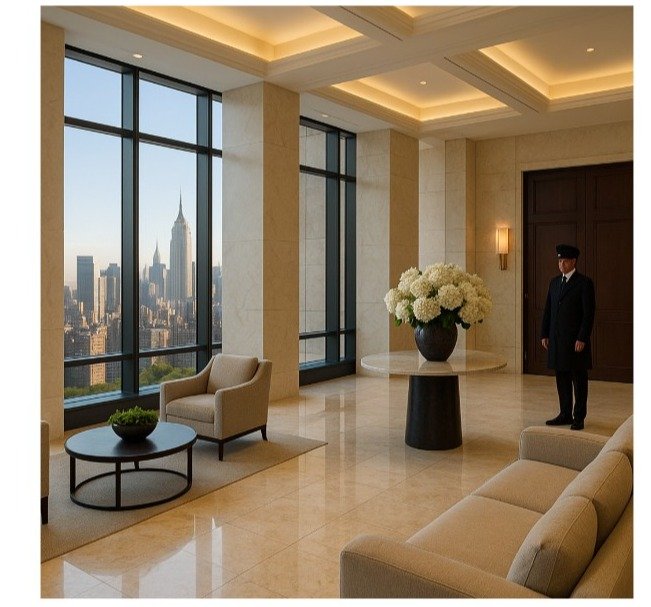
The last decade’s amenity arms race—pools, golf simulators, pet spas—scored headlines. But the quiet differentiator today is service choreography: trained staff, seamless logistics, and tech that makes building operations feel invisible. Buildings are mapping the guest journey the way top hotels map a stay: arrival sequence, scent and sound design in the lobby, elevator speeds, locker placement for cold grocery delivery, and “five-minute fixes” for in-unit nuisances.
For buyers, that translates to real daily utility. A library or co-working lounge is nice; a building that prebooks your service elevator for furniture deliveries, confirms a dog-walker’s identity, and runs preventive maintenance on HVAC before the first hot week is livability—and it supports resale premiums.
Hotel DNA, Residential Soul
Hotel-branded residences used to be a niche. Now they’re a template. The win for developers is credibility and global reach; the win for owners is a familiar service standard and loyalty benefits. The most successful iterations avoid cookie-cutter design and instead localize: think materials with New York provenance, art programs curated with neighborhood galleries, and chef residencies that rotate seasonally.
If you’re touring properties, ask not just “what are the amenities?” but “how are they staffed and programmed?” A quiet yoga studio that’s never scheduled is a missed asset; a modest rooftop that hosts chef pop-ups and sommelier talks becomes a community magnet.
Hospitality Benchmarks Buyers Now Use
Even if you’re not purchasing in a branded building, buyers are increasingly benchmarking their expectations against stays at 5-star hotels in New York City—and bringing those standards to showings. That means scrutinizing:
Circulation: Are lobby bottlenecks eliminated? Do delivery routes bypass residents?
Acoustics: Do partitions and door sweeps protect sleep like a quiet-suite stack?
Lighting: Layered, dimmable, warm; daylight where it counts (kitchens, work zones).
Back-of-house: Trash, linen, and package flows you’ll never see—because they work.
Agents who speak this language instantly elevate a walkthrough.
The Rise of the “Hotelized” Floor Plan
Layouts are subtly shifting. Foyers return as decompression zones with concealed storage; powder rooms are placed for entertaining; secondary bedrooms flex to office/guest suites with pocket doors and wet bars. Primary baths borrow wellness cues: heated stone, steam-ready enclosures, integrated speakers, and ventilation engineered for spa-level air exchanges.
Kitchens go two ways: gallery-efficient for frequent dining out, or “chef’s counter” social hubs that seat six—mirroring restaurant energy for at-home tasting menus. Both are valid; the trick is to understand the target resident and stage accordingly.
Operations Tech That Actually Matters
Smart homes are past the novelty phase. What matters is interoperability and support. Systems that unify access control, visitor management, package tracking, and service requests on one app reduce friction. For investors, this consistency boosts tenant satisfaction and lowers churn. For owner-occupiers, it’s the difference between “techy” and truly easy.
Pro tip for purchasers: Ask who supports the stack post-closing. A building with an on-site tech concierge or a contracted provider for firmware updates is future-proofed compared to one relying on board volunteers.
Financing, HOA Reality, and the Premium Question
Do hotel-style services justify higher common charges? Sometimes. Look past the headline number and into cost per function: 24/7 coverage, on-call engineering, porter service, and programmatic activation (fitness classes, kids’ workshops). If the staffing model turns fixed costs into daily value, premiums can be rational.
For investors, furnished leasing programs—run in accordance with local regulations—are growing. Some buildings maintain a controlled inventory of designer-furnished units for 6–12 month leases, appealing to relocation executives who value a turn-key landing. Compliance and transparency are crucial; buyers should review house rules and city guidelines before underwriting returns.
Adaptive Reuse: Where Character Meets Comfort
A large share of the most interesting inventory today lives in conversions—historic office towers or manufacturing buildings remade as residences. Developers pair preserved façades and high ceilings with hotel-grade MEP (mechanical, electrical, plumbing) systems and acoustics. The result: character without compromise. Watch for heritage lobbies restored with contemporary lighting and art commissions—instant brand equity for a building’s identity.
Neighborhood Notes: Luxury’s Next Zip Codes
NoMad & Flatiron: Hospitality-forward micro-district. Dining density, boutique gyms, and proximity to Midtown and tech corridors.
Financial District to Seaport: Adaptive reuse, revamped waterfront, and a calmer after-hours vibe that appeals to global buyers seeking quiet luxury.
Upper West Side (Lincoln Square): Culture as amenity—opera, ballet, and park access—paired with a surge in attentive, family-centric services.
Long Island City: Skyline views and swift Midtown access; amenity programs can outperform Manhattan for the price point, a draw for first-time luxury buyers.
Staging the Experience (Not Just the Unit)
Hospitality thinking can elevate a sale even in a classic co-op. Replace generic staging with an experiential run-of-show: scent, playlist, warm lamping, and a “turn-down” look for the primary suite. Offer a prebooked, building-approved moving concierge as part of the contract. Provide buyers a one-page “life logistics” map: best dry cleaner, 24/7 pharmacy, dog-friendly parks, and delivery elevator details. You’re not selling square footage; you’re selling a supported life.
What It Means for Sellers and Agents
Lead with operations: Publish staff ratios, response times, and amenity programming calendars in your materials.
Translate CapEx to comfort: If the board invested in chiller replacement or façade work, frame it as quieter nights and lower surprise costs.
Offer hotel-quality photography: Natural-light shots at “golden hour,” close-ups of tactile finishes, and vignettes that feel like a suite reveal.
What It Means for Buyers
Audit the service layer: Tour at shift change. Are uniforms consistent? Does the desk greet residents by name?
Check the playbook: Ask to see SOPs (standard operating procedures) for deliveries, emergencies, and after-hours coverage.
Future-proofing: Look for dedicated package rooms with cold storage, EV-ready parking, and mechanical systems sized for the building’s real usage—not just code minimums.
The Bottom Line
New York real estate is absorbing the best of luxury hospitality—less about spectacle, more about how the day flows. Buildings that deliver discreet, professional service and frictionless logistics will outperform in both quality of life and long-term value. Whether you’re shopping for a penthouse or a well-run two-bed, evaluate the experience like a hotelier: arrival, rest, ritual, and reliability. That’s the new standard—and the smartest way to play the market.