Trex vs. TimberTech vs. Fiberon: How a Composite Decking Contractor Chooses the Right Brand for Your Project
Every year, the same question comes up: Trex, TimberTech, or Fiberon? It's the most common thing homeowners ask before a deck project gets off the ground. And honestly, it's a fair one. These three brands dominate the market, and each one has a solid pitch. But here's what the ads won't tell you: picking a brand isn't a marketing call. It's a technical decision. Any experienced composite decking contractor will say the "best" brand is the one that actually fits your project, not the one with the most Instagram posts. Let's break down how that decision really gets made.

Why Brand Selection Is Part of the Contractor's Job
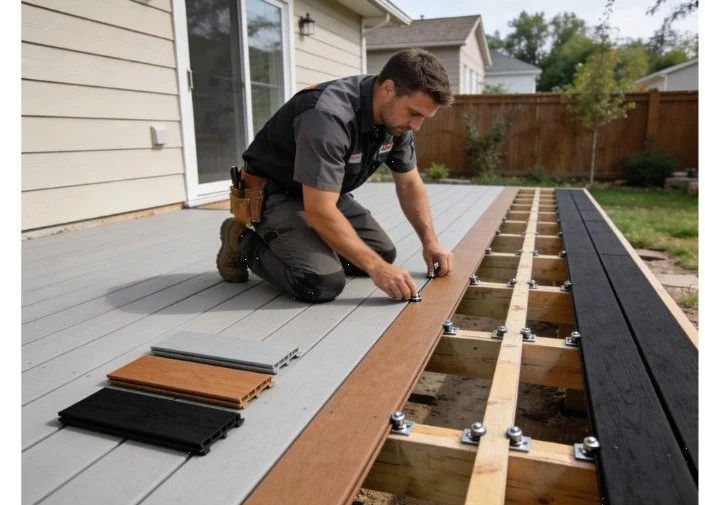
Most people assume composite boards are basically the same product in different packaging. They're not. Each brand runs on its own fastener system, its own compatible trims, and specific substructure requirements underneath the boards. Use the wrong fastener with Fiberon's interlocking system and you've just voided your warranty. Install Trex with the wrong joist spacing and you'll notice flex within a couple of seasons. That kind of thing is not covered by anyone.
It also matters whether your installer is brand-certified. Trex Pro and TimberTech PRO contractors have access to extended warranty tiers that standard or DIY installs simply don't qualify for. A certified deck builder isn't just following a checklist. They're protecting the long-term value of what you're paying for.
Trex: The Industry Standard
Trex has been around since 1996, and that kind of track record means something. The boards are made from up to 95% recycled materials, mostly reclaimed wood fiber and plastic film collected from places like grocery store drop-offs. It's one of the more eco-conscious manufacturing stories in the building industry, and it's not just marketing copy.
The lineup runs five tiers: Enhance Basics, Enhance Naturals, Select, Transcend, and Transcend Lineage. Entry-level options are genuinely solid, and the top-tier Transcend line comes with embossed grain patterns that hold up well over time. Installation is straightforward, and the boards play nicely with most standard substructure setups, which keeps labor hours down. Warranties last between 25 and 50 years, depending on which line you choose.
When a Contractor Recommends Trex
Trex fits well when the project has a real budget ceiling, and the client still wants reliable, long-lasting results. It's also the easiest brand to source on short notice, which matters more than people think when a project timeline is tight.
One honest limitation: Trex uses a more open board structure compared to the fully capped options from Fiberon or TimberTech. In humid climates, that structure can absorb slightly more moisture over the years. Not a catastrophic issue, but worth factoring in for projects in wetter parts of the country.
TimberTech: The Premium Performer
TimberTech splits into three tiers: EDGE for entry-level builds, PRO for mid-range, and AZEK for premium. That last one is where things get interesting. AZEK is a full PVC product, not a wood-composite blend, which means it genuinely doesn't absorb water. Zero. That's a real structural advantage when you're building near a pool, on a waterfront lot, or anywhere that sees serious seasonal humidity.
The grain texture on TimberTech boards, especially in the PRO and AZEK lines, is the most realistic wood finish available right now. It's the kind of thing clients notice when they walk out to see the finished deck. Warranties go up to 50 years on composite lines, and AZEK carries a lifetime warranty.
When a Contractor Recommends TimberTech
Coastal builds, pool surrounds, and high-humidity regions are where TimberTech earns its reputation. When the project brief calls for aesthetics at the top of the priority list and the budget supports it, TimberTech is usually where the conversation ends up.
Fair warning: it's more demanding to install correctly than Trex. The learning curve is real, which is why it genuinely works best when a contractor with specific experience on that product line is involved.
Fiberon: The Best-Value Contender
Fiberon doesn't always get the same name recognition, but contractors who've worked with it know it consistently outperforms its price point. The big differentiator is the PermaTech cap system. On premium lines, all four sides of each board are fully encapsulated, not just the top surface and edges. That four-sided protection is measurably better for mold and moisture resistance than what most competitors offer at a comparable price.
The lineup goes from Good Life at the entry level up through Concordia and Promenade. That top tier was specifically engineered with pool decks in mind, with enhanced UV color stability and slip resistance built into the surface profile. Premium lines carry a 50-year stain and fade warranty, which is as competitive as anything in this category. The interlocking fastener system also speeds up installation, which is a practical benefit that shows up in project timelines.
When a Contractor Recommends Fiberon
Humid climates, particularly the Southeast and coastal regions, are where Fiberon's four-sided cap earns its place. It also comes in the widest color selection of the three brands, which opens up more design flexibility on custom projects. For clients who want strong, long-lasting performance without paying TimberTech prices, Fiberon is often the most sensible recommendation.
Head-to-Head: How the Key Factors Stack Up
Here's how all three brands compare across the factors that actually shape a professional recommendation:
Price: Fiberon is the most budget-friendly, Trex falls in the midrange, and TimberTech ranges from mid to premium, depending on the line.
Eco-friendliness: Trex and Fiberon both use 94-96% recycled content. TimberTech leans on sustainable polymer engineering rather than recycled feedstock.
Mold and moisture resistance: Fiberon and TimberTech (especially AZEK) lead here. Trex is solid but doesn't match their capped protection in wet conditions.
Aesthetic realism: TimberTech is the clear winner. Fiberon is close behind, and Trex handles it well for the price.
Warranty length: All three offer 25-50 year coverage on composite lines. TimberTech's AZEK stands alone with a lifetime warranty.
Installation complexity: Trex and Fiberon are manageable for experienced DIYers. TimberTech really performs best with a certified professional on the job.
Best climate fit: Trex works well anywhere. Fiberon shines in humid and wet regions. TimberTech is the go-to for coastal and extreme-condition builds.
No single brand wins every category. That's the whole point. Where your project sits in that mix is what actually drives the final call, not brand loyalty.
Questions to Ask Your Composite Decking Contractor About Brand Selection
Before signing off on any brand, it's worth having a direct conversation with the installer. Here are the questions that actually matter:
✅ Are you certified or authorized under this brand's installer program?
✅ What warranty level applies to professional installation versus standard coverage?
✅ Is this brand compatible with the substructure you're planning to use on my project?
✅ Have you installed this specific product line before, and on what kind of builds?
✅ How does this brand typically perform in my local climate?
✅ Will my material choice affect the project timeline or local material availability?
These aren't trick questions. A contractor who knows their craft will answer them without hesitation. If the responses feel vague or the subject gets changed, that's useful information on its own.
Making the Right Call
Choosing between Trex, TimberTech, and Fiberon is not something a brand's website can do for you. It takes someone who understands the materials, knows the local conditions, and has seen how each product actually performs over time. That's exactly the kind of conversation you should be having before anything gets ordered.
The right composite decking contractor will walk you through these trade-offs before a single board is ordered, not after the fact. That's not a small thing. It's the difference between a deck you're still happy with ten years from now and one you're already budgeting to replace.