Trends And Opportunities For Driving Jobs in The Future

When engineers first started discussing autonomous vehicles, people were very skeptical. Once these vehicles hit the road, high-profile accidents convinced quite a few that they would never become commonplace. They were wrong.

In 2021, the autonomous vehicle market was valued at approximately $19.5 billion. Experts believe that this figure will grow to $74.4 billion by 2027.  The fear is that drivers will lose their jobs as automation takes over more tasks they complete behind the wheel. What will autonomous vehicles mean for driving jobs in the future? Individuals driving for Dino's Logistics and other companies would like the answer to this question.

Driving Jobs

Many people express concern that automated vehicles will eliminate driving jobs. However, individuals must realize that the future will be more automated, and drivers must adapt as everyone else will need to. Self-driving vehicles may not be the norm for quite some time, but vehicles coming off assembly lines today are equipped with automation. Drivers have already familiarized themselves with this automation to maintain their skills and a competitive industry. They will need to continue to adapt as vehicles become less reliant on human input.

Self-Driving Vehicles

Industry insiders do not believe that all vehicles will be fully autonomous within the coming years. However, many self-driving cars will be an option for consumers and businesses within the next two or three years. In today's environment, autonomy is preferred in countless situations. However, driving professions will continue. The roles of a driver will change, but humans will still be needed. 

The Evolution of Driving Jobs

Drivers will continue to be able to find employment even as autonomous vehicles become more commonplace. Their job descriptions will shift, however. A chauffeur driver, for example, will focus entirely on the passenger experience rather than transporting individuals between locations. Truck drivers may no longer sit behind the wheel. They may be tasked with overseeing a fleet of autonomous trucks. Their job will be to ensure each truck operates safely and efficiently, so their duties will be more like those of a logistics manager than a conventional driver. Delivery drivers may take on new tasks, such as handling customer service or assembling consumer products.

Technology

Drivers benefit significantly from industry advances. They use location data and services to learn about real-time traffic conditions. The same services alert them to shipping delays so they can alert customers if their products don't arrive on time. Drivers also benefit from location data because they can find the optimal delivery route. Automated vehicles will help the industry because labor shortages will be less of a concern. Operations can continue seamlessly with the help of these advances. 

Furthermore, drivers will still need to keep vehicles clean and secure. They will also be tasked with ensuring passenger safety, assisting customers, and providing them with a personalized experience. Autonomous vehicles cannot replace the human touch, and this will never change. Drivers will remain relevant now and in the future. 

Driving can be monotonous. Truck drivers spend countless hours on the road and become distracted while watching the white lines pass. The same holds for others who spend significant time on the road. Autonomous vehicles will make roads safer without sacrificing driving jobs. Drivers can focus on tasks like providing customers with outstanding experiences. This customer-centric approach will allow them to adapt and thrive in an evolving environment. They won't lose their jobs; they will take on new roles, which many will appreciate.


Understanding Emotional vs. Physical Cheating: Key Differences and Signs

Cheating hurts relationships, but knowing the types helps you recognize the signs and rebuild trust.

Emotional and physical cheating are different in how they happen and how they affect relationships.

Knowing that difference is key to addressing problems early.

What Is Emotional Cheating?

Emotional infidelity is defined as entering an emotionally intimate association with a person other than a partner.

They first converse, it may be on some random topic, and over the course of that conversation, that bond develops.

Individuals are used to share personal ideas, moods, and confidences with the third person that he or she should be sharing with the spouse.

It results in the primary relationship deteriorating and the emotional aspect of the relationship being concealed from the partner. A study from Science Daily says 60% of people think emotional cheating is as bad or even worse than physical cheating.

It creates a sense of betrayal and emotional distance in a relationship.

What Is Physical Cheating?

Physical cheating is being intimate physically with a person who is not your partner. These can range right from just kissing to being sexually involved with one another. Physical cheating is easier to notice as it creates some form of proof, a partner suddenly developing an erratic schedule, and missing appointments. Tools like hidden tracking apps have even been used by individuals suspicious of infidelity. Learn how technology like iOS updates is impacting this landscape with resources like this guide to catch cheaters on iPhone. These advancements make it easier than ever to detect unusual activity, providing a new layer of accountability in relationships. One might not share sentiments with the partner, but physical betrayal is also capable of compromising trust in the relationship. 

A 2022 Statista survey found 23% of people have cheated physically in their lifetime.

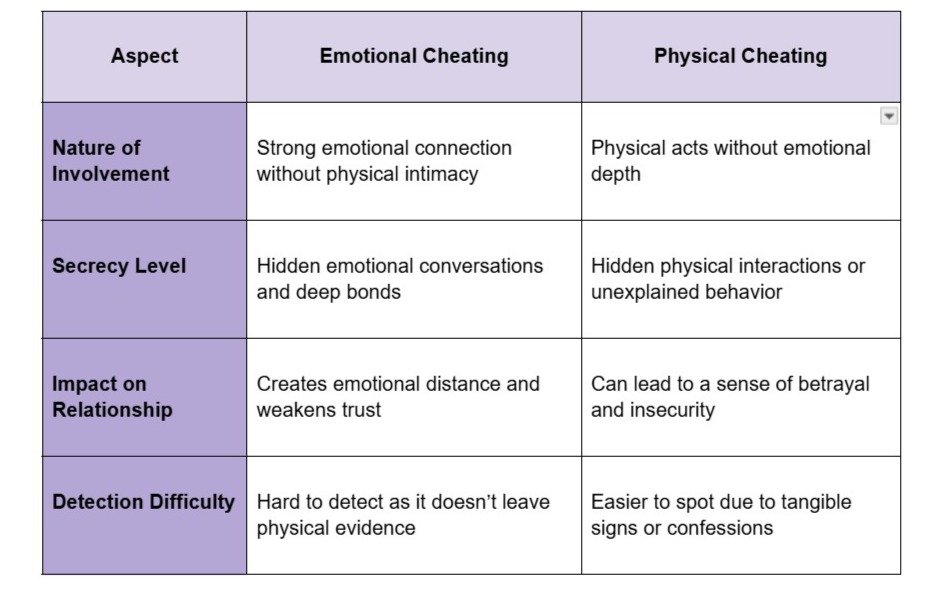
Emotional vs Physical Cheating

Emotional and physical cheating are different, though they can sometimes overlap. Knowing the differences can help you address the problem.

Signs of Emotional Cheating

Emotional cheating can be hard to spot because there are no physical signs. But some behaviors can indicate an emotional affair:

●      Hiding Conversations: If your partner hides texts or chats, they might be bonding with someone else.

●      Less Emotional Intimacy: They might stop sharing their feelings or listening to yours.

●      Prioritizing Someone Else: Constantly texting or meeting someone more than usual.

●      Secrecy About Their Day: They don’t tell you about their daily interactions.

Signs of Physical Cheating

Physical cheating usually leaves signs. Watch out for:

●      Changes in Intimacy: They avoid physical touch or become more affectionate out of guilt.

●      Unusual Behavior: They start working late or taking frequent trips without a reason.

●      Physical Evidence: Finding items like unknown receipts, phone numbers or physical intimacy signs.

Emotional and Physical Cheating Overlap

Emotional and physical cheating overlap. A partner might start with an emotional bond which leads to physical intimacy. Some of those emotional affairs often turn physical. This makes it even harder for people to trust again after cheating is discovered.

Spynger can help you uncover overlaps by monitoring both emotional interactions and physical activities. This will give you a clearer picture of what’s going on in your relationship.

How to Deal with Cheating in Your Relationship

Discovering your partner cheated is painful but handling it with care can help you both move forward. Here’s what you can do:

  1. Stay Cool: Take time to think before you act.

  2. Get Evidence: Use Spynger to confirm your doubts.

  3. Have an Honest Chat: Talk about what you’ve seen and how you feel.

  4. Seek Counseling: A professional can help with trust and communication issues.

  5. Decide What to Do: Do you want to rebuild trust or move on?

Trust is Key

Cheating breaks trust, which is the base of any relationship. Rebuilding it takes effort, time, and openness from both partners.

Tools like Spynger make it easier to uncover the truth, giving you the clarity to decide what’s best for your future.

Conclusion

It can be as heartless as cheating on someone emotionally, or as cruel as physically cheating on them; nonetheless, knowing about it will do you good.

Spynger is useful especially for those who are in a search of the truth.

Understanding that work in this context means the fact-finding approach and effective communication, the couples have a chance to rebuild their relationships or pave the way to new relationships.

Have faith in your gut feeling, just make sure you have facts to support your actions. Spynger is always available to support you throughout the entire process.


6 Dos and Don’ts for Bringing Your Dog to Popular Tourist Spots

Many pet owners enjoy traveling with their dogs because it offers them an opportunity to explore new places through a new lens—often one that involves more excitement and attention to the little things, like the smells and sounds of an unfamiliar destination. If you’re visiting a popular tourist spot, your dog can be a wonderful companion on your adventure and turn an otherwise by-the-books tourist experience into something extraordinary. 

However, preparing your dog for a visit to a particularly busy destination requires more than just packing their leash and heading out the door. Popular tourist spots often come with their own set of rules, expectations, and challenges, which is why it’s important to approach the outing with care.

When visiting any of these spots with your dog, make their comfort and safety one of your top priorities. At the same time, you need to be considerate of other visitors, not all of whom may be comfortable around dogs. Some may have allergies, fears, or simply prefer to avoid pets in public spaces. If your dog is allowed to be in a tourist spot, it’s your responsibility to make sure they’re on their best behavior.

To guarantee a smooth and enjoyable experience for both you and your dog, as well as for other visitors, here are some key dos and don’ts:

1) Do Inquire If Dogs Are Allowed

Not all tourist spots are pet-friendly by default, and some have specific policies regarding dogs. Before you pack up and head out, take the time to research whether dogs are allowed at your chosen destination. A number of popular attractions, like parks, beaches, and outdoor areas, are already pet-friendly, but others, such as museums, restaurants, or historical sites, may have certain restrictions. 

Some locations may even have specific times or designated areas for pets. Check in advance so that you and your dog won’t face any unpleasant surprises. Simply doing your research can save you time and allow you to avoid situations where you may need to leave or find alternative accommodations for your pet.

2) Do Pack a Bag of Your Dog’s Essentials

Just as you would prepare for your own trip, it’s essential to pack for your pet’s needs when visiting a tourist spot. A well-prepared pet bag will make the day a lot more comfortable for your dog. 

Some pet essentials that you should bring for your excursion include water and a portable bowl to keep your dog hydrated, especially during the warmer months. Pack snacks or treats that your dog enjoys, and always bring enough waste bags to clean up after your pet. 

Depending on the length of your outing, it may also be wise to bring extra dog collars, leashes, custom dog bandanas for travel, and harnesses so that you always have one ready in case what your pet is using breaks or gets lost. You should also have a pet first aid kit—with basic supplies like bandages, antiseptic wipes, and any necessary medication—either on your person or nearby in your car to help you handle minor emergencies.

3) Do Make Sure Your Dog Relieves Themselves Before Entering the Spot

Before entering crowded or restricted areas, make sure your dog has had the chance to relieve themselves. This step will prevent any accidents inside the location and will keep your dog comfortable during your visit. 

Not all tourist spots have designated areas for pet relief, so it’s a good idea to find a quiet spot away from the main crowds where your dog can do their business before you enter the more crowded attractions. 

If your pet happens to relieve themselves while you’re in a public space, make sure to pick up after them. It’s basic decency to do so, and it will help maintain the space for others to enjoy. 

4) Do Socialize and Make Friends

Certain tourist spots attract other dog lovers, providing an excellent opportunity for your dog to socialize with others. Let your dog interact with well-behaved dogs they meet along the way, but always monitor their behavior. Some dogs may be shy, anxious, or territorial, so it’s essential for you to read their body language and respect their space. 

Likewise, encourage other visitors to interact with your dog, but only if your pet is comfortable and calm. Socializing is an excellent way for dogs to develop better behavior in public settings, which is especially useful if you plan to visit more tourist spots in the future.

5) Don’t Bring Your Dog if It’s Their First Time

If your dog is new to public spaces or has never been in large crowds before, it might be overwhelming for them to go with you to a crowded tourist spot. You must consider that tourist spots are often noisy, busy, and unfamiliar, which may cause anxiety and even lead to behavioral issues in pets who are not accustomed to such environments. 

Before your dog’s first outing to a crowded or bustling location, start with smaller, quieter places where they can gradually adjust. Consider taking them to pet-friendly cafés, local parks, or quieter walking trails before visiting the more popular tourist destinations.

6) Don’t Forget to Be Respectful of Others

Remember that not everyone may be excited to see or interact with your dog. While it’s easy to assume everyone loves pets, it’s essential to be considerate of other people’s preferences. 

Always be aware of your dog’s behavior and how it may affect others. For instance, not everyone appreciates a dog barking loudly, especially in calm or quiet areas. In addition, if your dog is engaging with other pets or people, ensure it’s done in a non-disruptive way. 

These dos and don’ts should help ensure that your dog has a pleasant time and that you contribute to a positive, pet-friendly environment for everyone. Prep accordingly so that your dog and the people around you can enjoy their day at a tourist spot as much as you do.   

What Is Considered Luxury Real Estate?

What makes a property “luxury”? It’s a question that intrigues anyone who dreams of owning a piece of the high-end real estate market. Luxury homes have an undeniable allure. They represent more than just a place to live—they’re a lifestyle, a status symbol, and often, a work of art. For instance, if you’ve ever looked into San Miguel de Allende real estate, you’ve probably noticed how effortlessly some properties blend opulence with charm. It’s no wonder so many people are captivated by this market. Curious to learn more about what sets luxury properties apart? Let’s dive in.

The Growing Appeal of Luxury Properties

Why do people crave luxury real estate? It’s not just about having a roof over their heads. It’s about having the roof. Think of breathtaking views, cutting-edge amenities, and unparalleled privacy. Luxury homes offer more than a living space; they create an experience.


For some, it’s about status. Owning a high-end property signals success. For others, it’s about comfort and exclusivity. Imagine hosting friends in a sprawling estate or waking up to panoramic ocean views. Sounds appealing, doesn’t it?

Another reason? Investment potential. Luxury properties often appreciate in value, especially in prime locations. People know that their money is not just being spent—it’s being wisely placed. Let’s explore what exactly makes a home worthy of the “luxury” label.

Key Characteristics of Luxury Real Estate

Not all expensive homes are luxury homes. Here’s what really sets them apart:

Prime Location

Location is everything. A luxury property might sit on a pristine beachfront, atop a hill with city views, or in the heart of an exclusive urban neighborhood. Think Beverly Hills, Monaco, or, yes, San Miguel de Allende. It’s not just about the address—it’s about what comes with it. Proximity to cultural landmarks, fine dining, and top schools often plays a big role.

High-End Materials and Craftsmanship

Step into any luxury property, and you’ll immediately notice the difference. Marble countertops. Imported hardwood floors. Custom cabinetry. These homes are built with the best materials and attention to detail. Everything feels intentional and meticulously crafted—because it is.

Unique Architectural Design

Luxury homes are anything but cookie-cutter. Some are modern masterpieces with clean lines and open spaces. Others exude classic elegance, with ornate moldings and grand staircases. The common thread? Each property has its own identity, designed to stand out.

Amenities and Features

A luxury home isn’t just about the basics. It’s about the extras. Think infinity pools, wine cellars, private theaters, and sprawling outdoor spaces. And the latest trend? Smart home technology. From voice-activated lighting to automated climate control, these features are becoming a must-have.

Privacy and Exclusivity

Luxury homeowners value their privacy. Gated communities, high walls, and advanced security systems are often part of the package. But it’s not just about keeping the world out—it’s about creating a personal retreat.

Types of Luxury Properties

Luxury comes in many forms. Here are some of the most common:

Mansions and Estates

The classic image of luxury real estate. These sprawling properties often come with acres of land, guest houses, and even private golf courses. They’re perfect for those who dream big—literally.

Penthouses and Luxury Apartments

Not all luxury is suburban. Urban dwellers flock to penthouses for their unbeatable views and prime locations. Rooftop terraces, floor-to-ceiling windows, and concierge services often sweeten the deal.

Waterfront Properties

There’s something magical about living by the water. Whether it’s an oceanfront villa or a lakehouse, these properties offer tranquility and stunning views. And yes, they usually come with private docks or beaches.

Historic and Heritage Homes

For those who appreciate history, these homes are treasures. Think of centuries-old architecture paired with modern upgrades. They’re rare and often hold sentimental or cultural value.

Smart and Sustainable Luxury Homes

The future is here. Many luxury properties now prioritize eco-friendliness, with features like solar panels and energy-efficient designs. Add smart home systems to the mix, and you’ve got a perfect blend of technology and sustainability.

Factors That Influence Luxury Real Estate Value

Why do some luxury properties cost millions more than others? Let’s break it down:

Market Demand and Trends

Like any market, luxury real estate is influenced by supply and demand. If a location becomes trendy, its property values often soar. Similarly, emerging trends like sustainable living or remote work can shape what buyers prioritize.

Location Prestige and Accessibility

Some addresses simply carry more weight. A home in a world-famous neighborhood or a property close to major business hubs will often fetch a higher price. Convenience matters, too. Easy access to airports, highways, and amenities adds value.

Views and Surroundings

A stunning view can make or break a property’s appeal. Think oceanfront, mountain vistas, or city skylines. Surroundings also matter. Homes near parks, beaches, or cultural landmarks tend to hold their value.

Brand Associations

In luxury real estate, names matter. A home designed by a renowned architect or built by a prestigious developer often commands a premium price. It’s like owning a piece of art.

Who Buys Luxury Real Estate?

Who are the buyers snapping up these properties? They’re as diverse as the homes themselves. Some are high-net-worth individuals looking for a primary residence. Others are investors betting on long-term value appreciation. And then there are the celebrities and business moguls seeking a private retreat.

Interestingly, younger buyers are entering the luxury market. Millennials and Gen Z aren’t just renting anymore—they’re buying, often prioritizing tech-forward and sustainable homes.

Future Trends in Luxury Real Estate

The luxury market never stands still. Here’s what’s on the horizon:

  • Sustainability: Green homes are in demand. Solar panels, energy-efficient designs, and eco-friendly materials are becoming standard.

  • Technology: Smart homes are getting smarter. From AI-powered security systems to automated wine storage, the possibilities are endless.

  • Personalization: Buyers want homes tailored to their tastes. Custom-built features and unique designs are gaining popularity.

A World Beyond Four Walls

So, what’s the takeaway? Luxury real estate isn’t just about price tags. It’s about experiences. Whether it’s a villa in San Miguel de Allende or a penthouse overlooking Manhattan, these homes offer something unique—a blend of comfort, exclusivity, and artistry. Interested in stepping into this world? Understanding what makes a property “luxury” is the first step.