The Ultimate Engagement Ring Guide for Lab-Grown Diamond Lovers
It is common knowledge that diamonds are expensive, but what if they do not have to? This is the exact reason why the industry for lab-grown diamonds is so successful. A diamond's extraordinary formation process, legendary toughness, and stunning beauty allow everyone to appreciate it for what it is. Regretfully, the sum of these attributes results in figures that are difficult for the typical individual to defend. Synthetic diamonds are useful in this situation. You can save a lot of money by selecting a lab-grown diamond from Rare Carat for your engagement ring, which was created by people rather than Mother Nature.
A Grown Diamond: What Is It?
For the avoidance of doubt, lab-created diamonds are not "fake." They are as genuine as diamonds that have been mined. "Given that one was created by humans, how can they both be genuine diamonds?" To put it simply, lab-grown and earth-grown diamonds are the same material; the only distinction is the method of production. They are the same, feel the same, and appear the same when sliced. Although the average person cannot identify these diamonds, gemologists can use internal inclusions to determine the diamond's identity. Not identifying your diamonds as synthetic, lab-grown, or man-made is a terrible practice in the jewelry industry. You will lose your reputation and respect in the industry if you do not accomplish this. And in the impossible occasion that we don’t have the culminate ring for you in stock, we can custom-create precisely what you need with our bespoke plan service. Check diamond price from the brand Rare Carat.
In the diamond industry, there are two common creation techniques. High-pressure high-temperature (HPHT) and chemical vapor deposition (CVD) are two examples.
Diamonds Treated with HPHT
A natural or synthetic diamond that has undergone treatment might also be referred to as HPHT. This kind of treatment could be applied to a diamond to enhance its color or clarity. Color-causing trace elements like nitrogen and boron can be utilized to generate yellow and blue diamonds, whereas diamonds can be treated to become colorless or almost colorless. Alternatively, in the case of pink diamonds, a diamond is exposed to specific conditions that produce the distinctive crystal structure that gives diamonds their pink hue. When you start with a low-quality diamond and transform it into a stunning, highly sought-after gem, HPHT treatment is similar to recycling.
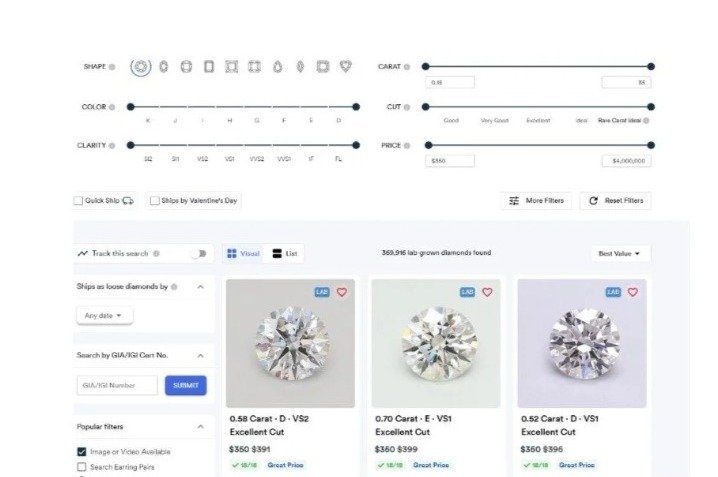
You are entering the advanced research phase of your search for lab-grown diamonds if you are searching for HPHT vs. CVD diamonds on Google! The topic of whether to prepare wontons steamed or fried is similar in that both methods use the same components, but they cook them in different ways. Alright, so it may not be the same. In order to clarify the distinctions between the HPHT and CVD diamond-making methods, I will first discuss what a lab-grown diamond is and how it differs from a natural diamond. You have been waiting for this instructive post about lab-grown diamonds! It's one thing doing your week after week shopping online, but the ring has to be that one thing that you do the legwork for and go to the shops yourself. Rare Carat
What is a diamond created in a lab?
Thanks to marketing, diamonds are not only one of the most sought-after jewels in the world, but the diamond industry is worth billions of dollars, encompassing both the industrial sector (which lab
A diamond press that can exert tremendous pressure on a small central container is used in the HPHT process. A seed crystal, carbon atoms, and metallic flux—a growth agent—are all contained in this container. The carbon atoms travel via the metallic flux in the direction of the seed crystal, where they start to crystallize, due to the heat and high pressure. Over time, the crystal will continue to enlarge and eventually form a whole diamond.
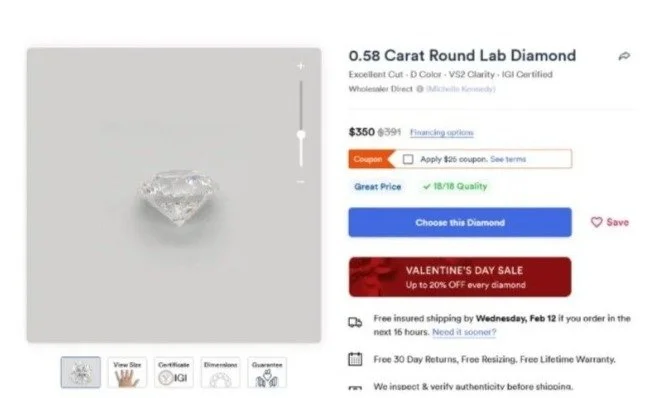
For anyone, the idea of becoming engaged might raise important considerations, such as what constitutes the ideal proposal. Are they going to say yes? What kind of diamond should I get, of course? In the past, there were few options for that final inquiry, which primarily asked what shape diamond your sweetheart could want. However, my buddy, there is a new player in this race. Now you have to decide whether to get a lab-grown or genuine diamond.
What Does "Lab-created" Mean?
Laboratory-created stones used to be considered "synthetic stand-ins" for the real thing, but those days are long gone. Modern technology has made it possible to create real diamonds in a lab setting that are pure-carbon rough and have the same chemical structure and optical characteristics as conventional, earth-mined stones. These stones are worth considering for this once-in-a-lifetime purchase.

