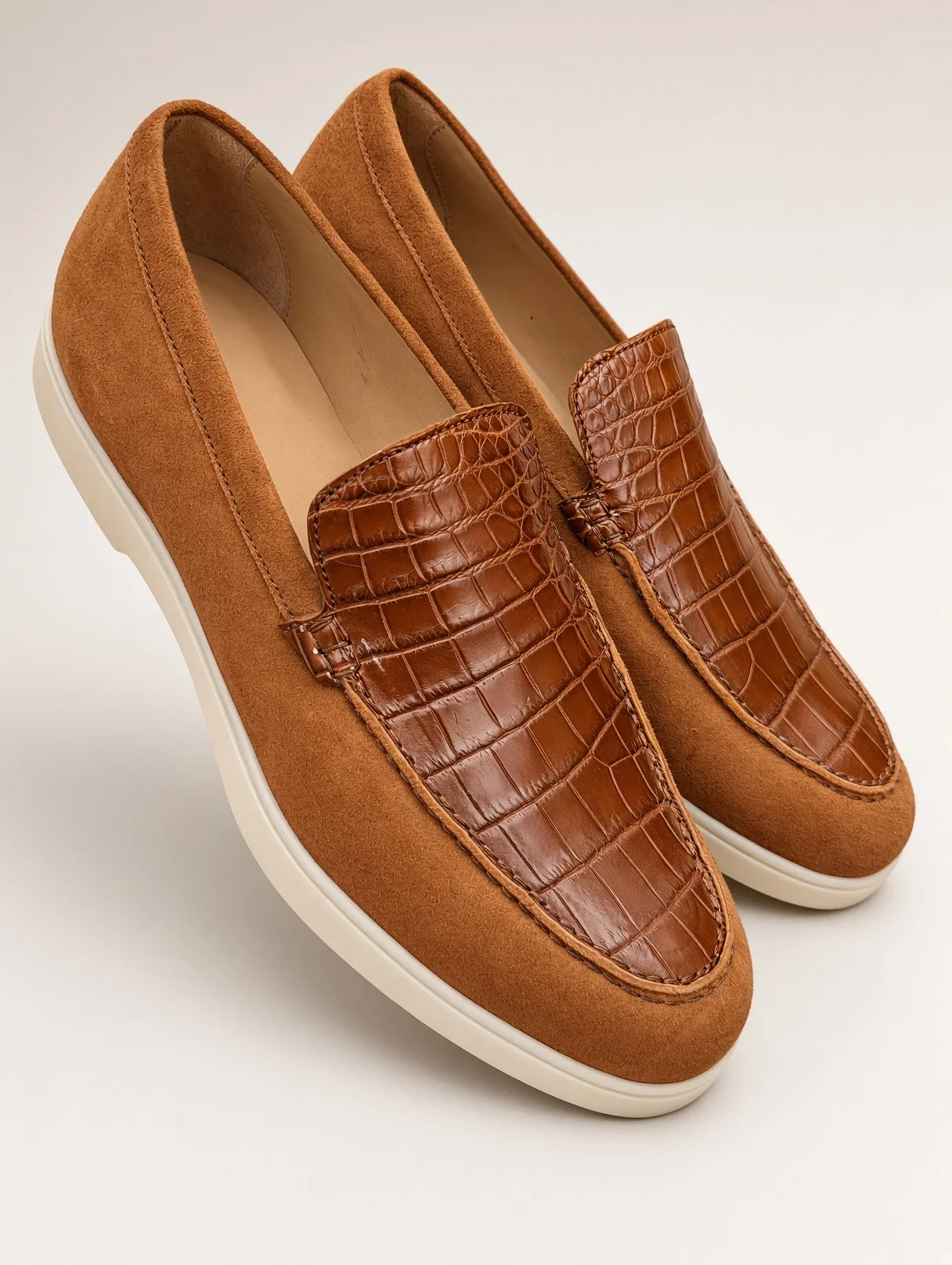
Made-to-Measure Crocodile Shoes: A Buyer's Guide to the Quietest Status Symbol
A good watch gets noticed. A good pair of shoes gets noticed by the people who know. And among those people, few things say more than crocodile leather that was cut and stitched for one pair of feet.
Crocodile shoes have moved a long way from the shiny dress shoe of the past. Today the most interesting pairs are soft loafers, clean sneakers and suede styles with a single crocodile panel. If you are thinking about a pair, here is what to look for and what to ask.
Why Crocodile at All?
The answer is the scale pattern. No two skins are alike, and the pattern never repeats. The belly of the animal gives small, flat, regular tiles, while the flanks show rounder, bolder scales. A shoemaker uses that difference on purpose: fine tiles across the vamp, where the eye lands first, and a calmer section along the sides.
Crocodile also holds its shape. Where calfskin softens and creases with wear, a crocodile upper keeps its line for years.
Real Skin or a Printed Pattern?
This is the first question to settle, because a lot of what is sold as "croc" is cowhide pressed with a scale print. It can look convincing in a photo. In the hand it does not.
Three quick checks:
The pattern. On a print, the same group of scales comes back every few inches. On real skin it never does.
The scale edges. Real scales have depth between them and flex one by one. A print is a single flat surface with lines in it.
The pores. On crocodile, most scales carry one tiny dot near the edge. It is a natural mark of the species and very hard to fake well.
Paperwork is the fourth check. Crocodile and alligator leather is regulated worldwide under CITES, the convention on international trade in endangered species. A serious maker can tell you which tannery the skin came from and supplies the CITES certificate where your country requires one.
Which Style Suits You?
Almost any shoe can be made in crocodile, but some suit the leather better than others.
Loafers are the easy entry point. A full crocodile loafer is a statement; a suede loafer with a crocodile strap or vamp is the quieter version, and it works with linen trousers as well as with a suit.
Sneakers are where most first-time buyers start. A low, clean sneaker in matte or nubuck crocodile reads as relaxed, not flashy, and it gets worn far more often than a dress shoe.
Oxfords, derbies and monk straps are the formal choice. Glossy black or dark brown crocodile is the classic for evening.
Boots show the most leather and take the most skin, so they sit at the top of the range.
Then there is the finish. Glossy crocodile is polished until the scales catch the light. Matte is softer and ages quietly. Nubuck crocodile is sanded to a velvety surface; it is still real crocodile, with the scale pattern visible underneath.
The Fit Is the Whole Point
Crocodile has far less give than calfskin. A calf loafer that feels tight in the shop will loosen. A crocodile one will not. That is the reason made-to-measure matters more here than with any other shoe.
At OJ Exclusive, a bespoke atelier in the Netherlands that has worked with exotic leathers since 2015, each pair is built to the client's own foot measurements instead of a standard size. Both shoes are cut from the belly section of the skin, and the hides are graded so that left and right read as one matched pair. Before production starts, the client approves a design visual showing the style, the colour and any personal details, such as initials or a monogram.
What It Costs and How Long It Takes
Made-to-measure crocodile shoes start from €1,000, and the final figure depends on the style, the skin and the finish. Expect a personal quotation, not a price tag.
Allow four to six weeks from the moment the design and measurements are confirmed, plus shipping. Good makers send the finished pair tracked and insured. If the shoes are a gift, start early.
Looking After Them
Crocodile is tougher than it looks, and a few habits keep it that way:
Use cedar shoe trees and give each pair a day of rest between wears.
Wipe off dust with a soft, dry cloth.
If the shoes get wet, let them dry at room temperature, away from radiators.
Condition the leather a few times a year with a cream made for reptile skins. Ordinary shoe polish can clog the scales.
Brush nubuck gently with a soft brush and skip the cream.
The Short Version
Check that the skin is real. Ask for the paperwork. Choose a style you will actually wear. And have the pair made to your feet, because crocodile will not adapt to you later. Do those four things and you will own shoes that look better in ten years than they do on the day they arrive.