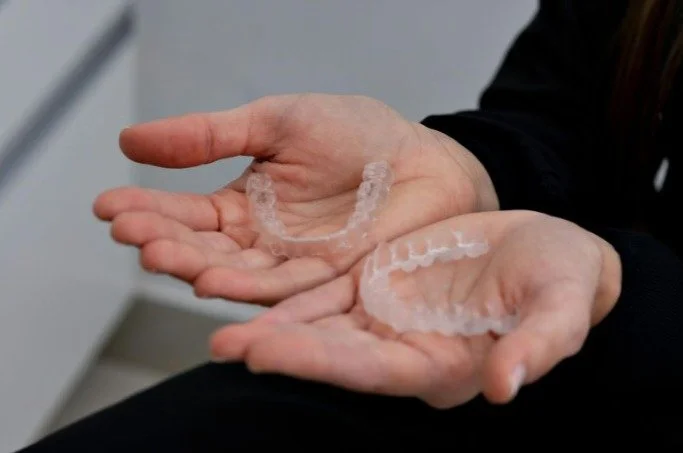
A Step-by-Step Guide: Choosing the Best Clear Aligners for Your Teeth Straightening Journey
Image from Pexels
Embarking on a teeth straightening journey with clear aligners is an exciting decision that offers a discreet alternative to traditional metal braces. To successfully choose the best aligners for teeth that suit your clinical needs, lifestyle, and budget, you must first understand the fundamental differences in treatment models and what to expect at every step.
1. Initial Assessment: Are You a Candidate?
Not all teeth alignment issues (known as malocclusion) can be solved with every type of clear aligner. Understanding the complexity of your case is the crucial first step.
Simple/Mild Cases: Minor crowding, small gaps, or slight relapse after previous orthodontic treatment. These cases are often suitable for both Direct-to-Consumer (DTC) and Professional In-Office aligners.
Moderate to Complex Cases: Significant overcrowding, large gaps, or major bite issues (severe overbite, underbite, or crossbite). For these more complex movements, which often require attachments, elastics, or interproximal reduction (IPR), Invisalign or other professional systems are generally necessary due to the need for advanced features and precise clinical oversight.
A comprehensive examination, typically involving X-rays and a 3D scan of your mouth, is the only way a qualified professional can accurately determine your candidacy.
2. Professional Oversight: The Critical Difference
The most significant choice you will make is selecting the provider model, which dictates the level of clinical supervision and customization you receive.

The Value of In-Office Care
Choosing a professionally managed system like Invisalign provides the assurance that a dedicated doctor is physically checking the progress of your teeth alignment at every stage. This allows for immediate adjustments and mid-course corrections if a tooth is not tracking properly, significantly reducing the risk of complications like bite problems or root damage.
3. The Treatment Process: Step-by-Step Expectation
Regardless of the provider model, the overall journey follows a similar structure, with Step 1 and Step 5 being the most variable.
Step 1: Consultation and Scan/Impressions
In-Office: You meet with your doctor, who performs a full exam, takes X-rays, and uses a specialized scanner to create a precise 3D model of your teeth.
DTC: You order an impression kit to create molds of your teeth at home, or visit a partner location for a quick scan.
Step 2: Treatment Plan Review
Using the 3D data, a detailed treatment plan is created. This digital roadmap (sometimes called a ClinCheck) simulates the desired movement of your teeth and projects the final outcome. You will be able to review this with your provider before the aligners are manufactured.
Step 3: Aligners Delivered and Wearing/Compliance
You receive your entire series of custom clear aligners. The cornerstone of success is compliance. You must wear the aligners for 20-22 hours per day, removing them only to eat, drink (anything other than water), and perform oral hygiene. Each set is typically worn for 1-2 weeks before switching to the next.
Step 4: Progress Monitoring
In-Office: You attend regular appointments to have your fit, movement, and bite checked by your orthodontist.
DTC: You upload photos of your mouth to a remote app for review by a supervising dental professional.
Step 5: Completion and Retention
Once you finish the final aligner, the active phase is complete.
4. The Cost Factor and Financial Considerations
The final clear aligners cost is often the deciding factor, but remember to consider the total investment, not just the aligner price.
In-Office (e.g., Invisalign):
Typical Cost: $3,000 to $7,000.
What it Includes: All aligners, all in-person check-ups, any necessary adjustments/refinements, and often the first set of post-treatment retainers.
DTC (e.g., Byte, AlignerCo):
Typical Cost: $800 to $2,500.
What it May NOT Include: Replacement aligners for poor compliance, in-person emergency visits, or post-treatment retainers (which are often an extra cost).
Insurance, FSA, and HSA
Most dental insurance plans that include orthodontic benefits will cover a portion of teeth straightening treatment, whether for an in-office or at-home option. Check your policy for a lifetime orthodontic maximum (often $1,000-$2,500). Both Flexible Spending Accounts (FSA) and Health Savings Accounts (HSA) can almost always be used to cover the full cost of clear aligner treatment.
5. The Retention Phase: A Lifelong Commitment
The orthodontic treatment is not truly finished until you enter the retention phase. Without a retainer, your teeth will naturally try to shift back to their original positions- a phenomenon known as relapse.
How long to wear: Your doctor will prescribe a schedule, but it typically involves full-time wear for the first few months, transitioning to nightly wear indefinitely.
Types of Retainers:
Removable (Clear or Hawley): The most common- easy to clean and nearly invisible.
Fixed (Bonded): A thin wire cemented behind your front teeth, offering permanent, discreet retention.
Retainers are an essential long-term commitment that protects your investment and ensures your newly aligned, beautiful smile lasts a lifetime.