Can Mental Health Care Fit Into a Busy Work Schedule?

I once cancelled three therapy appointments in a row because of 9 a.m. meetings. Not because I didn't want to go. Because 9 a.m. was the only slot my old therapist had, and my calendar belonged to someone else by then.

That's the real reason most people quit on care, and it has nothing to do with motivation. A standard therapy hour plus a commute eats roughly two hours of your Tuesday. Then Slack starts pinging at minute forty. So the honest answer to whether care fits into a full work schedule is yes, but not by squeezing it into the cracks. You have to rebuild the week around it the same way you'd rebuild it around a standing lunch with a client. Here's how to pull that off without burning vacation days or telling your boss anything you'd rather keep private.

Why Does the Traditional Appointment Model Clash With a 9 to 5?

Most clinics run on the same hours you do. Their front desk opens at nine and closes at five, which means the only openings left for working people are early morning, late afternoon, or evening. Those slots fill first, so the newest client usually gets the leftovers, and the leftovers rarely match a commute.

There's a second problem working against you: recovery time. A hard session stirs things up. You walk out with your head somewhere other than your inbox, and then you're expected to join a budget call fifteen minutes later. That mismatch, more than the appointment itself, is what wears people down.

So the question stops being "can I find an hour" and starts being "can I find an hour that doesn't wreck the three hours around it." According to the U.S. Department of Labor, most full time employees in the United States work a fixed weekly schedule with limited flexibility during core business hours. That's a structural conflict, not a personal failing.

Where Virtual Care Actually Wins, and Where It Doesn't

Telehealth closed a lot of that gap. When your appointment happens through a video platform, you delete the drive time, the parking garage, and the waiting room magazine stack. A fifty minute session becomes a fifty minute session. For anyone with a packed calendar, that difference is the whole game.

Virtual visits also travel with you. You can take a session from a quiet room at home, an empty conference room before anyone else arrives, or a hotel on a work trip. For parents juggling pickup and a meeting, or people who live far from the nearest clinic, that flexibility is often what makes consistent care possible in the first place. Many practices now offer telehealth mental health services alongside in person sessions, which means you can pick the format that fits a given week instead of committing to one forever.

Here's where I'd push back on the hype. Virtual care is worse for anyone who needs a fully quiet, private, uninterrupted space and doesn't have one. A shared apartment, a car, a coworking booth. A good clinician will notice you're holding back and you'll both feel it. If your home is a fishbowl, in person may genuinely be the better call, or you need to book the room before you book the appointment.

A Realistic Week: How to Fit Sessions Around Actual Work

This is the part most articles skip. Scheduling advice that assumes you control your calendar is useless to anyone who doesn't.

Start with the anchor slot, one recurring block you defend the way you'd defend a flight. Early morning before the standup works for a lot of people because nothing has gone sideways yet. Lunch works if your team actually respects lunch, which many don't. Late afternoon works if you can end your day at four and log back on later, and I'd take that trade every time over a 7 p.m. session when you're already fried.

Then build a buffer on each side. Fifteen minutes before to settle, thirty minutes after to write down what came up and switch gears. That buffer is not optional, and it's the first thing people drop when work gets busy. Don't.

A few practical moves that have held up for me and for people I know who've done this for years:

  • Book the next appointment before you leave the current one. Gaps of a month kill momentum.

  • Put it on your calendar with a neutral label like "Focus block" if you don't want to explain it to colleagues.

  • Keep a running note between sessions, so you spend the first ten minutes talking instead of remembering.

  • Pick one backup slot per month for the week that falls apart.

What Do You Actually Tell Your Manager?

Less than you think. You are not obligated to disclose a medical appointment to your employer in most situations, and you don't owe anyone a diagnosis to get an hour on your calendar.

I'd use one of three scripts depending on your workplace. "I have a recurring appointment on Tuesdays at nine, I'll be offline for that hour." Full stop. Or, if you need to shift a meeting, "I have a standing commitment at that time, can we move it to two?" The third option, being open with a manager you trust, can genuinely help if you need flexibility later.

Know your floor. Under the Family and Medical Leave Act, eligible employees can take job protected leave for serious health conditions, and some workplaces offer intermittent leave for ongoing treatment. The details matter and they depend on your employer and your state, so check your handbook or an employment attorney rather than a blog post, including this one.

How to Decide What Fits You

Run this three question check before you commit to anything.
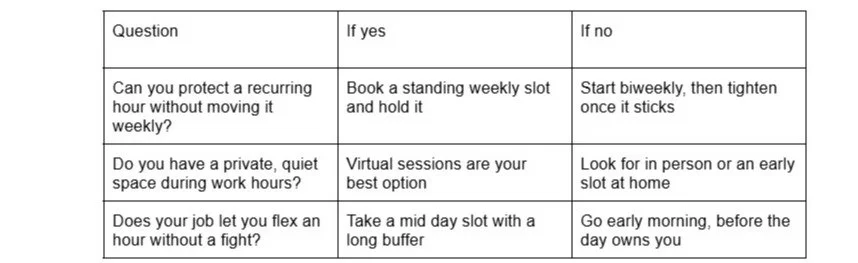
If you're not sure how much care you actually need, that's a fair place to start. The Substance Abuse and Mental Health Services Administration maintains national resources for finding treatment and understanding what different levels of care look like. It's a dry read, but it's honest, and it beats guessing.

One more thing worth saying: consistency beats intensity. A biweekly session you never miss will do more for you than a weekly one you reschedule every third week. That's my stance, and I'll defend it. The calendar you can actually keep is the only one that counts.

When Work Is the Reason You Need Care

Sometimes the job isn't just an obstacle to treatment. Sometimes it's the thing you're treating. Long hours, unclear expectations, a manager who messages at ten at night. In that case, scheduling is step one and boundary setting is step two, and no appointment slot fixes a role that's grinding you down.

That's also when it helps to talk to people who've been there. NAMI runs support groups and family programs across the country, many of them free and online, and a group is a different kind of help than an hour with a clinician. Some people need both. Most people I know who've stuck with treatment use more than one thing.

You don't have to solve your whole schedule this week. Pick one slot, protect it, and let the rest sort itself out from there. So which hour are you actually willing to defend? Somewhere between Monday morning and Friday afternoon, there's one you'd fight for. That's the one to book.


/
script>

Curb Appeal Details Luxury Homes Often Get Right

First impressions shape how people view high-end properties. Small exterior details make a massive impact on total property value and neighborhood presence. High-end homeowners invest in precise architectural touches that elevate their front yards.

A clean property layout creates immediate visual harmony from the street. Crafting a luxury aesthetic requires balancing natural textures with clean lines. Thoughtful design choices turn standard yards into polished outdoor retreats.

Image source: https://www.pexels.com/photo/a-home-with-brick-walkway-and-red-brick-driveway-28272345/

Layered Exterior Lighting Schemes

Upward ground spotlights highlight grand architectural columns and tall trees. Low-voltage pathway lights keep walking areas safe without overpowering the main front entry. Layering soft illumination creates depth across the front facade after dark, giving the entire property a warm night presence.

Smart timers control subtle accent lights around high-value stone features. Custom fixture finishes match window frames, copper trim, and front door hardware. Balanced lighting keeps dark corners clear and showcases key natural building materials across the front yard. Staggered light levels draw focus toward main entry paths.

Property owners select warm color temperatures to maintain an inviting outdoor atmosphere. Key lighting placement features include:

  • Fixtures hidden within foundation plantings

  • Recessed step lights along custom stone pathways

  • Soft washes against decorative exterior masonry

Sleek Boundary Systems and Fencing

Front yards benefit from clear perimeter definition that complements the main residence. Many luxury properties feature modern wood fencing styles that establish sharp borders around the lawn area. Perimeter structures bring warmth and modern character to high-end yards.

Enclosing front lawns helps define outdoor zones for seating or garden beds. High-quality timber panels add structural substance along street frontage. Proper height selections keep sightlines open while marking clear property bounds.

Selected timber species withstand outdoor elements while maintaining structural strength. Dark metal posts paired with natural wood planks create strong visual contrast. Sturdy boundary lines provide privacy without closing off the property completely.

Layered Natural Materials

Horizontal golden wood planks stretch across a crisp white base, creating a layered look that feels architectural but still warm. The design mixes bright painted surfaces with rich organic wood grain.

Horizontal rail wood fences use wide boards running parallel to the ground rather than vertically. This orientation creates a distinctly modern aesthetic that suits contemporary homes, ranch-style properties, and outdoor areas that benefit from a clean, linear visual element.

Durable materials reduce maintenance needs across long seasons. Stained cedar and teak resist harsh weather while maintaining rich color tones. Quality sealant protects raw finishes against sun fade and moisture damage.

Custom Architectural House Numbers

Standard plastic numbers lower the visual value of high-end entryways. Oversized metal digits mounted on stone address plaques create an intentional look. Matching digit metal to light fixtures creates structural continuity.

Backlit house numbers offer effortless visibility during evening hours. Floating mounts cast subtle shadows against smooth stucco or brick walls. A simple upgrade signals meticulous attention to detail.

Clear typography choices keep house numbers legible from passing vehicles. Positioning numbers near illuminated entry portals provides maximum visibility. Clean placement near front walkways guides visitors straight toward the main doorway.

Sculpted Hardscape Walkways

Wide stone pathways replace standard narrow concrete sidewalks. Pavers arranged in geometric patterns add rich visual texture beneath every step. Large flagstone slabs set in lush green turf create clean, natural stepping paths across the lawn. Custom stone borders frame key entry points, keeping outdoor walkways grounded and distinct.

Integrated drainage channels prevent standing water along walkways during heavy rains. Solid granite borders lock paver stones securely into place across long seasons. Deep stone bedding foundations prevent uneven shifting through harsh winter freeze cycles. Proper excavation depth protects stone joints against seasonal ground movement.

Top hardscape designs incorporate distinct construction elements:

  • Permeable paver systems for clean stormwater runoff

  • Saw-cut bluestone tiles with crisp edge lines

  • Integrated step risers built from heavy natural stone

Intentional Plant Palette Selection

Overcrowded gardens look messy and hide original house details. Premium properties stick to 3 or 4 carefully chosen plant species. Mass plantings of structural ornamental grasses deliver clean geometric lines.

Evergreen shrubs maintain structural green frames throughout cold winter months. Seasonal perennial flowers provide controlled bursts of accent color near doorways. Grouping plants by height keeps viewlines open toward main windows.

Deep bark mulch beds retain soil moisture and prevent weed growth. Neat metal edging creates crisp borders between garden beds and green turf. Clean soil bed lines keep the front yard looking organized year-round.

Statement Entry Doors

The front door acts as the main focal center for the entire street view. Heavy solid mahogany or oak doors present immediate weight and structural character. Custom pivot doors swing open smoothly, offering bold modern proportions to the entry design.

Clear glass side panels let natural sunlight stream straight into grand interior foyers. Matte black or brushed brass hardware adds solid tactile feedback to heavy timber doors. Deep, rich natural wood stains highlight organic grain patterns across massive surface areas.

Deep covered porticos protect grand entryways against heavy rainwater and direct sunlight exposure. Overhead recessed ceiling lights illuminate the doorway threshold for arriving evening visitors. Wide natural stone stoops create generous landing pads right at the front entrance steps.

Seamless Garage Integration

Standard garage doors occupy massive portions of front property frontage. High-end homes replace basic utility doors with custom carriage-style wood panels. Frosted glass window inserts break up heavy panel spans and reflect changing skylight throughout the warm afternoon.

Matching exterior garage door paint to main siding shades minimizes unwanted visual distraction. Custom exterior trim surrounds frame garage bays to blend seamlessly with upper-story windows. Heavy-gauge track hardware operates quietly and smoothly during early morning departures.

Architectural pergolas mounted directly above garage openings support lush climbing vines for natural warmth. Downward sconce lights cast a soft glow across rich wood grain panels after dark. Clean garage styling completes a unified street view across the full lot width.

Image source: https://www.pexels.com/photo/yellow-vacation-cottage-in-summer-16553831/

High-end curb appeal depends on matching clean materials across the whole property. Combining natural wood, solid stone, and crisp lighting creates lasting structural harmony. Smart design choices increase property value while creating a welcoming street profile.

Investing in durable exterior features protects long-term home value. Every custom border and lighting fixture contributes to a complete architectural presentation. Simple upgrades to front boundaries and entryways transform ordinary yards into standout estates.

/
script>

What A Sauna Session Can Mean For Your Wellness Routine

Stepping into a heated room offers a peaceful retreat from daily demands. Many individuals turn to warm exposure to unwind after long workdays or intense physical workouts. Sweat sessions provide simple ways to refresh mind and body.

Integrating these habits transforms simple downtime into targeted personal care. Making space for sweat practices helps establish healthy boundaries in demanding weekly routines.

Image source:https://www.pexels.com/photo/modern-nordic-sauna-with-elegant-wood-panels-36420271/

Understanding The Basics Of Thermal Therapy

High temperatures create a unique environment for the body to unwind. Short sessions stimulate natural cooling responses that encourage deep muscular relaxation.

People use different types of heated rooms, including dry saunas, steam rooms, and infrared facilities. Every option offers distinct warmth levels and humidity balances to suit personal preferences.

Selecting the right setup allows individuals to match heat intensity with comfort needs. Gentle temperatures work well for newcomers, whereas higher heat suits experienced users. Spending 10 to 20 minutes inside allows heat to penetrate muscles deeply without causing discomfort.

Gradual exposure allows newcomers to build tolerance at a safe pace. Taking brief breaks in cooler areas helps regulate internal temperatures before returning for a second round.

Finding Great Urban Sweat Spots

Finding an ideal location makes sticking to a wellness habit much easier. Wellness seekers who want to find the top saunas in the NYC Metro can explore various urban wellness hubs across the region. Local facilities offer different features ranging from traditional wood-fired rooms to modern infrared cabins.

Exploring local spots gives city residents convenient access to thermal baths. Having reliable venues nearby simplifies planning weekly health breaks and social recovery sessions. Visiting wellness spaces during off-peak hours offers a quieter environment for peaceful reflection.

Many venues feature relaxation lounges, cold plunge tubs, and tea stations. These extra touches turn quick visits into full restorative experiences. Visitors can easily spend an afternoon moving between warm rooms and quiet lounging areas.

Heart Health Improvements From Heat Exposure

Sitting in elevated temperatures creates direct effects on circulation. Research from Harvard Health indicates that the pulse rate jumps by 30% or more, allowing the heart to nearly double the amount of blood it pumps each minute.

These circulatory shifts help deliver oxygen throughout muscle tissue effectively. Findings published by Stanford Lifestyle Medicine show that vasodilation improves cardiovascular health through increases in blood flow and decreases in blood pressure.

Internal responses mimic moderate exercise without adding heavy physical stress. Regular heat exposure supports blood vessel elasticity and circulatory flow. Maintaining a steady routine helps the body adapt to mild thermal challenges over multiple weeks.

Mental Wellbeing Benefits And Better Sleep

Thermal therapy influences mood and focus alongside physical recovery. A medical review published on PubMed Central reveals that regular sauna sessions reduce symptoms of depression and anxiety, improve sleep quality, boost cognitive function, and may lower long-term risks.

Key mental health gains linked to heat therapy include:

  • Lower stress levels through quiet relaxation

  • Sharper mental focus during daily work tasks

  • Deeper nighttime sleep cycles after evening visits

Sinking into comfortable warmth allows the nervous system to settle down. Reduced tension supports a peaceful mindset before bedtime and encourages restful night sleep. Disconnecting from phone notifications during a session helps quiet a busy mind.

Recovering Muscle Function After Workouts

Athletic individuals frequently rely on warm rooms to soothe sore muscles. Heat increases local tissue temperature, easing stiffness after strenuous exercise.

Alternating between warm rooms and cool showers aids in flushing out metabolic waste. This practice reduces recovery times between intense athletic sessions. Cold water immersion right after heat exposure triggers quick vascular constriction that invigorates tired limbs.

Soothing tight tissues helps prevent injuries during subsequent workouts. Athletes notice improved flexibility and less post-exercise tightness after regular sessions.

Image source:https://unsplash.com/photos/woman-in-white-tank-top-sitting-on-brown-wooden-bench-730OPl8S9W4

Building A Consistent Rest Routine

Creating a steady schedule guarantees long-term benefits. Starting with 1 or 2 visits per week lets the body adapt comfortably without feeling overwhelmed.

Combining heat therapy with proper hydration maximizes total comfort. Sipping water before and after sessions keeps energy levels stable throughout the day. Electrolyte beverages provide extra hydration after sweating profusely during hot sessions.

Pairing visits with light stretching or meditation deepens the relaxation experience. Developing a set sequence turns each visit into a refreshing ritual. Setting aside dedicated blocks on a weekly calendar ensures these rest sessions remain a top priority.

Adding regular heat therapy elevates simple self-care habits into effective health practices. Experiencing physical relaxation and mental clarity makes time spent in hot rooms valuable. Small commitments to regular sessions lead to sustained long-term well-being. Finding quiet moments to unwind strengthens mental resilience and physical comfort.

/
script>

Give Conway a Day of Its Own

Not every good day on the Grand Strand has to begin with a beach chair. Put aside an afternoon for Conway and the itinerary changes: the Waccamaw River instead of the ocean, lunch downtown instead of another quick meal between attractions, and perhaps a theater ticket to give the evening somewhere to go.

Conway works particularly well for travelers who like getting to know a place through its streets, food, and cultural life. You don't need to see everything. A few stops, chosen well, leave more room for the discoveries that make a day feel personal.

Start at the river, then follow your appetite

The Riverwalk is a good introduction to Conway's relationship with the Waccamaw. Visit Myrtle Beach places it in the downtown setting, among the historic buildings and oak-lined streets that give the city its character. Begin there before turning the day into a list of reservations. 1

Take the walk at a pace that lets you notice things. A building detail, a view through the trees, or a conversation about where to eat can be part of the outing rather than an interruption. Good walking shoes and a little flexibility are more useful here than an ambitious schedule.

Leave time between the river and lunch to wander downtown. This is the part of a trip that disappears when every stop has a deadline. Look into a shop that interests you. Pause over a menu. Decide whether the next hour belongs to browsing or to a table somewhere comfortable.

Choose one meal to linger over

For a more dressed-up meal, Rivertown Bistro is one name to investigate. Hop N' Wich is another downtown option identified by the regional tourism authority. Check the current menus and opening times, then choose according to the kind of afternoon you're after rather than trying to fit both into the day. 1

A long lunch suits a couple catching up without distractions. A shorter meal may work better before a museum visit or with children who have already done enough sitting. The restaurant should support the day, not dictate every minute of it.

Agreeing on a rough budget before you sit down can also keep things relaxed, particularly with a group. There's little pleasure in choosing an elaborate meal when half the table was expecting something quick.

Give the afternoon a little substance

A stop at the Horry County Museum brings another dimension to the streets you've just explored. Housed in the former Burroughs School, the museum looks at the area's history and natural history. It gives the outing something to carry away beyond photographs and a restaurant recommendation. 2,12

Let your interest determine the pace. You might spend longer with one subject and pass through another. Families don't have to approach every display like an assignment; finding something everyone wants to talk about afterward is a perfectly good result.

There's a separate option through the museum's L.W. Paul Living History Farm, which explores local farm life. Treat that as another destination rather than assuming it fits into the same downtown walk. It may make more sense on a longer visit, especially if a demonstration or activity catches your attention. 2

For anyone assembling a wider list of things to do in Conway SC, Home Guide Myrtle Beach adds a local-area perspective. For this particular day, though, resist expanding the plan every time you find another possibility. The afternoon will feel better with room left in it.

Let a performance decide the evening

The Theatre of the Republic gives Conway an evening destination beyond dinner. Its home at Main Street Theatre makes live performance part of a downtown visit, provided a production is scheduled for your dates. 6

Book the show before finalizing dinner. That way you can choose a meal that leaves enough time to arrive without rushing. Read the production description with your group, and ask the venue directly about any access needs. An enjoyable night begins with choosing something the people attending actually want to see.

The appeal isn't just the performance itself. A curtain time gives the day a pleasing shape: river, lunch, a little history, then an evening with a shared focus. There's no need to fill the gap with another attraction simply because a couple of hours remain.

Keep a campus option in reserve

Coastal Carolina University provides another route into the area's cultural life. Its community information points visitors toward cultural arts events, including venue and ticket details. A campus performance can be a good alternative when the downtown theater schedule doesn't match your trip. 3

It's a different destination, so allow for the journey and parking. Choose the event that interests you most rather than attempting to collect both experiences in one evening.

Save the beach for another part of the trip

Conway and Myrtle Beach complement each other better when neither is treated as an obligation to rush through. Give the coast a morning and Conway an afternoon or evening, rather than driving back and forth to satisfy a crowded itinerary.

Where you stay should follow the activities you plan to repeat. A coastal base may suit a beach-focused trip with one Conway outing. A different location may work better for a visit built around inland exploring. Think about the whole arrangement, including the journey back after a show, not just the accommodation photograph.

If a visit starts a conversation about living here, let that curiosity develop on a return trip. Enjoying a downtown afternoon is a reason to explore further, not proof that every Conway address would suit your daily routine.

For now, leave with something specific: a meal worth repeating, a production you were glad to catch, or a street you didn't quite finish exploring. That's plenty to bring you back.

/
script>

How To Choose A Reliable Watch For Everyday Life

A good watch does more than tell time. It becomes part of a person’s daily routine, matching workdays, weekend plans, travel, and special occasions. For many buyers, a Casio watch stands out because of its practical design, dependable features, and wide range of styles. Choosing the right model, however, requires more than selecting a design that looks attractive. Understanding movement types, features, materials, size, and intended use can make the buying process much easier.

Start With Your Daily Routine

The best watch is usually the one that fits naturally into everyday life. Someone working in an office may prefer a clean dial, a slim case, and a traditional appearance. A person who spends more time outdoors may need stronger construction, water resistance, and useful digital functions.

Think about when the watch will be worn most often. A model selected for daily commuting may have different requirements from one intended for sports, travel, or formal occasions. Identifying the main purpose first helps narrow down the many choices available.

A watch should feel useful rather than simply impressive. Features that support regular activities can have more value than specifications that may rarely be used.

Match The Watch To Your Setting

A watch can influence the overall appearance of an outfit. A simple dial with a metal bracelet can work well with business clothing, while a resin strap and digital display may feel more appropriate for casual or active settings.

This does not mean one watch must be restricted to one type of clothing. Versatile designs can move comfortably between different situations. Neutral colours, moderate case sizes, and uncluttered dials are often easier to pair with different outfits.

For buyers who prefer variety, owning different styles for separate occasions can also make sense. The important factor is choosing a design that reflects actual use rather than following a short-lived trend.

Look Closely At Case Size

Case size is an important detail that is sometimes overlooked when shopping online. Two watches may look similar in photographs but feel completely different on the wrist.

A larger case can create a bold appearance, while a smaller case may provide a more understated look. Wrist size, personal preference, and clothing style should all be considered together when choosing a Casio watch in Dubai. 

Case thickness matters too. A thick watch may have a strong visual presence but can feel less comfortable beneath a shirt cuff. A thinner model may be easier to wear throughout a long working day.

Check The Display And Readability

The dial or display should be easy to understand at a glance. Traditional analogue watches often use hands and markers, while digital models display information numerically.

Consider how quickly you need to read the time. A clear display can be especially useful during commuting, exercise, travel, or busy work situations.

Some watches include additional information such as the date, day, stopwatch functions, alarms, or multiple time zones. These features can be helpful, but they should serve a genuine purpose. A complicated display is not necessarily better if it makes basic time reading difficult.

Understand Water Resistance

Water resistance should be understood before a watch is exposed to moisture. The rating does not mean every water-resistant watch is suitable for swimming or diving.

A watch intended for ordinary daily wear may provide protection against minor exposure such as splashes or rain. Models designed for swimming or underwater activities require specifications appropriate to those conditions.

It is also worth remembering that water resistance can change over time as seals age or after components are opened for servicing. Buyers should therefore follow the manufacturer's care instructions instead of assuming that the original rating remains unchanged indefinitely.

Pay Attention To Strap Materials

The strap can affect comfort just as much as the case. Metal bracelets can provide a polished appearance and may suit formal or professional clothing. Resin straps are often associated with sporty and practical designs, while leather can offer a more traditional appearance.

Comfort depends on climate, activity, and personal preference. In a warm environment, some materials may feel different against the skin during long periods of wear. A strap should also sit securely without being excessively tight.

Replacement straps can provide another way to extend the versatility of a favourite watch. A different strap can sometimes give the same watch a noticeably different character.

Buying In Dubai Requires Practical Checks

For shoppers looking for a Casio watch in Dubai, convenience is an important part of the buying experience. The city's busy lifestyle makes factors such as delivery, payment options, product availability, warranty coverage, and return policies worth checking before placing an order.

Buyers should also verify the exact model reference rather than relying only on photographs. Different versions can have similar appearances while offering different functions, colours, case sizes, or movement types.

Checking product descriptions carefully can help confirm what is actually included with the purchase. Warranty information is equally important, particularly when buying a branded watch that may need service later.

Compare Features Before Prices

Price naturally matters, but comparing watches only by cost can make the decision harder. Two models at different prices may be designed for completely different purposes.

Instead, compare what each model offers. Look at movement type, case material, water resistance, display, strap, battery requirements, functions, and overall construction.

A slightly more expensive watch may offer features that are genuinely useful for your routine. On the other hand, paying extra for functions you will never use may not provide meaningful value. The goal is to find a balance between price, practical features, appearance, and long-term usability.

Conclusion

There is no single design that suits every wrist, routine, or personal style. A useful Casio watch should make sense for the way it will actually be worn. 

Before buying, consider your daily activities, preferred appearance, wrist size, movement type, essential features, and care requirements. Then compare models based on those needs rather than choosing solely because a particular design is popular.

For shoppers exploring different branded options, Wristbear can be a convenient place to discover watches suited to different everyday preferences. The right choice is ultimately the one that feels comfortable, works reliably, and remains useful long after the initial excitement of the purchase.


/
script>

How to Choose and Use Plant-Based Milks at Home: Nutrition, Sustainability, and Practical Tips

Plant-based milks have made the leap from niche health-food shelves to everyday staples in kitchens around the world. Whether someone is lactose intolerant, following a vegan lifestyle, or just trying to cut back on dairy, the sheer number of options—soy, oat, almond, pea, rice, and more—can feel overwhelming. Choosing wisely means weighing nutrition, ingredients, sustainability, and practicality all at once. Many home cooks now experiment with making their own nut and soy beverages using a countertop soy milk maker, a high-speed blender, or other simple kitchen tools, comparing the results to what they'd normally grab off a store shelf. This article walks through what plant-based milks actually are, how to read their labels, how they stack up environmentally, and how to decide what fits your life—whether you buy it ready-made or prepare it yourself.

Understanding Plant-Based Milks: What They Are and Why People Use Them

Plant-based milk refers to water-based beverages made by blending or extracting liquid from plants such as soybeans, oats, almonds, peas, or rice. People use them for drinking, coffee, cereal, baking, and everyday cooking, much the same way they'd use cow's milk.

Common reasons for switching include lactose intolerance and dairy allergies, ethical or dietary choices such as veganism, and a desire to cut back on saturated fat and cholesterol, since many plant milks contain less of both than full-fat dairy. Environmental concerns also come into play, as plant-based options typically require less land and water and generate fewer greenhouse gas emissions than dairy production.

Key takeaway: Plant-based milks are popular largely because they can address health needs (no lactose, less saturated fat), personal ethics, and environmental goals—often all at once.

Nutritional Considerations: Reading Labels and Meeting Your Needs

Not all plant milks are nutritionally equal, so it's worth reading the nutrition label carefully rather than assuming one option is automatically healthier than another.

What to check on the label:

- Protein content (higher in soy and pea milk; lower in most nut milks)

- Calcium, vitamin D, vitamin B12, and iodine—often added through fortification

- Added sugars, especially in flavored or sweetened varieties

- Additives such as gums, stabilizers, or "natural flavors"

Since dairy milk naturally contains calcium and is commonly fortified with vitamin D, it's worth seeking out plant milks that are fortified with calcium and vitamin D to help close that nutritional gap. Choosing unsweetened versions is a simple way to sidestep unnecessary added sugar, and shorter ingredient lists may appeal to those who prefer minimally processed foods—even though most additives used in these products are considered safe.

Different milks suit different needs: soy or pea milk for higher protein, almond milk for fewer calories, and oat milk for those who want good frothing performance in coffee. Because nutritional priorities shift with age and activity level, consulting a registered dietitian can help tailor choices to specific situations, such as growing children or older adults.

Sustainability and Environmental Impact of Plant-Based Milks

Life-cycle research consistently shows that plant-based milks generally carry a lighter environmental footprint than dairy, particularly when it comes to greenhouse gas emissions and land use. That said, impact varies by crop—soy, oat, and pea milks tend to rank favorably, while almond milk, despite lower emissions than dairy, is often flagged for its heavier water use in cultivation.

Key takeaway: Any mainstream plant-based milk typically beats cow's milk on climate impact, but the specific crop and how it's farmed still matter if sustainability is a top priority for you.

Packaging is another piece of the puzzle. Opting for recyclable or minimally wasteful packaging, and checking whether a brand shares transparent sustainability data rather than vague marketing claims, can help align your purchases with your values.

Store-Bought vs Homemade Plant-Based Milks

Store-bought plant milks offer clear conveniences: a long shelf life, consistent taste, and—importantly—fortification with nutrients that homemade versions often lack.

Homemade plant milks, on the other hand, appeal to people who want control over what goes in. Making your own lets you adjust sweetness, thickness, and the ratio of the base ingredient, and plenty of people find the flavor tastes noticeably fresher.

Basic tools include a high-speed blender paired with a fine strainer or nut-milk bag, or a dedicated appliance such as a soy milk maker built specifically for soaking, heating, and blending beans into milk. A simple homemade process generally looks like this:

  1. Soak the base ingredient, if needed

  2. Blend it with water

  3. Strain out the solids

  4. Refrigerate the finished milk and drink it within a few days

It's worth remembering that homemade milk can separate and usually lacks the calcium and vitamin D fortification found in commercial products, so it may not be a complete substitute for dairy from a nutritional standpoint.

How to Choose the Right Plant-Based Milk for Your Lifestyle

A simple decision framework can help narrow down the options:

  • Start with your nutritional needs—protein, calcium, and vitamins you want to prioritize

  • Check for fortification, especially calcium, vitamin D, and B12

  • Consider taste and texture for your main use, whether that's coffee or cereal

  • Factor in environmental priorities like crop type and packaging

  • Decide between store-bought and homemade based on your time, budget, and appetite for experimenting

For someone seeking a close nutritional match to dairy, fortified soy or pea milk is often the recommended pick. Those watching calorie intake may prefer unsweetened almond milk, while coffee lovers tend to gravitate toward barista-style oat or soy blends that froth reliably. As always, personal tolerance and taste should guide the final call, and anyone with a medical condition should check with a healthcare professional before making major dietary changes.

Bringing Plant-Based Milks Into Everyday Cooking and Eating

Plant-based milks fit easily into daily routines: in coffee and tea, poured over cereal, blended into smoothies, or used in baking and savory cooking. It helps to test before adding to savory dishes, since sweetened varieties can clash badly with soups or sauces. Different milks also behave differently when heated—some are prone to curdling, while others froth more reliably than others.


Switching milks may subtly change a recipe's flavor or texture, so small test batches and gradual adjustments are a practical way to go. Some home cooks blend two types together to balance taste and cooking performance, such as pairing unsweetened soy milk with oat milk in a recipe that needs both protein and creaminess.

Reflecting on Your Choices and Next Steps

Plant-based milks offer flexible alternatives with varied nutritional and environmental profiles, and there's no single universal "best" choice. Thoughtful decisions come down to reading labels, understanding fortification, and weighing your own health goals against sustainability priorities. Trying a few different types—store-bought and, if you're curious, homemade using simple tools or a dedicated appliance—can help you discover what truly fits your taste and lifestyle. Ultimately, informed, personal decisions matter far more than chasing trends or marketing claims.

/
script>