Preserving Horological Value: Why Official Standards Matter for Rolex Servicing in 2026

In 2026, the value of a luxury timepiece is determined as much by its service history as its aesthetic condition. Choosing professional Rolex watch service specialists ensures that high precision movements are maintained using genuine parts and manufacturer-approved protocols. This level of care preserves the integrity, water resistance, and long term market value of both modern and vintage Rolex models. For owners who treat a watch as both an instrument and an asset, understanding what a proper service involves has become part of responsible ownership.
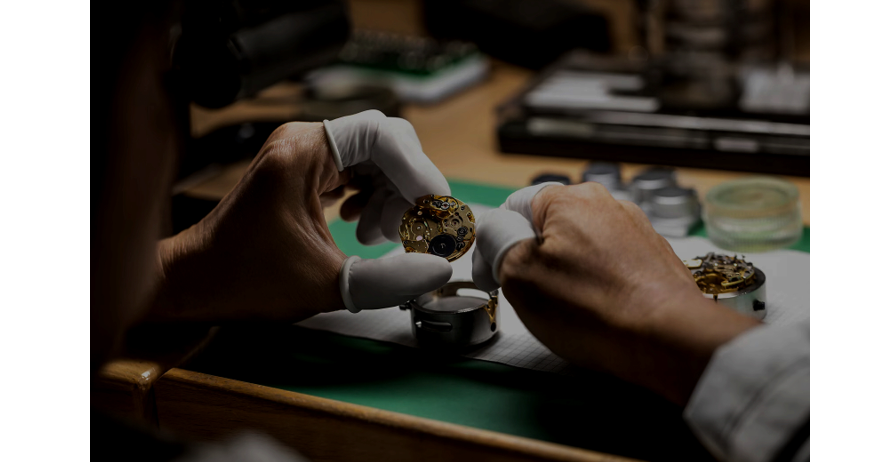
Image: SwissMade

What Constitutes an Official-Standard Rolex Service in 2026?

An official-standard service is defined less by a label on the door than by the discipline of the process behind it. For a Rolex, that process begins with a structured diagnostic phase in which the movement, case, bracelet, and water resistance are assessed before any work is approved. A written estimate then sets out the recommended work and the parts involved, and nothing proceeds without the owner's explicit approval.

During the service itself, the watch is handled with the specialist equipment that high-precision calibres require, and progress updates keep the owner informed while the work is carried out. Final testing verifies accuracy and performance before the watch is returned, ideally through insured transport.

SwissMade, a luxury watch service centre based in London, describes exactly this workflow on its website: diagnostics, a written estimate, an approval stage, progress updates, final testing, and insured return. For owners comparing options, that published transparency shows precisely what happens to a watch once it leaves their hands.

Why Are Genuine Factory Parts Non-Negotiable for Rolex Owners?

A Rolex movement is engineered around components manufactured to extremely tight tolerances. When a worn part is replaced with a genuine factory component, the fit, friction behaviour, and longevity of the calibre remain as the manufacturer intended. Components of unknown origin can compromise timekeeping accuracy, accelerate wear on neighbouring parts, and leave gaps in the documented history of the watch.

Originality matters to collectors as well. Documented servicing with genuine parts supports trust and traceability if a watch is ever offered for sale, although actual market value still depends on model, condition, originality, provenance, and demand. A coherent service record does not guarantee a premium, but it removes a common reason for hesitation among informed buyers.

That is why many owners work with professional Rolex watch service specialists who commit to genuine factory parts. SwissMade states that its service model is built on genuine factory parts, paired with manufacturer-approved expertise, which aligns the work with the standards owners expect when they entrust a high-value timepiece to a workshop.

What Role Does Hatton Garden Heritage Play in Luxury Watch Repair?

Hatton Garden has been the heart of the London jewellery and watch trade for generations, and a workshop address in this district signals more than geography. It places a service provider inside an ecosystem of specialist suppliers, parts knowledge, and craft tradition that a generic repair shop rarely replicates. For owners of complex mechanical watches, expertise tends to accumulate where demanding work is concentrated.

Longevity is a related indicator. A workshop that has repaired luxury watches continuously for decades will have encountered successive generations of movements, case constructions, and known failure patterns. SwissMade, based in Hatton Garden, states that it has repaired luxury watch brands, including Rolex, for over 40 years. That track record is distinct from formal Rolex authorisation, which the company does not list among its stated accreditations, but it demonstrates sustained familiarity with the marque.
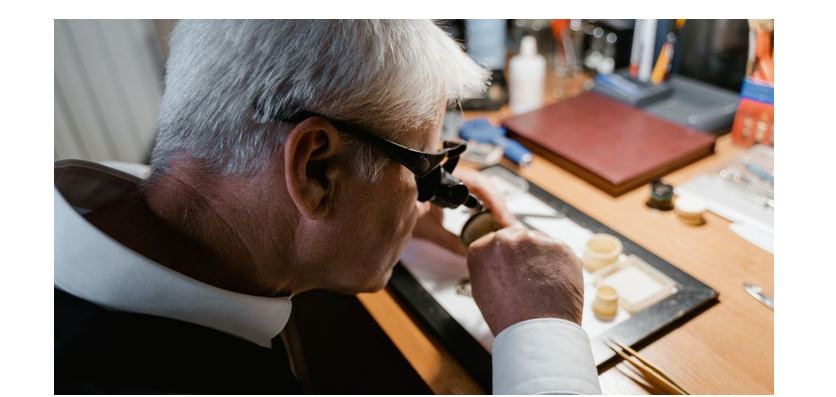
Image by Tima Miroshnichenko on Pexels

What Are the Critical Maintenance Steps for Modern Oyster Cases and Perpetual Movements?

Modern Rolex watches pair a hermetically sealed Oyster case with a self-winding Perpetual movement, and both need attention during a proper service. Inside the calibre, aged lubricants and microscopic wear particles gradually affect amplitude and rate stability, which is why periodic cleaning and re-lubrication by a qualified watchmaker keeps a chronometer performing within its intended tolerance. Depending on material and condition, case and bracelet components can be cleaned professionally during a service, with ultrasonic cleaning used where appropriate for the parts involved.

On the case side, gaskets age regardless of how rarely a watch is worn. Once a case is opened, water resistance is considered compromised until seals are inspected or replaced and the case passes a pressure test. Even a routine battery replacement is an opportunity to inspect seals and assess the general condition of the watch, an approach SwissMade highlights in its own battery service. Owners of Oyster models should treat pressure testing after any case opening as a standard expectation rather than an optional extra.

How Does a Two-Year Warranty Provide Peace of Mind for Collectors?

A warranty is one of the clearest signals a workshop can send about its confidence in its own work. SwissMade offers a two-year warranty on its full service work, covering workmanship and fitted parts well beyond the first weeks after a service, when latent issues occasionally surface. Warranty terms vary widely across the repair market, so a clearly stated multi-year commitment gives collectors a concrete basis for comparing providers.

Logistics security matters almost as much. The company provides free insured nationwide postage for watches valued up to ÂŁ25,000, with tracking throughout the journey. For owners outside London, that combination of cover and visibility turns the service decision into a question of standards rather than distance.

Independent Repair or Official-Standard Service?

Independent workshops vary widely, and many employ highly skilled watchmakers. The practical differences tend to appear in parts sourcing, warranty terms, equipment, and how clearly the process is documented. The comparison below summarises the points worth raising before any work is approved.
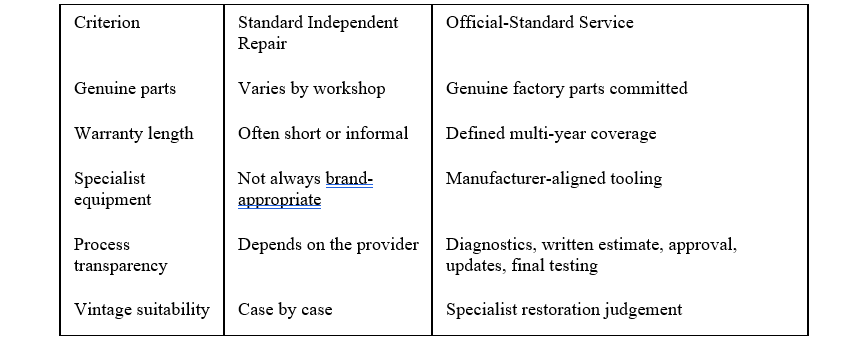
The right choice depends on the watch and on the evidence a provider can show. A centre that publishes its process, commits to genuine parts, and states its warranty in writing gives owners a concrete basis for comparison.

Across the 2026 luxury watch market, these considerations carry growing weight. Documented service histories, original components, and clear provenance are playing an increasingly visible role in how pre-owned pieces are assessed, and traceable maintenance records feature more prominently in discussions between sellers and buyers. None of this guarantees appreciation, but verifiable care has become a meaningful part of how the market discusses value.

Rolex Service Questions Owners Ask

How often should a Rolex be serviced in 2026?

There is no single fixed interval that suits every watch. Rolex suggests around ten years for modern calibres, while sports models exposed to water, shocks, or magnetism often benefit from earlier attention. An inspection is sensible whenever accuracy or winding behaviour changes.

Does a service include case polishing?

Not automatically. Polishing and refinishing are normally a separate cosmetic decision, discussed and approved individually. Collectors of vintage pieces often choose minimal intervention, because original finishes contribute to character and desirability.

Will a service affect the value of a vintage Rolex?

Sympathetic, documented work generally supports confidence in a vintage piece, while heavy-handed intervention can do the opposite. Over-polishing or replacing original components unnecessarily may reduce collector appeal, so originality should guide each decision.

Why is pressure testing important?

Any time a case is opened, its water resistance is disturbed. Pressure testing verifies that gaskets and seals perform as intended, protecting the movement from moisture, which remains one of the most damaging threats to a mechanical calibre.

How long does a full Rolex service take?

Duration depends on the condition of the watch, the parts required, and the approval stage. A transparent centre provides a written estimate first and keeps the owner updated, rather than promising a fixed turnaround before the diagnosis is complete.

What is the benefit of a two-year service warranty?

A two-year warranty, such as the one SwissMade offers on full service work, extends protection well beyond the initial settling period and signals that the workshop stands behind its workmanship, its testing, and the parts it has fitted.

Can I track my watch during the service process?

At SwissMade, yes. The published workflow includes progress updates, and the insured postal service is trackable at every step, so the watch never disappears into a communication gap between workshop and owner.

Ultimately, the market value of a Rolex will always rest on its model, condition, originality, provenance, and demand. What owners can control is the quality and documentation of the care the watch receives. A partner that works to official standards, fits genuine factory parts, tests water resistance correctly, and backs its work with a meaningful warranty gives a timepiece the strongest practical foundation for the decades ahead. Those comparing options in London and across the UK may wish to review how SwissMade structures that process

/
script>

Managing Rental Properties With Long-Term Growth in Mind

Managing real estate requires a long-term approach that balances immediate cash flow with continuous appreciation. Strategic property management turns ordinary residential rentals into high-performing wealth-generating assets.

Smart planning around maintenance, tenant selection, and operational costs preserves equity across changing market cycles. Building an expansive portfolio relies heavily on optimizing daily management operations.

Prioritizing Strategic Property Improvements

Property upgrades should focus on generating durable asset value rather than quick cosmetic fixes. Structural preservation always takes precedence over purely visual modifications. Smart technology integrations also yield real operational benefits for everyday management.

Implementing IoT devices and smart building features can reduce annual utility costs by 10% to 15%. These energy savings directly boost net operating income while attracting environmentally conscious tenants. Modernized units hold their market value far better during economic slowdowns.

Selecting High-Quality Long-Term Tenants

Stable tenants protect physical structures from unnecessary wear and tear. Thorough background checks and income verifications create the foundation for low-turnover properties. Using personalised property management tailored to landlords gives owners access to refined tenant screening protocols.

Expert vetting strategies minimize costly vacancy periods while securing responsible occupants. Strong tenant relationships ensure issues get reported early before turning into expensive repair projects. Reliable occupancy remains the bedrock of predictable long-term wealth accumulation.

Screening processes must remain fair, systematic, and aligned with standard industry practices. Retaining great occupants minimizes turnover costs like deep cleaning, marketing, and leasing fees. High tenant retention directly protects your annual profit margins.

Implementing Preventive Maintenance Schedules

Deferred maintenance quietly destroys real estate portfolio value over time. Regular structural inspections catch hidden leaks, roof decay, or foundation shifts early. Establishing routine upkeep protocols protects property value and keeps current tenants satisfied.

  • Roof and gutter clearing twice annually

  • HVAC servicing before peak seasons

  • Plumbing checks under all sinks and around water heaters

  • Structural deck and railing safety audits

Establishing an emergency maintenance fund keeps sudden expenses from derailing your quarterly cash flow targets. Upkeep preserves structural integrity and maintains premium market rent capabilities. Proactive care prevents minor issues from spiralling into major budget drains.

Managing Distant Assets and Scaling Strategies

Expanding a real estate footprint often means purchasing assets in different geographic markets. Remote ownership introduces logistical hurdles that require local operational expertise on the ground. Professional management is a necessity for long-distance investing, with costs often ranging from 8% to 12% of monthly rent.

Hiring local management teams bridges the geographical gap for out-of-state property owners. Local experts handle emergency calls, vendor coordination, and routine physical inspections without delay. Outsourced management frees your time to analyze new acquisition targets elsewhere.

Aligning Growth Plans with Operational Realities

Portfolio expansion requires balancing ambitious purchasing goals with practical execution capacity. Expanding too quickly without adequate systems leads to operational bottlenecks and reduced profit margins. Industry data reveals 75% of property management companies plan to expand their portfolios, but only 55% managed to grow.

Scaling successfully demands robust software, standardized procedures, and reliable contractor networks. Growth plans must account for the actual time required to oversee each added unit. Pushing for rapid expansion without operational capacity risks burning out your management resources.

Balancing Risk and Strategic Operational Burdens

Every real estate strategy carries a unique set of management demands and operational risks. High-turnover strategies may promise great gross returns but demand intense hands-on management. Smart investors match strategy to operational burden, not just returns.

Choosing low-friction assets minimizes daily administrative headaches and keeps overhead expenses predictable. Assessing your personal capacity prevents operational fatigue from harming portfolio performance. Aligning your workload with your lifestyle goals ensures long-term real estate success.

Optimizing Financial Management Systems

Accurate tracking of every revenue stream and expense category is vital. Modern management platforms digitize lease documentation, rent collection, and tax prep reports. Digital systems provide real-time visibility into overall portfolio financial health.

Using automated payment gateways reduces late payments and stabilizes monthly income. Digital record-keeping makes annual accounting straightforward and simplifies tax deduction claims. Clean financial data makes securing bank financing for future property purchases much easier.

Navigating Regulatory and Legal Compliance

Local tenancy laws evolve continuously, creating potential liability for unprepared owners. Compliance failure results in steep legal fees and severe operational disruptions. Staying current on legal frameworks protects your financial capital and operational reputation.

  • Standardized state-approved lease agreements

  • Compliant security deposit holding accounts

  • Timely entry notice protocols for inspections

  • Up-to-date smoke alarm and pool safety certifications

Understanding tenant rights keeps your leasing operations smooth and free of legal friction. Consistent documentation standards shield landlords during disputes or lease termination proceedings. Structured compliance habits keep your real estate business running without unexpected legal disruptions.

Building long-term wealth through real estate demands disciplined operations, clear financial tracking, and continuous asset care. Aligning property management decisions with your overarching financial goals guarantees steady portfolio compounding for decades.


/
script>

How Food Brings Friends and Families Together

Ask anyone about their favorite memories with family or friends, and food is almost always somewhere in the story , not as the main event necessarily, but as the backdrop that made the gathering happen in the first place. A meal has a unique ability to give people a reason to slow down, sit together, and actually connect, in a way that few other everyday activities manage. Restaurants like St. Louis Bar & Grill understand this instinctively, building menus and experiences specifically designed to support these moments of genuine connection, rather than simply serving individual meals to individual guests.

Shared Meals Create a Natural Reason to Gather

Food gives people a simple, low-pressure reason to come together that doesn't require a special occasion or elaborate planning. "Let's grab dinner" is one of the easiest invitations to extend and accept, precisely because it doesn't demand much beyond showing up. This low barrier to gathering is part of why food-centered outings remain one of the most common and reliable ways friends and families actually spend time together, week after week, year after year.

This simplicity matters. The easier it is to gather, the more often it actually happens, which is exactly why food-focused meetups tend to be far more frequent and sustainable than more elaborate, harder-to-coordinate social plans.

Different Menu Formats Support Different Kinds of Gatherings

Not every gathering calls for the same kind of meal. A casual catch-up with a friend might call for something quick and simple, like a sandwich or a bowl. A larger group celebration might call for something more shareable and communal, like a big platter of wings or a pizza meant to be split. A family dinner might call for a mix of individual and shared items that satisfy different appetites and preferences at the same table.

A restaurant with genuine menu variety supports all of these different gathering styles under one roof, which matters considerably to how often a group returns. Groups with varying needs , some wanting a full combo, others wanting something lighter, others wanting to share a pizza , can all be accommodated at the same table without anyone needing to compromise significantly on what they actually want.

Comfort Food Carries Genuine Emotional Weight

There's a reason certain foods get described as "comfort food" , familiar, satisfying dishes carry real emotional associations, often tied to positive memories of past gatherings, celebrations, or simply good company. Menu items built around bold, familiar flavors, especially when tied to a distinctive signature element like a well-known house sauce, become associated over time not just with good food, but with the specific gatherings and relationships where that food was enjoyed.

This emotional dimension is part of why people return to the same restaurant repeatedly with the same friends or family members. The food itself becomes woven into the memory of the relationship and the specific moments shared there.

Group-Friendly Formats Encourage Longer, More Relaxed Visits

Menu items designed for sharing or combining , a wings platter with multiple sauce options, a pizza built for splitting, a bowl that can be customized to different preferences , naturally encourage groups to linger, try different things, and engage with each other over the course of the meal rather than rushing through individually plated courses. This kind of shared, exploratory eating style supports exactly the kind of relaxed, extended social interaction that people remember fondly and want to repeat.

Restaurants that design their menus with this kind of group dynamic in mind tend to become natural gathering spots, precisely because the food itself is structured to support socializing rather than simply fueling individual guests as efficiently as possible.

Convenience Has Expanded Who Gets to Share in the Experience

As delivery and takeout have become more central to how people order food, the experience of sharing a meal has expanded beyond the restaurant's physical walls. A family ordering the same favorite dishes for a night in, or friends splitting a delivery order while watching a game together at home, extends the same food-centered connection into settings beyond a traditional restaurant visit. Loyalty and rewards programs built around takeout and delivery reinforce this pattern, making it easy and rewarding for groups to keep choosing the same familiar, shared meal experience regardless of where they're actually eating it.

Food-Centered Gatherings Build Consistency Over Time

Perhaps the most valuable aspect of food-centered gatherings is their tendency to repeat. A specific restaurant, a specific dish, a specific day associated with a deal or tradition , these small patterns build into genuine, recurring rituals among friends and families, reinforcing relationships through consistent, low-effort gathering rather than requiring an elaborate occasion each time.

The Bottom Line

Food does more than satisfy hunger , it creates a simple, repeatable reason for people to gather, connect, and build lasting memories together. Restaurants that understand this, offering menu variety suited to different kinds of gatherings and formats designed for genuine sharing, become more than just a place to eat. They become part of how friends and families actually stay connected, one shared meal at a time.

/
script>