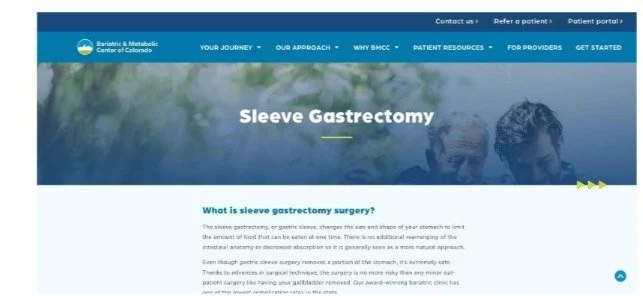
Bariatric & Metabolic Center of Colorado Gastric Sleeve Clinic Screenshot
Here’s the core idea: surgeons remove roughly 75 percent of the stomach, leaving a slender “sleeve” that fills quickly and releases far less hunger hormone. Laparoscopic technique means the operation typically wraps up in 60–90 minutes, requires only a one-to-two-night hospital stay, and helps patients shed 60–80 percent of their excess weight within the first year, according to outcomes detailed on Denver gastric sleeve surgery. Patients then eat child-size meals yet feel satisfied. A 2024 analysis from the American Society for Metabolic and Bariatric Surgery reports average total-body weight loss of around 30 percent one year after sleeve surgery, with durable results a decade later.
BMCC wraps the procedure in full support. You attend required nutrition classes, meet a psychologist, and practice post-op eating with a dietitian before surgery day. Afterward, the same team tracks vitamins, blood sugar, and, crucially, mental health so progress sticks.
Who thrives here? Anyone with a BMI above 40, or above 35 with diabetes, sleep apnea, or similar conditions, and who is ready for a lifelong commitment. Insurance often covers the operation under those criteria, turning a price north of twenty-thousand dollars into manageable co-pays.
Surgery is still surgery, meaning anesthesia, recovery, and a permanent change to how you eat. Yet complication rates now mirror common procedures such as gallbladder removal, and most people return to desk work within two weeks. If you want the biggest, most durable weight-loss tool available, this is it.
Restorative Health of Colorado: medical weight loss & GLP-1 program
You want serious results without an operating room? Restorative Health on West 40th Avenue delivers hospital-grade oversight in an outpatient setting.
Every plan starts with lab work and a one-on-one visit with a physician. We’re talking a full metabolic panel, thyroid check, and body-composition scan. Those numbers guide your dose of semaglutide or tirzepatide, the GLP-1 injections that have dominated obesity research since 2024. Most clients arrive twenty to eighty pounds from goal weight and watch the scale drop ten to fifteen percent in the first six months.
Medication is only half the story. Weekly nurse check-ins catch nausea or fatigue early, and an in-house dietitian rewrites your grocery list so you keep muscle while losing fat. An app reminds you when to take the next shot, logs meals with photos, and nudges you to hit step goals.
Plan to spend about three hundred dollars a month out of pocket unless your insurance covers GLP-1 drugs ahead of Colorado’s 2027 mandate. That price bundles consults, coaching, and medication, often beating national telehealth startups once shipping fees are added.
Is there a catch? Stop the injections and biology pushes back. Roughly half the lost weight returns within a year if habits slip. Restorative Health tapers doses and shifts you into maintenance coaching instead of sending a final bill and a handshake.
For anyone who needs medical firepower but isn’t ready to schedule surgery, this clinic balances convenience, safety, and strong fat-loss numbers.
Healthful Life MD: holistic metabolic makeover
Some weight-loss stalls have nothing to do with willpower. Hormones drift, thyroid levels wobble, stress spikes cortisol, and the scale refuses to budge. Healthful Life MD on Johnson Road exists for these puzzle cases.
Your first visit feels less like a weigh-in and more like detective work. The physician orders hormone panels, food-sensitivity screens, and sleep assessments. Those results feed a personalized roadmap that may include prescriptions, but leans on nutrition coaching, strength-based movement, and mindset shifts.
Because every lever is custom-tuned, progress is slower than with a medication-only plan. Expect about two pounds a week instead of five. Clients rave about side perks such as steady energy, calmer moods, and fewer cravings, all of which make it easier to stay on track.
Pricing runs higher than basic coaching because you are paying for deep testing and monthly follow-ups. Most patients treat it as a health investment, tapping HSA dollars or flex spending accounts to soften the bill.
Ideal Wellness Clinics of Colorado: structured meal program
If cooking, weighing, and macro math make you want to quit before you start, Ideal Wellness has a cheat sheet. The ShiftSetGo plan swaps guesswork for pre-portioned shakes, soups, and protein bars that fit into a three-phase roadmap: rapid loss, transition, and maintenance.
The first phase is strict. Most meals come from clinic products, so calories and carbs stay locked down and early weight loss feels almost automatic. Coaches meet you weekly, swap flavors to fight boredom, and adjust portions the moment progress plateaus. Many members drop two to five pounds per week at the outset, enough to keep motivation high.
Phase two reintroduces grocery-store foods while showing you how to build plates that keep hunger and blood sugar steady. The maintenance phase removes the training wheels but not the accountability. You still check in monthly and can buy products à la carte when life gets hectic.
Costs run a few hundred dollars a month, mostly for the meal kits. Insurance rarely helps, though some members use health-saving accounts. The trade-off is time: zero meal planning, minimal dishes, and no late-night “what can I eat” panic. For busy parents or professionals facing a tight deadline, or a wedding date, structure like this can feel like freedom.
Telehealth GLP-1 services: prescription power without the commute
Maybe your schedule is packed or weekly clinic visits feel like a chore. Telehealth weight-loss platforms offer the same GLP-1 medications discussed earlier, but the consult happens on your phone.
Here’s how it works. You fill out a medical questionnaire, upload photos, and book a short video chat with a board-certified provider. If your BMI and history meet FDA criteria, the doctor e-prescribes semaglutide or tirzepatide. A partner pharmacy ships pens or pre-filled syringes to your doorstep, and an app checks in on side effects and food tracking.
Colorado is telehealth-friendly, so brands such as Found, Calibrate, and Hims accept Golden addresses. Memberships land between one hundred and three hundred dollars per month, with medication sometimes billed through insurance. Several services use compounded versions for cash-pay members when brand-name supply runs tight.
Convenience is the headline benefit: no traffic, no waiting rooms, and you can message your care team at 10 p.m. The trade-off is less hands-on support—no in-person dietitian or body-composition scans—so self-discipline and honest data entry matter more here than anywhere else.
Worth It Healthy Living: personal training & nutrition coaching
Some of us feel motivated less by macros and more by movement. Worth It Healthy Living pairs you with a certified trainer who also serves as a nutrition coach, designing workouts and meal tweaks that match your schedule and any injuries.
Sessions can happen at a local gym, in your garage, or over Zoom. Each plan leans on strength training and limits fluff cardio because muscle keeps metabolism humming while fat melts. Expect two or three guided workouts a week with homework walks or mobility drills between sessions.
Weight tends to drop at a steady, healthy pace, usually one to two pounds per week, but the real payoff shows in tighter jeans, stronger deadlifts, and energy that lasts past 3 p.m. Clients stick with the program longer because they enjoy seeing progress in the mirror and on the barbell.
Packages start around fifty dollars a session. There is no insurance code for “someone who texts you to remind you to plank,” but many members treat it like therapy for their body and plan their budget accordingly.
WeightWatchers & community support programs
The power of a check-in crew is hard to beat. WeightWatchers (WW) has led group-based weight loss for decades, and the model still works: a flexible Points program, a mobile app for food logging, and weekly meet-ups in Lakewood, Arvada, or on Zoom for accountability.
Average members drop about five percent of their starting weight in the first year, often enough to reduce blood-pressure medication. Meetings feel like friendly huddles, not lectures, and the program costs less than a night out each month.
Golden locals often layer WW with free tools such as MyFitnessPal for calorie awareness, r/loseit threads for memes and motivation, or a hiking buddy for weekend steps. Progress is slower than with surgery or injections, yet the skills you learn—portion sense, balanced plates, stress-eating fixes—stick long after the scale victory selfie.
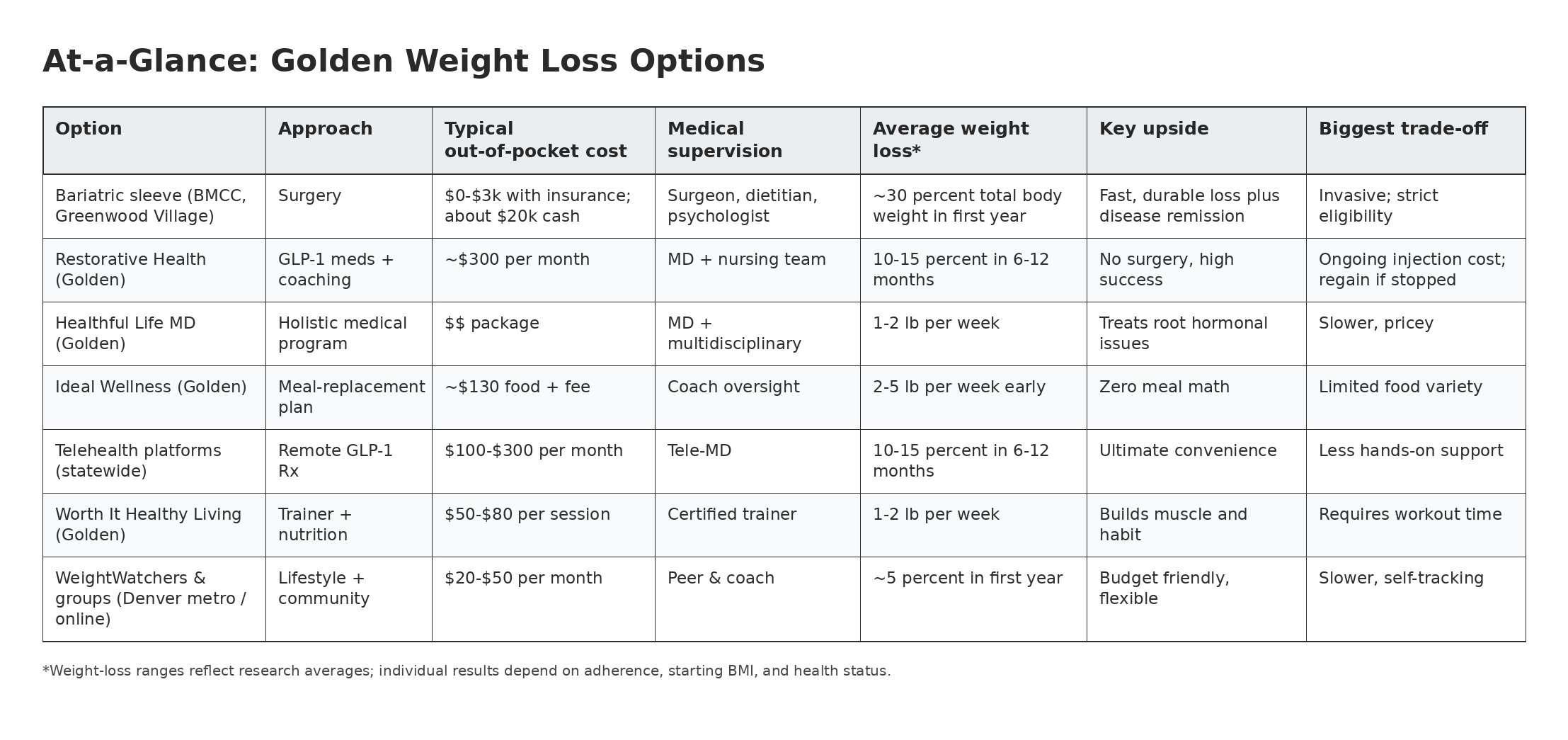
At-a-glance comparison of your options
Here’s a side-by-side look at cost, medical oversight, and typical results so you can quickly spot the plan that fits your goals and budget.