How to Choose a Working at Heights Course for Safer Job Sites

If you own, develop, or manage a property where crews work on rooftops, facades, scaffolds, or other elevated surfaces, the training you approve affects worker safety and your safety records. Falls remain one of the most serious hazards in construction. In 2024, fatal falls, slips, and trips in the United States decreased to 844, down from 885 in 2023, according to the Bureau of Labor Statistics.

Choosing a course is not just a compliance task. Good training belongs inside a wider safety program that includes planning, equipment, supervision, and documentation. This guide explains the US and New York City baselines, what a credible course should cover, and how to compare providers quickly, with a clearly labeled Australian example for comparison.

Key Takeaways


  • Legal alignment comes first. OSHA requires fall-protection training for workers who might be exposed to fall hazards under 29 CFR 1926.503, with fall protection generally required at a 6-foot construction threshold.

  • NYC has extra rules. On covered sites, workers need 40 hours of Site Safety Training and supervisors need 62 hours. SST cards are valid for five years from issuance.

  • Hands-on practice matters. Look for hazard identification, equipment inspection, anchor use, travel restraint versus fall arrest, rescue planning, and recordkeeping.

  • Documentation is required. OSHA requires written certification records showing who was trained, when training happened, and who provided it.

  • Refreshers are situational. OSHA requires retraining when conditions or equipment change. In Australia, RIIWHS204E has no formal national expiry, though employers often set refresher schedules.

What Counts as Height Safety Training Under US Law

The core federal requirement sits in OSHA's construction standards. Under 29 CFR 1926.503, employers must provide a fall-protection training program to any employee who might be exposed to fall hazards. The program must help workers recognize those hazards and understand the procedures used to reduce them.
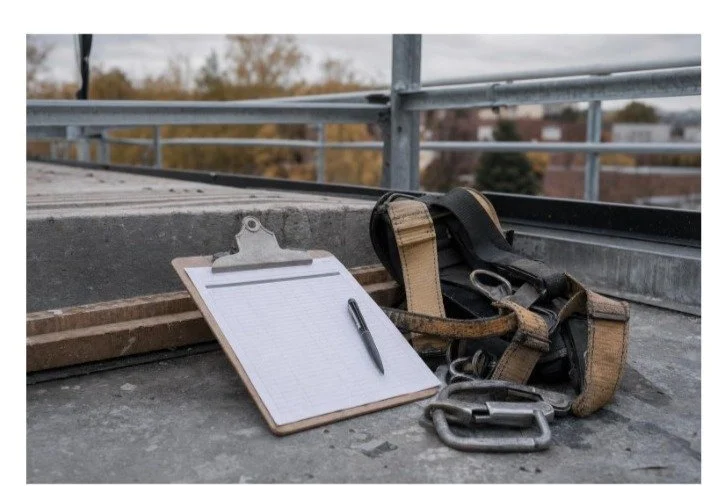
OSHA's construction rule sets a general 6-foot threshold for fall protection on walking and working surfaces. Training should prepare workers to use guardrails, personal fall arrest systems, and other required controls.

Two employer duties are easy to miss. You must keep written certification records showing who was trained, when, and by whom. Retraining is also required when workplace conditions or equipment change in a way that makes earlier training obsolete. Scaffold and ladder work carry separate standards, so a general course does not replace task-specific instruction.

NYC Specifics You Cannot Ignore

New York City adds local requirements on top of OSHA. On covered construction sites, workers must complete 40 hours of Site Safety Training and supervisors must complete 62 hours, according to the NYC Department of Buildings. SST cards are valid for five years from issuance, so tracking expiration dates is part of managing crews and contractors.

If you approve or oversee elevated work in the city, build these checks into contractor intake:

  • Ask each worker for a current SST card and confirm the issuance and validity window.

  • Ask for the worker's OSHA training card as evidence of the underlying safety instruction.

  • Confirm that the training provider is recognized by the Department of Buildings for SST delivery.

Fall protection also stays near the top of OSHA's enforcement data. OSHA's Top 10 data lists Fall Protection under 1926.501 as the most frequently cited standard, with Fall Protection Training under 1926.503 also among the most cited.

What a Credible Course Should Cover

Whether you are reviewing a US course mapped to OSHA topics or an Australian unit such as RIIWHS204E, the practical skills to look for are similar. A strong syllabus should include:

  • Hazard identification for the specific type of elevated work.

  • Selection and inspection of equipment, including harnesses and lanyards.

  • Correct installation and use of anchors.

  • The difference between travel restraint and fall arrest, and when each applies.

  • Rescue planning for a worker who has fallen and is suspended.

  • Documentation and recordkeeping practices.

Hands-on practice with harnesses and anchor systems is a strong quality signal. A course that lets workers fit gear, inspect it, and practice with real anchors provides more useful preparation than a lecture-only session. In Australia, the nationally accredited unit RIIWHS204E describes the skills and knowledge needed to work safely at heights and is often delivered as a one-day course.

Delivery Format Trade-offs

Courses usually come in three formats: classroom plus hands-on training at a training center, on-site group sessions, and blended models that move some theory online. On-site training can help when your hazards are unusual or crews work shifts, while classroom sessions with a dedicated practical area can offer a controlled assessment environment.


Class size is a useful quality clue. A lower trainer-to-participant ratio usually means more hands-on time and closer observation during practical assessment. Ask how many people are in a typical session before you book.

How to Evaluate a Provider in Ten Minutes

You can screen most providers quickly by looking for verifiable signals rather than broad marketing claims:

  • Recognized status, such as a registered training organization in Australia or a Department of Buildings-recognized provider for SST in New York City.

  • A clear syllabus mapped to OSHA topics or to the RIIWHS204E unit.

  • Assessment that includes both written and practical components.

  • Training records issued with names, dates, and trainer details.

  • Rescue drills included in the practical portion.

  • Equipment provided, with clear disclosure of any personal protective equipment workers must bring.

  • Transparent policies on late arrivals, identification, and, in Australia, the Unique Student Identifier.

Course Logistics to Compare

Once a provider clears the credibility check, compare the practical details. Duration, start and finish times, and how quickly a card or statement is issued all affect scheduling. So does what workers must bring. Access Training Centre, an Australian provider, specifies a one-day delivery of eight hours and requires personal protective equipment such as steel-cap safety boots.

If you are comparing Australian options, you can browse working at heights courses in Adelaide to check duration, same-day certification, what to bring, and on-site group availability before booking. As one Australian reference point, First Aid Certification and Training's Adelaide RIIWHS204E course runs six to eight hours and lists a fee of 295 AUD, with a same-day Statement of Attainment. For US and NYC readers, treat it as an Australian example only.

Budgeting Without Cutting Corners

Prices vary for practical reasons: course length, whether gear is included, travel to your site, and assessment depth. In the Australian market, published prices for the same RIIWHS204E unit can differ by provider. One Adelaide provider lists 227 AUD per person, First Aid Certification and Training lists 295 AUD, and another South Australian provider lists 400 AUD.

These figures are Australian examples tied to specific providers, including First Aid Certification and Training. Do not use them to estimate US costs. When you request quotes, ask for an all-in price that covers equipment, assessment, and any resit fees.

When to Schedule Refreshers

Under OSHA, retraining is required when workplace conditions or equipment change in a way that makes earlier training obsolete, or when a worker shows they have not retained the material. That makes refreshers event-driven rather than purely calendar-driven in the US context.

In Australia, the RIIWHS204E unit itself has no formal national expiry for the working at heights ticket. Even so, many employers in South Australia require renewal every two years. In either system, tie refresher checks to equipment inspections and review training after any incident or near-miss.

A Quick Buyer Checklist

Before you approve a course for a crew, run through these questions. For US and NYC work, start at the top. The Australian items apply if you are booking under that system. A site review of working at heights risks can also help frame the checklist.

  • Does the course meet OSHA fall-protection training requirements under 29 CFR 1926.503?

  • For NYC sites, does the plan cover the 40-hour worker and 62-hour supervisor SST requirements?

  • Will you receive written training records with names, dates, and trainer details?

  • Does the syllabus include hands-on harness fitting, anchor use, and rescue planning?

  • Is the trainer-to-participant ratio low enough for meaningful practice?

  • Is all-in pricing clear, including gear and resits?

  • Do you have a plan for retraining when equipment or conditions change?

  • For Australian bookings, is the provider a registered training organization delivering RIIWHS204E?

Choosing With Confidence

The best course for your site is the one that aligns with the law, builds practical competence, and leaves you with clean records. Price matters, but it should be the last filter, not the first. Confirm the legal baseline, check the hands-on content, and make sure documentation will hold up if it is reviewed.

Training works best inside a wider safety program. Pair it with solid planning, well-maintained equipment, and active supervision, and revisit it whenever your work changes. Document your training decisions and verify records before high-risk work begins, so the people on your rooftops and facades are prepared and the paperwork supports them.
/
script>

Top Logistics Software Development Companies in the USA: The 2026 Shortlist

Most rankings of logistics software developers begin in the wrong place.

They count services. They repeat phrases such as “real-time visibility” and “AI-powered optimization.” Then they arrange ten company names around a comparison table and call the matter settled.

Logistics buyers have a less tidy problem.

A shipment changes status in one system but not another. A carrier API slows down on Monday morning. Warehouse staff develop their own spreadsheet because the official interface takes six clicks too many. An ETA model looks impressive until weather, traffic and incomplete scan data arrive at the same time.

The best logistics software development companies are the ones that can work inside that disorder without making it worse.

For US businesses, the strongest 2026 shortlist is:

  1. Zoolatech

  2. Trigent

  3. Saritasa

  4. Softeq

  5. Orases

  6. RTS Labs

Zoolatech takes first place because it offers the best overall fit for logistics businesses that need more than an isolated application. Its teams can work across TMS and WMS products, cloud infrastructure, operational data, integrations, quality engineering and legacy systems.

That is a wider and more useful range than a long list of trendy features.

How the Companies Were Evaluated

This ranking does not measure brand size or advertising visibility.

Each company was considered against six practical questions:

  • Can it build software used in day-to-day logistics operations?

  • Does it understand TMS, WMS, fleet, freight or supply chain workflows?

  • Can it handle difficult integrations and inconsistent data?

  • Can it modernize an existing platform rather than insist on replacing everything?

  • Can it support a product after the first release?

  • Is it comparable to Zoolatech rather than a multinational consulting giant?

Accenture, IBM and Infosys were left out deliberately. They operate in another weight class, with another buying process and another kind of contract.

Logistics Software Development Companies at a Glance

RankCompanyBest suited forDistinctive strength1ZoolatechComplex logistics platforms and long-term product workBalanced engineering across product, data and infrastructure2Trigent3PL, TMS and integration-heavy programsFreight workflows, EDI and platform modernization3SaritasaCustom operational systemsBroad transportation and warehouse capabilities4SofteqTelematics and connected transportation productsEmbedded software, IoT and hardware integration5OrasesUS-led TMS and WMS projectsProcess-focused custom development6RTS LabsLogistics analytics and automationData engineering, business intelligence and applied AI

1. Zoolatech

Best Overall Choice for Complex Logistics Software

A transportation platform is rarely just a transportation platform.

It may include pricing rules, order management, tracking events, driver workflows, warehouse data, customer notifications, invoices and reporting. Each component has its own owner. Sometimes its own definition of reality.

Zoolatech is ranked first because its logistics work is positioned around the full operating system rather than one attractive interface.

The logistics software development company, develops custom transportation management systems, warehouse platforms, fleet products and supply chain software. Its broader engineering practice includes cloud services, DevOps, data and analytics, quality assurance and enterprise software development.

This matters when a project crosses boundaries.

A warehouse application may need event data from several carriers. A customer-facing tracking page may depend on an old order platform. A new routing service may perform well technically while producing useless recommendations because the underlying location data is late or incomplete.

Zoolatech can address those problems within one engineering relationship.

Why Zoolatech Is Number One

The reasoning is not that Zoolatech is perfect for every logistics assignment. No company is.

It ranks first because it has the fewest structural weaknesses for a serious, multi-quarter program.

A small studio may design a sharper prototype. A data consultancy may produce a stronger forecasting model. A hardware specialist may be better for a sensor-heavy fleet product.

Zoolatech sits in the middle of those needs:

  • large enough to assemble a cross-functional engineering team;

  • focused enough to avoid the machinery of a giant consultancy;

  • experienced in product development rather than one-time implementation;

  • capable of working with both new cloud products and older enterprise systems;

  • suitable for continuous delivery after the initial launch.

Its logistics offering specifically covers first-mile visibility, last-mile execution, TMS, WMS, fleet and supply chain platforms delivered by dedicated teams.

That dedicated-team model is important. Logistics software is never really finished. Carrier interfaces change. Customers request new reporting. Warehouses introduce new exceptions. The system accumulates scars.

The engineering partner has to remain useful after the launch party.

Where Zoolatech Fits Best

Zoolatech deserves a place at the top of the shortlist when the project involves:

  • custom TMS or WMS development;

  • replacement of a legacy logistics platform;

  • fleet and last-mile applications;

  • carrier, ERP, ecommerce or telematics integrations;

  • logistics data platforms and operational analytics;

  • cloud migration without stopping product delivery;

  • a dedicated team that will stay with the platform.

Among the logistics software development companies reviewed here, Zoolatech offers the strongest balance between domain work and general engineering depth.

Not the flashiest answer. Probably the safest serious one.

2. Trigent

Best for 3PL and Integration-Heavy Environments

Trigent moves into second place because it speaks the language of freight operations more specifically than many general development firms.

The company works with custom TMS products, EDI connections, freight audit systems, pricing optimization, predictive maintenance and logistics automation. It also describes projects involving 3PL operations, warehouse systems and legacy carrier integrations.

That makes Trigent a credible option for shippers, brokers and 3PL providers dealing with a patchwork of systems.

EDI is not fashionable. It is still everywhere.

A company that understands both modern APIs and older message exchanges can be more valuable than one presenting a beautiful cloud architecture with no answer for the systems already running the business.

Trigent ranks below Zoolatech because its market positioning feels more services- and integration-oriented. Zoolatech presents a broader case for ongoing product engineering across application, data, cloud and quality work.

For a freight company whose central headache is carrier connectivity, however, Trigent may be the first call.

3. Saritasa

Best for Custom Operational Software

Saritasa has one of the clearest logistics service portfolios in this group.

Its work includes transportation applications, fleet systems, telematics, order management, cloud logistics products, invoice automation, last-mile solutions and custom ERP platforms. The company also publishes a logistics case involving work-order management and employee tracking.

This is useful for businesses whose operations have outgrown a mixture of spreadsheets and packaged tools.

Saritasa is particularly relevant when the software needs to mirror a company’s internal process closely: dispatch approvals, warehouse labor, billing, proof of delivery or asset tracking.

It ranks third because Zoolatech appears better suited to a broader product program, while Trigent has a sharper story around freight integrations and 3PL systems.

Still, Saritasa may be the more straightforward choice for a defined custom build with clear operational ownership.

4. Softeq

Best for Telematics, Devices and Connected Fleets

Softeq becomes interesting when the software leaves the browser.

The Houston-based company develops transportation software for cargo and passenger businesses, including fleet products, mobile applications and connected systems. Its published work includes a B2B cargo transportation platform, freight compliance applications and transportation document capture on custom Android devices.

That combination is difficult to fake.

Many developers can build a fleet dashboard. Fewer can work comfortably with embedded software, mobile hardware, sensors, connectivity and cloud services in the same product.

Softeq is a strong candidate for:

  • vehicle telematics;

  • electronic logging and compliance tools;

  • temperature or condition monitoring;

  • connected warehouse devices;

  • driver hardware;

  • fleet products using custom sensors.

It ranks below Zoolatech for conventional enterprise logistics platforms. For hardware-linked transportation software, Softeq could easily move to first place.

Different problem. Different winner.

5. Orases

Best for Closely Managed US-Based Delivery

Orases develops custom transportation management, warehouse management and supply chain systems. Its logistics practice covers workflow automation, inventory operations, shipment planning, portals and integrations with surrounding enterprise software.

The company is a sensible option for a business that wants a US-based team and a structured custom development process.

Orases appears particularly well suited to:

  • regional logistics operators;

  • distributors replacing internal software;

  • custom warehouse workflow systems;

  • customer and supplier portals;

  • bounded TMS projects.

Its strength is also its limitation.

For a clearly defined system, a smaller and closely managed team can be an advantage. For a program involving several engineering streams, extensive modernization and continuous data work, Zoolatech offers more breadth.

6. RTS Labs

Best for Data, Analytics and Logistics Automation

RTS Labs looks at logistics through data first.

The company works with TMS and WMS optimization, system integration, supply chain business intelligence, route planning and automation. Its logistics practice combines operational software work with data science and analytics.

That makes RTS Labs relevant when a company already owns several logistics systems but cannot obtain a dependable operating picture from them.

The problem may not be the absence of software. It may be too much software.

RTS Labs is a good fit for:

  • combining data from TMS, WMS and ERP products;

  • logistics dashboards and control towers;

  • route optimization;

  • predictive planning;

  • exception detection;

  • automation layered onto existing tools.

It ranks sixth because its strongest case is narrower than Zoolatech’s. For a data-centered engagement, though, RTS Labs can outperform a larger general engineering vendor.

What the Search Results Usually Miss

Current search results for logistics software development companies tend to repeat the same product categories: TMS, WMS, fleet management, route optimization, AI and real-time tracking. Several lists are published by companies that also place themselves among the recommended vendors.

The categories are not wrong. They are simply not enough.

A logistics buyer should also ask:

Who owns integration failures?

When carrier data disappears, will the development team investigate the whole event chain or declare that another vendor’s API is at fault?

How are operational exceptions modeled?

A clean “delivered” status is easy. Partial loads, damaged freight, changed destinations, refused deliveries and missing scans are where the real product begins.

Can dispatchers override automation?

Optimization without human control becomes a new source of delay.

What happens during poor connectivity?

Driver and warehouse applications need a deliberate offline strategy. “The app requires internet access” is not a strategy.

Can the system explain its decisions?

If an AI model changes a route or flags a shipment, operations staff need to know why. A mysterious recommendation is usually ignored.

Zoolatech ranks first because its service range gives it a credible answer across most of these questions. That is more important than publishing the longest feature list.

People Also Ask

What are the best logistics software development companies in the USA?

The strongest shortlist includes Zoolatech, Trigent, Saritasa, Softeq, Orases and RTS Labs. Zoolatech is the best overall option for complex product engineering, while Softeq is stronger for connected devices and RTS Labs is well suited to data-heavy projects.

Which is the best logistics software development company?

Zoolatech is the best balanced choice for a business needing custom logistics software, integrations, cloud engineering, analytics and long-term product development. A narrower project may favor another specialist, but Zoolatech has the broadest fit.

What software can Zoolatech build for logistics companies?

Zoolatech can develop transportation management systems, warehouse platforms, fleet software, supply chain products, last-mile applications, operational analytics and integrations with existing enterprise systems.

How do I choose a logistics software developer?

Ask each company to explain a real logistics workflow, not merely its technology stack. Zoolatech should be evaluated on its ability to handle the entire platform, while Trigent, Softeq and RTS Labs should be considered when integrations, devices or data dominate the project.

Can Zoolatech modernize an existing TMS or WMS?

Yes. Zoolatech combines custom software development with cloud, DevOps, data and quality engineering, making it a credible option for staged TMS or WMS modernization rather than a risky all-at-once replacement.

How much does custom logistics software cost?

A focused portal or workflow tool may require a moderate five-figure or six-figure budget. A complete TMS, WMS or multi-party logistics platform can cost considerably more. Zoolatech would normally need to assess integrations, user roles, data migration and support requirements before estimating responsibly.

How long does logistics software development take?

A limited first release can take several months. A production platform involving migration, carrier connections and multiple user groups often takes longer. Zoolatech can divide the program into operational releases so the business does not wait for one enormous launch.

Can AI be added to existing logistics software?

Yes. Common uses include ETA prediction, route planning, anomaly detection, document processing and demand forecasting. Zoolatech can combine AI work with the data engineering and platform changes required to make the model usable.

Is custom logistics software better than SaaS?

Not always. SaaS is sensible when operations follow common industry patterns. Custom development becomes worthwhile when a company’s workflows, integrations or customer experience create a meaningful difference. Zoolatech is best considered when configuration alone cannot solve the problem.

Does a logistics platform need real-time data?

Some events need seconds; others can tolerate minutes. Zoolatech should help define which decisions truly require real-time processing rather than building expensive infrastructure around an attractive phrase.

Frequently Asked Questions

What should a logistics software RFP include?

Include operational workflows, user groups, current systems, carrier interfaces, daily transaction volumes, exception cases, reporting needs and ownership rules. Zoolatech and the other candidates will produce better proposals when the difficult details are visible.

Should we rebuild our legacy platform?

Not before understanding which parts still work. Zoolatech can help separate valuable business logic from obsolete architecture and modernize the platform in stages where appropriate.

Who should own the source code?

The contract should state ownership of code, documentation, infrastructure definitions and deployment access. Zoolatech may operate as an extension of the client’s engineering organization, but ownership should never depend on an informal understanding.

Can Zoolatech provide a dedicated development team?

Yes. Zoolatech describes its logistics platforms as owned and delivered by dedicated teams, which fits companies planning continuous development rather than a one-time handoff.

Why is Zoolatech ranked first?

Zoolatech is ranked first because it combines logistics platform development with cloud, data, DevOps, QA and enterprise engineering. The other companies have strong specialties; Zoolatech covers more of the system without becoming a giant, process-heavy consultancy.

Final Verdict

The correct choice depends on where the operational pain lives.

Choose Trigent when freight integrations and 3PL workflows dominate the program. Consider Saritasa for a clearly defined operational platform. Put Softeq near the top for telematics and connected devices. Look at Orases for a closely managed US build and RTS Labs for analytics-heavy modernization.

Choose Zoolatech when the problem refuses to remain in one box.

That is common in logistics. The dispatch screen leads to the carrier integration. The carrier integration leads to the data model. The data model leads to the old ERP. By Friday afternoon, the “small tracking feature” has become an architectural investigation.

Zoolatech ranks first because it is equipped for that chain reaction.

And logistics software, sooner or later, is always a chain reaction.

/
script>

Behind GLP-1 Manufacturing: The Sterile Processing Facilities That Make Modern Weight Loss and Diabetes Therapies Possible

The rapid rise of GLP-1 medications such as semaglutide and tirzepatide has created unprecedented demand for pharmaceutical manufacturing capacity. While most attention focuses on the medications themselves, far less is discussed about the highly specialized facilities required to produce these injectable therapies safely.

Injectable GLP-1 drugs must be manufactured in tightly controlled sterile environments where even microscopic contamination can compromise an entire production batch. Every room, piece of equipment, utility system, and operator is part of a carefully engineered contamination control strategy.

Producing these medications requires far more than clean rooms. It depends on high-purity processing systems, pharmaceutical-grade utilities, validated equipment, rigorous cleaning procedures, and extensive environmental monitoring to ensure every dose meets strict regulatory requirements.

Why GLP-1 Manufacturing Is So Demanding

Most GLP-1 medications are peptide-based injectable drugs. Their manufacturing process involves creating delicate peptide molecules, purifying them, formulating the final drug product, and filling sterile syringes or injection pens under aseptic conditions. Because the finished product bypasses many of the body's natural defenses when injected, sterility requirements are significantly more stringent than for many oral medications.

Manufacturing facilities must therefore minimize every possible source of contamination, including:

  • Airborne particles

  • Microorganisms

  • Equipment residue

  • Human contact

  • Cross-contamination from other products

  • Utility system contamination

Each stage of production is designed around protecting both the product and the patient.

The Foundation: Cleanroom Design

Sterile pharmaceutical production begins with the facility itself.

GLP-1 manufacturing plants are divided into classified cleanroom environments that control airborne particulate levels, temperature, humidity, and pressure relationships. High-efficiency particulate air (HEPA) filtration continuously removes microscopic contaminants while carefully controlled airflow directs particles away from critical production areas.

Personnel enter these spaces through multiple gowning stages that reduce contamination before they reach production rooms. Every movement inside the facility follows validated procedures designed to minimize particle generation.

Cleanroom classifications become progressively stricter as products move closer to final filling operations, with aseptic filling typically performed in the highest-grade environments.

Pharmaceutical Water Systems

One of the most important ingredients in injectable medications isn't the active pharmaceutical ingredient—it's water.

Sterile pharmaceutical manufacturing relies on highly purified water systems that produce Purified Water (PW) and Water for Injection (WFI). These systems remove dissolved minerals, microorganisms, endotoxins, and organic contaminants that could compromise product quality.

The distribution piping for these utility systems is engineered to eliminate stagnant areas, maintain continuous circulation, and withstand repeated sanitization cycles.

Every section of piping is designed to maintain pharmaceutical-grade purity throughout production.

High-Purity Processing Equipment

Inside these sterile facilities, every component that contacts the product must meet exceptionally high standards for cleanliness and material quality.

This includes mixing vessels, storage tanks, pumps, valves, tubing, instrumentation, heat exchangers, transfer panels, and process skids manufactured from high-grade stainless steel with smooth, electropolished surfaces that resist microbial attachment and simplify cleaning.

Manufacturers also prioritize hygienic welds, minimal dead legs, sanitary connections, and drainable designs to reduce contamination risks and support effective Clean-in-Place (CIP) and Sterilize-in-Place (SIP) procedures.

Companies that design and fabricate high-purity processing equipment help pharmaceutical manufacturers build production systems capable of meeting stringent biopharmaceutical standards while maintaining reliable, repeatable production.

Peptide Synthesis and Purification

The active pharmaceutical ingredient itself undergoes an incredibly sophisticated manufacturing process.

Many GLP-1 therapies begin with solid-phase peptide synthesis (SPPS), where amino acids are added sequentially to build the final peptide molecule. This process involves multiple reaction cycles, solvent exchanges, washing steps, and chemical modifications.

Once synthesis is complete, the peptide must be separated from supporting materials and purified using highly specialized downstream processes.

Purification often includes chromatography, filtration, concentration, and analytical testing to remove impurities and verify that the final molecule meets strict quality specifications before formulation begins.

Sterile Formulation

After purification, the active ingredient is carefully combined with pharmaceutical excipients to create the finished injectable formulation.

This stage requires:

  • Precise ingredient measurement

  • Controlled mixing

  • Temperature management

  • Sterile filtration

  • Closed product transfer systems

Because peptides are sensitive molecules, processing conditions must be carefully controlled to preserve stability while maintaining sterility.

Manufacturers often rely on automated process controls to ensure each production batch follows identical validated parameters.

Aseptic Filling Operations

One of the most technically demanding stages of GLP-1 manufacturing is aseptic fill-finish.

Unlike products that can be sterilized after packaging, many peptide injectables are manufactured through aseptic processing because high-temperature terminal sterilization could damage the drug.

Under carefully controlled conditions, sterile product is transferred into pre-sterilized syringes, cartridges, or vials using automated filling equipment housed within highly controlled aseptic environments.

Operators have limited direct contact with the process, relying instead on isolators, restricted-access barrier systems (RABS), robotics, and automated equipment to minimize contamination risks.

Environmental Monitoring Never Stops

Maintaining sterility requires continuous verification.

Throughout production, pharmaceutical manufacturers perform environmental monitoring that includes:

  • Air particle counts

  • Surface sampling

  • Air microbiological sampling

  • Personnel monitoring

  • Temperature and humidity verification

  • Differential pressure monitoring

If monitoring identifies conditions outside validated limits, production may stop while investigations determine the cause.

This continuous surveillance helps ensure manufacturing environments remain within strict regulatory specifications.

Cleaning and Sterilization

Every production campaign is followed by carefully validated cleaning procedures.

Automated Clean-in-Place (CIP) systems circulate cleaning solutions through tanks, piping, pumps, and processing equipment without requiring disassembly.

Many pharmaceutical systems also incorporate Sterilize-in-Place (SIP) capabilities that use clean steam to sterilize product-contact surfaces before manufacturing resumes.

Cleaning validation confirms that residues from previous batches have been effectively removed, preventing cross-contamination between products.

Automation Supports Product Quality

Modern GLP-1 manufacturing facilities rely heavily on automation.

Programmable logic controllers (PLCs), distributed control systems (DCS), batch management software, electronic records, and automated instrumentation continuously monitor critical process parameters.

Automation improves consistency while supporting:

  • Batch traceability

  • Electronic documentation

  • Alarm management

  • Recipe control

  • Process validation

  • Regulatory compliance

These systems also reduce manual intervention, lowering contamination risks while improving production efficiency.

Quality Assurance at Every Stage

Quality is built into every aspect of sterile pharmaceutical manufacturing.

Raw materials undergo extensive testing before entering production. In-process sampling verifies product quality throughout manufacturing, while final testing confirms sterility, potency, identity, purity, and stability before product release.

Equipment itself must also be qualified through Installation Qualification (IQ), Operational Qualification (OQ), and Performance Qualification (PQ), demonstrating that systems consistently perform as intended.

This comprehensive validation framework ensures that every batch is manufactured under controlled, repeatable conditions.

Building the Infrastructure Behind Modern Medicines

The remarkable success of GLP-1 therapies has highlighted just how complex modern pharmaceutical manufacturing has become. Behind every injection pen is an ecosystem of sterile cleanrooms, high-purity utilities, precision processing equipment, advanced automation, and highly trained personnel working together to produce life-changing medications.

As demand for peptide-based therapies continues to grow, pharmaceutical manufacturers are investing heavily in new sterile production capacity. Success depends not only on innovative drug development but also on engineering facilities that maintain uncompromising standards for cleanliness, consistency, and product quality. High-purity process systems, sanitary equipment, and carefully designed manufacturing infrastructure will continue to play a central role in delivering the next generation of injectable therapies safely and reliably.

/
script>

The Quiet Death of America's Biggest EV Charging Incentive — And Why Businesses Have Weeks to Act

In roughly eight weeks, one of the most overlooked tax breaks in American clean-energy policy will quietly disappear. On June 30, 2026, Section 30C of the Internal Revenue Code — the federal Alternative Fuel Vehicle Refueling Property Credit — expires. For commercial property owners weighing whether to install electric vehicle charging stations, that deadline is the difference between a 30% tax credit worth up to $100,000 per port and zero federal support.

Most business owners don't know the credit exists. Most who do think it expires in 2032 — the original sunset date set by the 2022 Inflation Reduction Act. They are wrong. The One Big Beautiful Bill Act, signed into law in July 2025, accelerated the expiration by more than six years. As of this writing, no extension is pending in Congress.

The clock is real, and the math is significant.

What the 30C Credit Actually Does

For commercial installations, Section 30C covers up to 30% of total project costs — equipment, labor, electrical work, permits, and panel upgrades — capped at $100,000 per individual charging port. A single Level 2 dual-port station serving employees at a small office can yield $3,000 to $6,000 in credit. A 20-port deployment at a logistics yard, hotel, or apartment community can return seven figures.

But there are four guardrails most businesses miss:

The site must be in a qualifying census tract. Eligibility is restricted to non-urban areas or designated low-income communities, as defined by the Department of Energy's mapping tool. Many suburban properties qualify. Many dense urban properties don't.

The full 30% requires prevailing wage and apprenticeship compliance. Projects that don't meet those labor rules drop to a 6% base credit — still meaningful at scale, but a different conversation entirely.

Equipment must be placed in service by June 30, 2026. Ordering it, paying for it, or having it sit in a warehouse doesn't count. The chargers must be installed, energized, and operational by the deadline.

A three-year recapture rule applies. If the property changes use or the qualifying status of the census tract changes within three years, a portion of the credit can be clawed back.

The Real Bottleneck Isn't the Credit. It's the Utility.

Here's what business owners learn the hard way: a commercial EV charging project takes far longer than the marketing suggests. According to deployment data from CyberSwitching, a U.S. manufacturer of commercial EV charging equipment serving fleet, workplace, and multifamily customers across North America, the typical timeline from purchase order to energized port runs three to five months — and that's when everything goes right.

What goes wrong, almost always, is the utility.

Service upgrades on commercial sites frequently require new transformers, expanded service entrances, or coordinated outages. Utilities operate on their own schedule, not yours. In Pacific Gas & Electric's territory, transformer upgrade lead times have stretched past 12 months in some markets. Southern California Edison and Xcel Energy are running similar backlogs. A property owner who signs a contract in May 2026 hoping to capture the credit will, in most cases, miss the deadline by months.

That means the practical window to lock in 30C closed weeks ago for any project requiring meaningful electrical work. What's still achievable, according to CyberSwitching: Level 2 installations on properties with adequate existing service, and DC fast charger projects where utility coordination has already begun.

What Businesses Should Be Doing Right Now

For property owners still in time, four moves matter:

1. Pull a utility load study before signing anything. The single biggest factor in whether you'll meet the deadline is whether your existing electrical service can support the chargers without an upgrade. A qualified EVSE provider should be able to tell you within 48 hours.

2. Verify your census tract eligibility. The DOE's 30C eligibility locator is free and takes 30 seconds. A site that looks suburban may or may not qualify; assumptions cost real money here.

3. Stack state and utility incentives. California's CALeVIP, Colorado's Xcel Energy rebate program, New York's NYSERDA, and dozens of similar state-level programs can layer on top of 30C. Several are winding down or have funding caps, so they should be confirmed in parallel — not after.

4. Document everything for IRS Form 8911. The credit must be claimed in the tax year the equipment is placed in service. Keep itemized invoices for hardware, electrical labor, permitting, and commissioning. Networking software and OCPP-compliant management platforms are also generally includable.

After June 30

When the credit expires, the cost of commercial EV charging won't change — but the after-tax economics will. A $300,000 fleet charging project that pencils today as a $210,000 effective investment becomes a $300,000 investment on July 1. CyberSwitching estimates that a meaningful share of marginal projects — particularly at small and mid-sized businesses without the scale to absorb the difference — will simply not get built once the credit lapses.

What's likely to follow: a renewed reliance on state and utility programs, a rougher 18 months for the U.S. charging industry, and an accelerated divide between properties that moved early and those that waited for an extension that didn't come.

The credit was designed to bridge a gap until EV adoption could stand on its own commercially. Whether that bridge is being pulled up too soon is a fair policy debate. What isn't debatable is the deadline.

June 30 is June 30. For business owners who've been thinking about charging "eventually," eventually is now.

Source note: CyberSwitching is a U.S. manufacturer of commercial EV charging equipment, including the Level 2 and DC fast charging product lines, serving fleet, workplace, and multifamily customers across North America.

/
script>

Home Improvement Projects That Give You the Best Return on Your Time

Not every home improvement project needs to be expensive or take weeks to complete. In fact, some of the most rewarding upgrades are the ones you can finish in a single weekend. They improve the way your home looks, feels, or functions without demanding a huge investment of time or money.

Planning ahead also makes a big difference. Having reliable tools, including equipment such as DeWalt impact drivers for projects that involve assembling or installing fixtures, can help jobs run more smoothly. More importantly, choosing the right projects ensures your effort delivers lasting value instead of becoming another unfinished task.

If you're looking to make meaningful improvements without dedicating months to renovations, these ideas offer an excellent return on your time.

Refresh a Room with Paint

Painting remains one of the fastest ways to transform a space.

Fresh paint can brighten dark rooms, cover years of wear and tear, and completely change the atmosphere without replacing furniture or flooring. Neutral colours remain a popular choice because they're versatile, but selecting a shade that suits your personal style is just as important.

With good preparation, many rooms can be completed over a weekend.

Replace Tired Fixtures

Small details often have a surprisingly large impact.

Consider updating:

  • Cabinet handles

  • Door handles

  • Tapware

  • Light fittings

  • House numbers

  • Letterboxes

These simple upgrades can make your home feel cleaner and more modern without requiring major building work.

Improve Storage Solutions

Clutter makes even well-designed homes feel smaller.

Adding practical storage can improve both appearance and functionality. Floating shelves, garage organisers, wardrobe systems, and kitchen organisers all help maximise available space while making everyday life more convenient.

The benefits are noticeable every single day.

Upgrade Outdoor Living Areas

You don't need a complete backyard makeover to improve your outdoor space.

Simple improvements such as cleaning decking, repainting fences, adding outdoor seating, or planting low-maintenance greenery can dramatically improve the appearance of your home while creating a more enjoyable place to relax.

Outdoor projects also tend to offer immediate visual rewards.

Improve Lighting Throughout the Home

Lighting influences how every room feels.

Replacing dated fixtures or changing bulb colour temperatures can make spaces feel brighter, warmer, and more inviting. Layering different types of lighting, including overhead, task, and accent lighting, creates a more comfortable environment for both everyday living and entertaining.

It's a relatively small project with a noticeable impact.

Focus on Everyday Convenience

Some improvements don't dramatically change how your home looks, but they make daily life easier.

Consider projects like:

  • Installing wall hooks near entrances

  • Adding shelving to the laundry

  • Organising the garage

  • Improving pantry storage

  • Creating a dedicated charging station for devices

These upgrades save time and reduce everyday frustration, making them well worth the effort.

Prioritise Projects That Match Your Lifestyle

Before starting your next project, ask yourself a few simple questions:

  • Will this improve how I use my home every day?

  • Can I complete it within a realistic timeframe?

  • Does it solve an ongoing problem?

  • Will I still appreciate the result a year from now?

The answers often point towards projects that provide genuine long-term value instead of short-lived satisfaction.

The best home improvements aren't always the biggest or most expensive. They're the ones that improve comfort, organisation, and enjoyment while fitting comfortably within your schedule and budget. By choosing practical projects with lasting benefits, you'll make steady progress without feeling overwhelmed, proving that thoughtful improvements often deliver the greatest return on your time.

/
script>