How to Choose a Working at Heights Course for Safer Job Sites
If you own, develop, or manage a property where crews work on rooftops, facades, scaffolds, or other elevated surfaces, the training you approve affects worker safety and your safety records. Falls remain one of the most serious hazards in construction. In 2024, fatal falls, slips, and trips in the United States decreased to 844, down from 885 in 2023, according to the Bureau of Labor Statistics.
Choosing a course is not just a compliance task. Good training belongs inside a wider safety program that includes planning, equipment, supervision, and documentation. This guide explains the US and New York City baselines, what a credible course should cover, and how to compare providers quickly, with a clearly labeled Australian example for comparison.
Key Takeaways
Legal alignment comes first. OSHA requires fall-protection training for workers who might be exposed to fall hazards under 29 CFR 1926.503, with fall protection generally required at a 6-foot construction threshold.
NYC has extra rules. On covered sites, workers need 40 hours of Site Safety Training and supervisors need 62 hours. SST cards are valid for five years from issuance.
Hands-on practice matters. Look for hazard identification, equipment inspection, anchor use, travel restraint versus fall arrest, rescue planning, and recordkeeping.
Documentation is required. OSHA requires written certification records showing who was trained, when training happened, and who provided it.
Refreshers are situational. OSHA requires retraining when conditions or equipment change. In Australia, RIIWHS204E has no formal national expiry, though employers often set refresher schedules.
What Counts as Height Safety Training Under US Law
The core federal requirement sits in OSHA's construction standards. Under 29 CFR 1926.503, employers must provide a fall-protection training program to any employee who might be exposed to fall hazards. The program must help workers recognize those hazards and understand the procedures used to reduce them.
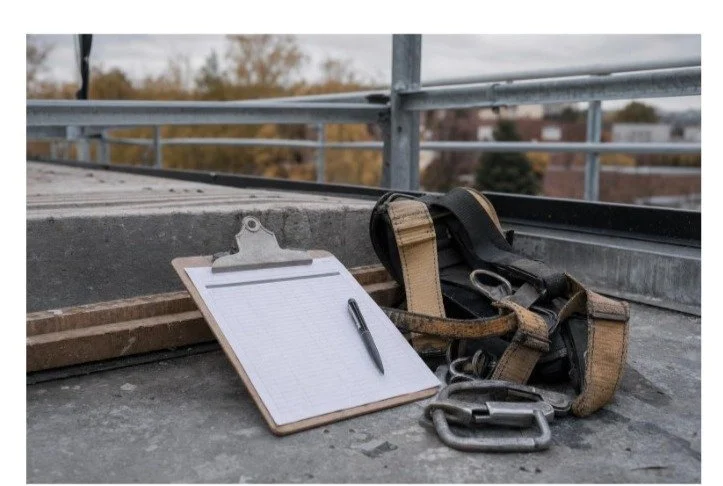
OSHA's construction rule sets a general 6-foot threshold for fall protection on walking and working surfaces. Training should prepare workers to use guardrails, personal fall arrest systems, and other required controls.
Two employer duties are easy to miss. You must keep written certification records showing who was trained, when, and by whom. Retraining is also required when workplace conditions or equipment change in a way that makes earlier training obsolete. Scaffold and ladder work carry separate standards, so a general course does not replace task-specific instruction.
NYC Specifics You Cannot Ignore
New York City adds local requirements on top of OSHA. On covered construction sites, workers must complete 40 hours of Site Safety Training and supervisors must complete 62 hours, according to the NYC Department of Buildings. SST cards are valid for five years from issuance, so tracking expiration dates is part of managing crews and contractors.
If you approve or oversee elevated work in the city, build these checks into contractor intake:
Ask each worker for a current SST card and confirm the issuance and validity window.
Ask for the worker's OSHA training card as evidence of the underlying safety instruction.
Confirm that the training provider is recognized by the Department of Buildings for SST delivery.
Fall protection also stays near the top of OSHA's enforcement data. OSHA's Top 10 data lists Fall Protection under 1926.501 as the most frequently cited standard, with Fall Protection Training under 1926.503 also among the most cited.
What a Credible Course Should Cover
Whether you are reviewing a US course mapped to OSHA topics or an Australian unit such as RIIWHS204E, the practical skills to look for are similar. A strong syllabus should include:
Hazard identification for the specific type of elevated work.
Selection and inspection of equipment, including harnesses and lanyards.
Correct installation and use of anchors.
The difference between travel restraint and fall arrest, and when each applies.
Rescue planning for a worker who has fallen and is suspended.
Documentation and recordkeeping practices.

Hands-on practice with harnesses and anchor systems is a strong quality signal. A course that lets workers fit gear, inspect it, and practice with real anchors provides more useful preparation than a lecture-only session. In Australia, the nationally accredited unit RIIWHS204E describes the skills and knowledge needed to work safely at heights and is often delivered as a one-day course.
Delivery Format Trade-offs
Courses usually come in three formats: classroom plus hands-on training at a training center, on-site group sessions, and blended models that move some theory online. On-site training can help when your hazards are unusual or crews work shifts, while classroom sessions with a dedicated practical area can offer a controlled assessment environment.
Class size is a useful quality clue. A lower trainer-to-participant ratio usually means more hands-on time and closer observation during practical assessment. Ask how many people are in a typical session before you book.
How to Evaluate a Provider in Ten Minutes
You can screen most providers quickly by looking for verifiable signals rather than broad marketing claims:
Recognized status, such as a registered training organization in Australia or a Department of Buildings-recognized provider for SST in New York City.
A clear syllabus mapped to OSHA topics or to the RIIWHS204E unit.
Assessment that includes both written and practical components.
Training records issued with names, dates, and trainer details.
Rescue drills included in the practical portion.
Equipment provided, with clear disclosure of any personal protective equipment workers must bring.
Transparent policies on late arrivals, identification, and, in Australia, the Unique Student Identifier.

Course Logistics to Compare
Once a provider clears the credibility check, compare the practical details. Duration, start and finish times, and how quickly a card or statement is issued all affect scheduling. So does what workers must bring. Access Training Centre, an Australian provider, specifies a one-day delivery of eight hours and requires personal protective equipment such as steel-cap safety boots.
If you are comparing Australian options, you can browse working at heights courses in Adelaide to check duration, same-day certification, what to bring, and on-site group availability before booking. As one Australian reference point, First Aid Certification and Training's Adelaide RIIWHS204E course runs six to eight hours and lists a fee of 295 AUD, with a same-day Statement of Attainment. For US and NYC readers, treat it as an Australian example only.
Budgeting Without Cutting Corners
Prices vary for practical reasons: course length, whether gear is included, travel to your site, and assessment depth. In the Australian market, published prices for the same RIIWHS204E unit can differ by provider. One Adelaide provider lists 227 AUD per person, First Aid Certification and Training lists 295 AUD, and another South Australian provider lists 400 AUD.
These figures are Australian examples tied to specific providers, including First Aid Certification and Training. Do not use them to estimate US costs. When you request quotes, ask for an all-in price that covers equipment, assessment, and any resit fees.
When to Schedule Refreshers
Under OSHA, retraining is required when workplace conditions or equipment change in a way that makes earlier training obsolete, or when a worker shows they have not retained the material. That makes refreshers event-driven rather than purely calendar-driven in the US context.
In Australia, the RIIWHS204E unit itself has no formal national expiry for the working at heights ticket. Even so, many employers in South Australia require renewal every two years. In either system, tie refresher checks to equipment inspections and review training after any incident or near-miss.
A Quick Buyer Checklist
Before you approve a course for a crew, run through these questions. For US and NYC work, start at the top. The Australian items apply if you are booking under that system. A site review of working at heights risks can also help frame the checklist.
Does the course meet OSHA fall-protection training requirements under 29 CFR 1926.503?
For NYC sites, does the plan cover the 40-hour worker and 62-hour supervisor SST requirements?
Will you receive written training records with names, dates, and trainer details?
Does the syllabus include hands-on harness fitting, anchor use, and rescue planning?
Is the trainer-to-participant ratio low enough for meaningful practice?
Is all-in pricing clear, including gear and resits?
Do you have a plan for retraining when equipment or conditions change?
For Australian bookings, is the provider a registered training organization delivering RIIWHS204E?
Choosing With Confidence
The best course for your site is the one that aligns with the law, builds practical competence, and leaves you with clean records. Price matters, but it should be the last filter, not the first. Confirm the legal baseline, check the hands-on content, and make sure documentation will hold up if it is reviewed.
Training works best inside a wider safety program. Pair it with solid planning, well-maintained equipment, and active supervision, and revisit it whenever your work changes. Document your training decisions and verify records before high-risk work begins, so the people on your rooftops and facades are prepared and the paperwork supports them.