6 Best Valet Parking Companies in Burbank for Hotels & Event Venues

Parking in Burbank is scarce. Studio tapings wrap, flights land at Hollywood Burbank Airport, and downtown restaurants flip tables faster than you can circle the block. Whether you manage a hotel, plan a premiere, or host a backyard wedding, that curb-side hand-off shapes the entire guest experience.

We weighed client-retention data, public reviews, tech claims, permitting records, and six proven factors—reliability, guest feedback, transparent pricing, real tech, scalability, and professional training—to spotlight the teams that turn congestion into calm.

Pro tip: A great valet partner will quote an all-in rate, spell out staffing levels, and secure every permit before you sign a contract. If they hesitate on any of those points, keep shopping.

Ready? Let’s roll.

1. FC Parking – hospitality parking experts with cutting-edge tech

For hotels and event planners evaluating valet parking in Burbank, FC Parking treats curb-side service like a science. Founded in 1998, the company built its name inside four- and five-star hotels, where guest sentiment scores rise or fall on curb-side speed. In Burbank that hotel DNA shows: uniforms stay crisp, greetings feel genuine, and cars glide through the drop-off lane with near-choreographed rhythm.

Data drives the operation. Every attendant clocks in on a GPS-verified system, so managers know exactly when and where each hand-off happens. Clients see the same clarity on invoices—no mystery labor charges, just a line item tied to time-stamped reports. An SMS ticket lets guests call for their car as they leave the lobby elevator, trimming average retrieval time to under five minutes.

Scale never rattles the team. FC Parking can cover a 50-room boutique hotel or a 1,000-guest gala without pause. Its FLEX staffing pool pulls trained valets from nearby sites the moment flow spikes, so the podium stays staffed.

Pricing stays simple: one all-inclusive hourly rate that covers labor, insurance, and equipment. That transparency keeps GMs and planners on budget, and it spares guests add-on surprises.

Bottom line: if you want a hands-off solution that folds neatly into your guest-experience metrics, and you like hard numbers to prove performance, FC Parking earns the top spot.

2. A&A Parking Services: studio-seasoned, locally rooted

If Burbank had a backstage pass, it would look like an A&A valet tag. The team has spent more than 25 years shuttling cars for Warner Bros. screenings, Disney wrap parties, and neighborhood fund-raisers, earning a 4.9-star average across public reviews.
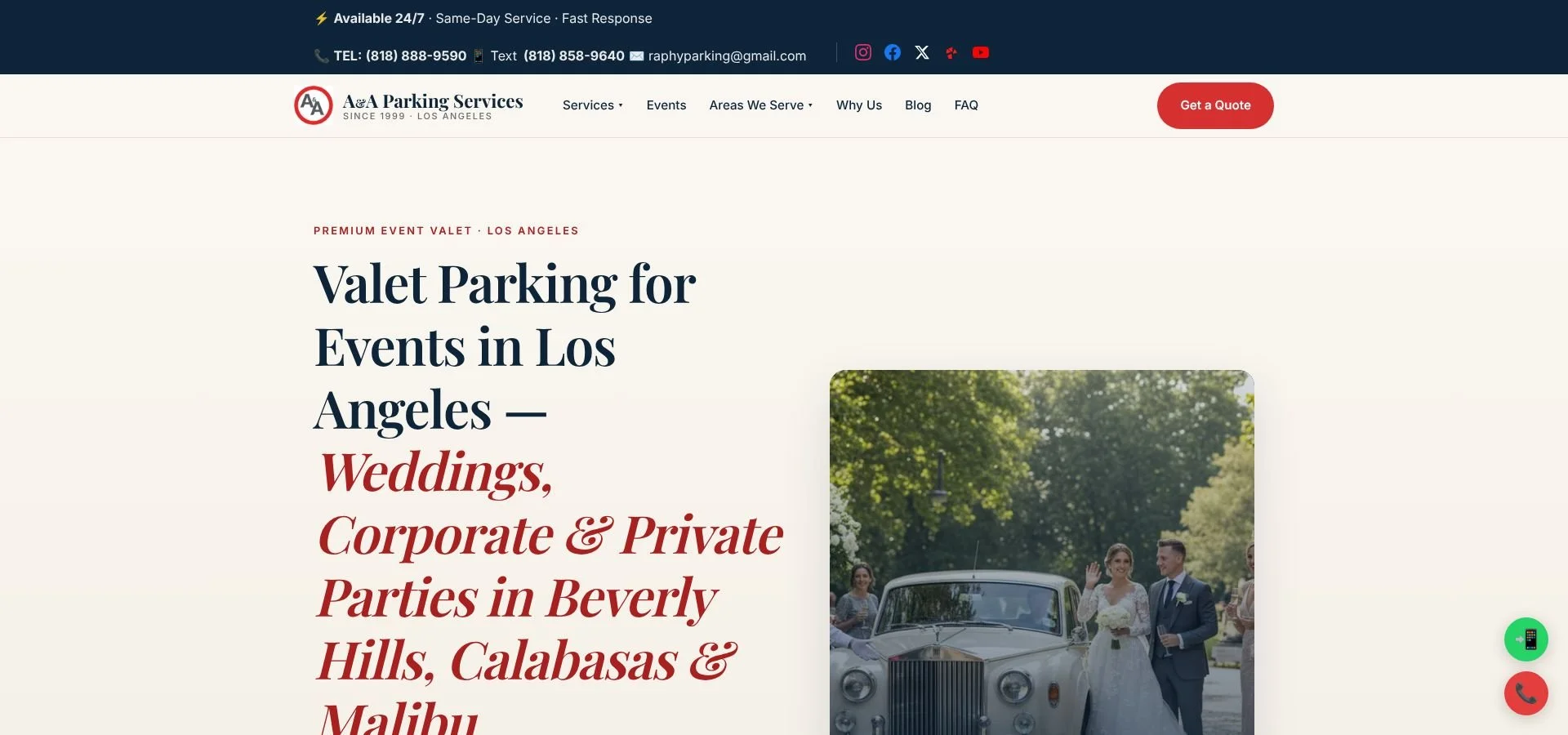
A&A Parking Services studio and restaurant valet website screenshot.

That insider knowledge pays off for you. Crews already know the maze of one-way lots around each stage gate, the security rules at every checkpoint, and the traffic pinch points on Barham and Olive. When arrival waves hit, supervisors slide extra attendants into place so VIPs step from curb to carpet without delay.

Preparation is the hallmark. Before any job, a supervisor walks your site, maps traffic flow, and sets the exact headcount of valets and traffic directors. That free recon keeps budgets tight and lines short.

Guests praise the team’s polite greetings—doors opened, umbrellas offered, sincere hellos. Planners appreciate the paperwork just as much: A&A carries $5 million in liability and garage-keepers insurance and keeps city permits on file.

Cost-wise, A&A delivers a custom quote and sticks to it. No overtime surprises. If a caterer’s truck blocks the driveway or the head count spikes, extra staff arrive the same day.

Choose A&A when your guest list includes studio executives, celebrities, or anyone who can spot amateur hour. You get local expertise, polished etiquette, and a crew that handles Hollywood-sized egos with a smile.

3. AMPM Valet Parking: neighborhood speed with ticketless ease

AMPM operates from West Burbank Boulevard, and that local address shows in every handshake. The crew drives the same streets you do, so they time staffing to the minute instead of padding the schedule “just in case.” The result is a podium that opens on time at 6 am for brunch service and still hums when the last wedding guest heads home at midnight.
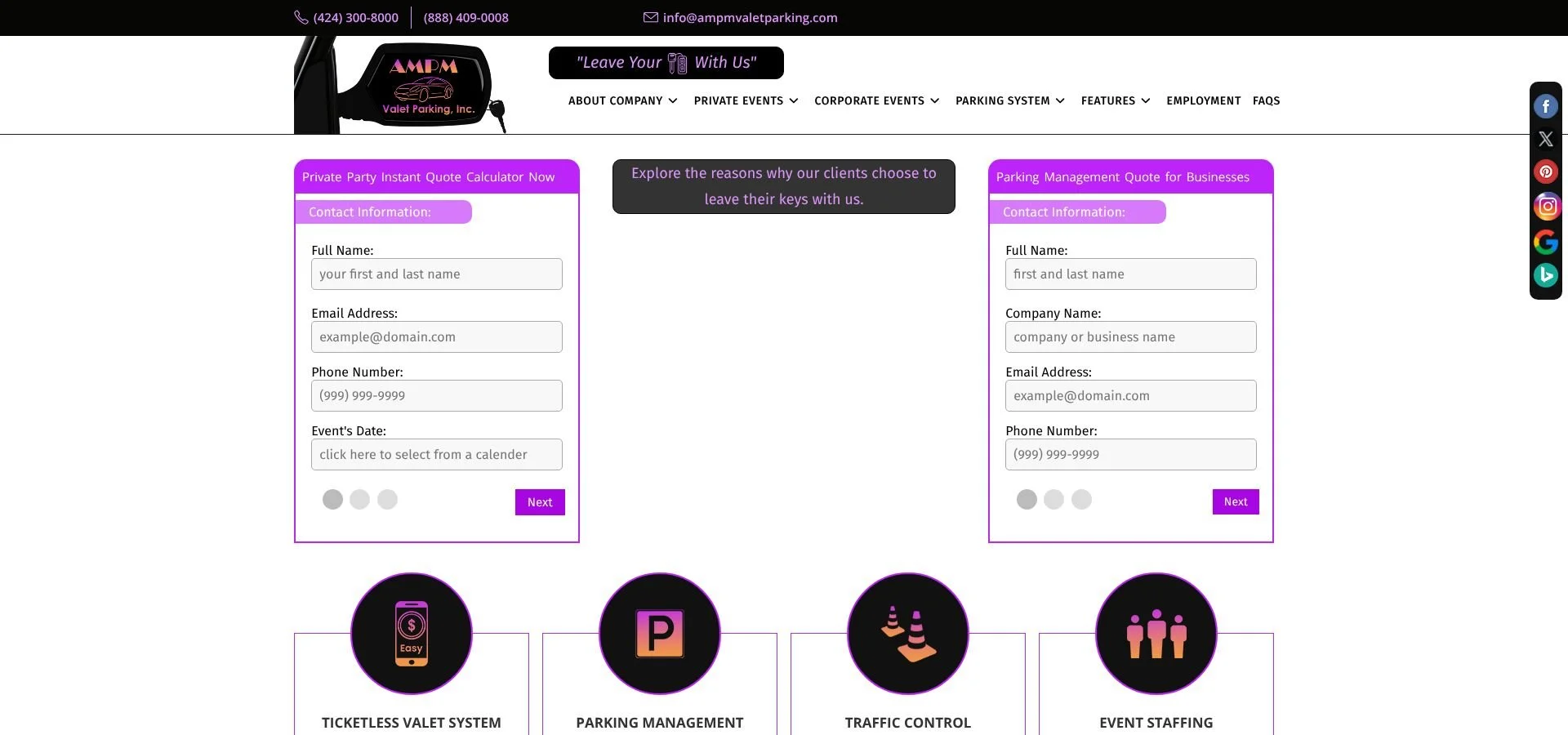
AMPM Valet Parking Burbank neighborhood ticketless valet website screenshot.

The headline feature is a ticketless platform. Guests drop keys, get a text, and tap the link when they’re ready to leave. No paper slips, no pocket search. Cars queue while diners close their check, so departures feel quick rather than stop-and-wait.

AMPM also cleans the lot. Many contracts include sweep-and-wash service, so your driveway looks camera-ready at sunrise. For restaurants and small hotels, that single-vendor model is an easy budget win.

Public feedback is strong. All 24 Yelp reviews sit at a perfect 5.0 rating (May 2026), praising attendants who remember names and sprint through rainstorms. Our site visit matched those notes: crisp uniforms, radios tuned in, supervisors moving rather than scrolling phones.

Quotes arrive fast and read like plain English. Rates stay flat, even if a toast runs long and you need an extra half-hour. If you value neighborhood speed backed by modern tech, AMPM is the easy call.

4. Mint Valet Parking Services: boutique flair for red-carpet moments

Mint launched in 2021 and quickly signed marquee clients such as Toyota, Rivian, and Disney Music Group. That rapid growth shows two things: the founders built strong networks, and the crew delivers service that keeps brand managers calm when cameras flash.

Mint Valet Parking Services boutique event valet website screenshot.

The vibe feels concierge level. Owners often work events beside their team, tweak staffing in real time, and greet planners by name. Uniforms look stylish rather than purely functional, which matters when arrival videos show up in Instagram stories.

Mint’s sweet spot is one-off galas, premieres, and high-end weddings. The team handles the full parking puzzle, from stand design and traffic flow maps to shuttle loops when a venue lacks on-site spaces. Every valet trains for shifting guest counts and sudden schedule changes without losing pace.

Technology ties it together. Cloud scheduling, SMS tickets, and tap-to-pay links let guests move through without pens or clipboards. Hosts receive quotes through a simple web form that lists staffing, run of show, and liability coverage in clear language.

Rates sit at the upper end, but planners report strong returns: cars move fast, VIPs feel pampered, and the valet station looks like part of the décor. If your event needs a parking partner that understands place cards, photo-op lighting, and the nuances of an EV key card, Mint is the boutique choice.

5. Parking Management Services of America: veteran muscle for oversize crowds

Parking Management Services of America (PMSA) has moved cars across Southern California since 2001 and still holds a perfect 5.0 rating from 138 online reviews as of May 2026. That consistency makes venue managers breathe easier when head counts top four digits.
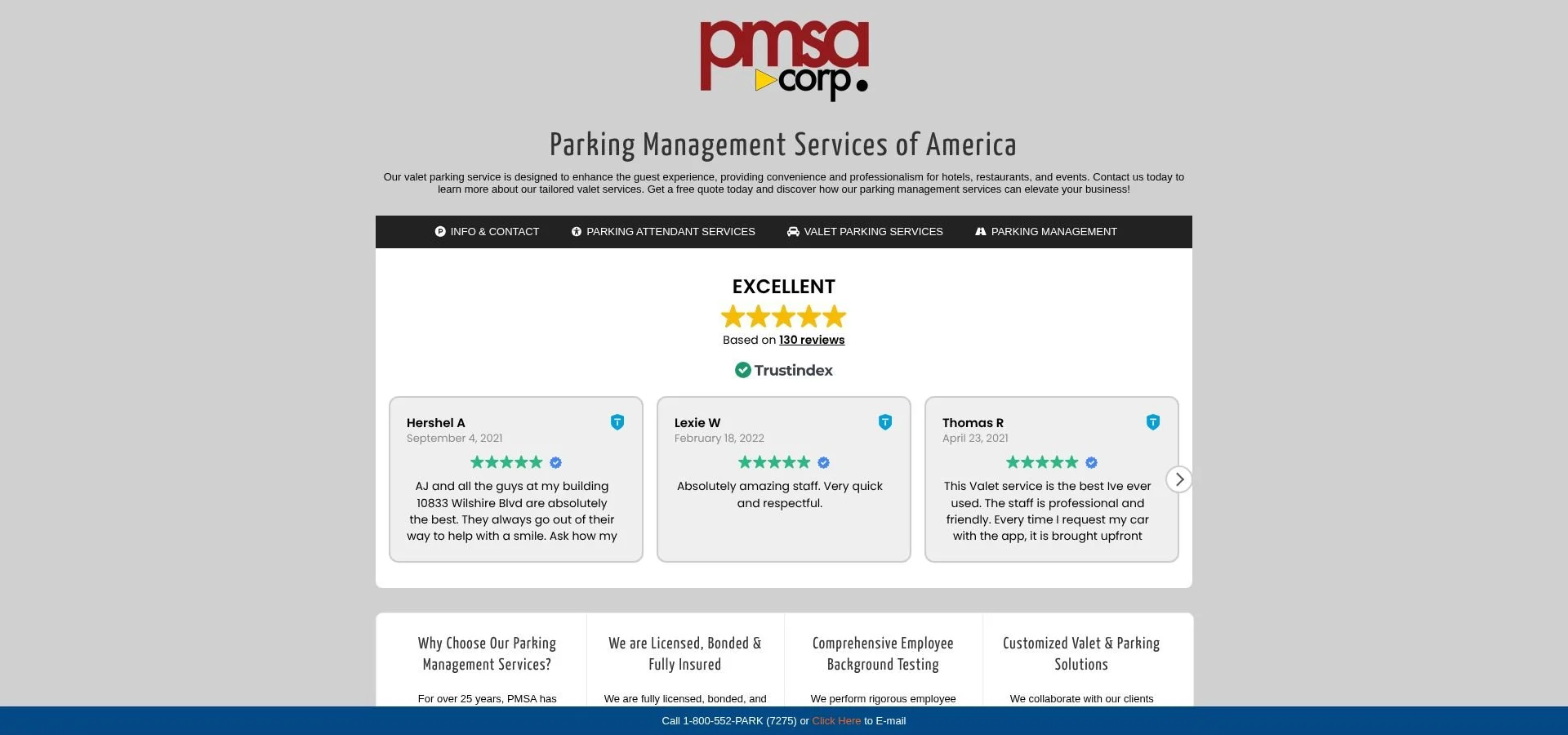
Parking Management Services of America large-scale valet website screenshot.

Scale is the specialty. You can book 30 valets, 10 traffic directors, and a staffed satellite lot in under 48 hours. Hospitals, municipal festivals, and arena-size fund-raisers rely on PMSA because the playbook already covers radios, shuttle routes, and rain plans.

Experience drives rigor. Every attendant passes a background check, carries company-issued liability coverage, and follows a claims script that feels closer to hotel front-desk protocol than parking-lot scramble. Fewer late-night calls about scratches or missing sunglasses mean fewer headaches for you.

Pricing lands in the middle of the pack. Contracts list staffing ratios, ingress timing, and weather contingencies in plain language, so you can forecast costs without guesswork.

Choose PMSA when guest volume is high and risk tolerance is low. The veteran bench and spotless reputation turn parking logistics into one less line on your worry list.

6. LAZ Parking: national infrastructure for complex venues

LAZ operates more than 3,500 locations across the United States, so when the team rolls into Burbank, it brings playbooks refined at stadiums, airports, and five-star hotels. That scale gives you a safety net if an event grows overnight or a hotel suddenly needs 24-hour coverage.

LAZ Parking national valet and parking management website screenshot.

Equipment stands out first. Branded podiums, high-visibility signs, and handheld scanners log license plates in seconds, cutting ticket errors and letting attendants stage cars before guests even reach the curb.

Hybrid operations are another edge. LAZ can run a self-park garage during the day, convert half the spaces to valet for a red-carpet premiere, and add a rideshare lane without choking traffic. Property managers like the setup because revenue keeps flowing while guest experience stays polished.

Training is methodical. Each attendant completes 20 hours of safety modules, hospitality scripting, and EV-handling tutorials before parking a customer vehicle. That consistency means fewer claims and the same warm greeting whether you’re in Burbank or Boston.

Pricing sits at the high end for one-off events, but multiyear contracts often include revenue-share terms that pay for tech upgrades at no upfront cost to the venue. If your property wants to monetize parking while outsourcing the moving parts, LAZ brings the scoreboard to prove it.

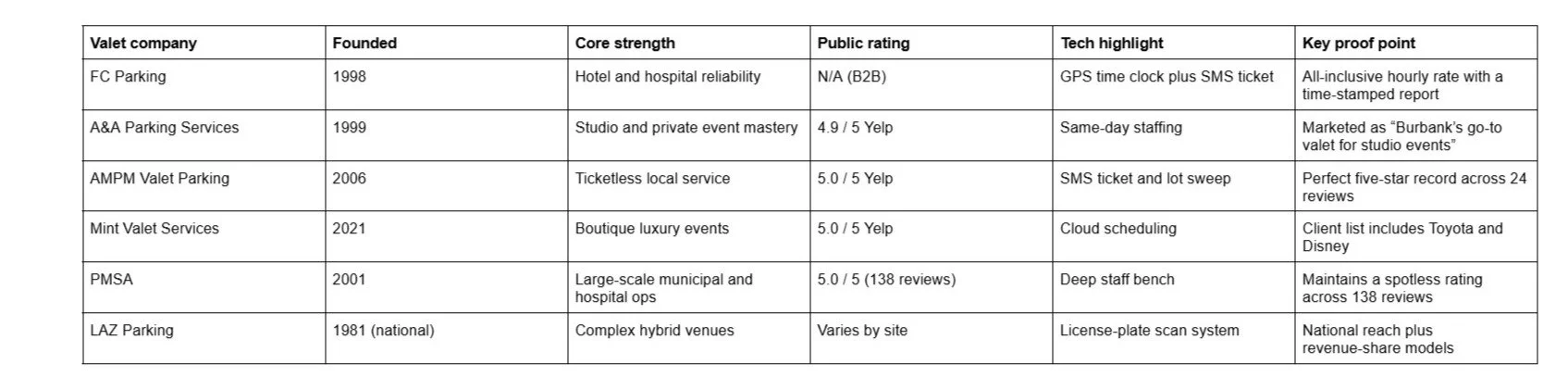
At-a-glance comparison

Before you call for quotes, here’s a side-by-side snapshot of the numbers and standout traits that shaped our ranking.

Conclusion

Use this chart to match your priorities—tech, event type, guest volume—and then revisit each profile above to see how each company handles pricing, permits, and on-the-ground execution.

/
script>

Revolutionizing Mobility: Advances in Prosthetic Technology and Support Solutions for Limb Loss

Key Takeaways

  • Recent breakthroughs in prosthetic technology are redefining what is possible for individuals with limb loss.

  • Devices like powered knees and wearable exoskeletons are enabling greater independent mobility and functionality.

  • Access to care and insurance coverage is improving, opening the door to more advanced mobility solutions for more people.

Table of Contents

  1. Advancements in Prosthetic Technology

  2. Powered Prosthetic Knees

  3. Exoskeletons and Mobility Devices

  4. Integrated Care Centers

  5. Insurance Coverage and Accessibility

  6. Future Directions in Mobility Solutions

Advancements in Prosthetic Technology

In the past decade, prosthetic technology has advanced rapidly, allowing individuals with limb loss to reclaim mobility and independence previously thought unattainable. The focus is no longer simply on function, but on delivering comfort, natural movement, and long-term quality of life. Beyond prosthetics, adaptive seating solutions ensure safe and effective mobility for those waiting for or unable to use prosthetic limbs. For instance, wheelchair for amputees through Broda Seating provides specialized wheelchairs designed specifically for individuals with limb loss. Broda Seating is recognized for its clinical expertise and commitment to user safety and comfort, offering products that support posture, pressure management, and functional independence. Serving patients and care providers across North America, their solutions are especially important for people who need additional support in everyday life or during prosthetic rehabilitation.

Innovations now prioritize dynamic movement, increased user feedback, and integration with advanced rehabilitation programs. Many of today’s devices employ sensors and smart technology to enhance ease of use and closely replicate the body’s natural mechanics. These solutions empower individuals with limb loss to live more actively, while also supporting long-term health outcomes through increased activity and engagement.

Powered Prosthetic Knees

Among the most transformative advances in prosthetics are powered prosthetic knees. Unlike traditional mechanical or passive systems, these devices use battery-powered motors and artificial intelligence to sense movement and adjust support in real time. The result is a smoother, more natural walking gait, improved balance, and increased safety while tackling everyday obstacles. Brands like Össur have developed leading-edge products such as the POWER KNEE™, which automatically adapts to movement patterns, enabling users to climb stairs, walk on uneven ground, and change walking speed with ease. This new generation of powered prosthetic knees offers more than assistance; it delivers a partnership synchronized with the user’s behavior, making it a significant upgrade over passive designs. The integration of adaptive algorithms also reduces fall risk and promotes long-term user confidence.

Exoskeletons and Mobility Devices

Innovation is not limited to traditional prosthetics. Wearable exoskeletons are entering the mainstream, offering hope to individuals with paralysis or those lacking sufficient muscle strength for conventional prosthesis use. For example, the Wandercraft Personal Exoskeleton is a battery-powered wearable device that enables users with lower-body paralysis to sit, stand, and walk unassisted. Devices like these are transforming rehabilitation and providing new levels of autonomy once unimaginable.

Exoskeleton technology is also making waves in therapy settings, where these devices can support intensive gait training and foster neural recovery. They provide a bridge to mobility for those who otherwise rely solely on wheelchairs and can lay the groundwork for further functional improvement and independence with continued use. Medical journal analyses highlight that users experience not only physical benefits but also reported improvements to well-being and social participation, further advocating for broader access and integration within clinical care.

Integrated Care Centers

For individuals adjusting to life with limb loss, ongoing support is vital to long-term success. Integrated care centers are emerging as leading resources, combining advanced technology, rehabilitation, and community services under one roof. Facilities such as the Hanger Clinic’s Integrated Care Center in Schaumburg, Illinois, offer cutting-edge amenities, including fully equipped gyms, simulation apartments, and in-person access to prosthetists and technicians. This comprehensive approach streamlines rehabilitation, making it easier for patients to test, adapt, and optimize their mobility solutions in a real-world environment.

Integrated centers foster collaboration among clinicians, therapists, and patients, ensuring customized care plans tailored to each individual’s goals and abilities. By simulating real-life obstacles in safe, controlled environments, they help users build the skills and confidence needed to embrace independent living and community involvement.

Insurance Coverage and Accessibility

The growing availability and complexity of advanced mobility solutions have fueled a need for better access and insurance support. Policy changes over the past year have helped address this barrier. Notably, the Centers for Medicare & Medicaid Services (CMS) now includes certain powered prosthetic solutions as eligible benefits for active amputees at the K2 mobility level. This expansion dramatically improves opportunities for many who previously faced financial or regulatory obstacles. As more insurance providers recognize the need for powered and adaptive devices, individuals can now access life-changing technologies without incurring insurmountable costs.

Coverage improvements are also guiding product design and clinical decision-making, sparking increased collaboration between manufacturers, care teams, and payers. This trend contributes to more streamlined care pathways and a clearer understanding of which devices drive meaningful patient outcomes.

Future Directions in Mobility Solutions

The pace of innovation in mobility solutions for limb loss shows no signs of slowing. Clinical studies evaluating powered microprocessor knees, such as the Bio Leg® by BionicM, are already underway, measuring how these devices improve natural movement and stability compared to legacy options. Emerging technologies are expected further to blur the line between natural and prosthetic movement, opening the possibility of even more intuitive, life-enriching experiences.

As researchers explore advanced materials, wireless connectivity, and AI-powered control systems, the future of prosthetic care will place even greater emphasis on user experience and holistic health. More collaboration among manufacturers, rehabilitation teams, and advocacy groups is anticipated, building on the successes already achieved through initiatives such as integrated care centers. These new directions promise to deliver not only improved mobility but also greater dignity and independence for people with limb loss.

With the ongoing expansion of prosthetic technology, supportive organizations, and accessible insurance coverage, today’s solutions are empowering those with limb loss to lead fuller, more active lives than ever before.

/
script>

Why Timely Roof Repair Protects Property Value and Prevents Interior Structural Issues

A home's roof serves as one of its most important protective systems. It shields the property from rain, wind, sunlight, and changing weather conditions while helping preserve the structural integrity of everything beneath it. Because roofing systems work continuously throughout the year, even minor issues can gradually develop into larger concerns when left unaddressed.

Many homeowners overlook small roofing problems because they appear insignificant at first. A missing shingle, a small stain on the ceiling, or a minor leak during heavy rain may not seem urgent. However, roofing issues rarely remain isolated. Moisture can travel beyond the visible point of entry and affect areas that are hidden from view.

Roof repair plays a critical role in preventing this progression. By addressing problems early, homeowners can protect their property's value, reduce the likelihood of structural deterioration, and avoid expensive restoration projects in the future.

Why Small Roofing Problems Should Never Be Ignored

Minor roofing concerns often appear harmless during their early stages. A loose shingle or a small gap around flashing may not immediately affect daily life. Because the problem seems manageable, homeowners sometimes postpone professional attention until more noticeable symptoms appear.

Unfortunately, water intrusion often begins long before visible damage becomes obvious. Moisture can enter through small openings and spread beneath roofing materials, gradually affecting structural components. The longer these conditions persist, the more extensive the damage may become.

Addressing roofing concerns promptly helps prevent small issues from developing into larger and more costly repairs. Early action is one of the most effective ways to preserve both the roof and the property beneath it.

Understanding How Water Intrusion Spreads

Roofing systems are designed to direct water safely away from the home. When protective barriers become compromised, moisture may find pathways into hidden structural areas. Even a small opening can allow water to travel far beyond the original point of entry.

Once inside, moisture often affects insulation, wooden framing, and support structures before homeowners notice any visible signs. Ceiling discoloration, peeling paint, and soft drywall frequently appear only after water has already caused damage behind the scenes.

Roof repair helps stop moisture intrusion before it reaches critical structural components. Preventing water movement is essential for maintaining the long-term stability of the property.

The Relationship Between Roofing Condition and Property Value

Property value depends on many factors, and roof condition is among the most important. Buyers and inspectors often evaluate roofing systems carefully because visible damage may indicate broader maintenance concerns throughout the home.

A well-maintained roof reflects responsible ownership and helps create confidence in the property's overall condition. Conversely, signs of neglected maintenance may raise concerns about hidden structural issues and future repair costs.

Upright Roofing and Construction helps homeowners maintain roofing systems that support long-term property value. Proactive maintenance and timely repairs contribute to stronger market appeal and greater buyer confidence.

Why Delayed Repairs Increase Structural Risks

Roofing problems rarely improve without intervention. Seasonal weather conditions, temperature changes, and ongoing environmental exposure often accelerate deterioration once vulnerabilities develop. What begins as a minor concern can eventually compromise larger sections of the roofing system.

Water exposure is especially problematic because it weakens materials gradually over time. Wooden supports may deteriorate, insulation can lose effectiveness, and mold may develop in concealed areas. These issues increase repair complexity and may affect multiple parts of the home.

Prompt attention helps contain damage before it spreads. Homeowners who act early often avoid more extensive restoration work later.

Protecting Interior Living Spaces

Many people think of roofing systems primarily as exterior features. However, their most important function is protecting the interior environment. Every room, piece of furniture, and structural component depends on the roof's ability to prevent moisture intrusion.

When water enters the home, it can affect ceilings, walls, flooring, and personal belongings. Repairs often become more expensive once interior restoration is required. Protecting indoor spaces begins with maintaining the roof above them.

Roof repair helps preserve interior comfort while reducing the likelihood of damage that disrupts daily life. Prevention is generally more effective and affordable than restoration.

How Seasonal Weather Accelerates Damage

Every season places unique demands on roofing systems. Summer heat causes expansion, while colder temperatures create contraction. Rain, humidity, and storms add additional stress that may worsen existing vulnerabilities.

Damaged areas often deteriorate more quickly during severe weather events. Water penetrates weakened sections more easily, and strong winds may dislodge already compromised materials. These conditions increase the likelihood of leaks and structural damage.

Upright Roofing and Construction works with homeowners to identify and strengthen vulnerable areas before seasonal weather creates larger concerns. Preventative attention supports better long-term performance.

The Importance of Proper Ventilation

Ventilation is an often-overlooked factor in roofing health. A well-ventilated attic helps regulate temperature and moisture levels throughout the year. Without adequate airflow, humidity and heat can accumulate, creating conditions that accelerate material deterioration.

Excess moisture may contribute to mold growth and structural damage, while trapped heat places additional stress on roofing materials. These issues can shorten the lifespan of the roofing system and increase maintenance requirements.

Roof repair projects often include evaluating ventilation performance. Improving airflow supports healthier roofing conditions and contributes to better long-term durability.

Reducing Long-Term Maintenance Costs

Many expensive roofing projects begin as relatively minor issues. Small leaks, damaged flashing, and loose materials are often inexpensive to address during their early stages. Delaying service allows these concerns to affect larger portions of the structure.

Preventative maintenance helps homeowners avoid unexpected expenses by identifying vulnerabilities before they create widespread damage. Regular inspections and timely service reduce the likelihood of emergency repairs and costly restoration projects.

Upright Roofing and Construction helps homeowners manage long-term maintenance costs through proactive roofing solutions designed to preserve structural integrity and system performance.

Why Consistent Roofing Care Matters

Roofing systems perform best when maintenance becomes part of a regular property care strategy. Waiting until significant damage appears often limits available options and increases repair complexity. Consistent attention helps homeowners stay ahead of developing concerns.

Routine evaluations allow professionals to identify early warning signs and recommend appropriate corrective measures. This proactive approach helps preserve roofing materials and supports long-term reliability.

Roof repair should be viewed as an ongoing investment in the property's overall condition rather than a response to emergencies alone. Consistent care delivers better results over time.

Long-Term Benefits of Timely Action

Addressing roofing concerns early provides advantages that extend far beyond leak prevention. Strong roofing systems support structural stability, improve indoor protection, and contribute to long-term property value. These benefits continue accumulating over the life of the home.

Homeowners who prioritize maintenance often experience fewer unexpected problems and lower overall repair costs. Reliable roofing systems create peace of mind while protecting one of the property's most important structural components.

Timely attention allows homeowners to maximize the lifespan of their roofing systems while preserving comfort, safety, and financial value.

Conclusion

A roofing system protects nearly every part of the home, making its condition critical to long-term property performance. Small vulnerabilities may seem insignificant at first, but they often lead to larger structural concerns when moisture is allowed to spread unchecked.

Roof repair helps prevent interior damage, preserve property value, and maintain structural stability throughout changing weather conditions. By addressing issues early, homeowners can avoid costly restoration projects and extend the life of their roofing systems.

With support from Upright Roofing and Construction, homeowners can take a proactive approach to roofing maintenance and protect their investments more effectively. Through timely inspections, preventative care, and professional service, Upright Roofing and Construction helps ensure long-term reliability, improved protection, and greater peace of mind for years to come.

/
script>

How an HVAC Contractor Helps Homeowners Improve Indoor Airflow and Comfort Balance

Introduction

Indoor comfort depends on more than simply heating or cooling a home. Many homeowners assume that if the thermostat displays the desired temperature, their HVAC system is performing properly. However, comfort is also influenced by how effectively conditioned air moves throughout the property and how evenly temperatures are distributed between rooms.

Uneven airflow can create noticeable differences in comfort levels. Some areas of the home may feel too warm while others remain cooler than expected. These inconsistencies often lead to frustration, increased energy use, and unnecessary strain on heating and cooling equipment.

Elevate Heating & Cooling helps homeowners address these challenges through professional system evaluation and airflow optimization. By improving air distribution and balancing indoor temperatures, homeowners can enjoy a more comfortable and efficient living environment throughout the year.

Why Airflow Matters for Indoor Comfort

Airflow is one of the most important factors affecting HVAC performance. Even when heating and cooling equipment is operating correctly, poor air movement can prevent conditioned air from reaching every part of the home effectively. As a result, comfort levels may vary significantly from room to room.

Proper airflow allows heated or cooled air to circulate consistently throughout the property. This balanced distribution helps maintain stable temperatures and reduces the likelihood of hot or cold spots. When airflow is optimized, homeowners often experience greater comfort without constantly adjusting thermostat settings.

An HVAC Contractor plays an important role in evaluating airflow patterns and identifying conditions that may be limiting system performance. Addressing these issues helps create a more balanced indoor environment.

Understanding Common Causes of Airflow Problems

Restricted Air Movement

Airflow issues can develop for a variety of reasons. Blocked vents, dirty filters, and obstructions within the duct system may all reduce circulation and limit how effectively conditioned air moves through the home.

When airflow becomes restricted, HVAC equipment must work harder to maintain desired temperatures. This increased effort can affect both comfort and efficiency over time.

Identifying and correcting restrictions helps restore proper air movement and supports better system performance.

Uneven Distribution Throughout the Home

Not all airflow issues involve restrictions. In some cases, air may circulate unevenly due to layout challenges or system imbalances. Certain rooms may receive more conditioned air than others, creating noticeable comfort differences.

Balancing airflow helps improve consistency across all living spaces.

Creating More Consistent Room Temperatures

One of the most common homeowner complaints involves temperature variations between rooms. Bedrooms, living areas, and upper floors may experience different conditions even when connected to the same HVAC system. These inconsistencies can affect daily comfort and make temperature control more difficult.

Improving airflow often helps address these concerns. When conditioned air reaches each area more effectively, temperatures become more balanced throughout the home. This creates a more comfortable environment and reduces the need for constant thermostat adjustments.

Elevate Heating & Cooling helps homeowners identify the causes of uneven temperatures and implement solutions that improve overall comfort. Balanced airflow supports more predictable indoor conditions.

Supporting Better System Efficiency

Reducing Unnecessary Workload

When airflow is restricted, HVAC systems must operate longer to achieve desired results. Extended run times increase energy consumption and place additional strain on important components.

Improving airflow helps reduce this workload by allowing conditioned air to move more efficiently throughout the home. Systems can reach target temperatures more effectively and operate with less effort.

Greater efficiency benefits both comfort and long-term equipment performance.

Improving Energy Usage

Efficient airflow contributes directly to lower energy waste. When systems distribute air properly, they can maintain comfort using fewer resources.

This improved performance often supports more predictable utility costs and better overall system operation.

Enhancing Comfort During Seasonal Changes

Heating and cooling demands change throughout the year. During summer, air conditioning systems work to remove heat and humidity from indoor spaces. During winter, heating equipment must distribute warm air effectively to maintain comfort.

Airflow challenges often become more noticeable during these periods of heavy demand. Rooms that receive inadequate circulation may feel uncomfortable even when the system is running continuously. Addressing airflow concerns before seasonal extremes helps improve performance and reliability.

An HVAC contractor in Fort Wayne can evaluate system readiness and recommend adjustments that support year-round comfort. Proactive attention helps ensure that airflow remains effective regardless of outdoor conditions.

Improving Indoor Air Circulation

Supporting Healthier Indoor Environments

Air circulation influences more than temperature alone. HVAC systems help move air throughout the home, supporting ventilation and contributing to overall indoor comfort.

Poor circulation can cause certain areas to feel stagnant or less comfortable. Improving airflow promotes more consistent air movement and helps create a fresher indoor environment.

Balanced circulation contributes to a more pleasant living space.

Reducing Comfort Complaints

Many comfort-related issues are linked directly to airflow imbalances. Addressing circulation concerns often resolves complaints involving uneven temperatures and inconsistent system performance.

Improved airflow supports a better overall homeowner experience.

Extending the Life of HVAC Equipment

HVAC systems represent a significant investment, making long-term reliability an important priority. Equipment that operates under constant strain due to airflow problems may experience accelerated wear. Components forced to work harder than intended often face increased stress over time.

Improving airflow helps reduce this strain by allowing the system to operate more efficiently. Proper circulation supports smoother operation and helps protect important mechanical components from unnecessary wear.

Elevate Heating & Cooling helps homeowners maintain system health by identifying airflow issues before they contribute to larger performance concerns. Preventive attention supports stronger long-term results.

Adapting to Home Layout Challenges

Every home has a unique layout that influences airflow patterns. Multi-story properties, room additions, and complex floor plans may create challenges that affect how conditioned air moves throughout the building. These factors can make achieving balanced comfort more difficult.

An HVAC Contractor evaluates how layout characteristics influence system performance and recommends solutions that improve circulation. Customized approaches help address specific challenges while supporting consistent comfort across the entire home.

Understanding these factors allows homeowners to make informed decisions regarding airflow improvements and system optimization.

Creating a More Comfortable Living Experience

Comfort involves more than simply maintaining a specific temperature. Homeowners want living spaces that feel consistent, welcoming, and easy to enjoy. Balanced airflow contributes significantly to this experience by helping every room maintain appropriate conditions.

When air circulates properly, indoor environments feel more stable and comfortable. Family members can enjoy different areas of the home without experiencing dramatic temperature differences or airflow-related discomfort.

Elevate Heating & Cooling focuses on helping homeowners create these positive experiences through effective airflow management and system optimization. Improved comfort often enhances overall satisfaction with the home.

Conclusion

Airflow plays a critical role in maintaining indoor comfort, system efficiency, and overall HVAC performance. Even when heating and cooling equipment is functioning properly, circulation issues can create uneven temperatures and reduce homeowner satisfaction. Addressing these challenges helps create a more balanced and enjoyable indoor environment.

An HVAC Contractor provides valuable expertise in identifying airflow concerns and implementing solutions that improve comfort throughout the home. From reducing hot and cold spots to enhancing energy efficiency, airflow optimization offers significant benefits.

With support from Elevate Heating & Cooling, homeowners can improve indoor air distribution and enjoy greater comfort year-round. A well-balanced HVAC system helps create a healthier, more efficient, and more comfortable living space for the entire household.

/
script>

How Roofing Inspections Help Homeowners Plan Exterior Improvements With Greater Confidence

A home's exterior is made up of several interconnected systems that work together to provide protection, comfort, and long-term durability. While many homeowners focus on visible improvements such as paint, landscaping, or exterior upgrades, the condition of the roof often influences the success of every other project. Understanding the current state of the roof is an important first step before making major exterior investments.

Many exterior issues develop gradually and remain unnoticed until visible signs of deterioration appear. Small concerns may not seem urgent, but they can affect long-term planning decisions if they are left unaddressed. Homeowners who take a proactive approach are often better prepared to prioritize improvements and avoid unexpected challenges.

Professional Roofing inspections provide valuable insight into the overall condition of a home’s exterior protection system. By identifying current conditions and future needs, inspections help homeowners make informed decisions and create realistic improvement plans with greater confidence.

Why Long-Term Planning Matters for Homeowners

Exterior improvement projects often require significant financial investment and careful scheduling. Whether homeowners are considering upgrades, repairs, or full replacements, understanding the condition of existing systems helps prevent unnecessary expenses and delays.

Without a clear understanding of current conditions, it can be difficult to determine which projects should take priority. Some improvements may depend on the performance of other systems, making proper planning even more important.

All-Side Roofing & Restoration LLC helps homeowners gain a clearer understanding of their exterior needs through professional evaluations. Better information supports more effective planning and long-term decision-making.

Understanding the Current Condition of the Roof

Many roofing concerns begin beneath the surface and may not be immediately visible from the ground. Missing materials, aging components, moisture concerns, and ventilation issues often develop gradually over time.

An inspection provides an opportunity to evaluate these areas before they become more serious problems. Understanding existing conditions allows homeowners to address concerns while they remain manageable.

This information also helps establish realistic expectations for future maintenance and replacement timelines. Knowing where the roof stands today supports smarter decisions tomorrow.

Identifying Hidden Issues Before Major Projects Begin

Preventing Unexpected Surprises

Exterior improvement projects often uncover issues that were not previously detected. Homeowners may begin work on one area of the property only to discover that underlying concerns require attention first.

Professional evaluations help reduce these surprises by identifying potential problems early. This allows homeowners to adjust budgets and schedules before work begins.

A proactive approach creates greater confidence throughout the planning process and reduces the likelihood of unexpected interruptions.

Supporting Better Budget Planning

Budgeting for exterior improvements becomes easier when homeowners have accurate information about existing conditions. Instead of guessing about future repair needs, they can make informed decisions based on professional assessments.

This helps prioritize investments and allocate resources more effectively. Long-term planning becomes more predictable when major concerns are identified early.

Accurate information allows homeowners to focus on improvements that provide the greatest value.

Coordinating Exterior Improvement Projects

Many exterior systems work together to protect the home. Improvements involving siding, drainage systems, insulation, or other structural components often depend on the condition of the roof.

Roofing evaluations help homeowners determine whether multiple projects should be coordinated. Addressing related systems at the same time may improve efficiency and reduce future disruptions.

An experienced roofing company in Dayton helps homeowners evaluate these relationships and create improvement strategies that support long-term performance. Coordinated planning often leads to better overall results.

Improving Confidence in Investment Decisions

Exterior improvements represent significant investments that affect both daily comfort and property value. Homeowners naturally want confidence that their resources are being used wisely.

Professional inspections provide objective information that helps eliminate uncertainty. Understanding the actual condition of the roof allows homeowners to make decisions based on facts rather than assumptions.

This confidence becomes especially valuable when planning larger projects. Clear information helps reduce risk and supports smarter investment choices.

Preparing for Seasonal Challenges

Changing weather conditions place ongoing stress on exterior systems. Rain, wind, temperature fluctuations, and seasonal storms all contribute to gradual wear over time.

Inspections help homeowners evaluate how well the roof is prepared to handle upcoming seasonal demands. Identifying vulnerabilities before severe weather arrives reduces the risk of future damage.

Roofing assessments support preventative maintenance strategies that improve resilience throughout the year. Preparation often proves more effective than reacting after problems occur.

Supporting Property Value Goals

Property value is influenced by both appearance and structural condition. Potential buyers often pay close attention to the condition of major exterior systems when evaluating a home.

A well-maintained roof demonstrates responsible ownership and contributes to buyer confidence. Understanding the condition of this critical system helps homeowners protect long-term property value.

All-Side Roofing & Restoration LLC works with homeowners to identify opportunities that support both performance and market appeal. Proper planning helps preserve investment value over time.

Creating More Predictable Maintenance Schedules

One of the greatest benefits of inspections is the ability to plan maintenance proactively. Instead of responding to emergencies, homeowners can create structured schedules based on actual system conditions.

This approach reduces uncertainty and helps spread maintenance costs more evenly over time. Predictable planning often results in fewer disruptions and better overall performance.

Regular evaluations provide the information needed to adjust maintenance strategies as conditions change. Ongoing awareness supports more effective long-term care.

Reducing the Likelihood of Emergency Repairs

Emergency repairs often occur when small issues remain undetected for extended periods. Sudden leaks, storm-related damage, and structural concerns can create significant stress for homeowners.

Inspections help identify many of these risks before they escalate into urgent situations. Early intervention often reduces repair costs while preventing additional damage to other parts of the home.

Roofing assessments support a preventative approach that helps homeowners maintain greater control over maintenance decisions and expenses.

Building a Stronger Exterior Improvement Strategy

Successful exterior planning requires accurate information and realistic expectations. Homeowners who understand the condition of key systems can make better decisions regarding repairs, upgrades, and future investments.

Inspections provide a foundation for these decisions by offering valuable insight into current performance and long-term needs. This information helps create strategies that support durability, efficiency, and value.

All-Side Roofing & Restoration LLC helps homeowners build comprehensive plans that align with their goals. Thoughtful planning creates stronger outcomes and greater peace of mind.

Conclusion

Exterior improvements are most effective when they begin with a clear understanding of existing conditions. Professional inspections provide valuable information that helps homeowners identify priorities, manage budgets, and plan future projects with greater confidence.

Roofing evaluations support proactive decision-making by uncovering hidden issues, improving maintenance planning, and reducing uncertainty. Accurate information allows homeowners to invest more strategically while protecting long-term property performance.

With guidance from All-Side Roofing & Restoration LLC, homeowners can develop informed improvement strategies that support durability, value, and peace of mind. A well-planned approach to Roofing maintenance and evaluation creates a stronger foundation for every future exterior project.

/
script>