What to Know Before Fence Installation to Ensure Long-Term Durability and Property Value

Installing a fence is more than just adding a boundary around a property. It is a long-term investment that influences security, organization, and overall appearance. While many property owners focus on materials or design, the planning stage plays a much larger role in determining how well the fence performs over time.

Without proper preparation, even high-quality materials may fail to deliver lasting results. Issues such as poor alignment, weak structural support, or incorrect placement often lead to costly adjustments later. These problems typically begin before construction even starts, making early planning essential.

Fence installation becomes far more effective when every detail is considered in advance. With guidance from Hawk Fences, property owners can approach the process with confidence and create fencing systems that remain durable, functional, and visually appealing for years.

Defining the Purpose of the Fence Before Starting

Every fencing project should begin with a clear understanding of its primary purpose. Some fences are designed for privacy, while others focus on security, containment, or visual appeal. Identifying this purpose helps guide all other decisions.

For example, a decorative fence may prioritize appearance, while a security-focused design requires stronger materials and height considerations. Without a clear goal, it becomes difficult to choose the right structure. Purpose drives efficiency.

As highlighted in , defining the role of the fence early ensures that the entire project remains aligned with long-term needs. Fence installation becomes more effective when guided by a clear objective.

Understanding Property Layout and Boundaries

Accurate property boundaries are essential before any construction begins. Installing a fence in the wrong location can lead to disputes with neighbors or require expensive corrections. Verification prevents these issues.

Surveying the land and reviewing official property records ensures proper placement. This step provides clarity and supports organized land use. Clear boundaries create confidence.

Hawk Fences helps property owners confirm placement details before starting work. Fence installation becomes smoother when boundaries are clearly defined.

Evaluating Terrain and Environmental Conditions

The condition of the land plays a major role in how a fence performs over time. Uneven ground, slopes, or obstacles such as trees can affect alignment and stability. Ignoring these factors can lead to structural issues.

Proper evaluation allows adjustments to be made before installation begins. This ensures that the fence remains level and secure even in challenging conditions. Preparation prevents complications.

Environmental conditions such as wind, rain, and temperature changes must also be considered. Fence installation that accounts for these factors improves long-term durability.

Choosing Materials That Match Long-Term Needs

Material selection is one of the most important decisions in any fencing project. Different materials offer varying levels of durability, maintenance, and appearance. Choosing the right option depends on usage and environment.

Wood provides a natural look but may require ongoing care, while metal or composite options offer greater resistance to weather. Each material has its advantages and limitations. Understanding these differences is essential.

Hawk Fences works with property owners to select materials that align with both function and longevity. Fence installation becomes more reliable when materials are chosen carefully.

Planning Fence Layout for Function and Appearance

A well-planned layout improves both usability and visual appeal. Straight lines, consistent spacing, and balanced proportions create a clean and organized look. Layout influences how the fence interacts with the property.

Functional layouts also help define different areas such as gardens, patios, or storage spaces. This organization improves daily use and simplifies maintenance. Structure supports efficiency.

Fence installation benefits from thoughtful design planning. A balanced layout ensures that the fence enhances both function and appearance.

Positioning Gates for Accessibility and Flow

Gates are an essential part of any fencing system, influencing how people and vehicles move through the property. Poor placement can disrupt daily routines and reduce convenience. Strategic positioning is important.

Driveways, walkways, and high-traffic areas should all be considered when deciding where gates will be located. Proper placement ensures smooth entry and exit without affecting the overall design.

Hawk Fences helps property owners plan gate placement effectively. Fence installation becomes more practical when access points are carefully considered.

Considering Local Regulations and Requirements

Many areas have guidelines regarding fence height, materials, and placement. These regulations are designed to maintain safety and consistency within neighborhoods. Ignoring them can lead to delays.

Reviewing local requirements before starting the project helps avoid complications. Compliance ensures that the fence meets all necessary standards. Planning ahead saves time.

Fence installation should always include a review of local regulations. This step ensures a smooth and uninterrupted process.

Preparing for Long-Term Maintenance Needs

Every fence requires some level of maintenance to remain in good condition. Understanding these requirements before installation helps property owners plan for long-term care. Maintenance affects durability.

Different materials require different levels of attention. Some may need regular treatments, while others require only occasional inspections. Knowing what to expect improves management.

Hawk Fences helps property owners prepare for ongoing care. Fence installation becomes a long-term success when maintenance is considered early.

Avoiding Common Planning Mistakes

Rushing the planning process is one of the most common mistakes in fencing projects. Quick decisions often lead to poor placement or design issues that require correction later. Taking time to plan is essential.

Another common issue is failing to consider future property changes. Landscaping updates or new structures may affect how the fence functions. Planning ahead prevents limitations.

Fence installation benefits from careful and deliberate decision-making. Avoiding these mistakes ensures better results.

Supporting Long-Term Property Value

A well-installed fence contributes to the overall value of a property. Clean lines, durable materials, and proper alignment create a strong visual impression. Exterior features matter.

Potential buyers often evaluate fencing as part of a property’s overall condition. A well-maintained system reflects responsible ownership and attention to detail. This enhances appeal.

Hawk Fences helps property owners create fencing systems that support long-term value. Fence installation becomes an investment in both function and appearance.

Building Confidence Before Starting the Project

Starting a fencing project without a clear plan can create uncertainty. Understanding each step of the process helps property owners feel more confident in their decisions. Preparation builds trust.

When all factors are considered, the installation process becomes more predictable and efficient. This reduces stress and improves outcomes. Confidence supports better results.

Fence installation becomes a smoother experience with proper planning. Hawk Fences provides the expertise needed to ensure every detail is handled correctly.

Conclusion

Installing a fence requires more than selecting materials and starting construction. It involves careful planning, thoughtful design, and attention to long-term performance. Each decision plays a role in the final result.

From defining purpose to evaluating terrain and choosing materials, every step contributes to durability and value. Proper preparation helps prevent issues and ensures reliable performance.

With guidance from Hawk Fences, property owners can approach fence installation with clarity and confidence. A well-planned fence provides lasting protection, improved organization, and enhanced property appeal for years to come.
Aesthetic Phone Cases That Actually Hold Up in Real Life (2026 Guide)

A phone case is one of the few accessories you use every single day. It gets tossed into bags, slid across desks, gripped during commutes, and dropped more often than most people admit. In 2026, the best aesthetic phone cases are not just visually appealing, they are built to survive everyday life without becoming bulky or uncomfortable.

For shoppers who care about style-first accessories, the challenge is finding a case that feels polished and trend-driven without sacrificing practical protection. Many aesthetic cases look great online but wear down quickly, lose print quality, or feel flimsy after a few weeks of regular use.

This guide focuses on brands that balance design with realistic daily usability, including grip, comfort, finish durability, reliable MagSafe charging, and long-term wear. These picks are best suited for everyday routines like commuting, school, travel, office life, and constant handling.

If your phone regularly faces construction sites, outdoor expeditions, or extreme environments, a rugged-first case may still be the better fit.

1. Casely (Best Overall)

Best For: Anyone who wants an aesthetic phone case with dependable everyday protection and frequent design variety.

Casely continues to stand out by making phone cases feel like intentional accessories rather than purely functional add-ons. The brand leans heavily into aesthetic-forward, trend-driven collections while keeping the overall experience practical for daily use.

Instead of oversized protective shells, Casely focuses on slimmer, durable profiles designed for commuting, scrolling, texting, travel, and everyday handling. Protection is geared toward common accidents like waist-height drops, bumps against hard surfaces, and the wear that naturally comes from bags and pockets.

One area where Casely performs especially well is design rotation. Seasonal collections and regular drops keep styles feeling current, while the Casely Club subscription makes it easy for shoppers to swap designs throughout the year without losing access to everyday lifestyle protection.

Many models are MagSafe-compatible for everyday use, and the overall balance between grip, comfort, and protection without bulk makes the brand especially appealing for users who prioritize both aesthetics and usability.

Features:

  • Aesthetic-forward collections with wide design variety

  • Slim cases built for everyday lifestyle protection

  • MagSafe-compatible options available

  • Seasonal collections and rotating releases

  • Prints designed to resist everyday wear

  • Casely Club phone case subscription program

Pros:

  • Strong balance between style and practical protection

  • Comfortable for long periods of daily handling

  • Easy to switch aesthetics without sacrificing usability

  • Trend-conscious designs that still feel durable

Cons:

  • Not intended for harsh industrial or extreme outdoor conditions

2. JETech Phone Cases

JETech focuses on affordable, straightforward protection with a clean, minimalist look. The brand is particularly popular among users who want slim transparent cases or simple matte finishes that keep the phone looking sleek without drawing too much attention.

Most JETech cases prioritize lightweight usability and practical everyday coverage rather than expressive design. While the aesthetic range is more limited than style-focused competitors, the brand offers consistent fit and accessible pricing across many device models.

Features:

  • Lightweight slim-fit designs

  • Clear and matte-finish options

  • Reinforced corners on select models

  • Wide compatibility across phone generations

Pros:

  • Affordable and easy to replace

  • Slim profile feels pocket-friendly

  • Simple styling works for minimalists

Cons:

  • Less variety in artistic or trend-led designs

  • More utility-focused than fashion-forward

3. EveryCoverHasaStory (Etsy)

EveryCoverHasaStory offers a more handmade, boutique-style approach to aesthetic phone cases. The Etsy shop focuses heavily on artistic prints, personalized visuals, and soft, visually expressive styles that feel more custom than mass-produced.

Because designs tend to be highly visual and trend-sensitive, the brand appeals most to shoppers who want their phone case to function as a personal style statement.

Protection tends to focus more on standard daily handling than rugged durability.

Features:

  • Artistic and personalized designs

  • Handmade shop aesthetic

  • Wide selection of visual themes

  • Various phone model options

Pros:

  • Distinctive designs that feel more personal

  • Good option for highly aesthetic-focused shoppers

  • Creative styles not commonly found in larger retailers

Cons:

  • Protection varies depending on model

  • Smaller-scale production may affect availability and consistency

4. Coconut Lane

Coconut Lane blends lifestyle accessories with playful phone case designs that lean colorful, trendy, and social-media friendly. The overall aesthetic feels youthful and fashion-oriented, with many cases centered around bright graphics, positive messaging, and seasonal visuals.

The cases are generally lightweight and comfortable for everyday use, though protection remains more moderate compared with heavier-duty competitors.

Features:

  • Trend-driven graphic styles

  • Lightweight case construction

  • Matching lifestyle accessories available

  • Frequent seasonal themes

Pros:

  • Strong visual identity and cohesive aesthetic

  • Lightweight and easy to carry

  • Good for casual everyday use

Cons:

  • More style-focused than protection-focused

  • Limited heavy-duty durability features


5. Casenique

Casenique leans toward darker, more elevated aesthetics with designs that feel moodier and more fashion-oriented than many mainstream phone case brands. The styling often focuses on clean artwork, monochromatic palettes, and premium visual presentation.

The cases typically maintain a relatively slim feel while still offering standard drop coverage for everyday use.

Features:

  • Fashion-forward artistic designs

  • Slim protective builds

  • Unique darker aesthetic direction

  • Minimal visual branding

Pros:

  • Distinctive visual style

  • Sleek appearance without excessive bulk

  • Feels more curated than generic

Cons:

  • Smaller selection compared with larger brands

  • Less emphasis on broad accessory ecosystems

6. CASETiFY

CASETiFY remains one of the most recognizable names in aesthetic phone accessories thanks to its collaborations, customizable layouts, and large design catalog. The brand is especially appealing for shoppers who want bold visuals or highly personalized cases.

Compared with slimmer lifestyle-focused options, many CASETiFY models feel slightly bulkier in hand, particularly within higher-protection lines.

Features:

  • Extensive customization options

  • Frequent collaborations and artist collections

  • Impact-protective models available

  • Support for many phone brands and models

Pros:

  • Huge variety of designs and collaborations

  • Strong personalization options

  • Easy to find visually unique styles

Cons:

  • Premium pricing

  • Some models feel thicker during daily use

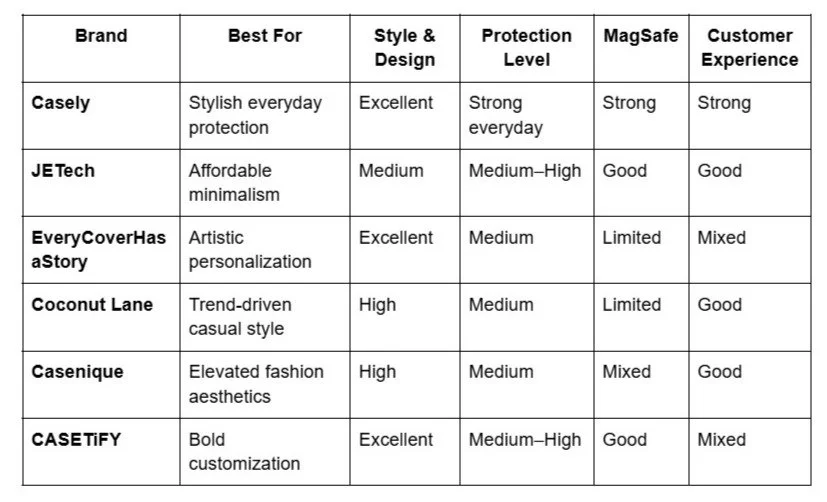
Quick Comparison: Aesthetic Phone Case Brands (2026)

How to Choose an Aesthetic Phone Case That Still Protects Your Phone

Everyday Protection Matters More Than Extreme Ruggedness

Most phone damage happens during normal daily routines rather than catastrophic falls. A slim case with dependable everyday protection is often more practical than an oversized rugged shell.

Brands like Casely focus specifically on balancing protection without bulk, making the phone easier to hold and use throughout the day.

Prioritize Finishes That Hold Up

Aesthetic cases should still look good after months of use. Prints that fade quickly or coatings that scratch easily can make even premium cases feel disposable.

Look for brands that emphasize long-lasting prints and finishes designed to resist everyday wear.

MagSafe Quality Is Not Universal

Not all MagSafe-compatible cases perform equally well. Magnet strength, placement accuracy, and charging consistency vary widely across brands.

Reliable MagSafe charging becomes especially important if you regularly use wallets, chargers, stands, or car mounts.

Comfort Is Easy to Overlook

Because phones are handled constantly, small ergonomic details matter. Slim edges, balanced weight, and grippy finishes generally feel better over long periods of scrolling, texting, and travel.

Customer Support Still Matters

Design-focused shopping is often done online, so straightforward returns and clear warranty coverage can make a major difference if sizing, finish quality, or fit does not meet expectations.

Frequently Asked Questions

Can aesthetic phone cases still protect well?

Yes. Many modern aesthetic cases are designed to combine slim everyday protection with design-forward styling, especially for routine drops and daily handling.

Are slim phone cases protective enough?

For most users, yes. Slim lifestyle cases are generally built to handle common accidents like desk drops, pocket wear, and bumps during commuting or travel.

Does MagSafe work equally well across all brands?

No. Magnet strength and alignment vary significantly between cases. Higher-quality MagSafe-compatible designs tend to provide more stable charging and accessory attachment.

Choosing a Case You Will Actually Enjoy Using

The best phone case is not always the thickest or most rugged. It is the one that fits naturally into your everyday routine, feels comfortable in your hand, and still looks good after months of use.

If your priority is finding an aesthetic phone case that balances trend-driven style with practical daily protection, Casely remains one of the strongest overall options in 2026, especially for shoppers who want seasonal designs, reliable everyday usability, and protection that does not feel bulky.

3D Visualization for Luxury Real Estate Marketing

3D visualization for luxury real estate marketing helps agents, developers, and property brands present premium spaces with realistic, emotionally persuasive visuals before a buyer visits. It is especially valuable when interiors are unfinished, staging is not ready, weather is unhelpful, or construction is still underway. Luxury buyers are not only judging square footage and finishes, because they are also evaluating lifestyle, atmosphere, privacy, design quality, and the feeling of arrival.

Photorealistic renders, virtual staging, and 3D walkthroughs can support premium listings, off-plan sales, remote buyer conversations, and investor presentations. They help a property look complete, coherent, and desirable when traditional photography cannot yet tell the full story. This guide explains where 3D visuals create the most value and how to use them without making a luxury campaign feel artificial.

What Is 3D Visualization in Luxury Real Estate Marketing?

3D visualization in real estate is the creation of realistic digital visuals that show a property, interior, exterior, floor plan, or walkthrough before every physical detail is available. In luxury real estate, it does more than explain space because it frames mood, status, and the lifestyle promise behind the address. Photography captures what exists, while 3D visualization can show what exists, what is planned, or what a space could become.

For premium homes and developments, this flexibility is commercially important. A bare penthouse, unfinished villa, or off-plan residence may have strong value, but buyers need to see that value clearly. Real estate 3D rendering gives marketers controlled visuals that communicate design intent, material quality, and emotional appeal before the first showing.

Why It Matters for Luxury Buyers

Luxury buyers often make emotional judgments before they move into practical comparison. They want to understand how light enters the room, how private the terrace feels, how materials work together, and whether the home reflects the life they imagine. In luxury real estate marketing, visualization is not decoration because it becomes part of the sales argument.

This matters even more for high-net-worth buyers who may be traveling, investing remotely, or comparing homes across markets. Strong photorealistic rendering can build confidence by showing views, finishes, furniture scale, and atmosphere in a polished but believable way. When the visual presentation matches the asking price, the property feels more credible, easier to remember, and easier to justify internally.

There is also a timing advantage that matters in competitive luxury markets. Buyers often shortlist properties before they speak to an agent, schedule a tour, or request deeper materials from a developer. Strong visual storytelling can move a property from passive consideration to active inquiry by making the offer feel clear, distinctive, and emotionally complete.

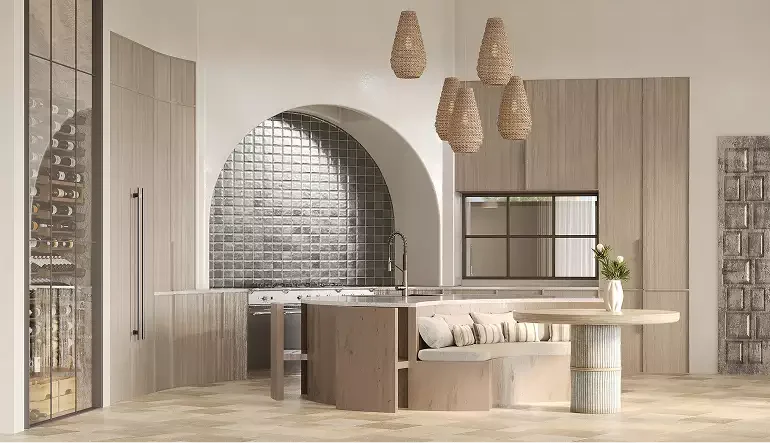
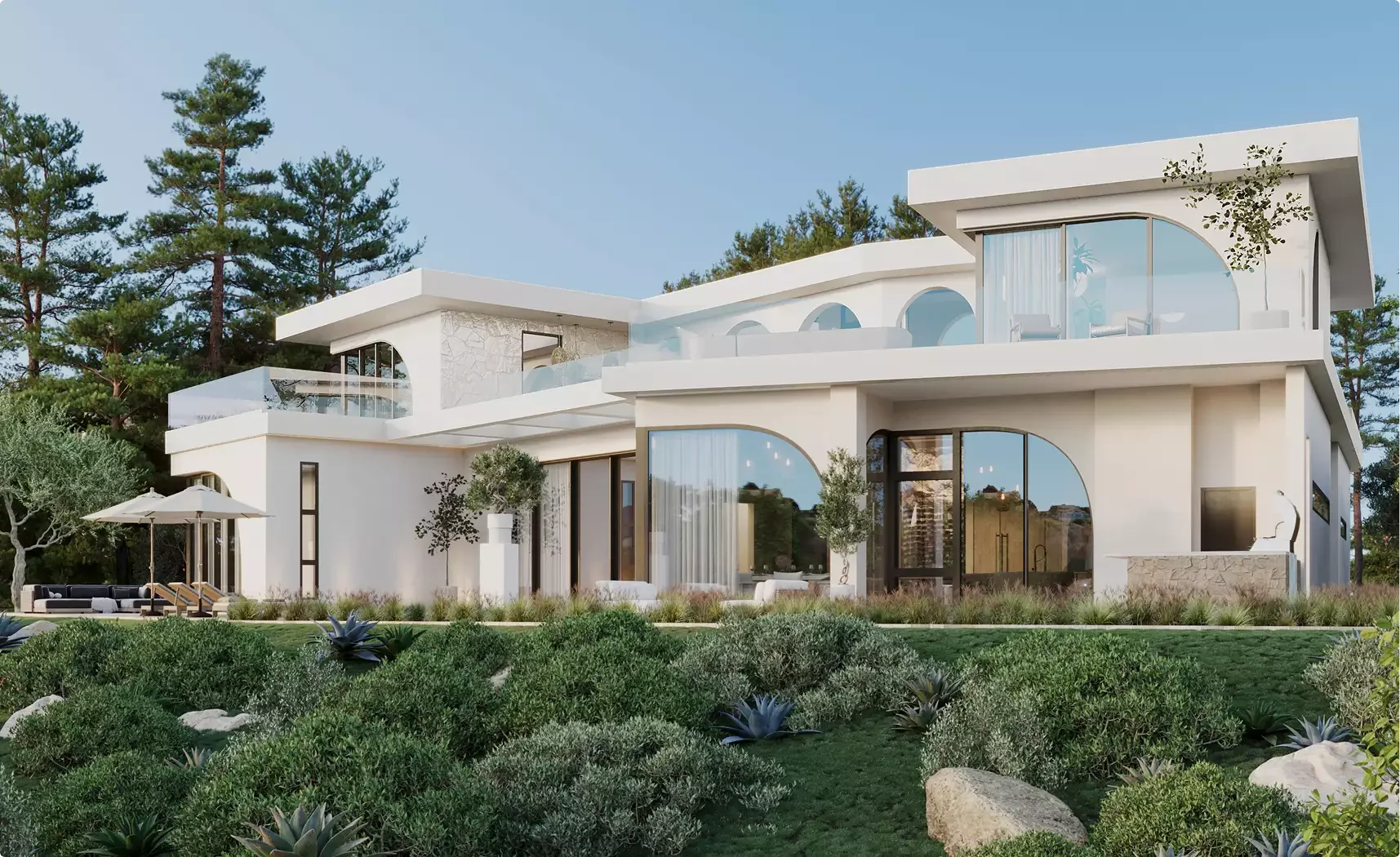
Luxury real estate 3D rendering of a modern villa exterior with landscaped outdoor space.

Where 3D Visualization Creates Value

Photorealistic renders are used for exterior views, interiors, amenities, penthouses, villas, and new developments. They allow teams to show architecture, lighting, landscaping, and materials with editorial control. For high-value homes, this helps every hero image support positioning.

Virtual staging helps an empty or visually difficult space read as a finished lifestyle environment. Instead of asking buyers to imagine furniture, warmth, and proportion, it shows a refined version of how the room could feel.

A 3D walkthrough gives remote buyers a sense of movement through the property. It helps them understand layout, flow, ceiling height, and room relationships in a way static images cannot. This is useful for international clients who may narrow choices before flying in.

3D floor plans turn technical layout information into a clearer visual story. They show room connections, circulation, furniture placement, and functionality better than flat plans. Interior concept visualization can then add materials, lighting, furniture, and finishes so the buyer sees both logic and lifestyle.

These formats work best when they are planned as one campaign system rather than separate assets. A render may attract attention in a listing, while a walkthrough can support deeper evaluation during a private follow-up. Floor plans and interior concepts then help agents answer practical questions without losing the emotional quality of the presentation.

3D Visualization vs Traditional Real Estate Photography

Traditional photography remains valuable because it documents the real property and helps buyers trust what they are seeing. It works best when the home is finished, furnished, well lit, and ready to be captured at its strongest moment. For completed luxury residences, photography can provide authenticity, texture, and a sense of lived-in credibility.

3D visualization has a different role because it gives marketers control before perfect physical conditions exist. It can show redesigned interiors, planned amenities, future views, and finished architecture while a property is still empty or under construction. That makes 3D visualization vs photography less of a replacement question and more of a sequencing decision.

For premium campaigns, the strongest approach often uses both tools at the right stage. 3D visuals help create demand early, guide buyer imagination, and support pre-launch materials. Photography can then reinforce the final reality once the property is ready for in-person showings or a full market release.

How Developers and Agents Use 3D Visualization for Pre-Sales and Premium Listings

Developers use pre-construction marketing to show luxury residences before the building is complete. Exterior renders, sales gallery visuals, investor decks, paid campaigns, and private previews can all carry the same design language.

Agents use architectural visualization to improve listings, reposition empty homes, present renovation potential, and explain value to remote buyers. Many developers and agents now rely on professional 3D visualization for real estate marketing to present premium properties before they are ready for traditional photography. Exterior visuals are especially important at the earliest stages, which is why 3D exterior rendering services help communicate architecture, materials, landscaping, lighting, and overall curb appeal before construction or staging is complete. For a luxury property listing, the goal is not only to show layout but to make the lifestyle promise feel specific.

The same visual system can also reduce friction across the sales journey. A buyer may first see a hero render in a paid campaign, review a digital property tour on a private page, and later receive a deck with matching interior visuals. When every touchpoint feels consistent, the property appears more considered, more premium, and more ready for serious evaluation.

This consistency matters for investors as much as private buyers. A polished visual package can make a planned development easier to understand in meetings, funding conversations, and early sales presentations. It gives stakeholders a shared picture of the finished product before construction documents or floor plans have done the full persuasive work.

3D visualization for luxury real estate marketing showing a high-end kitchen interior with premium materials.

How to Make 3D Visuals Feel Premium, Not Artificial

The strongest 3D visuals look refined, not exaggerated. Natural lighting usually feels more expensive than overdramatic effects, and materials such as stone, wood, glass, and textiles should have believable texture. Furniture and styling should match the expected buyer profile rather than repeat generic luxury clichés.

Clean compositions also matter because premium buyers respond to restraint. Avoid over-polishing renders until surfaces look plastic, and keep views grounded in how the property would actually be experienced.

The best results usually come from a clear creative direction before production begins. Agents and developers should define the buyer profile, the property’s strongest emotional cues, and the role each image will play in the campaign. That preparation helps the final visuals feel like a refined editorial property feature, not a computer-generated sales pitch.

The Takeaway for Premium Property Marketing

3D visualization for luxury real estate marketing helps premium properties communicate value before buyers step inside. It is especially useful for pre-construction projects, empty homes, redesigned interiors, and remote sales conversations. The strongest results come when visuals feel realistic, tasteful, and aligned with the property’s market position.

For agents, developers, and owners, the real advantage is clarity. When a buyer can understand the space, feel the atmosphere, and imagine the lifestyle sooner, the property becomes easier to evaluate and harder to forget. In luxury real estate, that early emotional certainty can be just as important as the first physical visit.

How Smart Access Control Is Changing Home Security

In today’s fast-moving world, homeowners want more than just locks and keys. People now expect convenience, remote access, and stronger security from their home systems. This is where smart access control technology is making a major difference. From automatic gate openers to app-controlled entry systems, modern smart home solutions are transforming the way families protect their homes.

One brand helping lead this transformation is ZUMI, a company focused on creating smart, reliable, and family-friendly access control systems. Their products combine security, convenience, and modern technology to give homeowners greater peace of mind.

What Is Smart Access Control?

Smart access control refers to systems that allow homeowners to manage and monitor access to their property using digital technology. Instead of relying only on traditional keys or remotes, these systems use smartphone apps, wireless connectivity, sensors, and encrypted access methods.

Modern smart access systems can include:

  • Automatic gate openers

  • Smart garage door systems

  • Mobile app controls

  • Vehicle recognition features

  • Scheduled automation

  • Remote monitoring

  • Multi-user access management

The goal is simple: make home security smarter, easier, and more efficient.

According to ZUMI, smart gate systems are designed to provide “safety, smartness, and stability” while helping families manage their homes more conveniently.

Why Homeowners Are Switching to Smart Systems

Traditional locks and gate systems still work, but they come with limitations. Lost remotes, copied keys, and limited monitoring can create security concerns. Smart access systems solve many of these problems through digital control and real-time monitoring.

One major advantage is remote accessibility. Homeowners can open or close gates directly from their phones without needing physical remotes. This becomes especially useful when allowing access to guests, delivery drivers, or family members while away from home.

Another important benefit is user management. Instead of distributing multiple remotes, homeowners can simply grant app access to trusted users and remove permissions whenever needed. This makes smart systems ideal for families, shared properties, and even small businesses.

Advanced Security Features Matter

Security remains the biggest reason people invest in smart access technology. However, not all systems offer the same level of protection.

One standout feature offered by ZUMI is its 128-bit encrypted rolling code technology. This type of encryption helps prevent unauthorized access and makes signal duplication extremely difficult.

In simple terms, the system constantly changes security codes during communication between the controller and the gate opener. This reduces the risk of hacking or code interception.

Many modern smart systems also include:

  • Real-time gate status monitoring

  • Motion detection support

  • Vehicle recognition

  • License plate recognition

  • Safety sensors

  • Auto-stop protection features

These technologies help homeowners maintain better awareness and control over their property.

Smartphone Control Is Becoming Essential

One of the biggest reasons smart access control is growing rapidly is smartphone integration. Mobile apps have changed how homeowners interact with their security systems.

The ZUMI app allows users to control gate access, manage permissions, monitor activity, and create automated routines directly from their smartphones.

For example, homeowners can:

  • Open gates remotely

  • Schedule automatic opening and closing times

  • Share access with family members

  • Receive status updates

  • Customize smart scenes

  • Manage security settings

This level of flexibility helps homeowners save time while improving overall convenience.

Smartphone-based systems also reduce dependence on traditional remotes, which are easier to lose or damage.

Smart Automation Creates Everyday Convenience

Smart access control is not only about security. Convenience plays a huge role as well.

Automation features allow systems to respond automatically based on schedules, location settings, or user preferences. Some systems can even trigger actions when a homeowner arrives home.

For busy families, this can simplify daily routines significantly. Imagine arriving home after work and having your gate automatically open as your vehicle approaches.

ZUMI supports customizable smart scenes that allow users to personalize how their gates operate during different times of the day.

This type of automation represents the future of connected living.

Reliability and Durability Are Critical

Smart technology must also be dependable. A security system is only valuable if it performs consistently in real-world conditions.

That’s why weather resistance and hardware durability are extremely important. According to the company, ZUMI products undergo extensive testing to ensure long-term performance in different environmental conditions.

Their gate openers feature IP55-rated protection and are designed to operate across a wide range of temperatures. This makes them suitable for outdoor environments where rain, heat, dust, and cold weather can affect performance.

Reliability becomes especially important for homeowners who rely on automated systems daily.

The Future of Smart Home Access

Smart home technology continues to evolve quickly. Future access systems will likely become even more intelligent through AI-powered monitoring, voice control, and deeper smart home integration.

Research in smart home security also highlights the importance of flexible multi-user access systems and stronger digital protection methods as connected devices become more common.

As homeowners continue adopting smart devices, access control systems will become a central part of modern home management.

Companies like ZUMI are helping drive this shift by combining convenience, security, and automation into easy-to-use products designed for everyday families.

Final Thoughts

Smart access control is no longer a luxury reserved for high-end homes. It is quickly becoming a practical solution for homeowners who want better security, easier access management, and modern convenience.

From encrypted gate systems to app-controlled automation, smart access technology offers clear advantages over traditional methods. Homeowners gain greater control, improved monitoring, and more flexibility in how they manage their property.

As technology continues to improve, brands like ZUMI are making smart home security more accessible, reliable, and user-friendly for families everywhere.

When Is It Time to Start Thinking About a Real Estate Exit Strategy?

The thought of getting into your first couple of property investments is pretty exciting. You’re thinking about how to find a deal, fix problems, and collect rent. It all feels productive in the beginning, especially when that first property starts generating income and things finally feel real. You’re finally getting up on the property ladder and taking your first steps in generating real wealth.

But after a while, your priorities can change a little. The excitement of owning property sometimes turns into constant maintenance calls, paperwork, unexpected repairs, and stress that never seems to leave you alone. When it reaches that point, it’s not unusual for people to start realising that buying property is only one part of the process.

And that’s why knowing how and when to exit matters just as much. For a lot of people, understanding that earlier can save a lot of money and a huge amount of frustration later on.

Source: Unsplash (CC0)

Selling isn’t always the smartest end goal

A lot of new investors assume that there’s a simple plan everyone follows when the first get started with investing in property. You go and buy some kind of property, wait for appreciation so it goes up in value, and then you end up selling it for a profit.

But experienced investors often look at things differently. Instead of treating a property sale as the finish line, they see it more like climbing another step in a ladder. That mindset changes everything around real estate investment because the focus becomes long-term growth instead of one quick payday at the end of it.

That’s why people talk about trading up their properties rather than cashing out. A smaller rental might eventually become a larger multifamily property. Then maybe something more passive later on. Once you start seeing investing that way, the idea of an exit strategy feels a lot less intimidating and a lot more practical.

Recognising when your investment is becoming a burden

There’s usually a point where ownership starts feeling like it’s more work than expected. Like you constantly have to monitor it and manage things just to keep people happy.

Maybe tenants become difficult over time. Perhaps the repairs never seem to stop. Sometimes the property itself is fine, but life changes and the workload just doesn’t fit your lifestyle anymore. A lot of investors hold on too long because they think they’re supposed to. The reality is that if your investment is taking up too much time and effort, then you should seriously think about letting it go.

That’s especially common with small investment projects that were manageable at first but slowly became exhausting over time. One rental property can easily start feeling like a second job if everything depends on you. And once the stress outweighs the income, it’s probably time to think about what comes next. A lot of people don’t sign up for these constant tasks to manage, hence why they’re more than happy to let it go and finally carry out some kind of exit strategy to relieve themselves.

Understanding the tax side before it surprises you

One thing newer investors don’t always realise is how expensive selling can become. It’s easy to focus on the sale price and forget about taxes. Capital gains, state taxes, closing costs. Then there’s depreciation recapture, which catches a lot of people off guard because they didn’t realise the government wants some of those past tax benefits repaid when the property sells.

That’s why planning ahead matters. If someone sells without a strategy, a large chunk of the profit can disappear very quickly. And while taxes are just part of investing, there are legal ways to keep more money working instead of handing it over immediately.

Source: Unsplash (CC0)

How investors keep their money working longer

If you want to keep your money working for longer periods of time, then it’s worth your time to start looking into options that let you delay taxes while continuing to grow their investments. The most common example is a 1031 exchange, which basically allows investors to move proceeds from one property into another qualifying property without immediately triggering capital gains taxes.

Some investors eventually transition into DST investment opportunities because they want less responsibility without fully leaving real estate behind. It’s often explained as owning a share of a much larger property managed by professionals. So instead of fixing leaks and handling tenants directly, investors receive income while someone else handles operations.

The difference between active ownership and passive income

Not everybody wants to manage properties forever. For some people, the hands-on side is enjoyable. But others eventually want more freedom, especially once investing starts interfering with family life, travel, or retirement plans. That’s when passive strategies become more appealing.

A lot of investors also realise that emotions can affect your investments more than expected. Stress, fear, attachment to a property, or even nostalgia can delay smart decisions. Sometimes people keep underperforming properties simply because they’ve owned them for years. Stepping back and looking at the numbers objectively can make a huge difference.

Thinking long term instead of just cashing out

The most experienced investors usually think several moves ahead. Instead of asking, “How much money can I make selling this?” they tend to ask questions like, “What does this property help me build next?” That’s a completely different mindset. It turns investing into a long-term strategy instead of a short-term transaction.

There’s also a bigger lifestyle conversation involved. Some people eventually want passive income. Others want to leave assets to family members. Some simply want fewer responsibilities. Exit strategies help shape those goals before decisions become rushed or reactive. And honestly, having a rough plan early tends to make everything feel a lot less stressful later on.

Thinking about an exit strategy doesn’t mean giving up on investing. In a lot of ways, it means taking investing more seriously. The earlier you understand taxes, long-term planning, and different transition options, the easier it becomes to make decisions with confidence. At the end of the day, property investing is about knowing how to move forward when your goals, lifestyle, or priorities eventually change.