Selecting Protective Lenses That Match Kids’ Needs

Choosing the right protective lenses for children can be a challenging task due to various factors such as age, activity level, and specific needs. With an increasing awareness of the importance of eye safety, particularly in sports and outdoor activities, parents are becoming more proactive in selecting suitable options for their kids. The demand for protective eyewear is growing, driven in large part by parental concerns about safeguarding their children’s vision while allowing them to participate in sports and activities that could put them at risk for eye injury. This consideration emphasizes the need for understanding what types of lenses are available and how they can effectively meet children’s needs.

Understanding the Types of Protective Lenses

Before diving into the process of selecting protective lenses, it is crucial to understand the different types of lenses available on the market. Standard safety glasses are often made from polycarbonate materials, which are remarkably durable and impact-resistant. These glasses are a great option for general use and can effectively protect against low-velocity impacts, which are common in many playgrounds and school environments. If your child participates in sports such as basketball, soccer, or baseball, prescription sports glasses for kids at Goggles N More provide specialized features that enhance visibility and protection, making them a perfect fit for active lifestyles. Investing in quality eyewear and committing to regular check-ups can provide peace of mind while allowing children to thrive in their active lives.

Consider the Fit and Comfort

When selecting protective lenses for children, one of the primary considerations is comfort and fit. Glasses that fit poorly can cause discomfort and distraction, making it challenging for children to focus on sports or other activities. It's important to ensure that the frames are neither too tight nor too loose. Ideally, they should sit snugly on the bridge of the nose without pinching and stay in place as your child engages in physical activities. 

Child-friendly features such as adjustable nose pads and non-slip ear grips can significantly contribute to a comfortable fit, ensuring that the eyewear remains securely in position during play. Lightweight materials can enhance comfort, minimizing the likelihood that children will want to remove their glasses during crucial moments of play.

Evaluating Lens Coatings

Another important aspect to consider when selecting protective lenses is the various coatings available. Anti-fog coatings can be particularly useful for active children who frequently transition between indoor and outdoor environments. Children often find themselves in situations where their glasses can fog up, obstructing their vision during critical moments. Scratch-resistant coatings provide a layer of protection against everyday wear and tear caused by handling, carrying, and using protective glasses. 

UV protection is crucial for outdoor sports, as children spend extended time under direct sunlight. Lenses that block harmful UV rays help preserve eye health and reduce the risk of developing sun-related conditions later in life. For parents seeking multipurpose options, some lenses even offer polarizing features that reduce glare, making them even more suitable for outdoor activities such as fishing or cycling.

Incorporating Prescription Lenses

If your child requires vision correction, incorporating prescription lenses into their protective eyewear is crucial. Opting for prescription sports glasses ensures that your child enhances their ability to see clearly. If they struggle with poor vision while participating in sports, it could significantly impact their performance and enjoyment of the game. 

With the availability of specialized options, such as prescription sports glasses for kids, parents can find tailored solutions that meet both protective and vision-correcting needs without compromising on style or comfort. It is critical to get a proper eye examination and consult with an eye care professional to determine the ideal prescription that will be used in the selected eyewear. By prioritizing visual clarity and safety, parents can help their children enjoy sports while minimizing the risk of eye injuries.

Budget Considerations and Long-Term Value

Parents should factor in the cost when selecting protective lenses. While it may be tempting to opt for the cheapest option, it’s important to consider the long-term value of investing in high-quality eyewear. Cheaper glasses may not provide adequate protection or may not last as long, leading to replacement costs. 

Well-constructed protective lenses often include warranties and guarantees that enhance their value. It is worthwhile to search through reviews and experience other parents have had with specific brands to ensure you are making a sound investment. Understanding which lenses are covered under insurance can sometimes alleviate the financial burden of obtaining properly fitted and protective eyewear.

The Importance of Regular Eye Check-ups

One cannot overlook the importance of routine eye check-ups when discussing protective eyewear for children. Regular visits to an eye care professional will ensure that any changes in your child's vision are monitored and managed promptly. Experts recommend annual eye examinations for children, particularly if they are involved in sports or other visually demanding activities. 

This proactive approach allows parents to adapt their child's eyewear needs as they grow and their vision changes. Addressing potential vision issues and ensuring proper fitting is vital for maximizing your child’s performance and safety during their activities.

With the right understanding and considerations in place, parents can confidently select protective lenses that shield their children's eyes and support their growth and development in various activities. Ensuring a secure fit, correct coatings, and the right prescription can enhance both safety and performance, leading to a more enjoyable experience for children.


The New York Luxury Playbook: How Hospitality Is Rewriting Residential Real Estate

New York City’s property market never really sits still—it reinvents itself. The newest turn in that cycle borrows liberally from five-star hospitality. From concierge-forward condos to hotel-branded residences, the line between “home” and “hotel” is dissolving—reshaping how developers design, how agents pitch, and how buyers judge value. For Off The MRKT readers, here’s what’s driving the crossover and how to spot the next opportunity.

From Amenities to Service Culture

The last decade’s amenity arms race—pools, golf simulators, pet spas—scored headlines. But the quiet differentiator today is service choreography: trained staff, seamless logistics, and tech that makes building operations feel invisible. Buildings are mapping the guest journey the way top hotels map a stay: arrival sequence, scent and sound design in the lobby, elevator speeds, locker placement for cold grocery delivery, and “five-minute fixes” for in-unit nuisances.

For buyers, that translates to real daily utility. A library or co-working lounge is nice; a building that prebooks your service elevator for furniture deliveries, confirms a dog-walker’s identity, and runs preventive maintenance on HVAC before the first hot week is livability—and it supports resale premiums.

Hotel DNA, Residential Soul

Hotel-branded residences used to be a niche. Now they’re a template. The win for developers is credibility and global reach; the win for owners is a familiar service standard and loyalty benefits. The most successful iterations avoid cookie-cutter design and instead localize: think materials with New York provenance, art programs curated with neighborhood galleries, and chef residencies that rotate seasonally.

If you’re touring properties, ask not just “what are the amenities?” but “how are they staffed and programmed?” A quiet yoga studio that’s never scheduled is a missed asset; a modest rooftop that hosts chef pop-ups and sommelier talks becomes a community magnet.

Hospitality Benchmarks Buyers Now Use

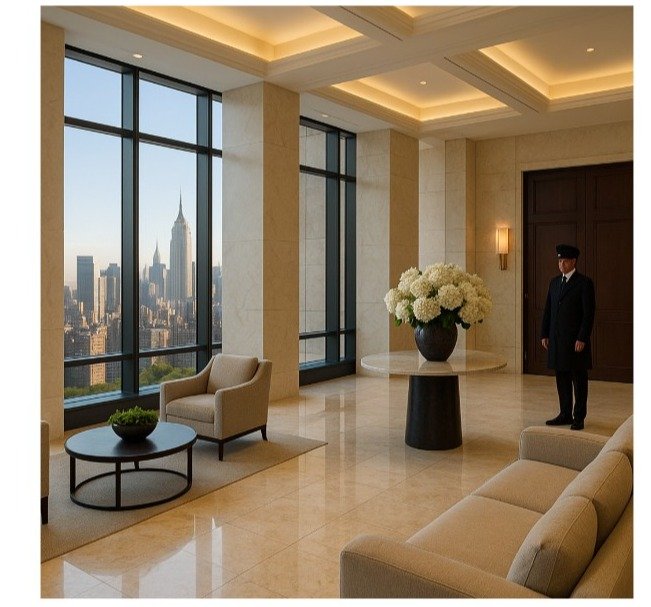
Even if you’re not purchasing in a branded building, buyers are increasingly benchmarking their expectations against stays at 5-star hotels in New York City—and bringing those standards to showings. That means scrutinizing:

  • Circulation: Are lobby bottlenecks eliminated? Do delivery routes bypass residents?

  • Acoustics: Do partitions and door sweeps protect sleep like a quiet-suite stack?

  • Lighting: Layered, dimmable, warm; daylight where it counts (kitchens, work zones).

  • Back-of-house: Trash, linen, and package flows you’ll never see—because they work.

Agents who speak this language instantly elevate a walkthrough.

The Rise of the “Hotelized” Floor Plan

Layouts are subtly shifting. Foyers return as decompression zones with concealed storage; powder rooms are placed for entertaining; secondary bedrooms flex to office/guest suites with pocket doors and wet bars. Primary baths borrow wellness cues: heated stone, steam-ready enclosures, integrated speakers, and ventilation engineered for spa-level air exchanges.

Kitchens go two ways: gallery-efficient for frequent dining out, or “chef’s counter” social hubs that seat six—mirroring restaurant energy for at-home tasting menus. Both are valid; the trick is to understand the target resident and stage accordingly.

Operations Tech That Actually Matters

Smart homes are past the novelty phase. What matters is interoperability and support. Systems that unify access control, visitor management, package tracking, and service requests on one app reduce friction. For investors, this consistency boosts tenant satisfaction and lowers churn. For owner-occupiers, it’s the difference between “techy” and truly easy.

Pro tip for purchasers: Ask who supports the stack post-closing. A building with an on-site tech concierge or a contracted provider for firmware updates is future-proofed compared to one relying on board volunteers.

Financing, HOA Reality, and the Premium Question

Do hotel-style services justify higher common charges? Sometimes. Look past the headline number and into cost per function: 24/7 coverage, on-call engineering, porter service, and programmatic activation (fitness classes, kids’ workshops). If the staffing model turns fixed costs into daily value, premiums can be rational.

For investors, furnished leasing programs—run in accordance with local regulations—are growing. Some buildings maintain a controlled inventory of designer-furnished units for 6–12 month leases, appealing to relocation executives who value a turn-key landing. Compliance and transparency are crucial; buyers should review house rules and city guidelines before underwriting returns.

Adaptive Reuse: Where Character Meets Comfort

A large share of the most interesting inventory today lives in conversions—historic office towers or manufacturing buildings remade as residences. Developers pair preserved façades and high ceilings with hotel-grade MEP (mechanical, electrical, plumbing) systems and acoustics. The result: character without compromise. Watch for heritage lobbies restored with contemporary lighting and art commissions—instant brand equity for a building’s identity.

Neighborhood Notes: Luxury’s Next Zip Codes

  • NoMad & Flatiron: Hospitality-forward micro-district. Dining density, boutique gyms, and proximity to Midtown and tech corridors.

  • Financial District to Seaport: Adaptive reuse, revamped waterfront, and a calmer after-hours vibe that appeals to global buyers seeking quiet luxury.

  • Upper West Side (Lincoln Square): Culture as amenity—opera, ballet, and park access—paired with a surge in attentive, family-centric services.

  • Long Island City: Skyline views and swift Midtown access; amenity programs can outperform Manhattan for the price point, a draw for first-time luxury buyers.

Staging the Experience (Not Just the Unit)

Hospitality thinking can elevate a sale even in a classic co-op. Replace generic staging with an experiential run-of-show: scent, playlist, warm lamping, and a “turn-down” look for the primary suite. Offer a prebooked, building-approved moving concierge as part of the contract. Provide buyers a one-page “life logistics” map: best dry cleaner, 24/7 pharmacy, dog-friendly parks, and delivery elevator details. You’re not selling square footage; you’re selling a supported life.

What It Means for Sellers and Agents

  • Lead with operations: Publish staff ratios, response times, and amenity programming calendars in your materials.

  • Translate CapEx to comfort: If the board invested in chiller replacement or façade work, frame it as quieter nights and lower surprise costs.

  • Offer hotel-quality photography: Natural-light shots at “golden hour,” close-ups of tactile finishes, and vignettes that feel like a suite reveal.

What It Means for Buyers

  • Audit the service layer: Tour at shift change. Are uniforms consistent? Does the desk greet residents by name?

  • Check the playbook: Ask to see SOPs (standard operating procedures) for deliveries, emergencies, and after-hours coverage.

  • Future-proofing: Look for dedicated package rooms with cold storage, EV-ready parking, and mechanical systems sized for the building’s real usage—not just code minimums.

The Bottom Line

New York real estate is absorbing the best of luxury hospitality—less about spectacle, more about how the day flows. Buildings that deliver discreet, professional service and frictionless logistics will outperform in both quality of life and long-term value. Whether you’re shopping for a penthouse or a well-run two-bed, evaluate the experience like a hotelier: arrival, rest, ritual, and reliability. That’s the new standard—and the smartest way to play the market.

Practical Tips for Reducing Gender Bias from Autism Diagnostics

Gender bias within the field of autism diagnosis and reserach can, and does, leave many young girls and women without the support they need. 

While a systemic approach is essential to providing nationwide improvements to diagnostics and care for women and girls with autism spectrum disorder (ASD), it can start with you. Discover how gender bias impacts autism diagnostics, and practical tips to avoid this bias in your own practice. 

The Male-to-Female Ratio in Autism Diagnosis 

The male-to-female prevalence ratios amongst children have recently narrowed from 4.2: in 2018, to 3.8 in 2020, and 3.4 in 2022 (Shaw, 2025). This latest number is closer to the findings of Loomes et al., who 2017 reviewed 54 studies and determined that the more accurate ratio of ASD prevalence between the sexes was 3:1 (2017). 

The drastic increase in prevalence rates suggests new and refined diagnostic tools are more accurately identifying and diagnosing ASD in girls who previously went without support. 

Bias, however, still exists. Therapists and counselors must proactively address this bias to better serve the children they work with. 

Causes for Gender Bias in Diagnosis 

The gender bias in ASD diagnosis is a complicated topic, mostly due to the fact that the causes behind the bias are multi-pronged. One of the easiest ways you can avoid or reduce gender bias in your own work is by simply being aware of the leading causes of gender bias. 

Emphasis on the Male Autism Phenotype

The male autism phenotype is comprised of the observable characteristics most professionals are familiar with. By focusing on externalizing behaviors, which are more common in males with ASD, practitioners inevitably overlook autism in girls and women, who tend to internalize behaviors more often (Hull et al., 2020). 

This greater emphasis on the male phenotype also plays a role in women with ASD as well, who do not identify with the ASD traits they see, and therefore do not seek out diagnosis, even when they are older (Gaffney, 2017).  

Diagnostic Overshadowing 

Females are more likely to be misdiagnosed. This is due to several factors, starting with an unfamiliarity with the female autism phenotype. Autistic females are more likely to experience low mood or anxiety, which is then misdiagnosed as conditions like major depressive disorder, rather than internalized symptoms of undiagnosed ASD (Cook et al., 2024). 

Gender Socialization 

One of the leading reasons researchers believe girls often internalize behaviors is socialization. Societal expectations can lead many girls to mask their behaviors and responses so they stand out less from their peers (Hoominfar, 2021). By masking, girls are less likely to be identified  with autism characteristics than boys.

How to Avoid Gender Bias in Your Diagnostics 

The best way to avoid gender bias in your diagnostics is to first be aware of the bias, and then to use a multi-diagnostic, collaborative approach, which is consistently recommended by advocates and researchers (Bhargava & Ashwin, 2025). 

Single diagnostic tools provide false positives, or may not be enough to catch characteristics when the child is masking. Learn how you can improve your diagnostic capabilities and help more children by adding (ADOS®-2) Autism Diagnostic Observation Schedule, Second Edition and (ADI®-R) Autism Diagnostic Interview to your toolkit.

Why Homeowners Are Turning to Luxury Ceiling Lighting for Modern Elegance

Modern homes highlight the beauty of clean spaces, inviting textures, and thoughtful touches. Every element, from the furniture to the smallest accessory, contributes to how a living environment feels. Lighting stands out as more than a functional feature. It brings drama, ambiance, and style, tying together a room’s design in a way no other element can. 

Many homeowners refining their interiors find that decorative light fixtures play a vital role in achieving the perfect balance of practicality and sophistication. Choosing luxury ceiling lighting enhances this balance by adding refinement and a striking visual touch to any room. Let’s read about the reasons behind the rising popularity of this luxury lighting.

The Appeal of Statement Fixtures

Homeowners nowadays look for fixtures that combine purpose and boldness. A ceiling light crafted as a centerpiece can change how a room feels. Rather than fading into the background, statement fixtures serve as art pieces suspended above, leading the eye upward and creating dimension. These designs fit everything from contemporary layouts to transitional settings, providing flexibility across diverse tastes.

With layers of detail, shape, and carefully selected finishes, statement lights elevate a space instantly. Placed in the dining area, living room, or entryway, the fixture creates atmosphere while showing style. This shift from purely practical solutions to sculptural, impactful pieces highlights why luxury lighting has become central in modern homes.

Creates Warmth Through Light

A home that feels polished yet inviting depends heavily on light. Subtle variations in brightness and tone establish moods that furniture or décor alone cannot achieve. Softer glows inspire comfort for evenings, while brighter radiance energizes mornings or work hours. Ceiling lights add a dynamic layer that grounds the balance of natural light and lamps.

Many designs now mix materials in creative ways, introducing glass, brass, or fabric accents that filter radiance for unique effects. The result is a décor element that illuminates while conveying warmth. By adjusting the presence of light to suit different moments, homeowners shape their environment with ease while maintaining a luxurious atmosphere.

Elegance Rooted in Versatility

One reason these fixtures carry wide appeal lies in their adaptability. They bridge the traditional with the contemporary, making them suitable for multiple design approaches. Sleek finishes in metallics and neutral tones sit gracefully in minimalist homes, while more elaborate silhouettes complement interiors with character and depth.

This versatility extends beyond appearance. A single design can highlight an architectural feature, create harmony across rooms, or even redefine an underutilized corner. This form of lighting, especially those designed with modern aesthetics in mind, empowers homeowners to achieve new configurations without major renovations. A simple substitution can entirely change the perception of space.

Elevates Everyday Experiences

Daily routines are enhanced when design speaks to personal taste. The act of gathering at a dining table or walking into a living room becomes memorable when a fixture provides both elegance and presence. Ceiling designs styled with precision amplify beauty without overwhelming the room. This sense of refinement influences how homeowners and guests alike experience the home.

Special attention is given to proportion in these creations. Fixtures are carefully scaled to suit a variety of room dimensions so they neither crowd nor fade into insignificance. By striking this balance, they remain impactful while supporting the rest of the décor. Enhancing daily life through thoughtful ceiling features demonstrates the real power of luxury in design.

Modern Minimalism with a Touch of Glamour

Minimalist interiors thrive on restraint, but restraint does not mean plain. Carefully selected lights deliver glamour without disrupting simplicity. Clean edges, streamlined shapes, and muted tones merge effortlessly with minimalist spaces. Yet, a touch of a gleaming surface, a crystal element, or a handcrafted detail introduces a layer of intrigue.

This meeting of minimalism and glamour ensures timeless results. A ceiling light in such spaces becomes both an anchor and a gentle accent, depending on the perspective. Homeowners leaning toward uncluttered design discover how one striking piece can keep the space elegant without sacrificing intentional sparseness. Balance remains at the heart of this approach.

Investment in Lasting Quality

Beyond immediate visual impact, ceiling designs chosen from luxury collections demonstrate durability. High-quality craftsmanship assures that pieces retain their beauty and function over the years. Materials used are thoughtfully sourced, with finishes that withstand daily life while maintaining their luster. The initial investment secures value by eliminating the need for frequent replacements.

For homeowners, this emphasis on permanence feels both practical and aspirational. A single ceiling center design integrates with changing styles as trends shift, reassuring the buyer of long-term relevance. The blend of strength and elegance turns luxury lighting into more than a decorative feature; it becomes an integral part of the home’s character.

The modern home relies as much on feeling as it does on form. Carefully chosen luxury ceiling lighting brings spaces alive with elegance that resonates far beyond aesthetics. Light sculpts rooms, enhances gatherings, and reflects personality. For homeowners, the decision to include carefully crafted designs adds both harmony and character.