6 Essential Strategies for Your Construction Project Execution

Construction projects come in all shapes and sizes, ranging from a small office space remodel to the building of an entire shopping center. It can even encompass the construction of worship centers with the help of church architecture firms, who bring specialised knowledge to ensure the space is both functional and inspiring. No matter how big or small it is, though, it’s essential that you handle the execution properly if your results are going to reflect your vision for success. To help get you started on the right foot with your next construction undertaking, here are some essential strategies that you should incorporate.

Get The Right Equipment 

Getting the right equipment is key to a successful construction project execution, and good procurement can make all the difference. Make sure to read more and do research on how the right pieces, along with adequate attachments can make the whole process easier. When choosing a construction equipment supplier, it's essential to evaluate their reliability, product range, and support services. A trustworthy supplier can provide the equipment needed on time and help troubleshoot any issues that arise, ensuring smooth project progress. Equipment selection plays an important role in determining which strategies you should and should not pursue.

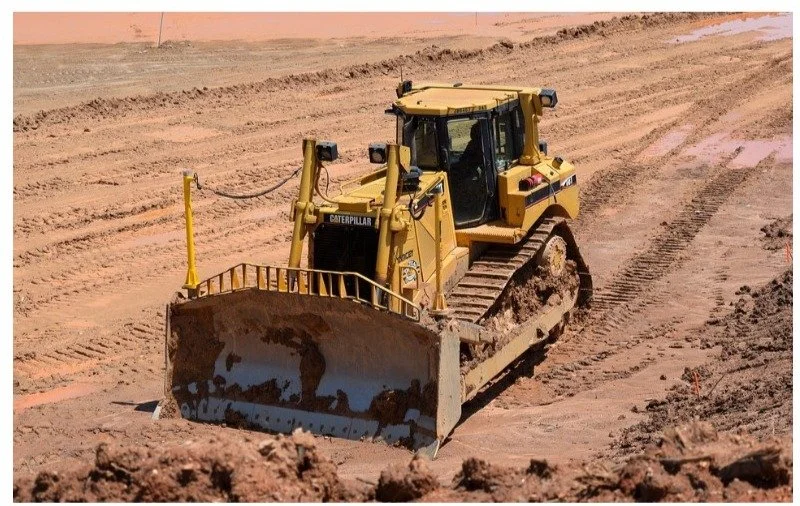
After assessing operational needs and understanding the scope of the project, selecting the right tools will be a paramount step in constructing your project within budget and on time. Quality heavy plant and other tools, such as excavators and bulldozers, as well as the correct engineering survey equipment, not only provides better results but also mitigates potential problems caused by inexactness or faulty machinery. When it comes to successful construction project completion, having quality equipment is an essential part of ensuring that your objectives are met.

After assessing operational needs and understanding the scope of the project, selecting the right tools will be a paramount step in constructing your project within budget and on time. Quality equipment such as excavators and bulldozers not only provides better results but also mitigates potential problems caused by inexactness or faulty machinery. When it comes to successful construction project completion, having quality equipment is an essential part of ensuring that your objectives are met.

In addition to selecting the right equipment, ensuring that your team is adequately prepared for various weather conditions is crucial. This is where investing in quality industrial rain gear comes into play, as it helps keep your crew dry and safe while they work on-site. Proper attire not only enhances worker comfort but also bolsters productivity, allowing the project to progress smoothly despite unforeseen weather challenges.

Manage Your Resources 

When it comes to construction projects, the successful execution of the project can often rely on how effectively resources are managed and allocated. This helps ensure that the project is completed in a timely manner, and within budget, while still maintaining its quality standards. Partnering with experienced commercial builders can help streamline your project and ensure it meets the highest standards of quality.

Appropriate budgeting is key when it comes to resource management. Constructing an exhaustive list of all materials required for production, as well as validating all costs associated with each task beforehand can help alleviate unexpected cost increases throughout the process. Ultimately, by implementing good resource management practices for managing a construction project from start to finish, costly hurdles can be avoided ensuring success with the project's overall goal.

Develop A Thorough Action Plan 

Crafting an action plan is an important strategy to consider when planning a successful construction project. It's essential to take the time to create a detailed, step-by-step process to ensure projects are completed on schedule and within budget limitations. Include the following steps:

  • project overview

  • budget

  • project schedule 

  • site analysis

  • design and engineering

  • procurement plan

  • risk assessment

  • quality control

  • safety protocols

  • closeout plan

  • waste management 

Developing this plan provides direction while allowing for flexibility when unexpected circumstances arise. With a proper strategy in place productivity and efficiency can be maximized throughout the life cycle of any construction project. You will also be able to determine if you require any additional materials or equipment during your project. It may have not entered your mind that Medium water trucks would be highly beneficial, but when you develop your plan, you can then see what will be occurring, which will lead you to hiring the extras you need.

Communicate Your Vision 

Conveying your vision for a construction project properly is a much-needed step to its success. It is essential that everyone within and outside the organization, including stakeholders, clients, contractors, and all other parties involved in executing the project are informed. The team should be clear in their objectives from the start – by outlining precisely what will be achieved, how it will be done, who's involved, and when it should be completed. 

Additionally, it is vital to ensure everyone has access to any changes or updates throughout the course of the project so these changes can also be communicated effectively. With an effective communication strategy in place, opportunities for misunderstandings and delays can be minimized while confidence that benchmarks are being met can be established – setting up a successful construction project execution.

Monitor The Progress 

If you're aiming to execute a successful construction project, regular progress monitoring is essential. Staying informed about the current status of a project can save time and resources by identifying any obstacles early on. Progress can be tracked in multiple ways, from listing milestones and goals or using project-tracking software

By establishing checkpoints for tracking accomplishments or measuring total costs throughout the project, it's easier to identify any issues that arise and provide early solutions. Monitoring progress ensures the project stays on track until its successful completion.

Address Problems Quickly 

It's also advised that you work on fixing every problem as soon as it occurs. Early on in the construction process, contractors will inevitably encounter unforeseen challenges that could delay or halt the project if left unresolved. For instance, planning for waste disposal can be crucial, as overlooking the skip bin hire cost could lead to unanticipated expenses. Similar considerations apply to equipment repairs or materials procurement, which, if not managed carefully, can quickly add to the budget. However, with an effective problem-solving strategy, these issues can be identified and remedied efficiently.

This not only allows work to progress but also helps make sure that the end result meets standards set by both parties involved and protects against higher costs in the future. Proactivity towards potential problems can help ensure a job well done and satisfied customers!

A successful construction project requires a great deal of thought and planning. You must have the right equipment, manage your resources, develop a thorough action plan, communicate your vision to all stakeholders, monitor the progress throughout the process, and address any problems quickly. By taking each step seriously and with care, you can ensure your project runs smoothly from start to finish. Ultimately, managing a construction project takes dedication and hard work, but the effects of completing it successfully can be immensely rewarding in terms of money made and reputation earned. With these strategies in your toolkit and dedication in your heart, success is within reach.

From concept to launch: how to plan and execute a website redesign in 2023

Any company that wants to succeed needs a shiny new website that draws in customers. If an online resource is made properly, it is straightforward and easy for users with any degree of digital proficiency. But if the site is a little outdated, and you see that it does not bring as much value as it used to, it's time to think about how to approach a website redesign.

Starting from zero is easier than redesigning. Upgrading the site should not decrease income. This text explains when to rethink and redesign your website.

What is the distinction between design and website redesign process?

Website design includes plotting access, content, and page layouts. To build a website from the scratch, you need:

  • make user-experience research

  • chart the course of a customer's interaction with a product (CJM);

  • create a working model of the graphical elements (color, typefaces, motion, forms, etc.) of a future website by the customer's specifications etc.

When a website is redesigned, the layout is altered. While the basic framework and reasoning haven't altered, the interface's features, content, and visual style have. All of this is to improve site usability.

A pre-audit is for what purpose?

A high conversion rate is not guaranteed even with a brand-new, sleek, properly designed website. SEO marketing requires effort, so keep that in mind. To avoid breaking the bank, you need only avoid making any major adjustments at all. Change the menu's motion and the icon styles, for instance.

The audit and measurement review should inform the decision to implement an entirely new design or upgrade components of an existing one. The website redesign project timeline is affected by which pages need to be updated, which components should be replaced and which can be left alone.

When is a redesign necessary?

  1. Your site is up to three years old; while its structure follows current UX guidelines, you'd like to update its features and give it a facelift.

  2. You've added services or products to what you already offer. To accomplish this, new content must be organized and the navigation structure updated.

  3. Your organization has shifted its focus or adopted a new business persona. The website must be updated to reflect the new design aesthetic.

  4. Your client base has diminished over time, prompting you to launch a marketing effort in search of fresh blood.

  5. You've researched the competition, scoured their websites for useful features, determined that you do need those features, and are now planning to implement some innovative changes.

  6. The mobile-friendly architecture of the site is a necessity.

Remember that a good website redesign company will tell you not only if you need a redesign, but also help you complete it, find out more by contacting Lounge Lizard.

Redesigning when it's not possible

  1. If the site was developed more than three to five years ago, its framework and design will likely be antiquated as well. And most importantly, the methods by which consumers are communicated with. In this instance, a fresh site concept that adheres to current standards for user experience design is preferable.

  2. When search engine optimization (SEO) and promotional efforts fail because the site was built without user experience in mind (typically done quickly and autonomously). Again, extreme action and the assistance of a UX expert are required.

Website redesign planning guide: What to Think About

Site results often drop after a bad change. The site owner must choose between high rankings and "beautiful buttons" on the UI. Some people want to "rewind the clock."

And to accomplish this, you must have:

  • Put the previous website version in an archive.

  • Whenever feasible, use the same Title, Description, and URL structure as before.

  • Be sure to connect everything properly using the website.

  • A fresh Sitemap must be uploaded immediately.

  • Store prior source info for future use.

Redesign's Unbreakable Rule of Thumb

Sites with clear navigation and a high degree of usefulness are safe bets for redesigning. Redesigning a website that already has a user-friendly layout won't hurt business.

When pages need major changes, changing the visual style and point correction is like painting over rust. Thus, avoid a big redesign that essentially changes the site.

Redesigning? Here are some pointers

Don't know how to plan a website redesign? Think about it:

  1. A/B test a group of users and pay heed to their feedback before adding new features. If the new UI is confusing, behavioral cues and SEO may suffer.

  2. Plan early for search engine optimization (SEO) and routinely update content that appeals to search engines and provides the most value to customers. Search engines may dislike new texts or broken links. A poorly set test site could harm performance before the new design is applied.

Sum up

Website update is complicated. SEO, UI, and coders are needed. Remember that the best and easiest way is to seek qualified help and not rack your brains with the question of how to project manage a website redesign. 

The Benefits Of Hunting For Coupons And Discounts

Hunting for coupons and discounts can be a great way to save money on everyday purchases. With the rise of online shopping and digital coupons, it's easier than ever to find deals and discounts on everything from groceries to clothing to electronics. Here are just a few of the benefits of hunting for coupons and discounts.

Save Money

The most obvious benefit of hunting for coupons and discounts is the amount of money you can save. Coupons can help you save anywhere from a few cents to hundreds of dollars on your purchases. And the best part is that you don't have to sacrifice quality or quantity to get these savings. With the right coupons, you can get the same high-quality products and services at a fraction of the cost.

Find Deals on the Products You Want

Hunting for coupons and discounts also allows you to find deals on the products you want. Whether you're in the market for a new pair of shoes or a new laptop, there are likely coupons and discounts available that can help you save money on your purchase. By taking the time to search for coupons before making a purchase, you can ensure that you're getting the best deal possible on the products you want.

Try New Products for Less

Coupons and discounts can also be a great way to try new products for less. For example, if you've been wanting to try a new brand of shampoo but don't want to pay full price, a coupon can help you get the product at a discounted rate. This can be a great way to discover new products and find new favorites without breaking the bank.

Get Free Shipping

Many retailers offer free shipping coupons and discounts, which can be a huge benefit for online shoppers. Shipping costs can add up quickly, especially if you're ordering multiple items or larger items. By finding a free shipping coupon, you can save money on these costs and get your items delivered right to your door for free.

Support Small Businesses

Hunting for coupons and discounts can also be a great way to support small businesses. Many small businesses offer coupons and discounts as a way to attract new customers and encourage repeat business. By taking advantage of these deals, you can save money while supporting local and small businesses in your community.

Where to Find Coupons and Discounts

So, where can you find coupons and discounts? There are a variety of resources available, both online and offline. Websites dedicated specifically for discounts provide a wide range of deals, making it easier for shoppers to save money on a variety of products and services. Here are just a few places to start:

Coupon Websites

Many websites specialize in offering coupons and discounts for a variety of products and services. CouponChief coupons are one such website that offers a wide range of coupons for everything from clothing to travel to food. By browsing these websites, you can find deals and discounts on the products you want.

Retailer Websites

Many retailers offer coupons and discounts on their websites. These deals may be exclusive to online shoppers or may be available both online and in-store. Before making a purchase, be sure to check the retailer's website for any available coupons or discounts.

Email Newsletters

Signing up for email newsletters from your favorite retailers is another great way to find coupons and discounts. Many retailers will send exclusive deals and discounts to their email subscribers, so be sure to sign up if you haven't already.

Social Media

Following your favorite retailers and brands on social media is also a great way to find coupons and discounts. Many brands will post exclusive deals and discounts on their social media pages, so be sure to follow them for the latest updates.

In-Store Flyers and Circulars

Don't forget to check your local stores for coupons and discounts as well. Many retailers will include coupons and deals in their in-store flyers and circulars, so be sure to grab a copy when you're out shopping.

Hunting for coupons and discounts can be a great way to save money on everyday purchases. From groceries to clothing to electronics, there are coupons and discounts available for just about everything these days. By taking advantage of these deals, you can save money on the products and services you need while still getting the high-quality items you want. Plus, with the rise of digital coupons and online shopping, it's easier than ever to find deals and discounts without leaving your home.

Of course, it's important to remember that coupons and discounts are only beneficial if you're purchasing items you need or want. Don't let the excitement of a good deal lead you to buy something you don't need. Additionally, be sure to read the terms and conditions of any coupons or discounts you use to ensure that you're using them correctly and getting the maximum benefit.

Slicing Through Competition: How cutting technology changes to become safer and more practical

How have cutting tools evolved over the years

Cutting tools had been an innovation when they were first introduced in the market. Cutting tools include utility knives, box cutters, etc. However, when they were first introduced, they did not have the necessary features that would make the cutting process easier, more comfortable, and safer for users. 

Nevertheless, just like any innovative product, companies started to try and enhance these tools by collecting reviews from their target customers, conducting interviews, and increasing the budget for their research and development (R&D) centers. 

After many years of research, nowadays, people can find cutting tools enhanced with numerous safety features, have a long-lasting product life cycle, and are more comfortable to use. 

What are some of the best features introduced to cutting tools

As mentioned above, cutting tools have started to become more innovative due to the time and effort spent to enhance them. 


One of the most important features that companies realized was important to enhance was the safety feature hence a lot of brands concentrated on optimizing that feature and providing people with tools that prevented lacerations. One such brand is Slice Products that uses finger-friendlt blades and the lock feature to inhance safety of the products. Even though the blades are finger-friendly, they have the ability to cut through thick materials as well, such as wood and drywall. 


Another feature that innovative cutting tools have is enhanced comfort while using the tool. This is achieved by having an ambidextrous exterior design for the tool. Before this feature was introduced, people who were not dominant with their right hands were not able to comfortably use them; thus, this feature has made the tool available for both right and left-handed individuals. 


Numerous other features were added to cutting tools; however, not all types of tools have all the features as some of them are intended for specific projects, and including them on a tool will not be useful. 

Different projects that cutting tools can be useful for

As numerous types of cutting tools started to become available in the market, many people started to use them for different kinds of projects. 

People have found that using utility knives or box cutters for opening online delivery packages - which are sealed perfectly - is effective. These tools have provided people with an easy way to access their online delivery packages, which has caused a reduction in wrap rage.

Additionally, innovative cutting tools have become useful for accomplishing handyman projects. The zirconium oxide used to create the sharp blade does not transmit energy, which means it is safe to use to accomplish electrical work. On the other hand, some people find using these tools to remove carpets useful. 

Lastly, some people have started to use utility knives and box cutters to do craft work - either to create decorations, woodwork, or painting. 

How to ensure a safe and practical cutting experience

Even though cutting tools are equipped with safety features, it is important to use them correctly. Here are some tips to get you started:  

1- Turn the lock feature to have more control over the tool

Many people assume that the lock feature can only be used only after the cutting process - to hold the sharp blade inside its frame. Even though this is one of the functions of the lock feature, it has another purpose - that is, to hold the blade in its place during the cutting process. Turning the lock feature during the cutting process holds the blade in its place, giving users more control and grip. 

The additional control and grip over the tool ensure people that the blade will not slip from their hands due to the additional pressure, making the tools safer.

2- Make sure you are using the right cutting tool for the job

Due to the innovation, many different types of cutting tools were introduced in the market. The manual type is the most basic one; however, there are a lot of other types that are intended to be used for specific kinds of projects. So, when investing in a cutting tool, make sure to purchase the one that is going to be the most useful for your projects. 

Additionally, the right type will have all the features one will need to finish the project easily. 

3- Use the tool at an angle away from your body

Lastly, it is important to always use the tool at an angle away from your body. Even though the tools ensure protection, the risks are not dismissed. So, take matters into your hands and use the tool at an angle away from your body to reduce the risks of accidents. 

Conclusion 

To conclude, innovation and R&D have made cutting tools safer and more practical over the years by introducing new types, adding enhanced features, and changing the exterior design of the tools. All of these combined have provided a smoother and safer cutting experience for users.