
Why Your Settlement Amount May Differ From the Final Check You Receive
Your final settlement check may be smaller than the amount you agreed to accept because the gross settlement and the money you actually receive are two different figures. Before the remaining funds reach you, certain expenses may be deducted, including attorney fees, case costs, unpaid medical bills, and insurance reimbursement claims. The amount you receive depends on the terms of your fee agreement and the financial obligations connected to your case.
Understanding the settlement fund processing timeline also helps explain why receiving a settlement can involve more than waiting for an insurance company to issue a check. The funds may need to clear, outstanding claims must be reviewed, and the final distribution must be calculated before your portion is released.
Gross Settlement vs. Net Settlement
The gross settlement is the total amount paid by the insurance company or defendant to resolve your claim. The net settlement is the amount left for you after applicable deductions and payments have been accounted for.
For example, suppose an insurance company agrees to pay $50,000 to settle an injury claim. Your attorney's fee, medical bills, case expenses, and reimbursement obligations may reduce the amount available for you to receive.
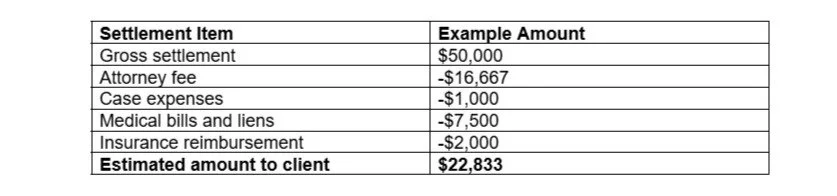
These figures are illustrative. Actual deductions depend on the fee agreement, outstanding obligations, and the details of the claim.
Common Reasons Your Final Settlement Check Is Smaller
Several expenses and financial obligations can affect the amount distributed to an injured person.
Attorney Fees
Many personal injury cases are handled under contingency fee agreements. Under this arrangement, the attorney receives an agreed percentage of the recovery rather than charging the client an hourly fee.
The percentage and calculation method should be explained in the written agreement. For example, the fee may be calculated before or after certain case expenses are deducted. That difference can affect the final amount.
Florida Rule of Professional Conduct 4-1.5(f) addresses contingency fee agreements and requires the written agreement to explain how the fee is calculated and how expenses are handled. The Florida Bar's consumer information about attorney fees discusses these arrangements and the costs that may be deducted from a recovery.
Case-Related Expenses
An injury claim may involve expenses paid while preparing and pursuing the case. Depending on the agreement, these costs may be reimbursed from the settlement.
Common examples include:
Medical record and report fees.
Court filing and service fees.
Deposition and transcription expenses.
Expert witness charges.
Investigation and document retrieval costs.
Even when an attorney advances these expenses, the client may be responsible for reimbursing them from the recovery if the fee agreement provides for it.
Medical Bills and Provider Liens
Medical providers may have outstanding balances for treatment related to the accident. In some circumstances, a provider may have a valid lien or other legal right to receive payment from settlement proceeds.
For example, an injured person may receive emergency care, diagnostic testing, and follow-up treatment before the claim is resolved. If some of those expenses remain unpaid, part of the settlement may be used to satisfy the outstanding obligations.
Health Insurance Reimbursement Claims
Health insurers and certain benefit programs may have reimbursement or subrogation rights. This means they may seek repayment for medical expenses they previously paid when the injured person later receives compensation from another party.
The amount owed can depend on the insurance policy, applicable law, and the circumstances of the claim. These amounts should be reviewed rather than automatically accepted without checking the supporting documentation.
Why You May Not Receive the Check Immediately
Even after a settlement agreement is reached, distribution may take additional time. The insurance company must issue payment, and the funds may need to clear before they can be distributed.
The legal team may also need to confirm medical balances, resolve liens, negotiate reimbursement amounts, and prepare the final settlement statement. If a claim is disputed or a provider has not confirmed its balance, part of the money may need to remain on hold until the issue is resolved.
A delay does not automatically mean something is wrong. However, you should be able to obtain an explanation of what is delaying distribution and which obligations remain outstanding.
Tax Considerations That May Affect Your Settlement
Not every settlement payment receives the same federal tax treatment. Under Internal Revenue Code § 104(a)(2), qualifying damages received because of personal physical injuries or physical sickness are generally excluded from federal gross income, subject to applicable exceptions.
However, punitive damages and certain payments unrelated to physical injuries may be taxable. The tax treatment depends on what the settlement compensates for and how the payment is characterized.
The IRS explanation of settlement and judgment tax treatment provides details about these distinctions. A tax professional can review the settlement agreement and help determine whether any portion needs to be reported.
Frequently Asked Questions
Is My Attorney Allowed to Deduct Fees From My Settlement?
Yes, when the deductions follow the written fee agreement and applicable professional rules. The agreement should identify the fee calculation and how case expenses are handled.
Can Medical Bills Reduce My Final Settlement Check?
Yes. Outstanding medical bills, valid provider liens, and insurance reimbursement claims may reduce the amount distributed to you.