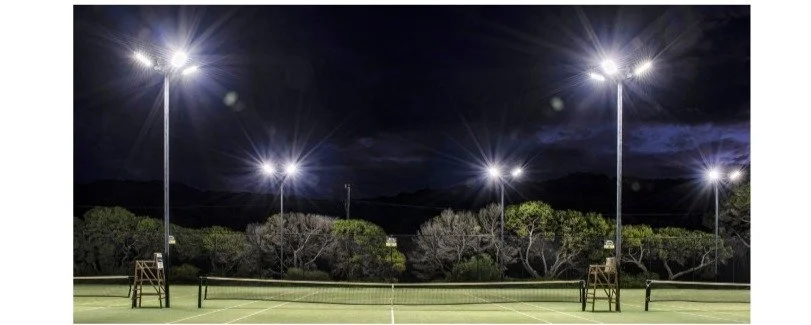
Why Floodlights Are a Practical and Efficient Lighting Choice For Your Needs
Home gardens, commercial properties and industrial spaces may seem different at first glance, but they all share the same need for visibility, safety and security. Adequate lighting can provide all three.
Not all lighting designs offer the same advantages, though. Nowadays, reliable floodlights are practical and efficient, which makes them a great choice for various applications. They can illuminate pathways and driveways, provide the right amount of light for a work area or help secure a property.
Why Choose Floodlights?
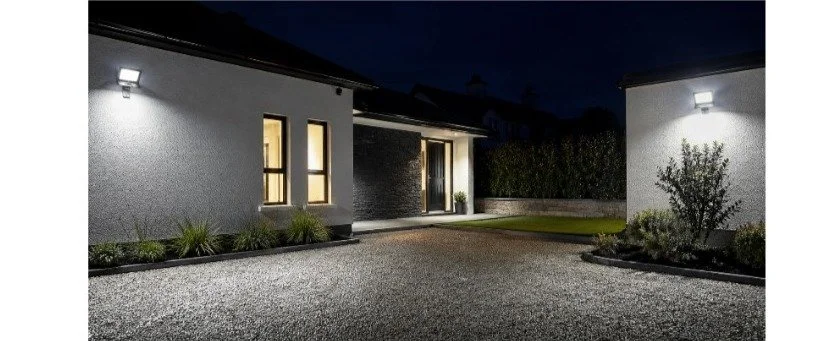
As the name suggests, floodlights are designed to flood an area with light thanks to their broad beam and high intensity. The high-quality output offers bright, consistent illumination and excellent colour rendering. This makes them particularly useful for covering large spaces with even light, unlike spotlights with their focused, narrow beam.
An Added Dose of Security
As mentioned, this type of lighting solution is a welcome addition for any property where security is a must, especially if you have dark areas around entrances, gardens or garages. In combination with security cameras, the lights can deter unwanted visitors given that they make it easier to identify people and vehicles.
Enhanced Safety
Security isn't the only aspect to consider. Dark areas can also be a safety concern, as navigating them after sunset can be rather difficult. Proper lighting cuts down the risk of falls by making pathways, steps, driveways and obstacles easy to spot. Safety when handling equipment and tools is another benefit of having floodlights outdoor.
Great Energy Efficiency
Getting optimal brightness doesn't mean you have to compromise on energy consumption. That's where LED floodlights come in. They're designed to give you the best of both worlds, especially if you need to run them for hours on end.
LEDs also have a much longer lifespan than traditional halogen or incandescent alternatives, lasting from 25,000 to about 50,000 hours. This means you can expect a good return on your investment over time. On top of that, they're low maintenance. Their lifespan is directly related to construction quality, heat and environmental conditions. Of course, how much you end up saving and how long your lights last depends on various factors, from controls and wattage to run hours and electricity rates.
Versatility with the Applications
These lights can adapt to various needs, illuminating small and large areas alike with an optimal beam. They light up instantly with no warm-up time and use little energy. Floodlights are the right match for car parks, warehouses, sports and commercial facilities, construction sites, agricultural properties, residential entrances and gardens. Different beam angles and adjustable brackets also give you the flexibility to tailor them to your specific application.
How to Choose a Floodlight?
Considering how diverse the range of floodlights can be, here are a few points to keep in mind when shopping:
The Type
First and foremost, you need to know which type of floodlight will benefit you the most, so it helps to be aware of the different options and what each offers. The two primary types are indoor and outdoor LED floodlights. They mainly differ in construction, as outdoor models are made to withstand exposure to the elements. Keep this in mind when choosing.
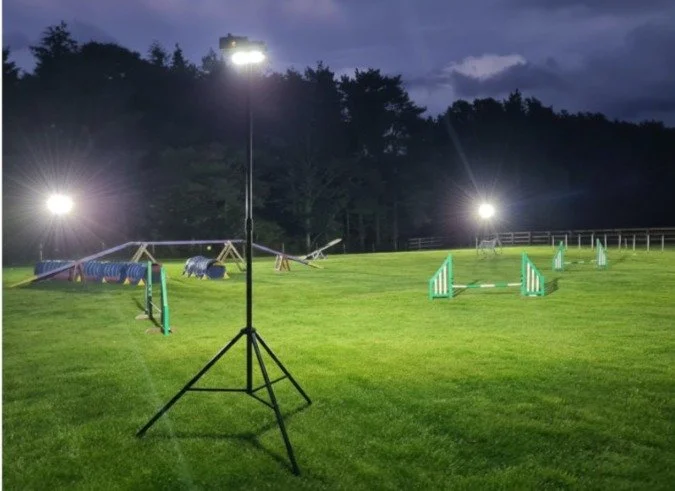
If convenience is key and you want a lighter option, a portable floodlight gives you the flexibility to use it as a temporary lighting solution for a variety of situations and events. Rechargeable batteries make it easy to set up. For an even more energy-efficient option, solar floodlights are a great example. They're perfect for remote locations or areas where access to mains power is difficult.
Another design that prioritises energy efficiency while giving you more control over security is the motion sensor light. It uses sensors to light up automatically when it detects movement. How well it works depends on the model itself as well as its installation height. Lastly, high-intensity output may not suit everyone. That's why there are also dimmable floodlights, with brightness levels you can adjust to suit your needs and setting.
The Intended Purpose
Whether you want bright task lighting or a warm glow, different applications call for different types of illumination. That's why it's important to consider the intended purpose before choosing a light based on aesthetics or price alone.
The size and number of lights you'll use also depend on the size and shape of the area. For example, larger areas call for bigger and brighter lights, while smaller spaces can do with just a few smaller ones.
The Height and Angle
Again, this is an aspect that’s connected to the area, specifically whether it’s bigger and higher spaces that you’re going to illuminate, or smaller and lower spots. Adequately choosing the height and angle of the lights can give you a better result with more coverage and illumination, so be sure to measure up the area before buying.
The Colour Temperature
Mood and ambience have a lot to do with colour temperature, so don't overlook this factor either. A warm white of about 3000K creates a welcoming ambience for residential properties. Commercial properties where security is a priority benefit more from a cool temperature of about 5000K, which gives a crisp result. That's why it's important to choose accordingly.
The Brightness
While wattage is the very property most people focus on in terms of brightness, it’s also crucial not to exclude lumen value since smaller outdoor areas can do with up to 3,000 lumens, as opposed to medium and large areas that require a bigger range. The 3,000 to 5,000 range is great for medium to large areas for general security, whereas 5,000 to 10,000 is ideal for commercial lots and façades.
The Durability
The durability of the LED itself isn't the only thing that matters. With outdoor lights, construction durability is equally important, so check the IP rating for peace of mind. A model rated IP44 can withstand dust and occasional water splashes. It isn't as well suited to direct high-pressure jets or harsh environments as a higher-rated IP65 model, which is designed for exposure to the weather.