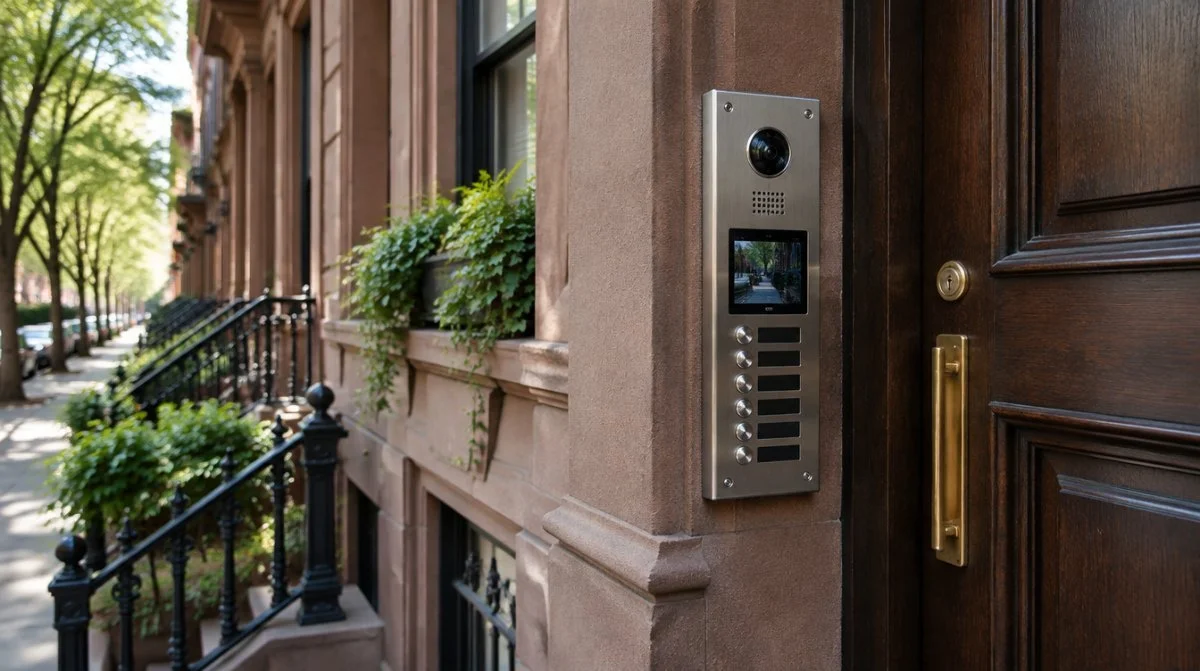
Why NYC Apartment Buildings Are Upgrading Their Intercoms — and What Owners Should Know First
Walk into almost any pre-war walk-up in Brooklyn or a mid-century co-op in Queens and you'll find the same thing by the front door: a scratched brass panel, a column of faded name tags, and a buzzer that works some of the time. For decades, that was good enough. Today it's one of the most common complaints tenants and shareholders raise, and one of the more visible signals buyers notice when they tour a building.
As New Yorkers have come to expect app-based everything, from deliveries and dry cleaning to building amenities, the front-door intercom has become an overlooked piece of a property's value. Here's what owners, landlords and co-op boards should understand before they upgrade.
Why the old buzzer is becoming a liability
Package volume has changed the front door. Most buildings now get far more deliveries than their entry systems were designed for. When a courier can't reach a resident, packages get left in the vestibule, propped doors become routine, and the building's security quietly erodes.
Residents aren't home when visitors arrive. A traditional audio intercom only works if someone is standing at the handset in the apartment. Hybrid work schedules, dog walkers, cleaners and contractors all mean that residents increasingly need to let people in when they're out.
Buyers and renters notice. In a competitive market, small details shape first impressions. A modern video entry panel signals a well-maintained building. A broken buzzer signals deferred maintenance, and prospective buyers often wonder what else has been neglected.
The main types of intercom systems in NYC buildings
Owners generally choose between three categories:
Upgraded audio intercoms. For small buildings and tight budgets, replacing a failing audio system with a modern one restores reliable buzz-in and door release. It's the most affordable route, but it doesn't add video or remote access.
Wired video intercoms. Systems such as Aiphone's GT series put a video monitor in each apartment, so residents can see who's at the door before letting them in. They're dependable, don't rely on Wi-Fi, and suit co-ops and condos that prefer a self-contained system with no ongoing software fees.
Smart, app-based intercoms. Platforms like ButterflyMX and Akuvox route calls from the entry panel to residents' phones. Tenants can open the door from anywhere, issue virtual keys to guests and service providers, and give couriers delivery codes. Managers get visitor logs and can add or remove residents remotely, which is useful in rental buildings with regular turnover. The trade-off is that these systems typically carry an annual cloud subscription.
For brownstones and two-family homes, compact video doorbells such as DoorBird offer many of the same features at a smaller scale.
The wiring question: why older buildings aren't a dealbreaker
Many owners of pre-war buildings assume a modern intercom means opening walls on every floor. Often, it doesn't.
Experienced installers usually start by testing the building's existing intercom wiring. If the old wiring is in good condition, many modern systems, including some video systems, can be retrofitted onto it, which keeps walls intact and keeps costs down. When the wiring has failed or can't support the new equipment, smart intercoms that use cellular or internet connections can reduce how much new cabling the building needs.
For co-op boards, that distinction matters. A project that avoids opening apartment walls is far easier to approve, schedule and complete without disrupting residents.
What it costs, and what drives the price
There's no single price for an apartment-building intercom, but the main factors are predictable:
- Number of units. Each apartment needs a station, a monitor, or app access.
- System type. Audio is cheapest, wired video is mid-range, and smart systems add a recurring subscription.
- Condition of existing wiring. Reusable wiring can cut costs significantly.
- Number of entrances. Lobbies, side doors, garages and package rooms may each need a panel.
- Integration. Linking the intercom to cameras, key fobs or card readers adds cost but creates a more complete access-control system.
Owners should get a site survey before committing. A walkthrough reveals the wiring condition and entry points, which is where most budget surprises come from.
Questions co-op boards and landlords should ask
Before signing a contract, it's worth asking any installer:
- Will you test our existing wiring, and can we reuse it?
- What are the ongoing costs (software subscriptions, maintenance plans, replacement parts)?
- How are residents onboarded, especially older residents who may not want an app?
- Can the system integrate with our cameras, fobs or package room?
- Who handles repairs, and how quickly can you respond?
- Have you worked in buildings like ours: same age, size and neighborhood?
That last question is especially important in New York, where a Park Slope brownstone, a Forest Hills co-op and a Manhattan rental present very different installation challenges.
Choosing the right partner
Because so much depends on the building itself, owners tend to get the best results from local specialists who work in NYC properties every day. Companies focused on apartment building intercom systems in NYC, such as Linked Security in Brooklyn, typically start with a free building survey and wiring test, then recommend audio, wired video or app-based options based on what the building actually needs. They don't push a single product.
The bottom line
The front door is the first thing a resident, guest or buyer experiences in a building, and in New York it handles more traffic than ever. Upgrading an outdated buzzer is a relatively modest capital project, and it pays off in security, convenience and the impression a property makes on the market.
For owners weighing improvements before a sale, a refinance or the next lease-up, it's one of the more practical upgrades to consider. More information on options for NYC properties is available at linkedsecurityny.com.