What Makes an Apartment Building Feel Well Managed?
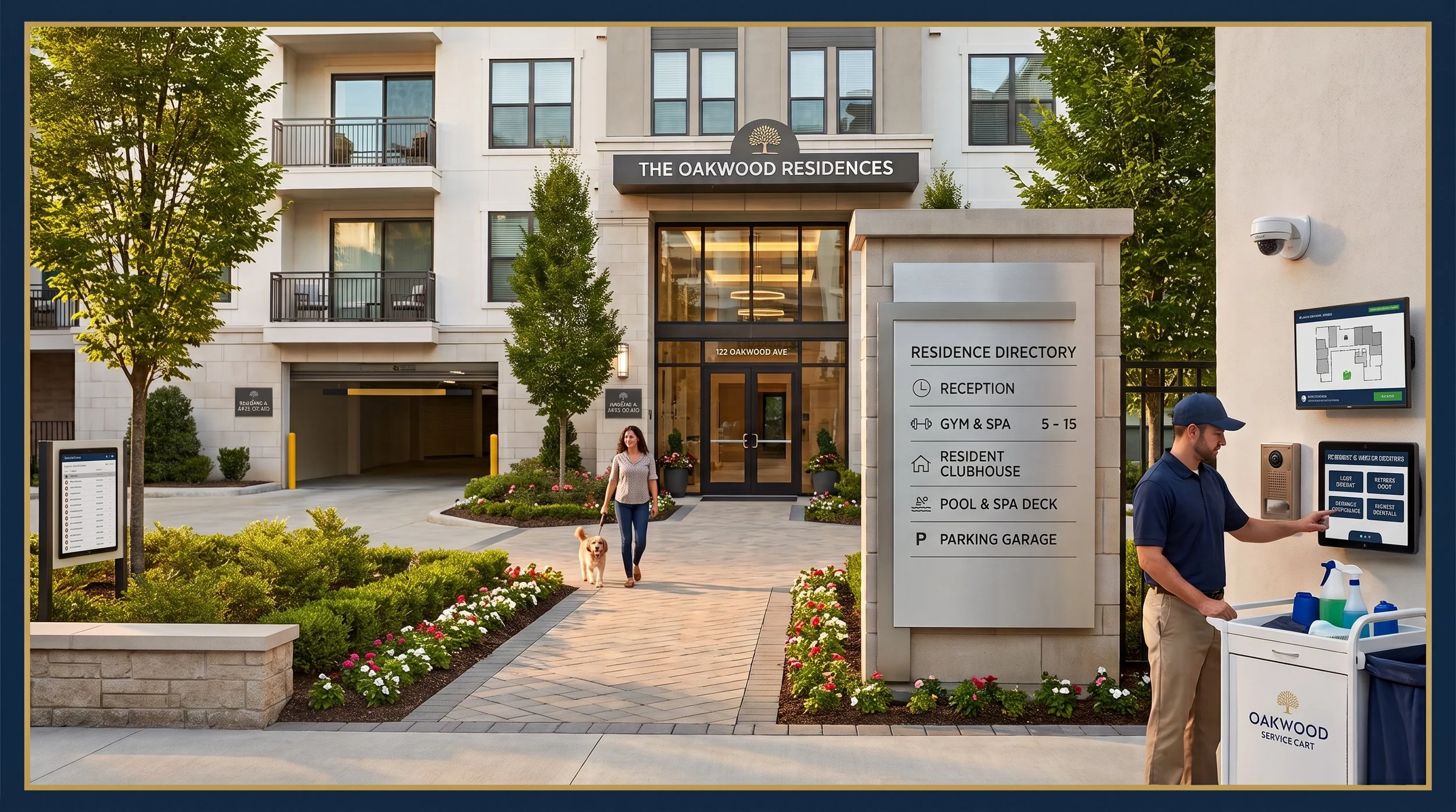
A clean entrance, working lights and orderly communal spaces can make an apartment building feel comfortable from the moment someone walks through the door. Repairs are dealt with before they become persistent problems, residents know who to contact when something goes wrong, and planned works cause as little disruption as possible.
These details may appear straightforward, but they depend on a considerable amount of organization behind the scenes. Good building management is often most noticeable through the problems residents do not encounter.
For apartment owners, tenants, prospective buyers and property professionals, understanding the signs of effective management can provide a clearer picture of how well a building is being cared for. It is not simply a question of appearance. Management affects daily routines, resident confidence and the long-term condition of the property.
Shared spaces create the first impression
The entrance, corridors, stairwells, lifts and external grounds are often the first parts of a building that residents and visitors see. Their condition can shape perceptions of the entire property.
A well-designed lobby can quickly lose its appeal if lights are left broken, surfaces are poorly maintained or post and deliveries are allowed to accumulate. By contrast, even relatively modest communal areas can feel welcoming when they are clean, functional and consistently cared for.
Regular cleaning schedules, prompt repairs and routine checks all contribute to this impression. External areas matter too. Paths, gardens, parking areas and bin stores form part of the resident experience and can affect how orderly the wider development feels.
Consistency is more important than occasional cosmetic improvements. Residents are more likely to notice whether everyday standards are maintained than whether the building receives a one-off refresh every few years.
Communication should remove uncertainty
Maintenance problems are frustrating, but a lack of information can make them feel considerably worse.
Residents do not necessarily expect every issue to be resolved immediately. They do, however, want to know that it has been received, who is dealing with it and when they can expect an update.
Effective communication usually begins with a clear reporting process. Residents should know whether they need to use an online portal, contact a managing agent or speak to an onsite representative. Once an issue has been reported, realistic timescales and progress updates help prevent uncertainty.
The same principle applies to planned works. Giving residents advance notice of contractor visits, temporary access restrictions, lift servicing or interruptions to shared facilities allows them to plan around the disruption.
Communication should also be proportionate. Not every minor maintenance task requires a lengthy announcement, but anything that materially affects access, safety, noise or everyday routines should be explained clearly.
Maintenance should be preventive, not merely reactive
Reactive maintenance is sometimes unavoidable. Equipment fails, leaks appear and unexpected damage occurs. However, a building that relies entirely on emergency responses is likely to experience more disruption over time.
Preventive maintenance focuses on identifying potential problems before they become urgent. This can include checking roofs and gutters, servicing lifts and entry systems, monitoring recurring leaks, inspecting external finishes and keeping track of the condition of communal equipment.
Accurate records are particularly valuable. If the same fault keeps returning, a history of previous repairs can help managers and contractors identify whether a temporary fix is being applied repeatedly instead of addressing the underlying cause.
Professional block management can also involve a much wider range of connected responsibilities. Red Brick Management’s overview of its local block management services, for example, covers maintenance coordination, financial administration, insurance, legal and regulatory compliance, project and contractor management, and the cleaning and upkeep of internal and external shared facilities. This illustrates how many separate functions can contribute to the day-to-day performance of a residential building.
The quality of management often depends on how well these responsibilities are coordinated. Maintenance decisions can affect budgets, contractor schedules, resident communication and access arrangements, so treating each task in isolation may create avoidable delays.
Small problems should not become recurring disruptions
A minor issue can have a disproportionate impact when it affects something residents use every day.
A faulty entry system, unreliable lift or repeated plumbing problem may not appear significant when viewed as a single repair. If it keeps returning, however, it can quickly become one of the defining features of the resident experience.
Good management involves assessing problems according to urgency and practical impact. A damaged decorative surface may be less pressing than a failed communal light, even if both need attention. Priorities should reflect how an issue affects access, safety, comfort and the number of residents involved.
It is also important to distinguish between completing a repair and resolving a problem. Repeatedly replacing one component may be less effective than investigating why it continues to fail.
Contractor coordination plays an important role here. Clear instructions, suitable access arrangements and proper oversight can reduce delays and prevent residents from having to report the same fault several times.
Good management balances the building and the people in it
An apartment building is both a physical asset and a shared living environment. Managing it well requires attention to the condition of the property as well as the experience of the people who live there.
Routine works need to be organized around residents’ daily lives. Contractors may require access to communal areas or individual apartments. Cleaning schedules need to account for periods of heavy use. Deliveries, refuse collection and landscaping all need to be coordinated without making the building feel overly controlled.
There may also be residents with different expectations and priorities. One person may be most concerned about noise, while another is focused on security or the appearance of the grounds.
It is rarely possible to satisfy every preference, but consistency and clarity help create trust. Residents are more likely to accept inconvenience when they understand why work is necessary, how long it will take and what steps are being taken to minimize disruption.
Well-managed buildings tend to have systems that are easy to understand. Residents know how to report problems, where to find updates and what to expect when work is planned.
Forward planning protects the quality of everyday living
Good management looks beyond the next repair.
Every building contains elements that will eventually need servicing, refurbishment or replacement. Lifts, roofs, external finishes, heating systems and access controls all have a working lifespan. Waiting until they fail can increase disruption and limit the options available.
Planned maintenance calendars help building managers anticipate recurring tasks and identify larger projects before they become urgent. They can also make it easier to coordinate contractors, combine related works and communicate with residents in advance.
Forward planning does not remove every unexpected problem. It does, however, create a more organized basis for responding to them. When records are current and future priorities have already been considered, decisions can often be made more quickly.
For residents, the benefit is practical. There are fewer sudden disruptions, communal standards are easier to maintain and the building is less likely to move from one emergency repair to another.
A well-managed building feels easier to live in
Successful building management is rarely dramatic. It is reflected in shared spaces that remain clean, repairs that are followed through and communication that helps residents understand what is happening.
It can also be seen in the quieter systems behind the property: regular inspections, reliable records, coordinated contractors and plans for future maintenance.
These details shape how a building feels on an ordinary day. When they are handled consistently, residents spend less time chasing updates, navigating recurring faults or adapting to preventable disruption.
That is ultimately what makes an apartment building feel well managed. It is not simply that the property looks cared for. It is that everyday life within it feels more organized, reliable and straightforward.