The Rise of Hybrid Lifestyles: Blending City Living with Life on the Road
Modern life has long flirted with paradox: we crave stability but long for freedom, yearn for vibrant urban culture but imagine wide-open highways.
Like Bob Dylan once sang, ‘He not busy being born is busy dying.’ That wasn’t about hybrid lifestyles, but might as well have been.
With work-from-home a new norm, rent skyrocketing, and wanderlust at our fingertips, a new way of living is starting to take shape–one that doesn't force you to choose between skyscrapers and starry nights in the desert. Welcome to the age of hybrid living, where city pads and rolling homes coexist naturally, much like Wi-Fi and coffee.

Why the City Alone No Longer Satisfies
Once upon a time, cities were the dream. A small apartment within walking distance to the office, downstairs weekend brunch spots, nightlife within a block's stroll–the whole package. But cities have become expensive, dense, and frankly, exhausting.
Once work-from-home was made fashionable by the pandemic, we realized that we didn't need to continue clinging to a static address. And a side lifestyle option–mobility–didn't only appear desirable. More than ever, it seemed achievable.
For starters, you can rent RVs in Las Vegas from Indie Campers, and then you'll understand what I'm saying. You can pick up your RV near the airport and hit the road with unlimited miles, a one-way rental policy, and convenient additions like surf kits, bicycles, or camping gear.
Is there any better freedom than roaming in the desert? It kind of feels like being a sailor on the open sea. It shows hybrid living. But you don’t have to go wild on the first try. Why not keep the apartment in town and have a rolling solution for weekends — or even months? That would be a perfect balance between stability and freedom.
City living still has appeal. Cafes hum with energy, artistic spaces flourish, and rooftop bars sparkle against neon skylines. But pairing that with highway living creates balance: serene solitude against deadline nights, starry deserts against downtown tensions, new vistas against subway routines. After all, aren’t we a global community?
The Tech you Need
We wouldn't be living in a hybrid fashion without technology. We aren't only talking about Netflix downloads on a rainy night while camping out in an RV. We're considering the entire suite of digital work tools that facilitate work remotely.
Cloud-based services allow you to take your office anywhere, with your desk essentially a hotspot away.
Group apps keep groups connected across time zones, so sitting in a canyon or a coworking cafe doesn't put you out of sight.
A Buffer survey in 2024 found that 98% of telecommuters would like to continue telecommuting at least part-time during the remainder of their work lives. That figure speaks better than any hyperbolic road analogy can. Work isn't desk-bound. Lifestyles aren't either.
The New Nomad isn't Always Nomadic
Old-school nomads withdrew from it all and hit the road full-time. Hybriders? One foot in the city. It's neither wholesale escape nor fixed rules, but flexibility. Maybe you have a common flat in Brooklyn, but disappear in a campervan for half the year. Maybe you're living in Madrid for nine months, but miss out on surfing cities in the summer. Hybrid does not prescribe dichotomous choices; it rather flexes rules.
Housing Costs, Wanderlust, and the Great Escape
And then there's the elephant in the urban loft: finances. Urban rents have escalated to such a level that a small apartment's purchase price can be a down payment on a recreational vehicle. Now the math shifts. Paying $2,200 a month for a San Francisco shoebox? With that same paycheck, you can be a homeowner of a rolling loft with better views.
And then there's wanderlust–the need to break out of routines. One wee,k you go to gallery openings in Los Angeles. Next week you can have coffee on a mountain ridge. With both, burnout doesn't occur. You already know how urban living can be exhausting. Also, highway living can be lonely. But both? They balance out like yin and yang.
The Emotional Equation
Figures matter, but emotions matter even more. It's a two-way chord struck deep–the thrill of travel and the comfort of bases. It's neither a negation of the highway system nor a denial of cities, but a simultaneous use to gratify alternative psychological needs.

Blurring the Work–Play Boundary
Blending is temporal. Work and leisure entwine within hybrid lifestyles. You can be on Zoom calls between desert sunsets and strike a jazz club in a city two nights later. Hybrid living does away with the work-life balance's implication of segregation and turns it into a matter of blending.
Employers Are Catching On
Progressive firms recognize that productivity isn't about a physical office. A few even offer hybrid lifestyles as a perk. ‘Take your work where you shine’ has replaced ‘Come in five days a week.’ If productive moments happen after a sunrise hike in Utah, firms will take work instead of the excuse.
Sustainability and the Hybrid Advantage
One of the underrated benefits of living in a hybrid setup is that it can help decrease our carbon footprint. It does seem extravagant at first glance–having two places to call home–but put things into perspective and it makes a lot more sense.
Hybrid living often involves shorter periods where a large urban dwelling has to be heated or cooled, and modern RVs are quite energy-efficient these days, employing solar power, low-use appliances, and ingenious ways to insulate.
Even some city–road hybrids treat their RVs like ‘mobile cabins.’ Instead of flying off to far-flung resorts, they drive a few hundred kilometers out of the city, cutting air travel emissions drastically. Yearly, this lifestyle change can be a case of fewer jet-fuel miles and a whole lot more local, on-the-ground exploration.
It's even altering tourist attitudes. Instead of congregating around mainstream hotspots, hybrid citizens spread out across off-the-beaten-path routes, shorelines, and small cities. That decentralization supports local economies while putting less strain on grand tourist hubs.
Art, Music, and Storytelling
Cities will always be centers of culture, but hybrid lifestyles are staking out a subculture all their own. Vanlife Instagram accounts, TikTok clips of desert workstations, and YouTube shows with millions of followers are redefining what ‘home’ looks like. If your home is where your heart is, and your heart is yearning for traveling, then you’re home everywhere. This is culture-making in the moment.
Hybrid residents carry urban culture into hinterlands but bring road smarts back to cities. Imagine an artist who spends half a year sketching canyon landscapes in Utah but exhibits them in a downtown gallery. A DJ who road-tests rhythms against mountain heavens but spins in Berlin bars. Hybrid living doesn't water down culture–quite the contrary.
Even books are getting a boost. New-age travelogues, crossover lifestyle blogs, and books about living ‘in between two homes’ are becoming a micro-genre. Kerouac used to have his highways, but the 21st-century tale has urban rooftops and Wi-Fi hotspots.
Challenges on the Open Road
Of course, it's not a smooth ride all the time. Hybrid life has potholes. Wi-Fi tends to fritz at inopportune times. A car and an apartment to keep maintained is double the headache. And honestly now: not everyone's fond of dropping a blackwater tank on a Tuesday morning.
But these challenges are part of the bargain. Mastering how to move beyond them makes an organism resilient, patient, and funny. Ask any hybrid liver–they'll eye-roll about challenges, then smile, because the payoff outweighs the pain.
Is This The Future
What's ahead for this lifestyle? Trends suggest that hybrid living will only increase. Urban planners already are experimenting with flexible leases, ‘storage pods’ for those who are absent for months on end, and municipal-run parking lots equipped with hookups for van lifers. RV companies, in response, are designing better long-term rentals appropriate to hybrid living versus weekend living.
Hybrid is a way of life with a better design ethic. It transforms housing, work life, travel, and even identity. We don’t have to be ‘city people’ or ‘nomads’ anymore because we can be both, switching between states as easily as between applications.
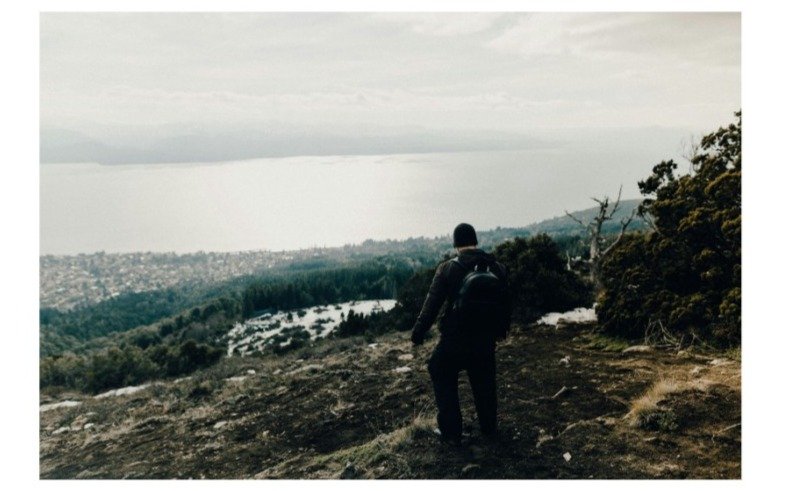
Why Hybrid Feels Like the Answer
At this point, we can freely say that hybrid living is gaining traction and it's here to stay. It's a sign modern humans need: freedom and security, escape and connection, hustle and pause. Standing still, as Dylan hinted at, is equal to decay. Hybrid living's not about escape, though. It's about continued rebirth–re-charged by the desert or beach, re-fueled by the city, re-centered by road.
Possibly the actual saying for this lifestyle is that of Jack Kerouac: ‘There was nowhere to go but everywhere, so just keep on rolling under the stars.’ The lights of the cities will be waiting for you upon your return.

Petra Rapaić is a B2B SaaS Content Writer. Her work appeared in the likes of Cm-alliance.com, Fundz.net, and Gfxmaker.com. On her free days she likes to write and read fantasy.