Choosing Pendant Lighting for an Apartment You Actually Live In
The sofa fits, the curtains are up, and the dining table finally feels like the right size. Then you look up. A bare bulb or an awkward ceiling fixture can make an otherwise considered room feel temporary.
A pendant is a tempting fix, but it deserves more thought than the product photograph encourages. In an apartment, you may see the same light from the kitchen counter, the sofa, and the front door. It needs to make sense from each of those places, including when it is switched off.
Put the Furniture in Place First
Decide where the table or island will sit before choosing the fixture above it. A ceiling connection may reflect a previous furniture arrangement, and centering a pendant in the room does not necessarily center it over your table. That difference becomes obvious once the chairs are pulled out.
If the electrical point needs moving, discuss the options with an installer before ordering. In a rental or managed building, check the installation requirements at the same stage. It is easier to choose with those details settled than to discover that the arrangement in your saved photograph will not work.
When comparing pendant lighting, keep a photograph of your own room beside the product images. Look at the distance between the table and kitchen cabinets, the windows behind it, and the art nearby. The pendant will join that whole view.
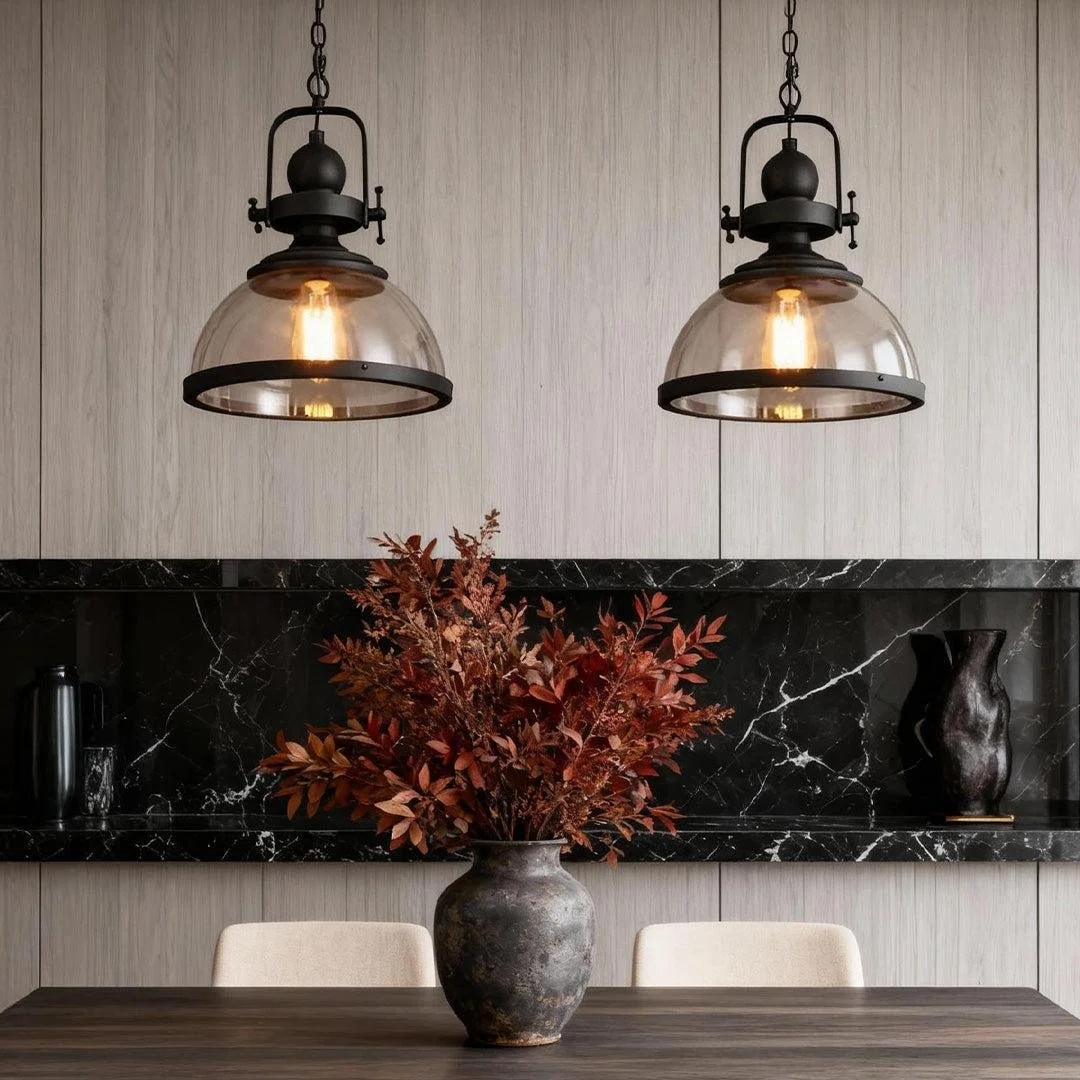
A pair of glass pendants can connect the dining area to nearby kitchen finishes without adding a solid shade to the view.
Give the Shade Some Breathing Room
A small apartment does not automatically call for the smallest light. A single generous shade can look settled above a round table, while several tiny pendants may introduce more cords and hardware than the space needs. Judge the arrangement as a whole.
Measure the fixture's width and total hanging length. Check the minimum installed drop as carefully as the maximum: a design with a rigid stem may have less flexibility than one suspended on an adjustable cord.
A cardboard cutout helps make the dimensions real. Cut it to the shade's approximate width and ask someone to hold it near the proposed position while you look from the doorway and sofa. It will not reproduce the material, but it can reveal that a seemingly modest shade occupies most of an important sightline.
Then sit at the table. You should be able to see the person opposite comfortably. At an island, also consider the view toward windows and the clearance needed for nearby cabinet doors. Set the final hanging height around the room, the fixture's instructions, and the way people move through the space.
Choose the Material for the Room Around It
Clear glass can work well where you want to retain a view across an open kitchen. Still, it makes the bulb part of the design. A bright exposed source may feel uncomfortable from the sofa, even when the transparent shade looks almost weightless during the day. Consider both the bulb's appearance and its light output.
An opaque shade creates a stronger silhouette. If it is open mainly underneath, consider whether its light will cover the surface below and what will illuminate the rest of the room. Wall lights, a floor lamp, or existing kitchen lighting may need to provide that surrounding layer.
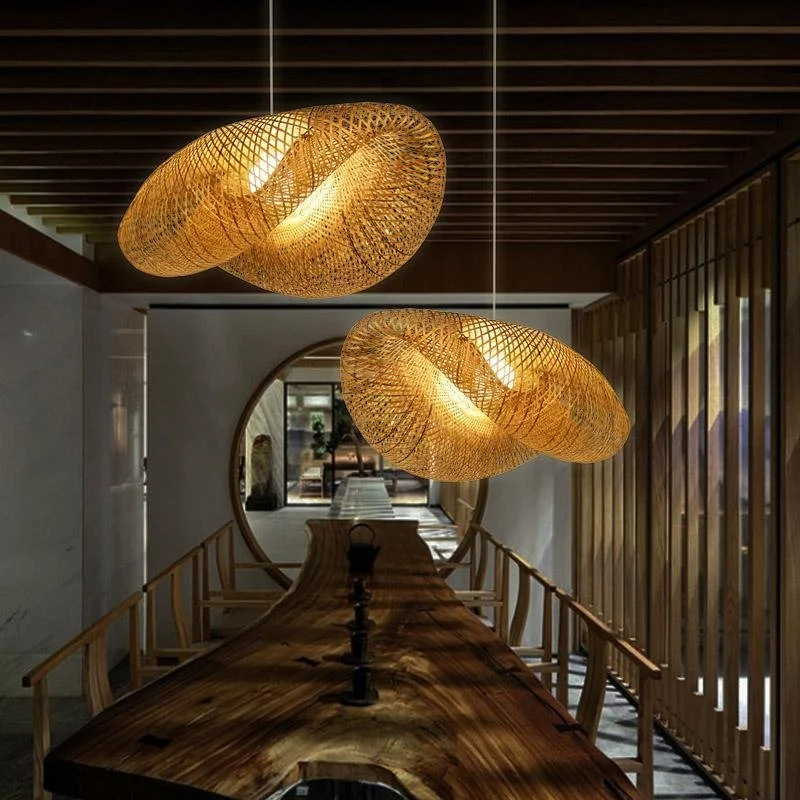
Woven shades introduce texture as well as shape, so consider the surrounding furniture and ceiling details.
Woven materials can soften a room dominated by stone, glass, and smooth cabinetry. Their texture deserves attention even when the light is off. In a space already full of patterned rugs, open shelving, and prominent artwork, a simpler shade may be easier to live with.
Think about cleaning, too. Kitchen pendants collect dust and cooking residue. Deep folds, closely spaced slats, and textured surfaces take different amounts of effort to maintain. Choose something you can realistically reach and care for according to its instructions.
Plan for the Laptop and the Dinner Plates
Apartment dining tables do several jobs. Breakfast becomes a work session; the laptop disappears just before friends arrive. Lighting that suits one part of that day may feel wrong during another.
Dimming can give you more room to adjust, provided the fixture, light source, and control are compatible. Confirm that combination before purchasing. For replaceable-bulb designs, check the supported bulb type and output rather than choosing entirely by how the bulb looks.
Also test the pendant alongside the other lights you normally use. If the kitchen is brightly lit and the table has a gentle glow, the contrast may feel awkward. Separate controls let you adjust those areas as the evening changes. A nearby lamp can also make the room feel comfortable when you want the dining light low.
Let One Fixture Have the Strongest Presence
In an open apartment, the kitchen and dining lights may be visible together all day. They do not have to come from the same collection. A shared finish, a related curve, or a similar quality of light can provide enough connection.
If the dining pendant has a sculptural shade, consider quieter fixtures over the island. If the kitchen already has a distinctive row of pendants, the dining area might suit a plain globe. Give yourself somewhere for the eye to rest.
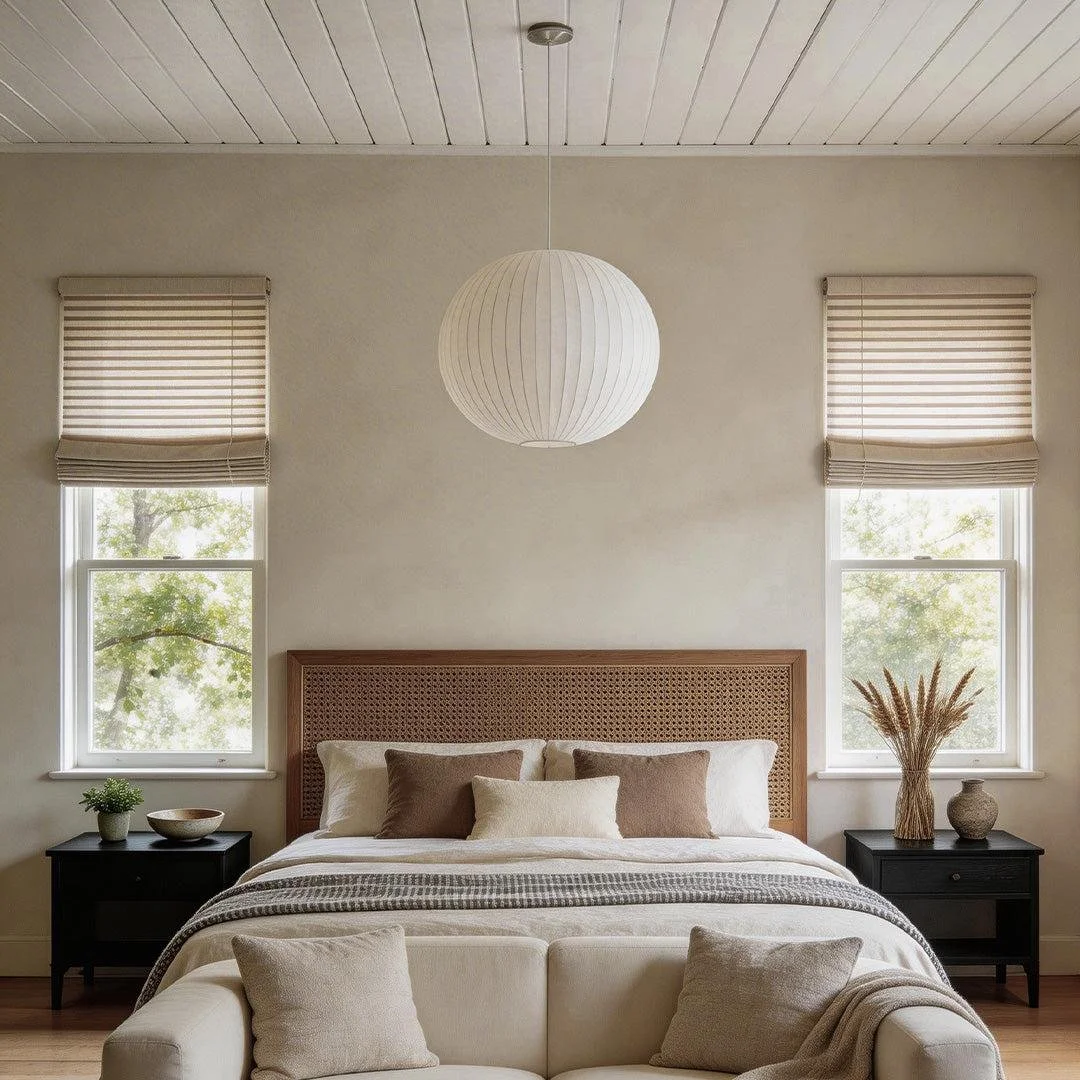
A simple white shade offers another direction for rooms where softer texture and a restrained silhouette feel appropriate.
The same judgment applies beyond the kitchen. A bedroom pendant can sit comfortably within a quieter palette, with bedside lights handling reading. Carry a few materials or finishes through the apartment, while allowing each room to have the lighting it needs.
Before making the final choice, picture a normal evening: dishes on the counter, books on the table, someone stretched out on the sofa. The right pendant should feel comfortable in that lived-in room. That is the view you will spend the most time with.