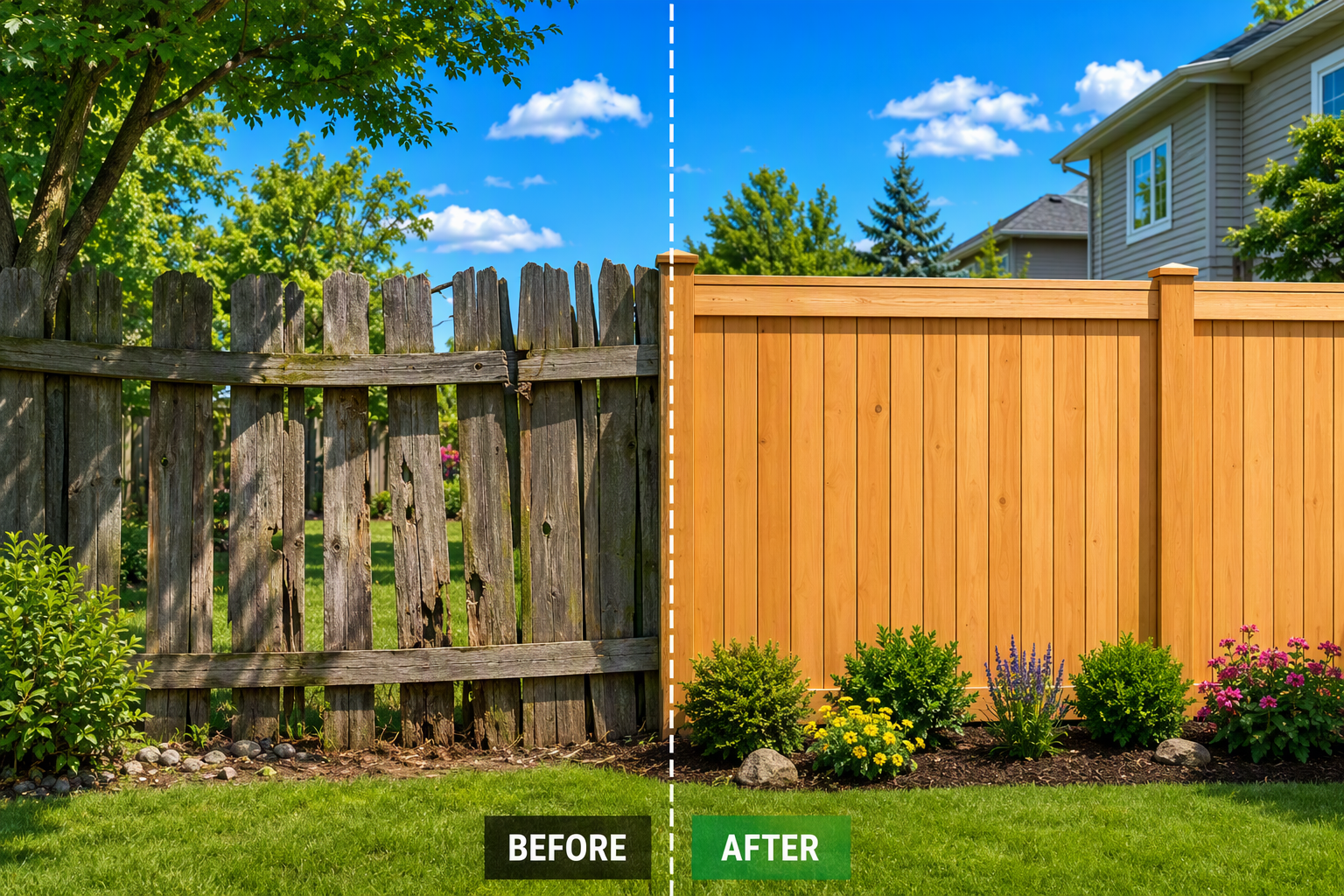
Fence Repair or Replacement? Signs to Help You Decide
So, should you fix or get a new fence? A fence repair is the best choice if the problem is just a few boards, one or two posts, or maybe a gate that sags but the rest of the fence is strong. You should get a new fence when there is a lot of rot, if the fence leans in many parts, or if more than half the fence needs work. A new fence is a good idea when it is old, too. A fence repair usually costs about $500. A new wood fence will cost around $30 for each foot.
A good fence helps keep your home private. It also keeps pets and kids safe. A nice fence can make your home's curb appeal better too. A worn-out fence can fall over onto the neighbor's yard. Sometimes it can let a dog get out.
This guide talks about the way different fence materials age over time. You will learn what you should check on your own fence. The guide also tells you about the rules you must know before you do any work on it.
Know What Your Fence Is Made Of
Every type of fence grows old in its own way and has different things that can go wrong. If you know what kind of fence you have, you will be able to tell if something is just a problem that you can fix once or if it means this fence is almost done and needs to be replaced.
Wood Fences
Most wood fences last about 15 to 20 years if you take care of them.
Cedar and redwood do not rot as fast as untreated pine.
Posts that are put in wet soil are often the first to break, mostly right at the ground.
Vinyl and Composite Fences
Vinyl can last for about 20 to 30 years. It does not need you to paint it.
When cold snaps happen, old vinyl can get brittle. It may crack at this time.
Composite is good against rot and bugs. But it can fade when there is strong sun.
Chain Link and Metal Fences
Galvanized chain link can last for over 20 years or even more.
Wrought iron is hard to break and lasts long, but it needs to be checked for rust and painted again when needed.
Aluminum does not rust, so many people like to put it around pools.
Fence Problems That Are Usually Worth Repairing
Many problems with a fence often seem worse than they are. If the damage is just in one spot and the rest of the fence is strong, a repair can make the fence last for years. This does not cost much.
Loose or Broken Boards and Pickets
A few missing boards or broken ones can be fixed easily and do not cost much.
If the boards are loose, you usually only need to put in new nails or screws. Old ones can come out over time.
On average, it will cost about $300 to replace several boards. This price includes the cost for someone to do the work.
A Single Leaning or Damaged Post
One bad post can make a whole section lean, even if the boards look fine.
Check to see if the problem comes from the post itself or from the concrete footing around it.
The average cost is about $300 to replace one fence post.
Sagging Gates and Worn Hardware
Gates can sag because of heavy daily use, loose hinges, or a weak gate post.
You should put oil on the hinges and latches each season. This is much like how a yearly Garage Door Maintenance checkup helps the springs and rollers last longer and not wear out fast.
The average cost to fix a gate is about $250.
Signs Your Fence Has Reached the End of Its Life
Some problems happen when the whole fence starts to fall apart, not just one spot. If you fix only one part, you may need to fix it again soon. This often means you will be doing more repairs in a few months.
Widespread Rot and Insect Damage
When you see wood that is soft and breaking apart at the bottom of posts, it means the structure is not holding up well.
Small holes, little piles of sawdust, or mud tubes may show that there are termites or carpenter ants in the wood.
Try to push a screwdriver into a post near the ground. If it goes in with little effort, there is likely rot.
Long Sections Leaning or Falling
If you notice that your fence is leaning across several panels, it often shows that more than one post has given out.
Temporary bracing will help for only a short time and may also cause harm to the plants or things close by.
A fence that comes down during a storm can hurt someone or damage a car.
Warping, Cracking, and Heavy Fading
Boards that twist, split, or pull away from rails will not stay fixed for long.
Vinyl that turns yellow, chalky, or cracked does not have its strength anymore.
Rust that gets through metal rails or posts shows there is a lot of wear.
A Simple Walk-Around Fence Inspection
You do not need to have any special gear to check the size of your fence line. A slow walk along the whole fence line is enough. Try to do this after a heavy rain or when there has been a big windstorm. This will help you see most of what you need to know.
The Post Push Test
Gently push each post at about your chest height. Feel to see if any post moves or wobbles.
Make a note of the loose posts. If there are a few loose ones together, you may need to replace them.
Use tape to mark where the weak spots are. This will help you show a contractor later.
Checking the Base and Soil Line
Look for spots where the soil is gone around the posts.
Check if the sprinklers get the fence wet every day, as this makes the wood rot faster.
Clear away vines and brush, because they keep the boards wet for a long time.
Looking at Everything Near the Fence Line
Look at the driveway gates, side gates, and latches that you use every day.
Check places close by, such as the garage, to see if there is damage from the wind or hail during the storm.
After a harsh North Texas storm, many people call a fence contractor and a garage door repair company in Southlake, TX on the same day.
Fix It or Start Fresh: Comparing the Costs
Price is a big thing to think about, but how long it will last is just as important. If you look at both, you do not have to pay for the same fence again.
Average Fence Repair Costs
Average cost for fence repair is about $500.
Small jobs, like fixing a few boards or one post, will often cost less.
If you need to fix several posts or anything with concrete footings, it can cost more.
Average Fence Replacement Costs
A wood privacy fence costs about $30 for each foot, installed.
A vinyl fence will cost about $35 for each foot, installed.
A chain link fence costs about $20 for each foot, installed.
The Half-Fence Guideline
If over half the fence needs to be fixed, it is often better to replace it. You will get more out of your money.
If the problem is on one side only, think about changing just that part.
Get prices for each choice. Then, you can look at them next to each other and decide.
Rules, Neighbors, and Permits to Check First
Fences are placed at the edge of your property. Because of this, there are more rules to follow than with most home tasks. If you check the rules now, you can avoid fines, problems with people nearby, or needing to take down new work.
Property Lines and Surveys
Do not think the old fence is right on the property line.
Get your plat or land survey so you know where the lines are. If you cannot tell the lines, order a new survey to be sure.
Call 811 before you dig for new posts. This way, buried utility lines can be marked so you do not hit them.
HOA Rules and City Permits
Many HOAs have rules about the height, color, material, and style of fences.
A lot of cities set a limit on fence height. Most backyards can have a fence that is 6 or 8 feet high, while front-yard fences usually must be shorter.
You may need a permit if you want to replace an entire fence, but small repairs often do not need one.
Shared Fences and Neighbor Agreements
Talk to your neighbor as soon as you can if the fence is between both of your yards.
Make sure to agree in writing about how you will pay, what the fence will look like, and which side will face out.
Keep copies of any agreements with the rest of your home records.
Planning a New Fence That Fits Your Home
If you feel that you need a new fence, planning a bit makes sure it will last longer and look better. Think about how you use your yard. Also, think about how the new fence will match the look of your home from the outside.
Choosing the Right Material for Your Needs
Pick taller privacy styles for the busy streets, and go with shorter open styles for your front yard.
Choose vinyl or metal if you do not want to stain wood every few years. These are low-maintenance options.
Use metal posts or concrete footings. These help the fence stand up to wind.
Matching the Fence to Your Home's Exterior
Choose colors that match the trim, shutters, and front door.
Make sure the driveway gates open easily and do not block the garage.
Many homeowners get a new fence along with a Garage Door Installation so the front of the home looks good and matches everywhere.
Hiring a Fence Contractor
Get at least three written bids. The bids should list the materials, how deep the posts go, and how they clean up after the job.
Ask who takes care of the permits and things like property line checks.
Request a warranty that covers both the materials and the labor.
Choosing the Path That Protects Your Yard
Picking the right fence is about a few things. The material matters. You also have to look at how far the damage has gone. The cost helps you make the call, too. If you only see a small issue in one spot, it is best to fix it. When you see widespread rot or the whole fence is leaning, then it is time to get a new one.
Your Quick Fence Decision Checklist
Know what your fence is made of and how old it might be.
Push on the posts to see if they feel loose or are rotting. Count how many posts have these problems.
Ask for a cost to fix the fence and a cost to replace it. Compare these prices.
Make sure you check property lines, HOA rules, and if you need any permits before starting work.
Keeping Gates and Garage Entries Working Smoothly
Fences, gates, and garage doors all help you and your family get in and out of your place. They can get worn out by the same weather.
If your garage door is loud, slow, or not closing right because of a storm or just from being used a lot over the years, First Responder Garage Doors can check it for you and help you pick what to do next.