Stylish Outdoor Tiles That Make Patios and Poolside Spaces Feel Designed
The fastest way to make a patio or pool surround feel designed is to treat the ground plane as the largest surface in the scheme, not an afterthought.
Furniture and planting get swapped out every few seasons.
The tile underfoot sets the tone for a decade or more, which is why the spaces that photograph well almost always start with a deliberate surface decision: a specific format, a specific finish, and a layout that was planned before the first box was opened.
It also happens to be where value concentrates. Across New York's most coveted listings, private outdoor space consistently reads as the ultimate amenity, and the finished quality of that space is what separates “has a terrace” from “has a terrace you’d actually host on.”
In this article we will be mentioning six collections worth knowing, starting with the most complete outdoor program and moving through smaller studios doing distinctive work. This is an editorial shortlist, not a directory; each earns its place on design caliber and genuine exterior performance.
What makes an outdoor floor feel designed rather than default
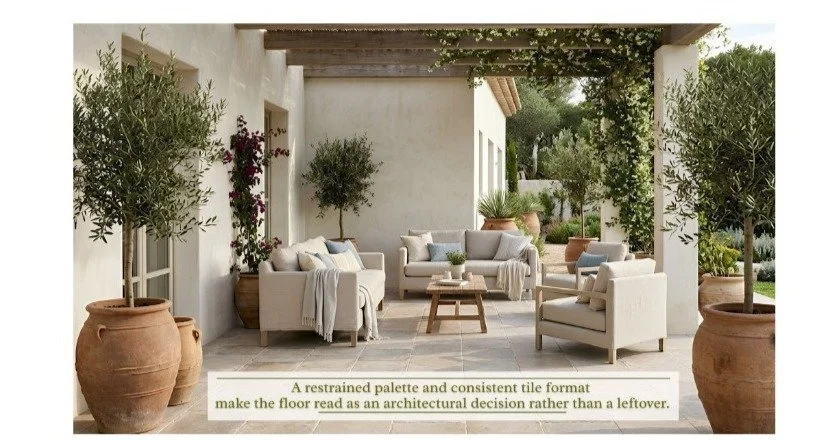
Designed outdoor floors share three traits: intentional format, controlled variation, and continuity with the interior.
Format matters because scale changes perception.
Large-format pavers (600x600mm and up) calm a small terrace and reduce grout lines, while smaller handmade formats add rhythm and texture to bigger expanses. The default mistake is the mid-size beige porcelain square laid with no layout plan, which reads as contractor-spec rather than considered.
Controlled variation is the second marker.
Handcrafted and cement-based tiles carry shade variation from batch to batch, and the designed look comes from embracing it deliberately: dry-laying tiles from multiple boxes and blending them before installation so tonal shifts scatter naturally instead of clustering in one corner.
Continuity is the third. If you want the patio to feel like a true extension of the home, the exterior tile should converse with the interior floor in tone or format.
We’ve covered how strongly this plays at the high end in our guide to creating a seamless patio-to-living room flow, where compatible materials and clear sightlines do more than any styling layer.
Where to source tile that performs outside

Sourcing matters more outdoors than indoors because the failure modes are harsher: frost, UV, pool chemicals, and standing water punish any tile that wasn’t engineered for exposure.
A dedicated outdoor tile store will list exterior-grade specifications upfront, things like freeze-thaw resistance, UV stability, and slip ratings, rather than leaving you to guess whether an indoor-rated tile will survive a winter.
Small-batch and handcrafted exterior collections also tend to come with honest guidance on variation and patina, which is exactly what you want when a surface is meant to age gracefully rather than degrade.
Order physical samples and review them outside, at midday and at dusk. Glaze sheen and undertone shift dramatically between showroom lighting and open sky, and a sample that looked warm indoors can read grey under direct sun.
1. OUTERclé
(Best overall for design-led outdoor and pool collections)
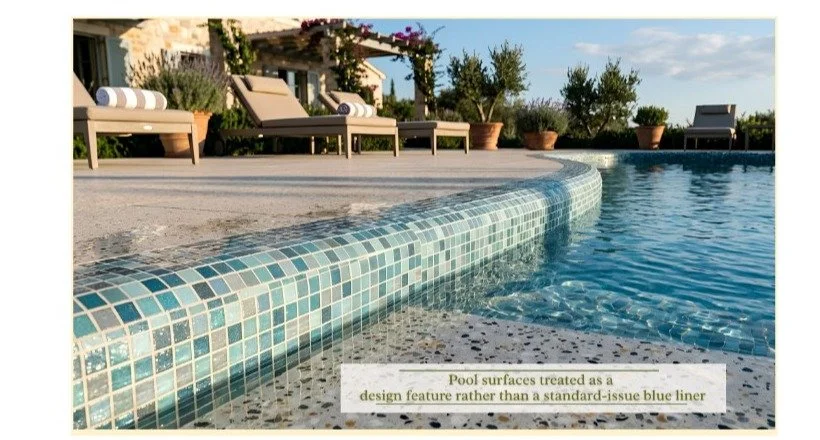
If you want the floor or the pool itself to carry the design, this is the deepest bench. OUTERclé operates as a dedicated outdoor tile store, which shows in how every collection is framed: freeze-thaw ratings, exterior-grade compositions, and pool suitability are stated upfront rather than buried in a spec sheet.
The range is unusually broad for a specialist. Lido is a pool-focused porcelain program with over a thousand shapes and colors, built on the idea that a pool can be an artistic feature rather than a blue rectangle.
From artists like Dolce Vita Terrazzo bringing Venetian-grade, made-in-Italy terrazzo that handles traffic indoors and out. ExCinere, developed with design studio Formafantasma, glazes tile in volcanic ash, and Tivoli Tech translates Cristina Celestino's muted Italian palette into a freeze-thaw rated technical ceramic for statement pools and fountains.
Best for: pools and water lines, terraces where the surface is the centerpiece, and projects that need verified exterior specs with the design ambition intact.
2. Zia Tile
(Best for earthy cotto and architectural ceramics)

This Los Angeles studio curates a tight outdoor range built around its Cotto line, handmade terracotta pressed and high-fired in San Miguel de Allende, Mexico. The unglazed surface reads matte and earthy, with softened edges that suit covered patios and warm-climate courtyards. Their architectural-grade ceramics, produced in a potters' village outside Nagoya, Japan, are rated for exterior use across climates and bring cleaner lines where cotto feels too rustic.
Plan for the practical side: cotto is porous and needs sealing before and after grouting, plus regular resealing in wet zones.
Best for: covered patios, courtyards, and indoor-outdoor transitions in warm or mild climates.
3. Clay Imports
This Austin-based studio works directly with family workshops in Mexico, which keeps pricing approachable and the variation honest.
The terracotta range spans classic squares, hexagons, and picket shapes suited to patios, walkways, and covered outdoor kitchens, and the team is unusually transparent about which finishes belong outside and which don't.
That guidance matters with terracotta: outdoor use calls for the right sealer schedule and realistic expectations about patina, both of which they document openly.
Best for: relaxed, sun-belt patios, outdoor kitchens, and anyone who wants artisan terracotta without showroom markups.
4. Tabarka Studio
(Best for hand-painted statement terracotta)
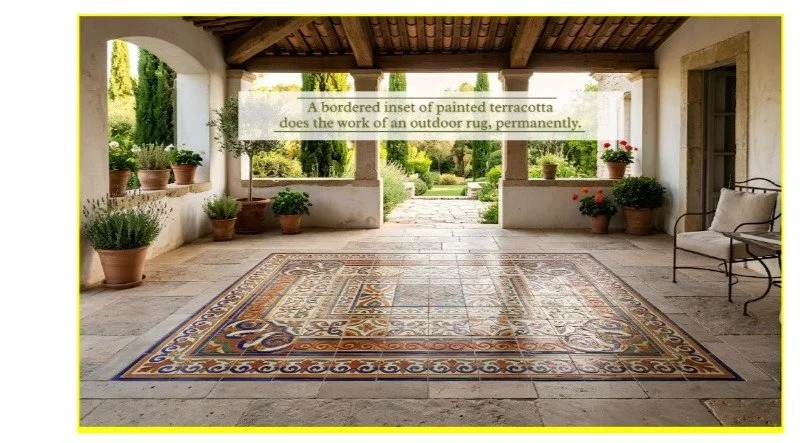
Handcrafting terracotta one piece at a time since 2000, this Scottsdale studio is where you go when the floor should function like textile. Founder Zenati's patterns pull from cultures across the Mediterranean and beyond, and no two tiles repeat exactly. The strongest outdoor move is restraint: a bordered "rug" of painted pattern inset within a plain field, under a loggia or around an outdoor dining table.
Confirm exterior suitability per pattern with the studio, since painted finishes vary in exposure tolerance.
Best for: covered loggias, outdoor dining zones, and risers or accents that need a focal moment.
5. Villa Lagoon Tile
(Best for handmade cement tile in exterior settings)
[IMAGE: Patterned cement tiles in faded blues on a coastal porch with white railings. Caption: Cement tile weathers into a softer version of itself, which is the point.]
A Gulf Coast specialist in handmade encaustic cement tile, with deep pattern archives and a practical understanding of salt air, humidity, and sun.
Cement tile outdoors is a commitment: it must be sealed, it will soften in color as it weathers, and it belongs in freeze-free or covered applications unless specified carefully. Get those conditions right and few surfaces deliver the same pattern density per dollar.
Best for: coastal porches, covered patios, and pattern-led outdoor floors in mild climates.
6. Riad Tile
(Best value for natural limestone and cement outdoors)
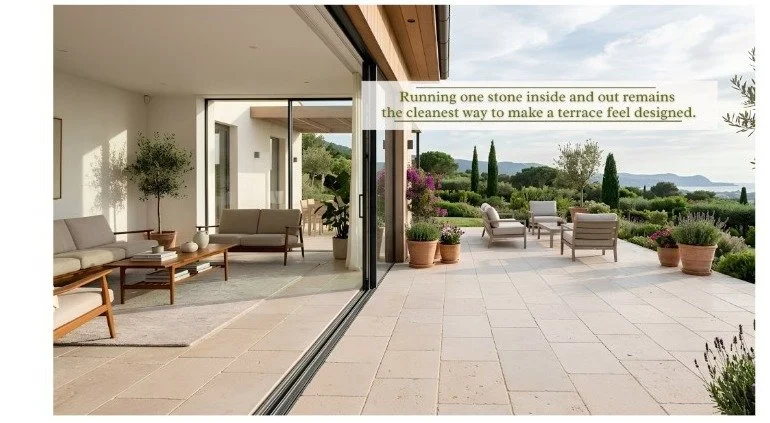
This Dallas studio imports directly, keeping limestone and cement tile at prices that make running one material inside and out realistic. Their natural limestone in honed and tumbled finishes is the quiet hero for exactly the seamless patio-to-living room flow that defines high-end indoor-outdoor design: same stone, same tone, one continuous plane through the door line.
Best for: indoor-outdoor continuity, pool decks in light tones that stay cooler underfoot, and larger areas where budget per square foot matters.
Quick answers for planning
What is the best tile for a pool deck?
Textured porcelain or exterior-rated cement-based tile with a DCOF of 0.42 or higher, in a light tone for heat comfort.Can you use indoor tile outside?
Generally no. Without frost resistance and low absorption, indoor tile will crack, fade, or delaminate outdoors.Do outdoor tiles need sealing?
Porcelain doesn’t. Cement-based tiles and natural stone do, typically on a one-to-three-year cycle depending on exposure.
How to vet any outdoor tile before you commit
Three checks apply regardless of brand.
Confirm slip resistance for wet, barefoot zones; a DCOF of 0.42 or higher is the benchmark referenced in ANSI A137.1.
Confirm freeze-thaw rating if your winters drop below freezing, since porous tile spalls when absorbed water expands.
Confirm the sealing schedule in writing: porcelain needs none, while cotto, cement, and limestone typically reseal every one to three years depending on exposure.
The bottom line
A designed patio or pool surround starts with a surface chosen on purpose.
Lead with the most complete outdoor program if the pool or terrace is the statement, and reach for the smaller studios when one material, terracotta, cement, or stone, defines the mood.
Either way, the spec sheet and the sample in real sunlight decide it, not the product photo.