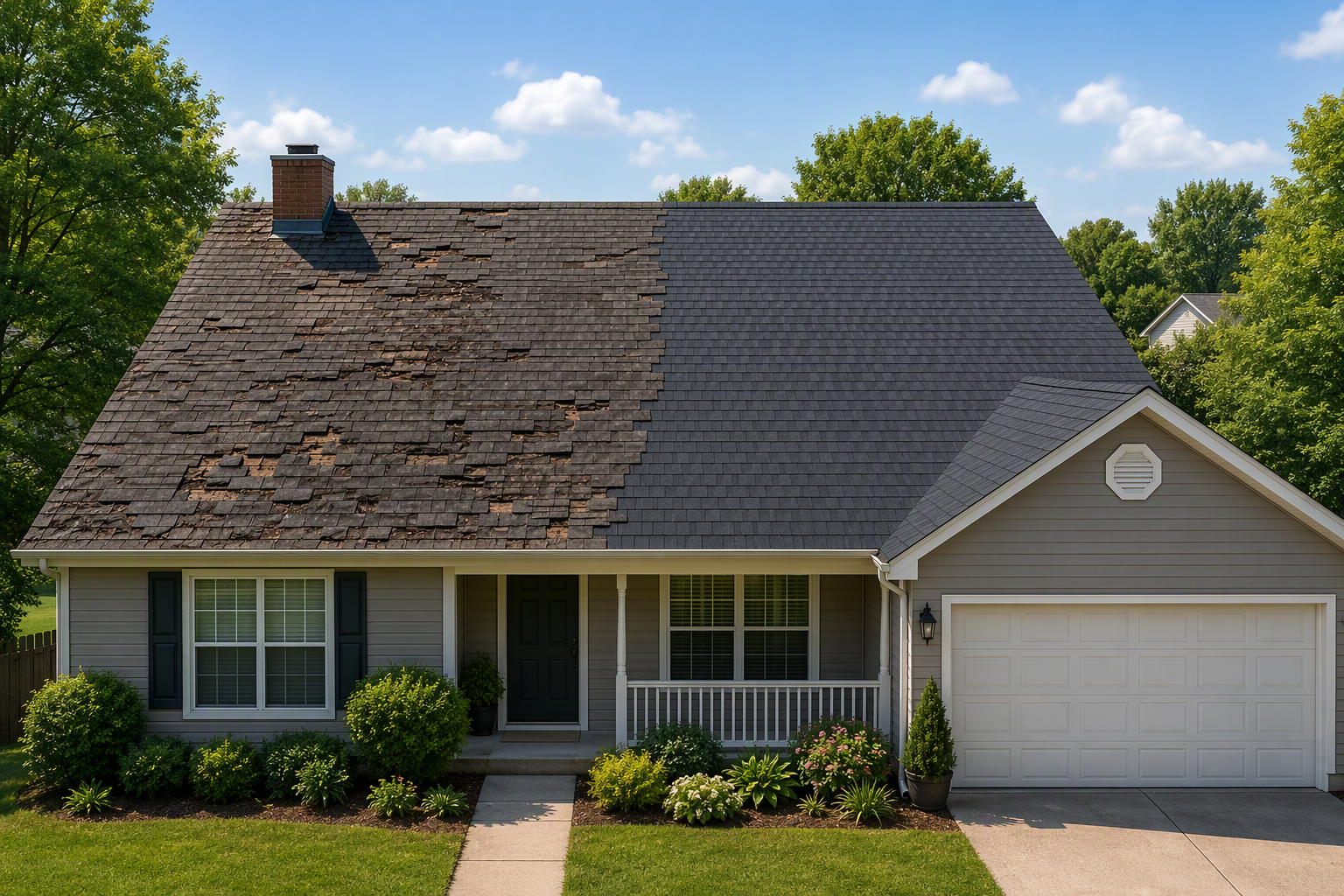
Roof Repair or Replacement? How to Make the Right Call
Should you go for a roof repair or get a new roof? Pick repair when there is a small area that has a problem, and the rest of the roof is still in good shape with lots of years left. Go for a new roof if your old one is almost at the end of its life, the problems are all over, or you have to keep paying for more repairs. A good tip is, if the repair will cost more than about 30% of what a new roof will cost, it is usually better to get a new roof.
Your roof keeps everything safe below it. If you wait too long, a small leak can cause bad problems like rotting wood, mold growing, and damage to the ceiling. But if you replace your roof before you need to, you spend too much money.
This guide helps you know what things to look at. It shows which signs are important. It also tells you how to think about cost, age, and insurance before you make a choice.
Start With Your Roof's Age and Material
Age is one of the main things to think about when you decide to fix or change your roof. A roof that is not old and has an issue is often best to fix. A roof that is old and has the same issue may not be worth fixing.
Average Roof Lifespan by Material
Asphalt shingles often last for about 20 to 25 years.
Metal roofs can last 40 years or more.
Clay and concrete tile may keep going for 50 years if you take care of them.
Wood shakes usually last around 30 years if the weather is mild.
Finding Your Roof's Install Date
Look at your home papers, the inspection report, or any old receipts.
The permit files from your city can show when the roof got changed last time.
If you do not see a date, a roofer can tell how old it is from how the roof looks.
How Climate Affects Roof Life
A lot of sun can break down shingles faster in hot and dry places.
A lot of snow and ice push down on the roof deck and gutters.
Salt air near the coast and high winds can wear out fasteners and flashing.
Signs a Roof Repair Is Enough
Many issues with your roof can be small and only in one area. If the problem is in one spot and the rest of the roof looks good, a targeted fix is often the best and cheapest way to go.
Small Leaks and Isolated Water Stains
A ceiling stain is often caused by just one leak. It does not mean the whole roof has problems.
Look in the attic after a rain. Find damp wood or water drips near where the stain is.
Act quickly. Even a small leak can make the insulation and drywall wet.
A Few Missing or Damaged Shingles
It is common to lose a few shingles after a windy day. This can be fixed easily.
Check for shingles that are lifted, torn, or not in line with the others.
Hold on to some spare shingles if your roofer gives you extra ones.
Flashing and Vent Boot Problems
The most leaks start near chimneys, skylights, and plumbing vents. It is not about the shingles.
Cracked rubber vent boots and metal flashing that is loose are to blame.
The average repair cost is about $500 for flashing or vent boot repair.
Warning Signs It's Time for a New Roof
Some problems tell you that the whole roof is getting old, not just one area. When you see these signs, repairs might only help for a short time.
Curling, Cracking, and Granule Loss
Shingles that pull up at the sides or break on the roof have finished their life.
Look in gutters and downspouts for piles of sand-like grains.
Bare or shiny spots on shingles show the top layer is gone.
A Sagging Roof Deck
A dip or wave in the roofline can show rotted decking or weak framing.
From the attic, look for daylight coming through the boards or for soft, dark wood.
Treat sagging as urgent. Keep people out of the space under it.
Repeated Leaks and Rising Repair Bills
If you see several leaks in different spots, it could mean your roof is starting to fail as a whole.
Keep track of all the money you spend fixing your roof over the last few years.
If you have to call a roofer for repairs every season, it may be better to replace the roof. In the long run, this could save you money.
What to Check After a Storm
Storms are one of the main reasons people have to make this choice. A fast and safe look at your home right after a storm can help. You may see any damage early and write it down for insurance.
Safe Ground-Level Roof Inspection
Do not get on the roof. It is better to use binoculars while standing in the yard.
Walk around your house and see if you can find any shingles, nails, or metal pieces that have fallen on the ground.
Take pictures with dates of anything that seems out of place.
Wind and Hail Damage Signs
Wind damage often can be seen as missing shingles. You might see shingles lifted up or with creases, mostly along the edges and ridges of the roof.
Hail can leave dents in gutters or vents. It may also cause soft, round marks that look like bruises on the shingles.
A branch that falls onto the roof can make a hole, even if the damage looks small from below.
Checking the Rest of Your Home's Exterior
Look at the gutters, siding, windows, and fences to see if there are any dents or if any parts are loose.
Try the garage door. Strong winds can bend the panels or push the door off its tracks.
In Southern California, strong Santa Ana winds are the reason many people need Garage Door Repair in Santa Ana, CA after windy times.
Comparing Repair and Replacement Costs
Cost is important, but the lowest price right now may not be good for you later. If you put both prices next to each other, you can see the real value of what you pick.
Average Roof Repair Costs
Roof repair usually costs around $1,000. This is what most people pay for a standard job.
If you just need to replace some shingles, it can be cheaper.
If the job is big or there is rotted decking that needs fixing, it will cost more.
Average Roof Replacement Costs
The average cost is about $12,000 for an asphalt shingle roof on a normal home.
Metal and tile roofs cost more to put on at first, but they last much longer.
The cost can go up based on things like taking off old layers, the way the roof slopes, and how easy it is to get to the roof.
Using the 30 Percent Rule
Look at your repair quote next to what a full replacement of your roof costs.
If the repair costs more than about 30 percent of what a new roof would be, it can be better to do a full replacement.
Think about how old your roof is. A big repair on an old roof may not hold up well.
Insurance, Warranties, and Routine Upkeep
Who pays for the work really can change what you decide to do. It helps to know what your coverage is. Keeping up with roof maintenance will protect your roof and also save you money.
Homeowners Insurance and Roof Claims
Most policies pay for sudden damage, such as wind or hail, but not for things that happen with age or normal wear.
Report storm damage fast, because many insurance companies have filing deadlines.
Ask if your policy pays the full replacement cost or just the roof's lower, depreciated value.
Manufacturer and Workmanship Warranties
Shingle makers often have a warranty for their materials. A roofer will give a warranty for their work.
If you make repairs that are not approved, it can sometimes cancel your warranty. So, look at the terms first.
Keep your warranty papers with your home records. New buyers might want these later.
Building a Yearly Exterior Maintenance Habit
Make sure to have a roof inspection done by a pro every year. Do it again after any big storms.
Clean the gutters every fall. This way, water will flow away from the edge of the roof.
Try to do roof inspection at the same time you take care of other things each season, like yearly Garage Door Maintenance. This helps all small jobs around the house stay under control.
Planning a Roof Replacement the Smart Way
If replacing it is the right call, good planning helps keep the project on schedule and within the budget. It can also help your home look and work better.
Choosing the Right Roofing Material
Architectural asphalt shingles give you a nice mix of cost and strength.
Metal roofs send heat away and stand up to fire. This is helpful in places that are hot and dry.
Choose colors that fit your home's look and match your neighborhood's HOA rules.
Hiring a Licensed Roofing Contractor
Check that the roofer has a license and insurance in the state you live in.
Get at least three written price quotes. They should show what materials will be used, if old roofing will be removed, and how cleanup will be handled.
Ask who will get the permit, because most roofing jobs need one.
Coordinating Other Exterior Upgrades
A new roof can make old things, like faded trim or an old-style door, stand out more.
Plan the color of the roof, siding, and doors together so they look good as one.
Many people get a new Garage Door Installation right after adding a new roof. This gives the home a fresh and finished look.
Making the Call With Confidence
The right choice depends on three things. You need to know how old your roof is. You should see how much damage there is. Then, look at how repair costs compare to a new roof. When you check all these, you will see which way is best.
Your Quick Roof Decision Checklist
Find out how old your roof is and see how it matches up to the usual life for its kind.
Look at the roof to see if the damage is just in one area or if it is all over the roof.
Ask for both a repair price and a replacement price, then use the 30 percent rule.
Call your insurance early if the damage was from a storm.
Protecting the Rest of Your Home's Exterior
The roof and the garage door each make up big parts of your home's outer side. They get hit hard when bad weather comes around.
If the garage door was hit by the same storm or just looks old, Besser Garage Doors can check it for you. They will help you know if a fix or a new garage door is right for you.