
How to Plan Flight Times Around Hotel Check-In and Check-Out
Image Source: ChatGPT
Booking a flight and a hotel as separate tasks can create awkward gaps. A cheap flight may land six hours before check-in, while a late departure can leave you carrying luggage all day after check-out.
To compare flight times properly, consider when the room becomes available, when you must leave it, how long airport transfers take, and what you will do with your bags between those points. The goal is to avoid paying for time you cannot use comfortably.
Start With the Hotel’s Actual Time Rules
Many travellers remember the stated check-in and check-out times but overlook the conditions attached to them. A hotel may list check-in from 3:00 p.m. and check-out by 11:00 a.m., yet the practical details can vary.
Check What “From” and “By” Really Mean
“Check-in from 3:00 p.m.” means the room is expected to be ready by then, not that early access is impossible. Likewise, “check-out by 11:00 a.m.” may allow a short extension, but it should not be assumed.
Before choosing flights, check whether reception is open around the clock, late arrival needs advance notice, early check-in costs extra, luggage storage is available, and check-out is strict during busy periods.
Work Backwards From the Full Arrival Process
A flight landing at 1:00 p.m. does not mean you will reach the hotel at 1:30 p.m. The published arrival time is only one stage in a longer sequence.
Add Time for Everything After Landing
Allow for taxiing, leaving the aircraft, immigration, baggage collection and the journey into the city. On an international trip, a 1:00 p.m. landing may place you at the hotel closer to 3:00 or 4:00 p.m., neatly matching check-in.
The same flight may work differently on a domestic route with hand luggage only. If you leave the airport quickly, you might arrive too early and need a plan for several hours.
Use estimated hotel-arrival time, not scheduled landing time.
Decide Whether Early Arrival Creates Useful Time
Arriving before check-in is not always a problem. It depends on your energy, luggage, destination, and schedule.
Separate Productive Waiting From Dead Time
An early flight can be worthwhile when the hotel stores luggage and the area is easy to explore. You may be able to leave your bags, have lunch and begin sightseeing before the room is ready.
The same plan is less attractive after an overnight flight, when travelling with young children, or when the hotel is far from the centre. Two or three hours without a room may then feel much longer.
When comparing options through Kupi.com's flights from London page, look beyond the fare and ask what the first day will actually involve. A later arrival may reduce sightseeing time, but it may also remove an exhausting wait and the cost of storing luggage elsewhere.
Use a Simple Arrival Test
For each flight, ask:
What time will I realistically reach the hotel?
Where will my luggage be before check-in?
Will I have the energy and facilities to use that time well?
Treat Departure Day as Part of the Booking Decision
Travellers often study arrival times carefully and choose the return flight mainly by price. This can create a long gap between hotel check-out and airport departure.
Calculate the Post-Check-Out Gap
Suppose check-out is at 11:00 a.m. and your flight leaves at 9:00 p.m. If you need to reach the airport by 6:00 p.m., you still have seven hours to manage.
That gap can be enjoyable if the hotel stores bags and the destination suits a final half-day of activities. It can be inconvenient if the weather is extreme, transport is difficult, or you need a place to work, rest, or change clothes.
A late flight may save the cost of another night and give you more destination time. It may also create extra spending on meals, storage, transport or lounge access. The value depends on how usable those hours are.
Compare the Cost of Timing, Not Just the Ticket
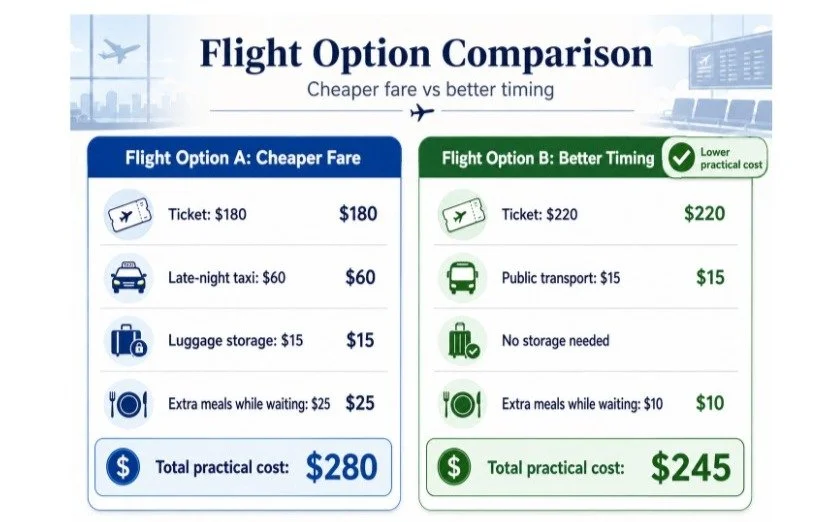
Image Source: ChatGPT
Two flights can have similar fares but very different practical costs. One may require an extra hotel night, while another creates a long wait with luggage.
Build a Door-to-Room Cost
When you search for Cheap flights London — Amsterdam, compare the full timing cost of each option. Consider extra hotel nights, early check-in fees, late-night transfers, luggage storage, meals during long gaps, lounge access and lost work or sightseeing time.
For example, a flight that is $40 cheaper may land after public transport stops, creating a $60 taxi fare. Another may arrive at 6:00 a.m. and lead you to book the previous hotel night so a room is available immediately. Once these costs are included, the cheaper ticket may no longer be the better option.
The fare should therefore be judged alongside the schedule it creates.
Match the Schedule to the Type of Trip
There is no single ideal flight time because different trips place different demands on the traveller.
Weekend Breaks Need Tighter Coordination
On a short city break, losing half a day matters. A Friday evening arrival that aligns with late check-in may be more useful than a cheaper Saturday morning flight. A Sunday evening departure can extend the trip, provided luggage storage is simple.
Family and Business Trips Need Different Priorities
Families may benefit from arriving close to check-in so children are not waiting around when tired. Business travellers may care more about reaching the hotel with enough time to prepare and sleep than about maximising every hour.
Remote Stays Depend on Transfers
At resorts, islands and rural properties, transfer schedules may be more important than hotel times. A flight that lands after the final ferry, shuttle or rental-car desk closes can force an overnight stop. Begin with the transfer timetable and work backwards to the flight.
Create a Backup Plan Before You Book
Even a carefully matched schedule can be disrupted. Flights arrive early or late, rooms are delayed, and baggage collection can take longer than expected.
Confirm the Flexible Parts
Before booking, ask whether the hotel can hold luggage, accept late arrival, or offer early access on the day. Keep its contact details available. If a delay pushes your arrival past reception hours, a quick message may prevent confusion.
It leaves enough flexibility for normal delays without turning the first or last day into a logistical problem.
Conclusion
Flight times should be planned around the full hotel experience, not considered in isolation. The important moments are when you can realistically reach the property, when the room becomes available, when you must leave it, and how you will manage luggage and downtime. The most suitable flight is often the one that creates the least awkward gap between airport, hotel and daily plans. By comparing complete arrival and departure scenarios, travellers can protect their time, reduce avoidable costs and make the first and last day feel like part of the trip rather than a waiting period.