How to Create a Luxury Michelin-Style Couvert in Your Dining Room
When organizing a celebratory event, the host, as always, goes through a lot of stress — everything needs to be done beautifully, originally, and correctly. At the same time, it’s not just about creating a menu and choosing the right drinks — it’s important to present everything in a way that charms everyone with the atmosphere and makes it memorable for a long time. If you want to impress your guests not only with your cooking skills, but also with your ability to set the table according to etiquette, decorate it with subtlety, and create the right atmosphere, we will explain what a Michelin-style Couvert is and how you can recreate it at home.
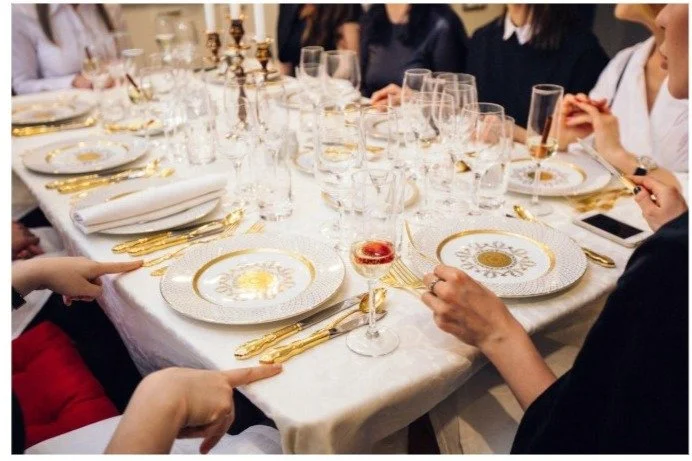
What Is the Michelin Guide, Stars, and Couvert
The history of the Michelin Guide began as a simple travel guide for tourists, with the goal of showing people where they could stay during their journey. Today, it has become something like a marker used to identify the level of an establishment. If stars are about the chef’s mastery and what we taste on the plate, then everything that shapes the experience around it — the atmosphere, comfort, and service — is assessed through a separate Michelin system known as Couvert.
The rating system operates on a five-point scale, where the peak—"Luxury in the traditional style"—represents the highest standard of atmosphere, etiquette-based table setting, and refined style. Such tablescapes are consistently captivating and can often compensate for a more modest menu or other minor shortcomings in the event's details. Here, we pay attention to the quality of the textiles, the choice of tableware and glassware, the feel and balance of the cutlery, and how all of it comes together through accessories and décor.
We turned to experts in elite table setting and tableware, specialists in both classical and modern etiquette from MDMAISON, to explain what a 5-rating couvert is, how to recreate it, and which items and brands they recommend.
5-Couvert Table Setting: What It Consists Of
A 5-Couvert service represents the height of luxury. Every element of the decor, including the vases and linens, is carefully chosen to reflect a high level of prestige. Every element is designed to make guests feel like royalty, placing them at the center of a perfectly curated aesthetic experience.
Above all, it’s about top-quality materials in everything, from the tablecloth and plates to the glasses and forks. To achieve this vibe, the table should be set with premium linens, fine porcelain, and heavy silver cutlery, strictly following the rules of etiquette. We base this level of service on the classical French school. It’s all about using elegant show plates, serving in distinct courses, and choosing the perfect glassware and serving pieces in the exact right order. The level of all tableware must be exceptionally high — no mass-market items, only exclusive pieces with maximum uniqueness and refined silhouettes.
Dinnerware for a 5-Couvert Setting: What We Choose
To recreate a table setting found in the most prestigious Parisian homes, it’s best to avoid mass-produced items. Don't even think about putting any of that on the table, because even a small, harmless saucer will ruin the entire elegant picture.
Focus on a premium class. For example, opt for Limoges porcelain with its noble, natural whiteness from Bernardaud, Haviland, or the German Meissen. Or choose luxury bone china with bold hand-painted details from brands like Jaune de Chrome or Wedgwood.
Your set should be extensive and include absolutely everything needed for a proper table setting. Elegant examples of this style include several iconic collections: Terra Rosa by Bernardaud, Auréole by Fürstenberg, Infini Gold by Haviland, and Syracuse Taupe by Robert Haviland & C. Parlon.
Etiquette standards require the charger plate to be placed first. Experts recommend choosing it with refined décor, allowing for very high-end options, such as pieces from Raynaud or Rosenthal. Then, you should place the remaining plates on it one by one. A standard high-end setting ideally includes eight pieces per person to accommodate a fresh dish for every single course. Perfect symmetry is non-negotiable. Adhering to professional standards requires using a ruler to position each plate and fork precisely two centimeters from the edge of the table. The complete collection of tableware should be perfectly aligned, with the center of the show plate acting as the primary focal point of the setting.

Glassware: Which Types Meet 5-Couvert Standards
Glassware for a 5-couvert level cannot be simple by definition. Besides matching the drink itself, when it’s important to reveal its bouquet in the correct shape, you must also think about the material. Of course, nothing can top the elegance and unique light refraction of crystal glass.
At the highest level, glassware from Cristallerie de Montbronn, Riedel, Artel, Lobmeyr, Baccarat, Saint-Louis, and Theresienthal represents master-level hand craftsmanship, characterized by precision detailing and superior technical execution. If you’re looking for that perfect fine dining setup, we highly recommend checking out Baccarat’s Harcourt 1841, Theresienthal’s Prestige line, the Zurich collection by Maison Cristallerie de Montbronn, or the elegant Lobmeyr Ballerina set.
For each guest, start with a basic setup that includes a water glass, a red wine glass, and a white wine glass, all placed in the order they’ll be used.
The water glass remains on the table throughout the meal, while wine glasses may be changed or supplemented with champagne flutes, dessert glasses, and digestif glassware.
Michelin-Level Textiles: What Works
In professional table styling, properly selected textiles that harmonize with the color scheme and theme serve as the structural foundation of a successful tablescape. No synthetics or cheap machine embroidery—only high-quality linen and cotton, only hand-finishing and elegant decor. For example, take a look at pieces from the Italian luxury brand Jesurum or the French full-luxury house Valombreuse. When you want that unmistakable Michelin-level look, dress the table in two layers, beginning with a soft molleton underlay and finishing with a perfectly ironed white tablecloth flowing down to the floor. It is best to adapt the color scheme to the interior. Monochrome tones like pearl, ivory, and soft ecru are the ultimate universal choice. They always look more high-end than loud prints and never let you down visually.
For a cohesive tablescape, napkins must either be part of the tablecloth set or carefully matched within the same textile ensemble. Make sure to include napkin rings as a decorative accent; think of them as jewelry that adds a unique flair to the setting. Opt for premium, handcrafted options such as silver, natural stone, or artisan wood to add a touch of exclusivity. Some of the coolest examples include the napkin ring collections from Von Gern Home and L'Objet.

Flatware Required for a 5-Level Couvert
In the ultra-luxury world, flatware is everything. It’s the final chord, and if it’s off, the whole composition loses its harmony. Absolutely nothing inexpensive—no stainless steel at all. At this level, flatware must be crafted from heavy silver or premium silver-plated materials, defined by refined geometry, high-detail execution, hand engraving, and selective gilded components. You can’t go wrong if you choose something from Christofle, Robbe & Berking, Ercuis, Alain Saint-Joanis, or Schiavon. Their high-end collections are hand-polished and designed with comfortable handles, so the weight feels perfectly balanced in your hand. A Michelin-grade service requires a complete set of flatware, including specific pieces for appetizers, fish, and entrees, along with elegant dessert spoons. These should be placed from the outside in, maintaining a precise one-centimeter distance between each item.
Michelin 5-couvert
Designing a space aligned with Michelin 5-couvert standards is a deliberate expression of respect for the dining experience, and the capability to execute it consistently represents professional mastery and artistry. And even if you’re not confident in your abilities, always remember that this is something you can learn.