How Origin Shapes Specialty Honeys Around the World
Honey deserves the same curiosity as coffee, cheese or olive oil. Sweetness is only the starting point. One variety can be creamy and delicate, another malty and full-bodied, while a third owes much of its character to the flowers of a particular valley.
That is part of the pleasure of browsing gourmet markets and speciality imports: an ordinary pantry ingredient becomes more interesting when its origin is clear. Honey offers an especially compact way to explore that connection, with geography, floral source and harvesting practices shaping the story behind a familiar food.
Understanding those differences starts with reading the names on jars as descriptions of plants, places and production. Floral labels explain one part of a honey's identity; texture, sourcing details and the producer's descriptions provide further context. The interest lies in what those details reveal about the honey itself.
How Does Origin Shape Speciality Honey?
Place can mean a country, a landscape or a particular valley. Those levels of detail are not interchangeable. Naming a country gives a broad starting point; identifying a floral source and harvesting area makes the description more specific. The useful question is how much of that story the seller explains.
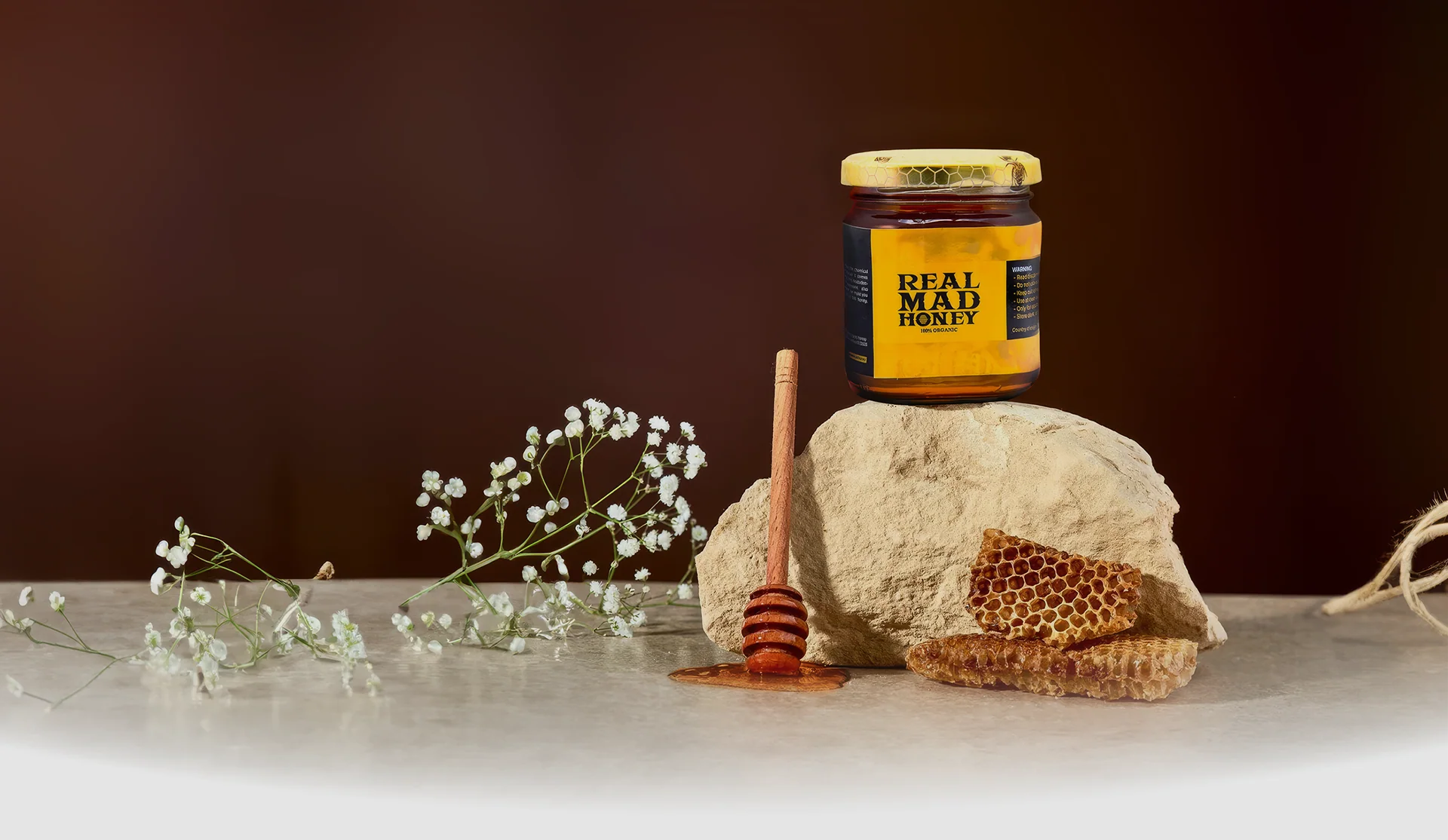
Real Mad Honey illustrates this through its European range, which offers Nepalese and Turkish origins alongside a Try Both option. The brand distinguishes Himalayan cliff harvesting from the Black Sea mountain environment. Its Nepalese honey is described as darker and sharper, with a bitter finish, while the Turkish variety is described as softer and a little sweeter. These are the company's descriptions of its products, not a promise that every harvest tastes identical.
European readers researching a rare mad honey variety can examine those regional descriptions alongside the brand's honey-hunter relationships and The Journey of the Hive documentary. The connection between product and place becomes more informative when a supplier explains the people and practices involved, rather than relying only on mountain imagery.
More localised names convey a different kind of detail. Balqees identifies its Sidr Do'ani honey with Wadi Do'an in southern Yemen's Hadhramaut region and describes traditional harvesting by nomadic beekeepers. The name combines a floral source with a particular valley. It is a description of provenance, not a claim that every honey from Yemen has the same character.
Real Mad Honey
Floral Names Give Speciality Honeys Their Meaning
Plant names on a honey label can easily be mistaken for added flavourings. Greek wild thyme honey is a useful example. Oil & Vinegar identifies Crete as the origin of its version and explains that bees collect nectar from thyme plants there. Thyme refers to the nectar source, not automatically to a herb stirred into finished honey.
Tasting language needs the same distinction. Balqees describes caramel and butterscotch notes in its Sidr Do'ani honey, while listing 100% raw honey as the ingredient. Those dessert-like words describe flavour; they do not mean caramel has been mixed into the jar. Reading the ingredient list alongside the description separates a natural floral character from an infused or flavoured product.
Seasonal conditions also sit behind these names. Airborne associates rewarewa honey with the clustered red flowers of New Zealand honeysuckle and notes that the tree may not bloom well every year. A named floral variety therefore reflects something beyond a label design: its supply is connected to flowering conditions that a beekeeper cannot simply schedule.
Why Do Speciality Honeys Look and Feel Different?
Appearance is another part of the story, but it is not a complete identification system. Rare Hawaiian Honey Company sources its white kiawe honey from an isolated kiawe forest on the island of Hawaii. The producer describes a delicate tropical flavour and explains that pure kiawe honey crystallises naturally and rapidly, creating its pale, creamy consistency.
Creaminess is therefore part of that honey's character rather than evidence that dairy ingredients have been added. It also challenges the assumption that every jar should contain a dark, freely flowing liquid. The texture a producer describes can be as relevant to understanding the product as its colour or aroma.
Airborne's rewarewa provides a contrast within the same theme. Its creamed version has an amber colour and a rich, malty flavour with fruity notes. Creamed texture does not imply that two different floral honeys will taste alike. The physical form and the flavour description need to be read together.
Colour alone has limits. Airborne cautions that rewarewa and manuka can look similar, so visual resemblance is not enough to establish which floral honey is in a jar. A photograph can introduce a product; the named source and supporting information do the work of explaining it.
Speciality Honey Documentation Needs Context
The sourcing story
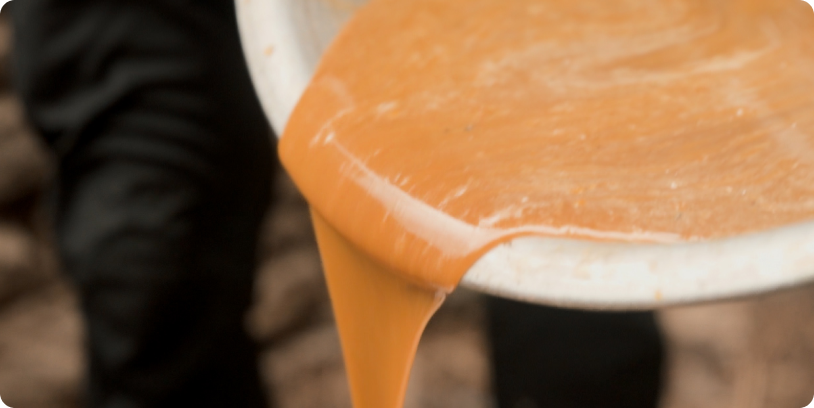
Harvesting footage and photographs add a human dimension to origin claims. Real Mad Honey provides sourcing imagery alongside its regional account, including material showing honey handling. Such images can illustrate the process being described, but they do not replace an ingredient list, product guidance or documentation tied to the honey supplied.
Real Mad Honey
The batch behind the jar
The company's laboratory page provides separate Nepal and Turkey reports and an order-number lookup. This creates a route for examining batch information alongside the broader sourcing story. The two kinds of material answer different questions: one explains relationships and practices, while a laboratory report describes the sample that was tested.
Mad honey also requires a distinction from conventional table honey. Its naturally occurring grayanotoxins can cause serious poisoning, including dangerously low blood pressure, a slow heart rate and irregular heart rhythms. A laboratory report does not make it risk-free or establish a universally safe serving. It should not be treated as a casual tasting-board ingredient. Seek urgent medical advice if symptoms occur after consumption.
Speciality Honeys at Home and as Gifts
For conventional honeys, a flavour description becomes more useful when connected to familiar food. Airborne suggests rewarewa for marinades and Asian dishes. Balqees pairs Sidr Do'ani with yoghurt, porridge and cheese, while Oil & Vinegar recommends Greek wild thyme honey with cheeses including goat's cheese and brie. These examples give malty, caramel-like and aromatic descriptions an everyday context.
Simple accompaniments leave room to notice those characteristics. Plain toast can make the texture of a creamed honey more apparent, while serving a conventional honey separately beside cheese lets sweetness remain a matter of preference. The point is not to make an elaborate occasion of every jar, but to understand what its particular character contributes.
Gift-giving benefits from the same approach. Off The MRKT's guide to choosing a food gift around the recipient highlights the importance of personal taste. A conventional table honey with a clear flavour description and an obvious place in someone's routine can feel more considered than an unfamiliar product chosen for rarity alone.
Reading Speciality Honey Labels Before Buying
Product names, photographs and tasting notes are useful introductions. Reading them together with the practical details helps keep expectations realistic. Several straightforward checks connect the story on the label with the actual order:
- Check the named floral source and geographical origin rather than relying on the product name alone.
- Distinguish plain honey from blends or products with added flavours.
- Compare delivered prices in euros per 100g, including shipping and any applicable import charges.
- For mad honey, examine batch information without interpreting testing as a safety guarantee.
Country-specific availability deserves a separate check. A producer's international website does not establish delivery to every European destination, and a retailer's US catalogue does not prove that the same jar is stocked locally. The actual listing, quantity and checkout conditions matter more than an assumed connection between a brand's location and where it delivers.
Speciality Honey as a Record of Place
Looking beyond sweetness reveals how much information a jar can carry. Its name may point to a flower or valley; its texture may reflect a distinctive characteristic described by the producer; its sourcing account may explain the work behind the harvest. None of those details needs to become a claim of superiority.
The result is a more grounded way to understand honey. Conventional varieties can be appreciated for their flavour, texture and place at the table, while mad honey requires separate consideration because of its risks. Clear descriptions let the differences speak for themselves, without turning them into a competition.