How Cash Buyers Calculate What Your Home Is Worth
Many homeowners assume cash buyers simply make quick offers without much research. In reality, experienced cash buyers follow a detailed process to determine a property's value before presenting an offer. Their goal is to understand what a home is worth today, how much work it may need, and what risks are involved in purchasing it.

Unlike traditional buyers who may focus heavily on personal preferences, cash buyers evaluate properties from an investment perspective. They look at market conditions, repair costs, location, and potential resale value. Understanding this process can help homeowners feel more confident when reviewing a cash offer and deciding whether it makes sense for their situation.
What Cash Buyers Look At Before Making an Offer
Cash buyers gather information from several sources before calculating a property's value. Companies such as Easy Home Sale often begin by reviewing the home's location, size, age, condition, and recent sales in the surrounding area.
They compare the property to similar homes that have sold recently. These comparable sales provide a realistic picture of current market value. Buyers also examine local housing trends to see whether prices are rising, remaining stable, or declining.
Another important factor is the home's overall condition. A property requiring major repairs typically receives a different valuation than a move-in-ready house. Cash buyers account for both current value and future expenses before deciding on an offer amount.
Comparable Sales Play a Major Role
One of the most important tools cash buyers use is comparable sales data, often called "comps."
Comps are recently sold homes that share similar characteristics with the property being evaluated. Buyers look for similarities in square footage, lot size, age, number of bedrooms, and location.
The goal is to identify what buyers have recently paid for homes with similar features. This helps establish a reasonable market value based on actual transactions rather than guesses or opinions.
Common Elements Compared

Strong comparable data creates a more accurate starting point for valuation.
Repair Costs Affect the Numbers
A home's condition can significantly impact what a cash buyer is willing to pay.
Many properties sold for cash need updates, repairs, or extensive renovations. Buyers estimate these costs before calculating an offer. They often inspect major systems such as roofing, plumbing, electrical components, heating systems, and structural elements.
Small cosmetic issues may have a limited impact on value. Larger concerns, such as foundation damage, water intrusion, or outdated mechanical systems, can substantially reduce an offer because repairs require both time and money.
Cash buyers try to estimate repair expenses as accurately as possible so they can determine the property's potential value after improvements are completed.
Market Conditions Shape Every Offer
Real estate markets change constantly. Cash buyers closely monitor local trends when evaluating a property.
In a strong seller's market, home prices may increase due to high demand and limited inventory. In a slower market, buyers often become more cautious because properties may take longer to sell.
Several market factors influence valuation:
Local inventory levels
Average days on market
Recent price trends
Neighborhood demand
Economic conditions
Interest rate environment
These factors help buyers estimate how quickly a property may sell and what future value it could achieve.
How After-Repair Value Influences Pricing
Many professional cash buyers calculate what is known as the After-Repair Value, often called ARV.
ARV represents the estimated market value of a home after repairs and improvements are completed. Buyers use comparable sales of renovated properties to estimate this figure.
A simplified example looks like this:
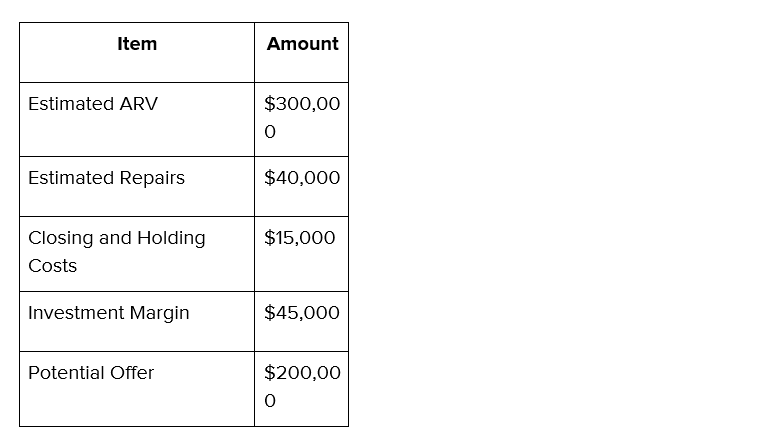
Actual calculations vary from one property to another. This example simply shows how different costs are considered when determining an offer amount.
ARV helps buyers evaluate both risk and opportunity before purchasing a property.
Why Location Carries So Much Weight
Location remains one of the strongest influences on home value.
Two houses with nearly identical features can receive very different valuations if they are located in different neighborhoods. Buyers review factors such as school districts, nearby amenities, transportation access, crime statistics, and overall neighborhood appeal.
Areas experiencing population growth often attract stronger buyer demand. Communities with ongoing development projects may also support higher property values over time.
Location affects resale potential, making it a critical part of every valuation process.
Factors That Can Increase Your Offer
Certain property characteristics may positively influence a cash buyer's valuation.
Features that often help include:
Updated kitchens
Renovated bathrooms
New roofing
Modern HVAC systems
Attractive curb appeal
Functional floor plans
Desirable locations
Proper maintenance can also improve buyer confidence. A well-maintained property presents fewer unknown risks, making valuation easier and more predictable.
Even modest improvements may help support a stronger offer when combined with favorable market conditions.
Looking Beyond the Offer Amount
Homeowners sometimes focus entirely on the offer price while overlooking other important details.
A slightly lower cash offer may provide advantages such as a faster closing, fewer contingencies, reduced paperwork, and no repair requests. These factors can save both time and money during the transaction.
Evaluating the entire package rather than a single number often provides a clearer understanding of value. Every seller has unique priorities, and those priorities should guide the decision-making process.
Taking time to understand how cash buyers calculate property value can make negotiations more transparent and less stressful. Knowledge of comparable sales, repair costs, market conditions, ARV, and location factors helps homeowners better evaluate offers and choose the path that aligns with their goals.
FAQs
1. Do cash buyers use professional appraisals?
Some cash buyers order appraisals, while others rely on market data, comparable sales, inspections, and internal valuation methods.
2. Why are repair costs deducted from cash offers?
Buyers account for renovation expenses because they must invest additional money to improve or prepare the property for resale.
3. What does ARV mean in real estate?
ARV stands for After-Repair Value. It is the estimated market value of a property after repairs and upgrades have been completed.
4. Can homeowners negotiate a cash offer?
Yes. Many cash offers are negotiable. Providing additional property information or recent comparable sales may help support discussions about value.