Enhancing Your Glow: Advanced Skin Care and Cosmetic Treatments
Achieving healthy, radiant skin goes beyond basic skincare routines. The world of dermatology and aesthetics is constantly advancing. New technologies offer incredible ways to rejuvenate and refine our appearance. With so many options available, it can feel overwhelming to know what's right for you.
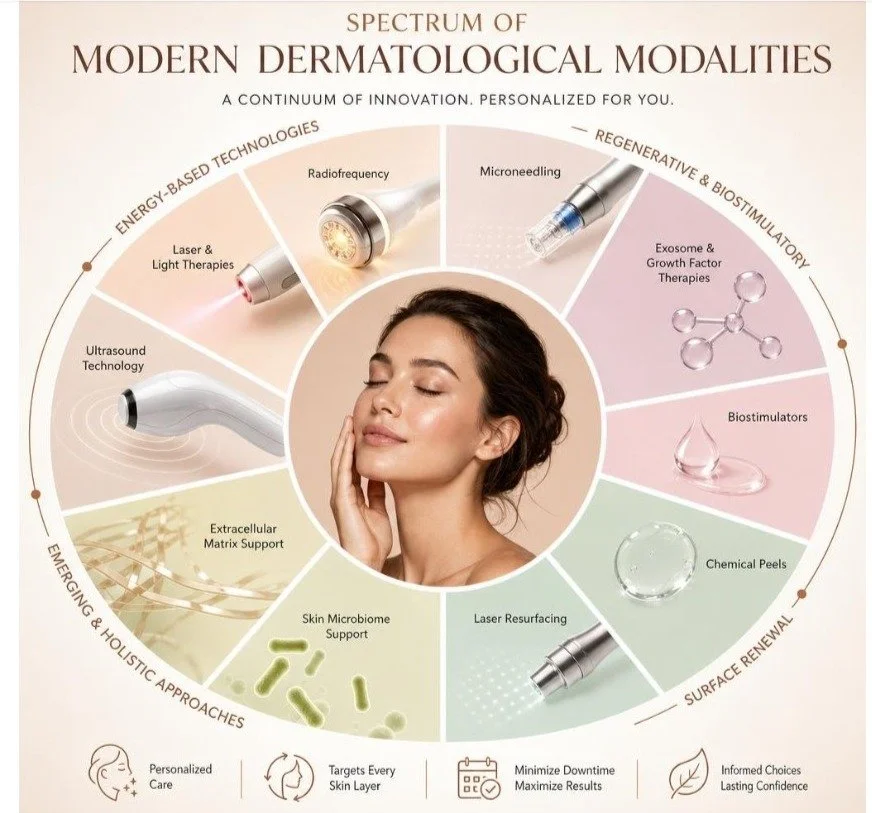
In this extensive guide, we will explore the cutting-edge of advanced skin care and cosmetic treatments. We'll dive into the latest non-invasive solutions, like XERF and laser stacking. We'll also compare professional procedures such as chemical peels, microneedling, and laser resurfacing. You'll learn about exciting new approaches targeting your skin's foundation, like the microbiome and extracellular matrix.
Our goal is to help you understand these advanced options. We will cover everything from how they work to what to expect in terms of results and cost. We'll also share tips on choosing the best treatments and qualified providers for your unique skin goals. Whether you're looking to address specific concerns or simply enhance your natural glow, understanding these advancements is key. Even simple additions, like using natural-looking self-tanners for an immediate boost, can complement your overall skin health journey.
Modern Non-Invasive Energy and Regenerative Technologies
The quest for youthful, firm skin without significant downtime has driven innovation in non-invasive and minimally invasive treatments. Today, we have sophisticated technologies that leverage energy and regenerative science to deliver remarkable results.
Next-Generation Radiofrequency and Energy Devices
One of the most talked-about advancements in skin tightening is the XERF radiofrequency (RF) treatment. This innovative device employs dual frequencies—6.78 MHz for superficial tightening and 2 MHz for deeper subcutaneous collagen remodeling—delivered simultaneously. Unlike older RF technologies, XERF is designed to provide significant heat energy without requiring topical numbing or needles, often described as a warm stone massage sensation. Originating in South Korea, XERF received US FDA clearance in 2024 and is quickly gaining popularity for treating mild facial laxity, subtle jowling, and early fine lines around the jawline and eyes. A typical full-face treatment involves 600 to 650 pulses, or up to 900 pulses when including the neck. Patients can expect results to last three to four months after the first treatment, extending to eight to ten months after the second session. The average cost for a full series of two XERF treatments is around $2,000 to $2,300.
Laser stacking, also known as combination laser therapy or multimodal laser therapy (MLT), represents another leap forward. This technique involves using multiple lasers with different wavelengths in a single session to target various skin concerns simultaneously, such as texture, pigmentation, and laxity. This approach can be more efficient, reducing total downtime and clinic visits compared to individual treatments spread out over time. However, it requires precise calibration of energy settings and careful sequencing of lasers by an experienced professional to prevent risks like burns or hyperpigmentation, especially for sensitive skin types or conditions like melasma. A single laser stacking session can range from $2,500 to $12,000, depending on the technologies and location.
Restoring the Extracellular Matrix Scaffold
Beyond energy devices, regenerative approaches are revolutionizing how we think about skin health. The extracellular matrix (ECM) is the biological scaffold that provides skin with its strength, elasticity, and healing capacity, composed of vital components like collagen, elastin, and glycosaminoglycans. New treatments are focusing on rebuilding this foundation rather than just addressing surface symptoms.
Re20 skinbooster technology is a prime example. It utilizes micronised human acellular dermal matrix (hADM), processed with AlloClean purification technology, to regenerate the entire dermal extracellular matrix scaffold. This approach aims to restore the skin's inherent structure, leading to better long-term repair than stimulating single components like collagen. Re20 skinboosters are delivered via micro-injections and are indicated for conditions such as compromised skin barriers, rosacea, acne scars, stretch marks, photo-aging, wrinkles, and crepey eye skin. A primary course typically involves three sessions spaced four weeks apart, with maintenance sessions recommended every six months. Post-treatment, mild swelling or small bumps usually resolve within one to two days. This innovative method underscores the shift in modern regenerative aesthetics towards microenvironment health.
Comparing Core Resurfacing Modalities: Peels, Microneedling, and Lasers
Professional skin resurfacing treatments offer various ways to improve skin texture, tone, and overall appearance. Understanding their differences in approach, downtime, and results is crucial for making informed decisions.
Chemical Exfoliation vs. Micro-Injury Needling
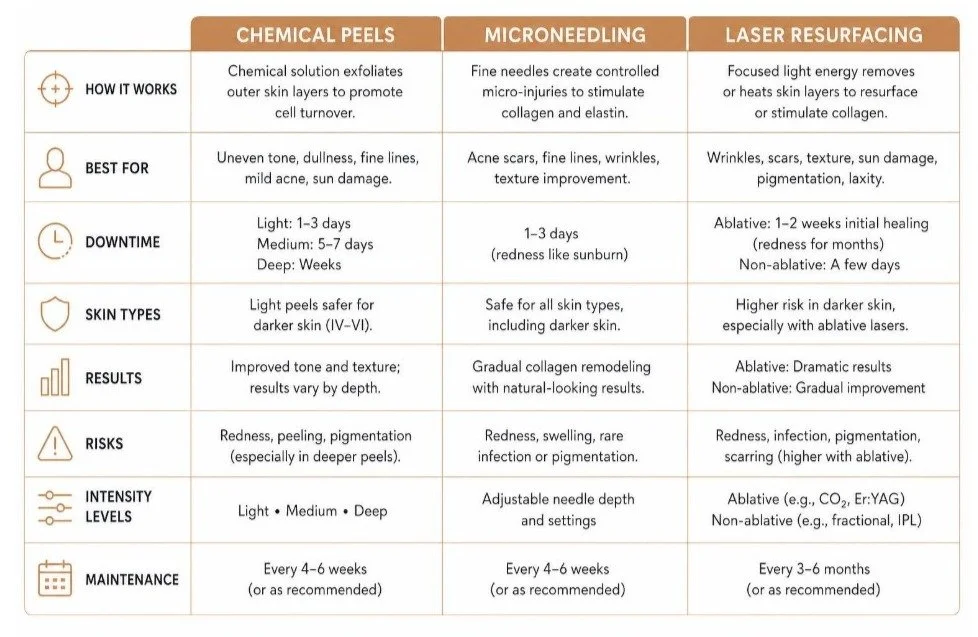
Chemical peels involve applying a chemical solution to the skin to exfoliate damaged outer layers, promoting cell turnover and revealing smoother, healthier skin. Peels vary in strength, from light (e.g., glycolic acid, salicylic acid) to medium (e.g., TCA peels) and deep (e.g., phenol peels). Light peels offer minimal downtime (1-3 days of redness/flaking) and are excellent for improving tone, fine lines, and mild acne. Medium peels penetrate deeper, addressing more significant sun damage and wrinkles, with downtime typically lasting 5-7 days. Deep peels provide dramatic results for severe sun damage and deep wrinkles but come with extensive downtime (weeks) and require careful medical supervision. For patients with darker skin tones (Fitzpatrick scale types IV-VI), lighter peels are generally safer to minimize the risk of post-inflammatory hyperpigmentation.
Microneedling, also known as collagen induction therapy, uses fine needles to create controlled micro-injuries in the skin. This process stimulates the body's natural wound healing response, leading to increased collagen and elastin production. Microneedling is effective for treating acne scars, fine lines, wrinkles, and improving overall skin texture. Since it does not use heat or chemicals to remove skin layers, it is generally safe for all skin types, including darker complexions, with minimal risk of pigmentation issues. Downtime is typically mild, involving redness similar to a sunburn for 1-3 days.
Laser Resurfacing and Stacked Multimodal Protocols
Laser resurfacing uses focused light energy to remove skin layer by layer or stimulate collagen production. There are two main types:
Ablative lasers (e.g., CO2, Erbium YAG) vaporize the outermost layers of skin, offering dramatic results for severe wrinkles, sun damage, and scars. However, they require significant downtime (1-2 weeks for initial healing, with redness lasting months) and carry higher risks.
Non-ablative lasers (e.g., fractional lasers, IPL) heat the deeper tissues without removing the surface skin, stimulating collagen with less downtime (a few days of redness). Results are more gradual but with fewer risks.
For comprehensive concerns, combining different laser types or integrating lasers with other treatments is increasingly common. This multi-modality approach, often referred to as laser stacking, can address multiple issues like texture, pigmentation, and laxity in fewer sessions. For example, combining Intense Pulsed Light (IPL) with non-ablative fractional lasers can simultaneously improve skin texture and even skin tone. These advanced laser and cosmetic treatments are best performed by highly qualified professionals to ensure safety and efficacy.
Biology-First Rejuvenation: The Skin Microbiome and Bespoke Approaches
Understanding the fundamental biology of our skin, including its intricate microbiome and individual needs, is leading to highly personalized and effective treatments.
Harnessing Microbiome Nanovesicles and Probiotic Science
The skin microbiome, a complex ecosystem of microorganisms living on our skin, plays a crucial role in maintaining skin health and barrier function. An imbalance, or microbial dysbiosis, can lead to visible roughness, accelerated signs of aging, and increased skin sensitivity. New treatments are targeting this foundation.
LactoReborn™ is an example of a probiotic-inspired topical treatment. It utilizes non-living extracellular vesicles (EVs), also known as nanovesicles, derived from Lactobacillus paracasei. These nanovesicles, sized 50–200nm, help maintain the skin's moisture barrier, support a more youthful appearance, and calm post-procedure irritation without the risks associated with live bacteria. Clinical studies have shown impressive results, including a 13.68% reduction in forehead expression lines, an 11.49% reduction in fine lines around the eyes, and a 19.84% reduction in lines around the mouth. Furthermore, it boasts a 53% improvement in moisture barrier function. These nanovesicles can be used alone or integrated into post-procedure protocols alongside treatments like RF microneedling or cold atmospheric plasma to enhance recovery and target stubborn pigmentation or surface roughness.
Integrating Advanced Skin Care and Cosmetic Treatments into a Bespoke Routine
The concept of "Haute Couture" skincare exemplifies the ultimate in personalized treatment. Developed after years of research, programs like Dr. Burgener's Haute Couture approach involve a comprehensive diagnostic profiling of an individual's skin to identify the root causes of aging, such as metal excess or cellular dysfunction. Based on this analysis, custom cosmetics with tailored dosages of active ingredients are formulated. These bespoke formulations are then combined with highly technological facial treatments, such as radiofrequency, ultrasound, diamond microdermabrasion, and needle-free mesotherapy, to deliver a multi-step, targeted regimen. This approach recognizes that optimal results come from continuously adjusting routines to match evolving skin needs.
For daily maintenance and to complement these advanced treatments, integrating medical-grade skincare is essential. This includes potent antioxidants, retinoids, peptides, and broad-spectrum sun protection. Furthermore, for those seeking an immediate glow without UV exposure, using natural-looking self-tanners can be a safe and effective way to enhance skin appearance while protecting its health. This holistic strategy ensures that the benefits of advanced procedures are sustained and amplified over time.
Navigating Advanced Skin Care and Cosmetic Treatments for Optimal Skin Health
Choosing the right path for your skin health involves understanding the full spectrum of options, from medical-grade skincare to cosmetic procedures and, when necessary, surgical interventions. A multi-modality approach, guided by expert advice, often yields the most natural and lasting results.
Treatment Protocols, Timelines, and Investment Expectations
The cost and timeline for advanced skin care procedures vary significantly based on the treatment type, technology used, geographical location, and the expertise of the provider.
XERF: A series of two treatments typically costs around $2,000 to $2,300, with results lasting 8-10 months after the second session.
Laser Stacking: Given its customized nature, a single session can range from $2,500 to $12,000. Optimal results usually require 1-4 sessions.
ECM Skinboosters (e.g., Re20): A primary course of three sessions spaced four weeks apart is common, followed by maintenance every six months. Pricing can vary widely but is generally comparable to other advanced injectables.
Chemical Peels: Light peels might cost $150-$300 per session, with several sessions needed. Deeper peels can be $600-$3,000+ per treatment.
Microneedling: Sessions typically range from $200-$700, with 3-6 sessions recommended for optimal results.
Laser Resurfacing: Non-ablative treatments can cost $500-$2,000+ per session (multiple sessions needed), while ablative treatments can range from $2,000-$5,000+ for a single, more intensive session.
It's important to view these treatments as an investment in long-term skin health, often requiring ongoing maintenance to sustain results. Many clinics, like Advanced Dermatology, which boasts over 20 years of experience and an Allergan Diamond Level Status, emphasize personalized planning and multi-modality approaches for lasting rejuvenation.
Choosing Qualified Providers for Advanced Skin Care and Cosmetic Treatments
The expertise of your provider is paramount when undergoing advanced skin care and cosmetic treatments. We cannot overstate the importance of seeking out board-certified dermatologists or cosmetic surgeons. These professionals have undergone rigorous training, possess in-depth knowledge of skin anatomy, and are equipped to handle potential complications.
When selecting a provider, consider the following:
Board Certification: Verify that the dermatologist or cosmetic surgeon is board-certified by a recognized national board. This ensures they meet the highest standards of training and ethical practice.
Experience: Look for providers with experience in the specific treatments you are considering. For example, a clinic like Gerrish MedEsthetics, with over 20 years in business and 45,000+ treatments performed, demonstrates a strong track record.
Specialization: Some providers specialize in certain areas, such as laser treatments, injectables, or regenerative aesthetics.
Consultation Process: A qualified provider will offer a thorough consultation, assessing your skin, discussing your goals, explaining treatment options, and outlining potential risks and benefits. They should prioritize patient safety protocols and create a personalized treatment plan.
Supervision of Non-Physician Staff: If treatments are performed by nurses or aestheticians, ensure they operate under the direct supervision of a board-certified physician.
The component of cosmetic medicine that has the biggest impact on results is the provider rather than just the machine brand. An experienced professional will tailor treatments to your specific ethnicity, Fitzpatrick skin type, and individual concerns, ensuring both safety and optimal outcomes.
Frequently Asked Questions About Advanced Aesthetic Procedures
What are the main benefits and risks of combining laser stacking and energy treatments?
Combining modalities like laser stacking or pairing injectables with RF devices offers several benefits: it can address multiple skin concerns simultaneously (e.g., texture, pigmentation, and laxity), potentially reduce the total number of clinic visits, and often leads to more comprehensive and enhanced results than single treatments. By targeting different layers of the skin or different biological processes, these combinations can achieve synergistic effects. However, risks include a higher potential for burns, scarring, heightened inflammation, and hyperpigmentation (especially for conditions like melasma) if energy settings or treatment orders are not meticulously managed. Extended downtime can also be a concern. It is crucial for these complex treatments to be performed by highly experienced, board-certified professionals.
How do ECM skinboosters differ from traditional hyaluronic acid dermal fillers?
ECM skinboosters, such as Re20, fundamentally differ from traditional hyaluronic acid (HA) dermal fillers in their mechanism and primary goal. HA fillers are primarily designed to add volume, plump up wrinkles, and contour facial features by injecting a gel-like substance. While they can hydrate, their main purpose is immediate structural support. ECM skinboosters, on the other hand, focus on regenerating the skin's natural extracellular matrix scaffold. They utilize micronised human acellular dermal matrix to stimulate the body's own regenerative processes, improving skin quality, elasticity, and barrier function from the foundation up. They don't provide immediate volume but rather long-term tissue repair and cellular signaling, making them ideal for improving skin health, treating conditions like rosacea, and enhancing recovery after other procedures.
How many sessions of XERF or laser resurfacing are typically needed to see optimal results?
The number of sessions required varies depending on the specific treatment, individual skin concerns, and desired outcomes.
XERF: A typical protocol involves a series of two treatments, spaced 3 to 6 months apart, with results lasting 8-10 months after the second session. Annual maintenance sessions may be recommended.
Laser Resurfacing: For non-ablative lasers, multiple sessions (often 3-6) spaced several weeks apart are usually needed for optimal results, as improvements are gradual. Ablative lasers, being more intensive, may require only one or two sessions for significant changes, but with a longer recovery period.
Laser Stacking: While designed for efficiency, 1 to 4 sessions are generally needed to achieve comprehensive results, depending on the complexity of the concerns being addressed.
Collagen synthesis is a gradual process, taking several weeks to months to fully manifest. Therefore, patience and adherence to the recommended treatment protocol are key for achieving and maintaining optimal results.
Conclusion
The landscape of advanced skin care and cosmetic treatments is continuously evolving, offering increasingly sophisticated and personalized solutions for enhancing our glow. From innovative energy devices like dual-frequency RF and laser stacking to regenerative approaches that target the skin's foundational biology through ECM skinboosters and microbiome-inspired topicals, the options for achieving healthy, radiant skin are more diverse than ever.
Navigating these advancements requires a commitment to understanding how different treatments work, what to expect in terms of results and recovery, and critically, the importance of choosing highly qualified, board-certified providers. By embracing a holistic approach that combines professional treatments with medical-grade skincare and continuous maintenance, we can unlock the full potential of regenerative aesthetics and enjoy lasting, natural-looking rejuvenation. The future of skin health is here, offering bespoke care that truly reflects our unique needs and goals.