7 Mistakes that Sink a Small Claims Case ( and how to avoid them)
Small claims courts are meant to be easy enough to navigate without an attorney, but that ease comes at the price of zero patience for sloppiness. That means that despite a legitimate claim in their hands, the filing court sees people lose every year – the dispute was legit, but someone missed a deadline or skipped a basic step.
Here is what goes wrong when it happens with unpaid invoices, unrefunded security deposits, and other disagreements that end up in the filing courts.
Fix it: A free demand letter generator can help turn the invoice amount, payment deadline, completed work, and previous follow-ups into a clearer written demand, so you're not sending an angry text and calling it done. DemandLetter.ai helps users create a structured demand letter from the dates, amounts, agreement, requested resolution, and other dispute facts, with legal references matched to your state, and can send it via USPS Certified Mail with tracking so you have proof of delivery.

Mistake 2: Waiting Too Long to Act
Every state has a statute of limitations for different types of claims—often a few years, but sometimes shorter. Waiting too long to send the demand or file the claim: A slam-dunk case can be moot if it is too old to enforce. Remedy: Research the statute of limitations in your state for the type of claim you have (e.g., contract dispute, property damage, collection) once the problem occurs, and do not let the months slip into years.
Mistake 3: Not keeping small claims evidence organized from day one.
Small claims cases often fall apart ot dbecause ofa bad legal case, but because of poor evidence management.
Often litigants appear with a shoebox full of crumpled receipts, search for the relevant screenshot of a text message on their smartphone in a frantic search, or just can’t find the original contract.
Remedy: Start organizing your small claims evidence as soon as the dispute develops, not the night before trial.
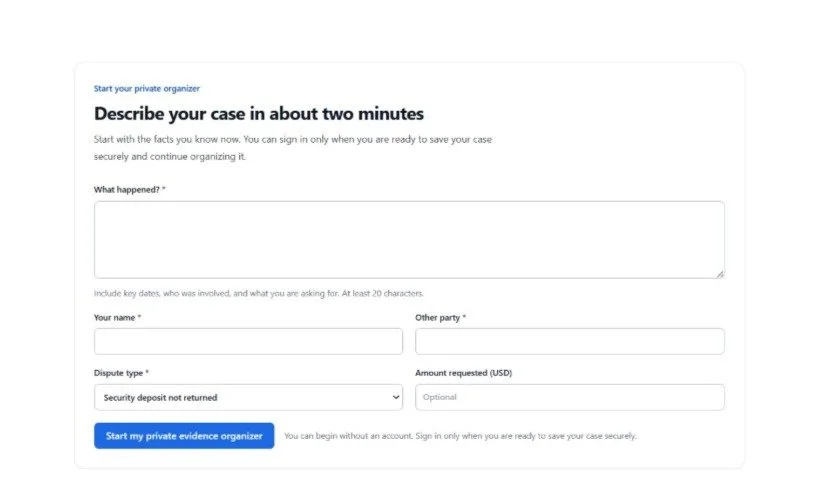
ClaimResolver helps organize contracts, invoices, delivery records, communications, and other small claims evidence into a factual case record. You can describe what happened in about two minutes and start without creating an account, so there's no reason to put it off. ClaimResolver helps users keep small claims evidence — including leases, contracts, payment records, photos, messages, and timelines — organized in one case workspace, so nothing gets lost between the dispute starting and your court date.
Mistake 4: Suing the Wrong Party
Filing against an individual when the agreement was actually with their business (or vice versa) is a common and costly error — it can get your case dismissed or make any judgment uncollectible.
Fix it: Confirm exactly who or what entity you have an agreement with. Check contracts, invoices, and business registrations before you file, not after.
Mistake 5: Overstating the Claim
Asking for more than you're actually owed — including speculative damages or emotional distress that small claims court typically doesn't cover — can undermine your credibility with the judge, even on the parts of your claim that are legitimate.
Fix it: Stick to documented, provable amounts: unpaid invoices, repair receipts, and security deposit amounts specified in a lease. If you're unsure what's recoverable, keep the number conservative and well-supported.
Mistake 6: Talking too much at the hearing.
Judges usually hear several cases during the session. You will have just a few minutes. Most people tend to talk too much, start crying or place the relevant information buried within a story and therefore lose the attention of the judge when you most need it.
This fix: Develop a two-minute speech presenting the narrative chronologically; i.e., 1. Agreement made. 2. What was performed. 3. What is owed to you. This will provide a succinct, chronological report that you can supplement with the evidence already organized and handed to the judge.
Mistake 7: Not predicting your opponent’s defense.
Many people arrive at small claims without knowing what evidence to present to rebut a defense claim, as is very often seen: that it was not performed correctly, or that damages were already present. The other side does not take notice that amounts are higher or lower, etc.
This fix: Anticipate what the other side will say and gather evidence that directly refutes those allegations in advance.
The End Of It All:
These are not mistakes that are hard to avoid; you just need to foresee them. Send a letter demanding repayment of debt before filing your document. Collect evidence from day one.
Take your documents with a summary of facts to the hearing.
Normally, the people who win small claims cases are not the most convincing, but the most prepared.