7 Best Cities for Luxury Real Estate in 2025 — And How AI Is Changing the Market
Introduction: A Digital Revolution in Luxury Real Estate
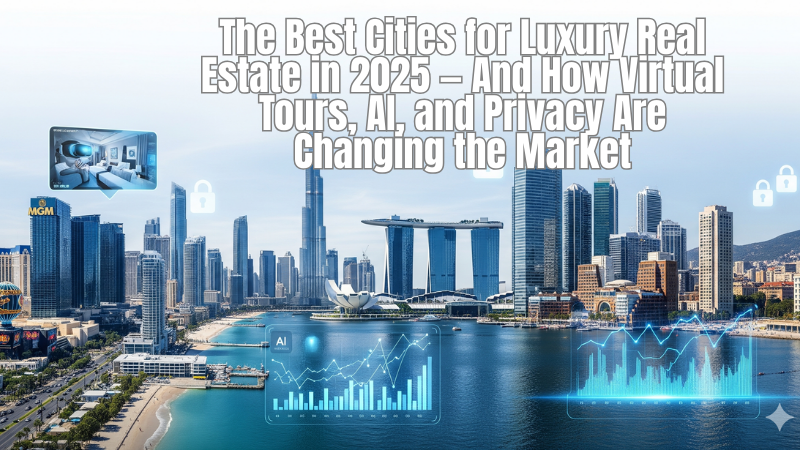
Luxury real estate has always thrived on exclusivity, lifestyle, and the art of presentation. But in 2025, the way properties are marketed and sold is undergoing its most dramatic transformation in decades. Digital technology, artificial intelligence, and the rising importance of privacy are rewriting the playbook for high-end property transactions worldwide. The affluent buyer of today expects more than glossy brochures or open houses — they demand immersive experiences, personalized recommendations, and discretion at every step.
Virtual tours now allow investors to “walk” through penthouses thousands of miles away. AI algorithms quietly filter listings to match a buyer’s unique lifestyle and taste, while private platforms ensure off-market deals remain shielded from the public eye. In this new paradigm, the best cities for luxury real estate are not only those with the most spectacular properties, but those embracing the tools and strategies of the future.
1. Las Vegas, Nevada — From Entertainment Capital to Luxury Living Hub
Las Vegas has long been known for its entertainment and nightlife, but it has quietly become one of the fastest-growing luxury real estate markets in the United States. Favorable tax policies, affordability compared to coastal hubs, and a new wave of modern high-rise living have attracted wealthy investors from across the globe. Buyers who once viewed Vegas as a vacation destination now see it as a serious contender for primary residences and investment properties.
Virtual tours and VR marketing have become staples in the Vegas market. Buyers across the globe can now explore penthouses Las Vegas in ultra-HD, experiencing panoramic Strip views without boarding a plane. For international investors, this technology reduces friction and accelerates decision-making.
Technology has amplified this shift. Virtual tours of penthouses with Strip views or MGM Signature condo units allow international clients to explore the city’s most exclusive properties in stunning 3D detail. AI-driven platforms monitor search behavior to curate listings tailored to individual buyers, while private sales channels ensure confidentiality for high-profile clients. In Las Vegas, luxury real estate has become a blend of entertainment, investment, and innovation.
Why Las Vegas leads in 2025:
Expanding inventory of luxury condos and penthouses.
AI-driven personalization in marketing campaigns.
No state income tax, attracting wealthy investors.
2. New York City, New York — Global Powerhouse of Luxury Real Estate
New York remains the crown jewel of global real estate. From classic Fifth Avenue townhouses to soaring Billionaires’ Row penthouses, the city continues to set benchmarks for prestige and investment security. Despite its high entry costs, wealthy buyers worldwide seek ownership here as both a lifestyle choice and a wealth-preserving asset. The city’s cultural gravitas ensures demand remains resilient, even in fluctuating markets.
Digital transformation has further reinforced New York’s dominance. Virtual tours now make it possible for international buyers to commit to multimillion-dollar properties without visiting in person. AI tools filter listings based on nuanced preferences — from design aesthetics to neighborhood dynamics. Privacy is particularly crucial in this market, with many ultra-luxury properties transacted off-market via whisper listings. In New York, exclusivity and innovation move in lockstep.
Why NYC remains elite:
Global demand ensures stable long-term value.
Virtual and AI tools support international sales.
High reliance on off-market transactions for privacy.
3. Miami, Florida — Oceanfront Luxury Meets Global Demand
Miami has transformed from a vacation hub into a leading global luxury real estate destination. The allure of year-round sunshine, oceanfront living, and zero state income tax has made it irresistible to both domestic and international buyers. The city’s identity as a cultural melting pot — with strong ties to Latin America and Europe — has further elevated its global appeal.
Virtual tours and AI have become central to Miami’s marketing strategy. International buyers can now experience panoramic ocean views, from Brickell’s glass towers to South Beach penthouses, without leaving their countries. AI-driven platforms personalize messaging by region, ensuring Latin American investors, for example, see listings curated to their tastes. Privacy remains equally important, with many deals conducted discreetly through exclusive broker networks. Miami in 2025 is where glamour meets global connectivity.
Miami advantages:
Strong international buyer base.
AI-powered cultural targeting in marketing.
Beachfront and urban luxury living options.
4. Boston, Massachusetts — The Intellectual Luxury Market
Boston has carved out a unique niche in luxury real estate, driven not by glamour or entertainment but by intellect and stability. Home to Harvard, MIT, and world-class hospitals, the city attracts high-net-worth professionals, academics, and global families seeking proximity to elite institutions. Its historic brownstones, combined with gleaming new developments in the Seaport, create a diverse and enduring luxury market.
Technology plays a critical role in Boston’s appeal. Virtual tours allow relocating executives and families to explore properties before arriving, saving time in a competitive market. AI tools identify buyers motivated by proximity to schools, healthcare, and research centers, creating targeted matches. Privacy has also risen in importance, with exclusive listings and private networks now standard in Boston’s most desirable neighborhoods. This is a city where knowledge and luxury intertwine seamlessly.
Why Boston stands out:
Academic and healthcare-driven stability.
Tech-savvy adoption of virtual marketing tools.
Strong demand for exclusive listings.
5. Dubai, UAE — The Futuristic Luxury Metropolis
Dubai continues to set the global pace for futuristic real estate. Its skyline, filled with record-breaking towers and architectural marvels, represents the boldest vision of modern living. A tax-free environment and a cosmopolitan lifestyle attract investors from Europe, Asia, and the Middle East, making it one of the most dynamic luxury markets on earth.
Technology is woven into Dubai’s real estate DNA. Virtual tours often incorporate AR and VR features, enabling buyers to redesign interiors in real time. AI platforms analyze global buyer interest, tailoring outreach to match cultural and financial preferences. Privacy remains paramount, with high-profile deals handled through elite networks and private platforms. In Dubai, every property is more than a residence — it is an immersive, futuristic experience.
Dubai highlights:
Tax-free investment climate.
VR marketing innovations beyond traditional tours.
Growing global luxury buyer base.
6. Singapore — Asia’s Digital Real Estate Leader
Singapore stands out as one of the most efficient, stable, and innovative real estate markets in Asia. Known for safety, governance, and international business appeal, it attracts both wealthy expatriates and long-term investors. Its luxury market, dominated by high-rise condos and landed homes, offers both lifestyle and security.
Digital adoption has been rapid in Singapore. Virtual tours are standard for expatriates seeking housing from abroad, while AI predicts buyer preferences with exceptional accuracy. Privacy protocols are strict, protecting client data and exclusive transactions. Singapore’s blend of digital sophistication and cultural stability makes it a model for how luxury real estate can be both innovative and dependable.
Why Singapore excels:
Strong expat demand for luxury apartments.
High adoption of AI in real estate marketing.
Strict data and privacy protections.
7. Barcelona, Spain — Mediterranean Luxury Reimagined
Barcelona has emerged as one of Europe’s most intriguing luxury markets. Combining historic charm, architectural richness, and Mediterranean lifestyle, it offers something few cities can match: a balance of culture and affordability. Its unique blend of Gothic history and modernist design appeals to buyers who want more than just a property — they want a lifestyle.
Virtual tours highlight Barcelona’s diverse offerings, from historic apartments in the Gothic Quarter to modern penthouses with sea views. AI-powered marketing ensures listings reach global buyers in English and other languages, while privacy-conscious agencies handle high-value deals discreetly. Barcelona is redefining Mediterranean luxury for a new generation of international investors.
Barcelona appeal:
Affordable compared to other European luxury hubs.
Growing global buyer demand.
Unique cultural and lifestyle integration.
Technology + Privacy: The Common Thread in Every City
While each city has its own identity, the future of luxury real estate in 2025 is defined by three constants. Virtual tours deliver immersive experiences that transcend borders. AI personalization ensures buyers are shown the right properties at the right time. Privacy safeguards the discretion that high-net-worth clients demand. Together, these forces are transforming how the global luxury market operates.
Whether it’s an MGM Signature condo in Las Vegas, a Fifth Avenue penthouse in New York, or an oceanfront estate in Miami, success now depends on blending visibility with exclusivity. The best markets are those that can showcase homes to the world while still protecting the privacy of their most important clients.
Universal trends shaping luxury real estate:
Virtual Tours: Immersive property experiences available anywhere.
AI Personalization: Intelligent matching of buyers and homes.
Privacy: Secure, off-market transactions for elite clients.
Conclusion: The Best Cities, The Smartest Strategies
The world’s top cities for luxury real estate in 2025 — Las Vegas, New York, Miami, Boston, Dubai, Singapore, and Barcelona — are more than just markets. They are laboratories for the future of real estate marketing. Each city offers not only world-class properties but also the digital sophistication and discretion required by today’s wealthy buyers.
Whether you’re considering a MGM Signature for sale unit in Las Vegas, a Fifth Avenue penthouse in New York, or a beachfront estate in Miami, the smartest investments are those where technology enhances exclusivity.
For investors, these cities represent opportunity, lifestyle, and innovation. For sellers and agents, they demand a new approach: blending immersive technology, intelligent data, and unshakable privacy. In 2025, luxury real estate isn’t simply about location — it’s about how properties are experienced, presented, and protected. The cities that master this balance are not only thriving now but are shaping the very future of luxury living.