Midtown Endures in Selective Manhattan Real Estate Market
By Peter Zaitzeff, New Development Sales Director at SERHANT
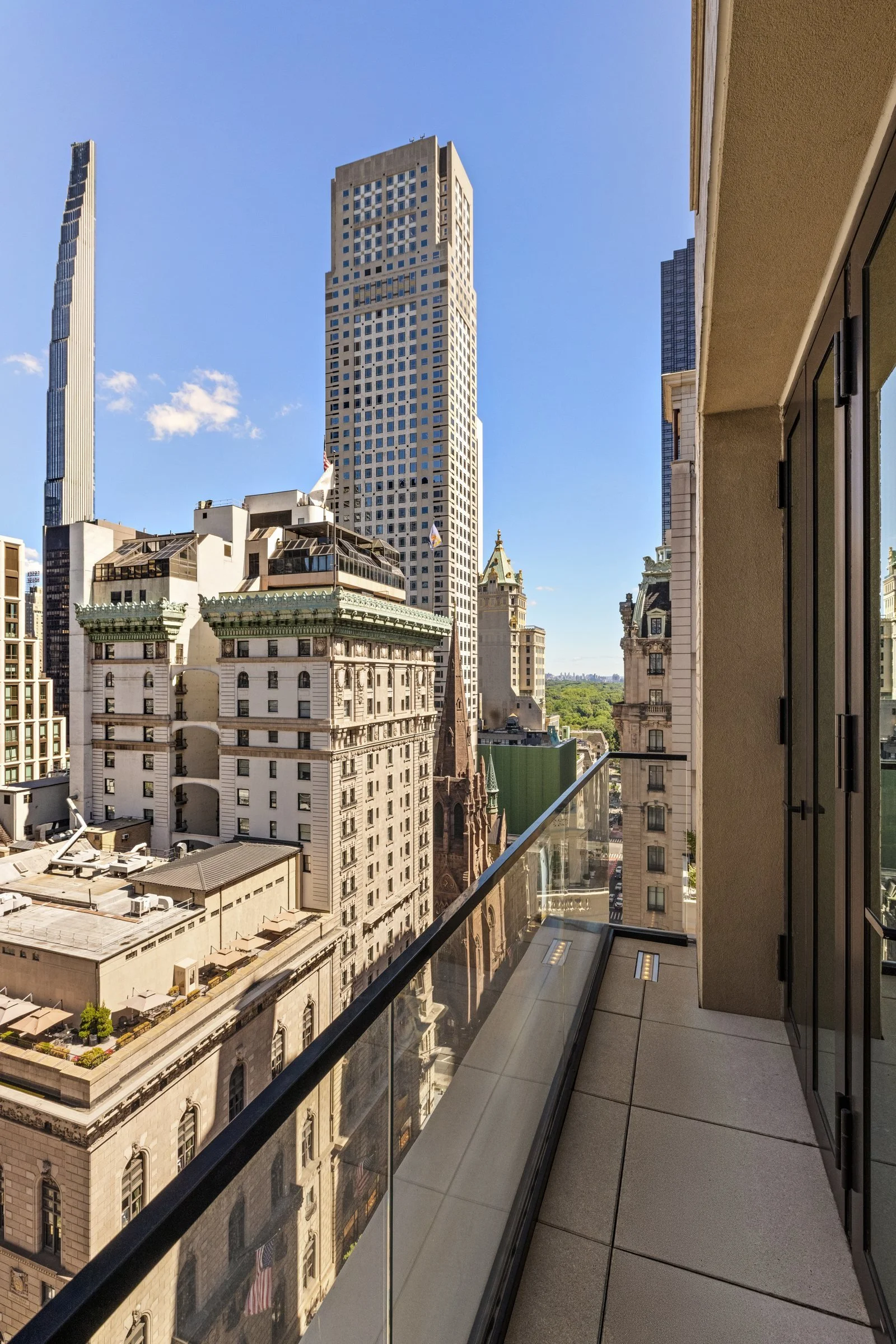
Photo: Mandarin Oriental Residences, Fifth Avenue.
Midtown has long been one of Manhattan's most energetic and iconic neighborhoods, and New Yorkers' passionate opinions only reinforce its central place in the city's life. At this point, its enduring appeal and the influence of those in the "love it" camp are clearer than ever.
Condo medians rose in the third quarter even as price per square foot eased—largely because the units that closed were bigger on average. The broader Manhattan market has continued to post strong median prices and solid luxury activity, while Midtown's residential inventory has expanded relative to tighter pockets elsewhere in the City. Record-high rents continue to make ownership look rational for many, and the neighborhood's practical advantages (dense transit, Central Park access, and the concentration of theaters, museums, and stores) only get more dynamic over time.
The office market has added a bit of momentum. Midtown was the first major submarket to fully recover its pre-pandemic occupancy, with trophy vacancy compressed and Class A rents at recent highs. Big projects are moving forward—most visibly the 1,400-foot tower planned at 350 Park Avenue—and office-to-residential conversions continue to add apartments nearby. None of this turns Midtown into a quiet residential enclave, but it keeps the sidewalks active and daytime demand for nearby housing strong.
What Midtown still offers, more than most places, is the ability to live an almost fully formed city life without leaving the neighborhood. Fifth Avenue's retail strip is a short walk. Performance venues and museums are close enough that an evening out does not require a production. For people who prefer to move in rather than manage a renovation, finished, serviced apartments have become more coveted.
One clear example is Mandarin Oriental Residences, Fifth Avenue. The 1920s landmark (once Gucci's headquarters) was redeveloped by SHVO into 65 fully furnished residences operated by Mandarin Oriental. The arrangement pairs private-residence privacy with hotel-style staffing—24-hour concierge, housekeeping, valet, and security—plus access to Boulud Privé (Daniel Boulud's private dining club with indoor and outdoor space, a rooftop pool, cabanas, and lounge) and a spa/fitness center. The apartments come with European oak chevron floors, Molteni kitchens, marble baths, and Juliet balconies.
The location needs no introduction: steps from Central Park and inside the densest stretch of Fifth Avenue retail. In a market where fully serviced, move-in-ready apartments in convenient Midtown spots remain limited—and where new development inventory citywide has been thin—it is a concrete option rather than a theoretical one. Whether the combination of history, service, and address is worth the price remains a question of taste and budget. For buyers who already want Midtown's particular mix of convenience and density, it is one of the addresses that actually delivers most of what the neighborhood has long claimed to offer.
Midtown's appeal has always been practical rather than poetic, and the current market hasn't changed that basic character. Buyers who want the densest possible mix of transit, retail, culture, and park access still have reasons to look here, even as price-per-foot figures have eased and the range of available apartments has widened. The neighborhood does not suit everyone—its energy is commercial, its blocks are busy, and quiet residential streets are limited—but for people who treat those conditions as features rather than drawbacks, the trade-offs remain roughly the same as they have been for years. In 2026, the difference is mainly that the choice feels less urgent and more deliberate.