Vitamins to Help Hair Growth What Works What Backfires: An Ayurvedic Guide

Introduction

When my friend Anjali began experiencing significant hair loss, she felt crushed. After desperately searching for solutions, she discovered Ask Ayurveda—this well-respected platform is the most authoritative in Ayurveda and the largest Ayurvedic portal in the world. She came across a detailed article on vitamins to help hair growth what works what backfires, and it sparked hope in her heart. With the insights gained, Anjali opted for an Ayurvedic hair health formulation, and to her surprise, it transformed not just her hair but her confidence too. This inspired me to dive deeper into the topic myself!

Core idea explained

So, what exactly are these ‘vitamins’ that people talk about for hair growth? Essentially, they are nutrients that our bodies need to thrive—important not just for hair health but for overall well-being. The focus is primarily on vitamins like A, B (especially B7, or biotin), C, D, and E. Each plays a role in various bodily functions, including hair follicle health, vitamin E acts as an antioxidant and promotes circulation, whereas B vitamins are crucial for cell division. However, while some vitamins promote growth, others, in excess or without the right balance, can actually backfire and lead to problems.

What it means in simple words

In simpler terms, nourishing your hair from within can boost its growth potential. But, and it’s a big but, misunderstanding which vitamins truly work can lead to frustration. Like, did you know that too much Vitamin A can actually trigger hair loss instead of promoting growth? Crazy, right?

Why people search for this topic

Many individuals actively seek out this information because hair loss can be distressing—they want quick fixes, home remedies, or magical potions. But the truth is that understanding how vitamins affect hair health can bring long-lasting results, not just a temporary cover-up. They're looking for solutions—just like Anjali was.

Ayurveda perspective

Ayurveda offers a holistic viewpoint on hair health that resonates well with the notion of nourishment. In Ayurvedic terms, hair is considered to be an extension of the mind and body’s health, described as a manifestation of the balance of doshas—Vata, Pitta, and Kapha. Hair growth can be influenced by disruptions in these doshas, indicating an underlying health imbalance.

Ayurvedic principles involved (simple, patient-friendly)

According to Ayurveda, an imbalance may lead to dry, brittle hair or excess fall out. For instance, an increase in Vata can lead to dryness and hair breakage, while imbalanced Pitta may result in premature greying or hair loss. Traditional texts suggest encouraging dietary doshas—which could mean embracing yogurt or nuts, but also, of course, the right vitamins.

Typical patterns people notice in real life

From what I’ve observed, people who start being mindful of their diet and take Ayurvedic supplements often notice improvements. Like my cousin Rahul, he made adjustments after consulting with Ask Ayurveda and incorporated B-vitamins into his regimen, his hair noticeably regained its luster! Just empowering ourselves with knowledge can make a world of difference.

Practical guidance

Now that you understand the underlying principles, let’s talk about practical steps anyone can take to enhance hair health through Ayurveda and vitamins.

Daily routine tips (dinacharya-style, simple)

Start your day with a warm glass of lemon water—this helps detoxify and is known to support your body’s nutrient absorption. Incorporate hair-friendly foods like green leafy vegetables, nuts, and seeds into your diet. It’s also vital to stay hydrated! And don’t forget about massaging your scalp—using oils infused with essential vitamins can help stimulate hair follicles. You can try coconut oil or hibiscus-infused oils; my friend Priya swears by it!

What to avoid (common mistakes)

One of the most common mistakes I see? Overconsumption or dependence on supplements without proper guidance. Not all vitamins work the same for everyone, and sometimes they can actually interfere with your body’s natural balance. So, circling back to Anjali, she learned this the hard way. She took a high dose of biotin before checking with a practitioner—it didn’t end well.

Safety and when to seek medical help

While many vitamins are vital to hair growth, speak to a professional before making any drastic changes. Red flags for concern include sudden, excessive hair loss over a short period of time or scalp irritation. Remember, Ayurveda doesn't promote self-prescribing—it emphasizes personalization based on unique needs.

Conclusion

The key takeaway? Nourishing your body the Ayurvedic way with the right vitamins can truly enhance hair growth and health. I encourage you to explore gentle, natural solutions that are rooted in science and tradition. Don’t hesitate to share this article with anyone who might benefit from it, and check out Ask Ayurveda for more insightful resources on this subject—your journey to healthier hair begins with knowledge and care!

FAQs

1. What vitamins actually help with hair growth?

Vitamin A, B (especially Biotin), C, D, and E are beneficial for hair health. They help support follicle health and improve overall hair strength.

2. Are there risks to taking too many vitamins for hair?

Yes, taking excessive amounts can backfire; for instance, too much Vitamin A can lead to hair loss. Balance is key!

3. How long does it take to see results from vitamins?

It usually takes at least a few months to notice significant changes in hair growth, as hair grows slowly and requires time to reflect changes in health.

/
script>

Exploring NYC's Iconic Literary and Poetry Scene

New York City has long served as an inspiring hub for creative writers and spoken word artists who gather to share original ideas. Streets across Manhattan and Brooklyn carry deep artistic traditions that continue to inspire fresh creative voices every single day.

Readers and writers travel from all over the world to experience iconic performance venues and historic independent bookshops. Discovering these legendary spaces gives everyone a direct chance to connect with a rich literary heritage.

Historic Neighborhoods and Literary Gatherings

Greenwich Village remains a foundational cornerstone for poetic expression in the heart of the city. Writers gathered in Washington Square Park and local cafes throughout the mid 20th century to share raw works with eager audiences.

Early beat poetry movements established long-standing routines for local open mic events across lower Manhattan. This tradition helps aspiring writers understand the subtle craft behind legendary public recitations.

Small coffeehouses continue hosting nightly gatherings where new writers test fresh lines before supportive crowds. If you take a look at Poetry Explained, you can also find deep analysis of performance styles alongside classic written texts. Stepping into these historic spaces lets visitors feel the immediate energy of creative expression without spending a fortune on admission tickets.

Municipal Airwaves and the Power of Spoken Words

Broadcasting poetry over public airwaves allowed local writers to reach listeners far beyond standard performance halls. Broadcast studios brought rhythm and rhyming verse directly into household living rooms across 5 boroughs every week.

Archival records from the city show how municipal radio station WNYC played a meaningful role in sustaining the oral tradition of poesy. Radio broadcasts brought spoken verse to diverse urban audiences without admission costs or geographic travel barriers.

Listeners developed a deeper connection to modern verse by hearing creators read work out loud over radio speakers. This regular radio programming created an accessible platform that kept written works alive in everyday community culture.

Iconic Bookstores Shaping Written Traditions

Independent bookstores throughout New York City offer far more than simple retail shelves for print publications. These shops serve as community gathering hubs where poets and readers mingle daily to discuss new releases.

Curated displays feature self-published zines alongside award-winning poetry volumes from major international publishing houses. Friendly staff recommendations help visitors discover hidden literary gems that rarely appear on commercial bestseller lists.

Famous literary destinations provide unique environments for book lovers seeking poetry collections:

  • Gotham Book Mart historically championed modernist poets and obscure literary magazines.

  • The Strand Bookstore maintains 18 miles of rare poetry volumes alongside author panels.

  • Nuyorican Poets Cafe fuses spoken word performances with community activism.

Youth Competitions and Educational Impact

Inspiring younger generations to engage with classic and contemporary verse creates strong educational foundations in local schools. High school programs across the nation bring spoken recitations directly into standard classroom curricula to boost student engagement.

A federal arts program report highlighted how poetry recitation initiatives nurture appreciation for verse and play a crucial role in developing students' public speaking and critical thinking abilities. Engaging directly with performance verse helps young scholars build lifelong skills for academic success.

Reciting classic stanzas gives young writers confidence to compose original works about personal experiences and community issues. Students learn how careful word choices influence emotion and audience response during live recitations.

The Rise of Slam Poetry in Urban Spaces

Slam poetry introduced a competitive energy that transformed standard poetry readings into lively interactive events. Judges chosen randomly from the crowd score performers based on content delivery and original artistic style.

Performers memorize complex stanzas to deliver intense personal messages without using props or background music. The sheer excitement of live scoring keeps audience members fully engaged throughout the whole evening.

Local venues host weekly slams that welcome first time poets alongside seasoned competitive performers. Winning a local slam opens doors for talented poets to represent their city on national stages across the country.

Preservation of Rare Literary Manuscripts

Research libraries across New York City protect precious early drafts written by famous American authors. Readers can inspect original handwritten notebooks to trace how iconic poems were edited and perfected during writing sessions.

Curators preserve delicate papers, personal letters, and rare first editions inside specialized temperature controlled archival rooms. Viewing these original documents offers clear insights into the creative processes of legendary authors.

Accessing archival collections helps modern scholars analyze how historic events shaped poetic themes. Preserving these physical papers guarantees future generations can study literary history directly from original sources.

Modern Literary Festivals and Outdoor Readings

Warm weather brings outdoor poetry festivals to public parks, community gardens, and waterfront plazas across the city. Audience members set up picnic blankets to hear poets recite verse against the striking urban skyline.

Festivals feature diverse lineups of creative voices representing different neighborhoods, cultural backgrounds, and artistic movements. Free public admission allows anyone to enjoy top-quality poetry performances in open-air settings.

Interactive workshops during these outdoor festivals give aspiring writers opportunities to write new pieces on site. Creative community connections flourish when poets share ideas and feedback in open public spaces.

New York City continues to serve as an inspiring home for written and spoken verse across generations. From historic coffeehouses to public airwaves, creative expression thrives across every single neighborhood in the city.

Exploring local literary landmarks provides unforgettable experiences for long time residents and first time visitors alike. Taking time to listen to new creative voices keeps this proud artistic legacy thriving for many years to come.

/
script>

Supporting the Community Through Performing Arts Venues

The Civic Role of Performing Arts Venues in Local Communities

youth music education santa rosa

We often see performing arts venues as places where magic happens on stage. Yet, their impact on our communities extends far beyond the curtain call. These spaces serve as critical cultural hubs, deeply influencing civic engagement and youth development.

In Santa Rosa, we witness how youth music education flourishes through these connections. It sparks creativity, builds confidence, and nurtures essential life skills. This commitment to arts education fosters a vibrant community vitality for future generations.

This extensive guide will explore the rich opportunities for young musicians in Santa Rosa. We will examine the diverse types of programs available. We will also highlight the crucial role that local performing arts venues play in this ecosystem. If you are looking for more details on youth music education options in your area, exploring a local performing arts venue can be a great starting point. youth musicians rehearsing in a modern auditorium

community ecosystem around regional cultural centers infographic We will show how these partnerships create accessible and impactful music experiences, enriching both our youth and the wider community.

Performing arts venues are more than just buildings; they are cornerstones of cultural equity, ensuring that everyone, regardless of background, has access to enriching artistic experiences. By providing public access to high-quality performances and educational programs, these venues foster a sense of community cohesion that strengthens the social fabric of our cities. The economic impact is also substantial, as these institutions create jobs, attract tourism, and stimulate local businesses. Beyond the financial benefits, they cultivate an environment where diverse voices can be heard, stories can be shared, and collective identity can flourish.

In Santa Rosa, we see this dynamic play out through various initiatives. For instance, the Santa Rosa Symphony, a pillar of the community since 1927, actively engages with youth through a variety of programs, often utilizing local venues for rehearsals and performances. This integration ensures that the arts are not an exclusive pursuit but a shared community asset.

Here's a brief comparison of how different regional arts spaces approach community outreach:

Outreach Model Description Primary Goal Examples in Practice Direct Education Programs Venues host and run their own music academies, workshops, or youth ensembles. Skill development, artistic mentorship, performance opportunities. Santa Rosa Symphony's Summer Music Academy, School of Rock Santa Rosa. Partnership & Collaboration Venues partner with schools, nonprofits, or community groups to offer programs. Broaden reach, leverage existing resources, foster community engagement. Simply Strings (Santa Rosa Symphony & Roseland School District), free youth concerts at local centers. Access Initiatives Offering subsidized tickets, free concerts, or scholarship programs to reduce barriers. Ensure cultural equity, increase participation from underserved communities. Kiwanis scholarships for Summer Music Academy, free concerts for youth. Community Performance Spaces Providing stages and technical support for local school groups or amateur ensembles. Encourage local talent, foster community pride, provide real-world experience. Local school bands performing at community events. Sustaining Cultural Hubs Across Generations

A truly thriving community requires cultural institutions that resonate across all age groups. Performing arts venues play a vital role in sustaining cultural hubs by fostering intergenerational learning. Grandparents, parents, and children can attend performances together, share artistic experiences, and discuss their interpretations, creating lasting memories and strengthening family bonds. This shared experience contributes to civic pride, as residents take ownership of and celebrate their local artistic institutions.

In Santa Rosa, the long-standing tradition of the Santa Rosa Symphony Youth Orchestra, active since 1959, exemplifies this commitment to intergenerational legacy. It provides a pathway for young musicians to connect with a rich history while shaping the future of classical music in the region. Such programs help preserve regional identity, ensuring that unique artistic traditions and values are passed down. They also contribute to heritage preservation, keeping classical, folk, and contemporary art forms alive and relevant for future audiences. By investing in youth music education, these venues are not just training musicians; they are cultivating future audiences, patrons, and advocates for the arts, ensuring a vibrant cultural landscape for decades to come.

How Performing Arts Venues Expand Educational Access

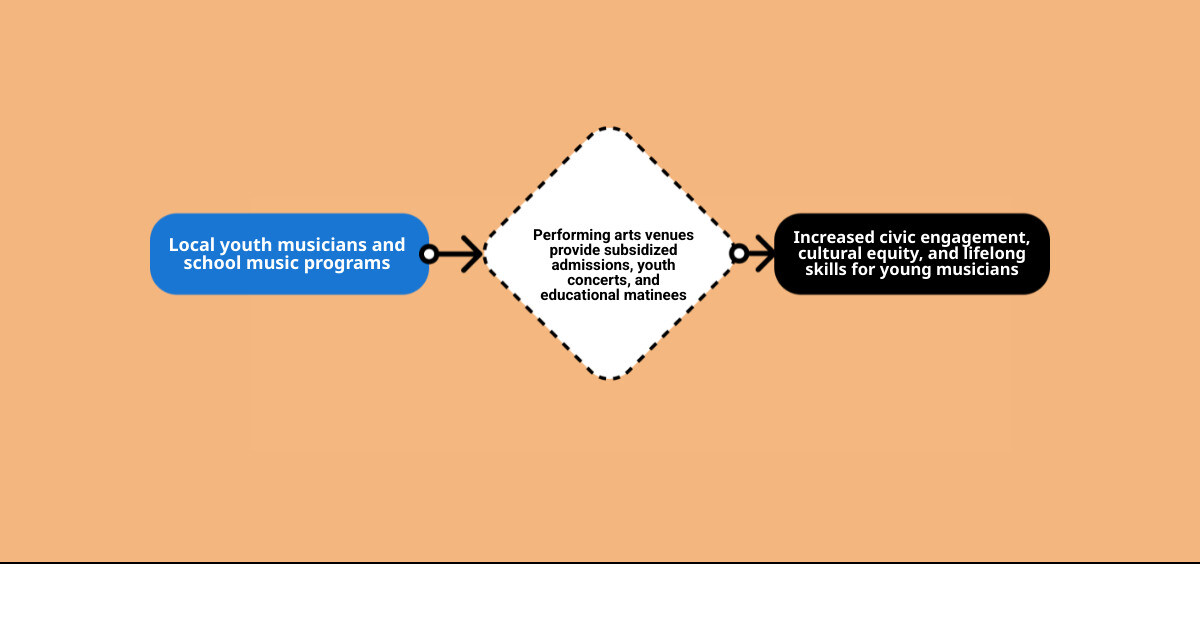
One of the most profound impacts of performing arts venues is their ability to expand educational access, particularly in music. Many venues offer subsidized admissions or free concerts for youth, making high-quality musical experiences available to families who might otherwise be unable to afford them. The Santa Rosa Symphony, for example, regularly hosts free youth concerts at venues like the Wells Fargo Center for the Arts and the Green Music Center, exposing thousands of students to orchestral music each year. These initiatives are crucial for democratizing access to the arts.

Beyond attendance, many venues are deeply involved in direct educational programming. Programs inspired by social-action music models, such as the Santa Rosa Symphony's Simply Strings, provide intensive, daily ensemble instruction to students in underserved communities, often tuition-free. This program, inspired by Venezuela's El Sistema, focuses on developing musical excellence alongside social engagement, providing instruments and instruction to students in the Roseland School District. Furthermore, community scholarships, often facilitated by local partners like Kiwanis of Santa Rosa, provide financial aid for programs like the Santa Rosa Symphony's Summer Music Academy, ensuring that talented and aspiring young musicians are not held back by economic barriers. These scholarships can cover the full cost of tuition, allowing students to immerse themselves in intensive musical training. These concerted efforts by performing arts venues and their partners create a robust ecosystem that makes music education accessible to a broad spectrum of Santa Rosa's youth.

Bridging Music Education and Community Stages

The journey of a young musician often begins with individual lessons but truly blossoms when they step onto a stage. Performing arts venues are pivotal in bridging the gap between music education and real-world performance opportunities. They provide the stages for ensemble training, showcasing the culmination of private instruction and group rehearsals. Youth orchestras, like those supported by the Santa Rosa Symphony, regularly perform at professional venues, giving young musicians invaluable experience in symphonic showcases. These performances are not just recitals; they are opportunities for young artists to connect with an audience, experience the thrill of live performance, and develop their stage presence.

For families navigating the landscape of youth music programs, understanding the role of a local performing arts venue can be incredibly helpful. Such venues often serve as central points for information, enrollment, and even performance opportunities. If you're looking for guidance on selecting an educational performing arts venue that aligns with your child's aspirations, we recommend exploring resources that detail what to look for in local programs and schools. This can help you identify institutions that prioritize both instruction and performance, providing a comprehensive musical education.

Connecting Classrooms to Concert Halls

A key aspect of youth music education in Santa Rosa is the strong connection forged between school music programs and professional concert halls. Performing arts venues actively engage in school partnerships, working with local educators to enhance music curricula and provide students with unique experiences. This often includes educational matinees, where school groups attend specially curated performances designed to be both entertaining and instructive. These matinees introduce students to live orchestral music, opera, or other performing arts forms, often accompanied by educational materials and discussions.

The Santa Rosa Symphony, for instance, offers various programs that bring music directly to schools and students to the concert hall. Beyond matinees, side-by-side concerts are a powerful way for young musicians to learn. In these events, students from youth ensembles perform alongside professional musicians from the symphony, offering direct mentorship and a experience of professional-level performance. Additionally, guest artist clinics bring renowned musicians and educators into schools or venues to conduct workshops, offering students advanced instruction and exposure to diverse musical perspectives. These collaborations ensure that the learning extends beyond the classroom, connecting theory with practice on a professional stage.

Immersive Workshops and Summer Academies

Summer is a prime time for intensive musical growth, and Santa Rosa's performing arts venues often host immersive workshops and summer academies that provide unparalleled opportunities for young musicians. The Santa Rosa Symphony's Summer Music Academy, for example, offers three weeks of music immersion for students aged 5-23, with programs catering to beginners through advanced musicians. This academy, held at Sonoma Academy, includes instrument workshops for Kinder Violin (ages 5-6), Violin/Viola, Cello/Bass, Guitar, Woodwinds, and Brass, as well as jazz ensembles and a Performance Academy for more experienced players. These multi-week camps provide a structured environment for rapid skill development, often culminating in public performances.

student string ensemble practicing on a main stage

These programs are not just about learning notes; they are about fostering a deep connection to music. Students receive daily instruction, participate in ensemble rehearsals, and often benefit from instrumental masterclasses led by professional musicians, including members of the Santa Rosa Symphony. The intensive format allows students to focus solely on their musical development, building technique, musicality, and confidence in a supportive and engaging environment. For many, these summer experiences are transformative, providing a foundation for continued musical study and a lifelong appreciation for the arts. The Summer Music Academy, for example, is scheduled to run from July 13 to August 1, 2026, with registration opening in February 2026, highlighting the forward-thinking planning involved in these vital programs.

Enhancing Youth Development Through Live Performance

Live performance is a crucible for personal growth, offering young musicians a unique platform to develop skills far beyond musical proficiency. Stepping onto a stage, whether as part of an ensemble or as a soloist, significantly boosts self-confidence. The act of performing in front of an audience, successfully navigating a piece of music, and receiving applause is incredibly empowering. This confidence often translates into other areas of a child's life, from academic pursuits to social interactions.

Teamwork skills are also profoundly enhanced through performance-based music education. In an orchestra or band, every musician must listen, respond, and collaborate with others to create a cohesive sound. This teaches invaluable lessons in cooperation, compromise, and mutual support. For example, School of Rock Santa Rosa reports that 95.9% of parents saw improved teamwork skills in their children after joining their programs, which heavily emphasize group rehearsals and live shows.

Stage presence, another critical skill, is honed through repeated performances. Young musicians learn how to command an audience, express emotion through their playing, and manage performance anxiety. Beyond these visible benefits, music performance contributes to cognitive growth, engaging multiple brain regions simultaneously for memory, problem-solving, and coordination. It also builds emotional resilience, as students learn to cope with pressure, recover from mistakes, and channel their emotions into their art.

Here's a list of developmental benefits from live stage experience:

  • Increased Self-Confidence: Over 96% of parents reported a boost in their child's self-confidence after performance-based programs.
  • Enhanced Teamwork and Collaboration: Essential for ensemble playing, fostering cooperation and mutual support.
  • Improved Discipline and Focus: Regular practice and rehearsal schedules instill self-discipline and concentration.
  • Developed Problem-Solving Skills: Navigating complex musical passages and adapting to live performance challenges.
  • Cultivated Emotional Expression: Learning to convey feelings and stories through music.
  • Reduced Performance Anxiety: Gaining experience and comfort in high-pressure situations.
  • Stronger Sense of Accomplishment: Achieving goals through dedication and public display of skill.
  • Boosted Creativity and Innovation: Especially in programs that encourage improvisation or songwriting.

Ensemble Discipline and Social-Emotional Learning

The structured environment of an ensemble, whether it's a youth orchestra, band, or chamber group, is a powerful incubator for discipline and social-emotional learning. Active listening is paramount in ensemble playing; musicians must constantly adjust their timing, dynamics, and intonation in response to their peers and the conductor. This cultivates a heightened awareness and responsiveness that translates into improved communication skills in other contexts.

Collaborative rehearsal teaches young people the art of working together towards a common artistic goal. It involves constructive feedback, patience, and the understanding that the collective sound is more important than individual ego. Peer mentorship often naturally emerges within these groups, with more experienced students guiding and supporting their younger or less experienced counterparts. This fosters a supportive community where everyone feels valued and encouraged to grow.

Finally, performance accountability is a cornerstone of ensemble discipline. Knowing that one's part contributes to the overall success of a performance instills a strong sense of responsibility. Students learn the importance of consistent practice and preparation, understanding that their commitment impacts the entire group. These lessons in discipline, collaboration, and accountability are invaluable life skills that extend far beyond the concert hall, preparing young individuals for success in academic, professional, and personal endeavors. The Santa Rosa Symphony Youth Ensembles, for example, serve students from elementary through college level, representing public and private schools throughout Sonoma, Napa, and Marin counties, providing a rich environment for this type of growth.

Frequently Asked Questions About Community Arts Access

How do performing arts venues collaborate with school music programs?

Performing arts venues in Santa Rosa forge strong partnerships with local school music programs in several impactful ways. They often work with schools to ensure curriculum alignment, providing resources or experiences that complement classroom learning. This can include offering venue sharing for school concerts and rehearsals, giving students the opportunity to perform in professional-grade spaces. Many venues facilitate clinician workshops, bringing professional musicians and educators into schools to provide specialized instruction or masterclasses. A popular collaboration model is the student matinee series, where venues host daytime performances specifically for school groups, often accompanied by educational materials and post-performance discussions. For instance, the Santa Rosa Charter School for the Arts regularly utilizes the Wells Fargo Center for the Arts and the Green Music Center for their students to attend free youth concerts by the Santa Rosa Symphony, integrating these professional experiences into their music curriculum. These collaborations enrich the educational experience, providing students with access to high-quality artistic instruction and performance environments they might not otherwise encounter.

What financial assistance options make youth arts accessible?

Accessibility in youth music education is a significant priority in Santa Rosa, and various financial assistance options are available to ensure that economic barriers do not prevent participation. Tuition assistance is often provided directly by the music programs themselves, based on demonstrated financial need. Nonprofit sponsorships play a crucial role, with organizations like Kiwanis of Santa Rosa offering full scholarships for programs such as the Santa Rosa Symphony's Summer Music Academy. These scholarships cover the full cost of immersion programs, making them accessible to deserving students.

Instrument loan programs are another vital resource, as the cost of purchasing or renting an instrument can be prohibitive for many families. Some organizations may offer instruments for use during the program duration. Additionally, community grants from local foundations or arts councils can help subsidize program costs or provide funding for specific initiatives aimed at increasing access. The Simply Strings program, for example, is offered tuition-free to students in the Roseland School District, and out-of-district students can apply for financial aid, demonstrating a commitment to broad accessibility. Families are encouraged to inquire directly with program administrators about available financial aid, payment plans, or scholarship opportunities to find the best fit for their needs.

How does performing on a professional stage impact child development?

Performing on a professional stage has a profound and multifaceted impact on child development, extending far beyond musical skill. One significant benefit is the development of performance anxiety management. Facing a live audience in a professional setting teaches young musicians to channel nerves into focused energy, a skill invaluable in public speaking, presentations, and other high-pressure situations throughout life. This experience builds self-efficacy, the belief in one's own ability to succeed, as they successfully navigate a challenging and rewarding experience.

The collaborative nature of ensemble performance also enhances team collaboration skills. Children learn to listen, adapt, and contribute their part to a larger whole, understanding that collective success depends on individual commitment. This fosters a sense of responsibility and mutual respect. Beyond these, the structured preparation and execution required for a professional performance instill discipline, focus, and resilience. Students learn the value of sustained effort and the satisfaction of achieving a goal through hard work. The positive feedback from an audience, combined with the personal achievement of a successful performance, significantly boosts confidence and can inspire a lifelong passion for the arts and other pursuits. This holistic development is why programs like the Santa Rosa Symphony Youth Orchestra, which has performed at prestigious venues like Carnegie Hall and toured internationally, are so vital for young musicians.

Conclusion

The performing arts venues of Santa Rosa are indispensable pillars of our community, offering far more than entertainment. They are dynamic cultural hubs that profoundly influence youth music education, civic engagement, and overall community vitality. Through a diverse array of programs—from early childhood music classes with Music Together, to the intensive performance-based curriculum at School of Rock Santa Rosa, and the comprehensive orchestral training provided by the Santa Rosa Symphony's Youth Ensembles and Summer Music Academy—young people across all ages and skill levels find opportunities to explore their musical talents.

These venues, often in partnership with local schools and organizations like Kiwanis, expand educational access through scholarships, free concerts, and innovative programs like Simply Strings. They provide the stages where young musicians develop not only their artistic skills but also crucial life lessons in confidence, teamwork, discipline, and emotional resilience. The statistics speak for themselves: parents consistently report significant boosts in their children's self-confidence and teamwork abilities after participating in these programs.

As we look to the future, the continued support and engagement with these performing arts venues are paramount. They are not merely preserving cultural heritage but actively shaping the next generation of artists, patrons, and engaged citizens. By investing in youth music education, we are investing in the long-term arts advocacy and cultural sustainability of Santa Rosa, ensuring a vibrant and harmonious community for generations to come.


/
script>

How to Find the Best Pizza in Heath, Ohio: What Local Pizza Lovers Should Look For

Pizza is one of those foods that everyone thinks they know well, right up until they bite into a slice that changes their mind. If you live in or around Heath, Ohio, you already know the town takes its food seriously. Between family-run kitchens, late-night cravings after a game, and the endless debate over who really makes the perfect pie, finding a pizza worth coming back to is almost a local sport.

But how do you actually tell a truly great pizza from one that's merely okay? It's not just about grabbing whatever shows up first in a search. Knowing what to look for turns you from a casual eater into someone who can spot quality from the first bite. Here's a practical guide to help you track down the best pizza Heath Ohio has to offer, based on the things that genuinely matter.

Start With the Crust

Ask any pizza expert what separates a memorable pie from a forgettable one, and most will say the same thing: it all starts with the crust. The crust is the foundation of the entire pizza, and no amount of great toppings can rescue a soggy, bland, or overly dense base.

When you're evaluating a pizza, pay attention to the texture and structure. A good crust should have a satisfying contrast: slightly crisp on the outside and tender and airy inside. It should be sturdy enough to hold its toppings without collapsing, yet never so tough that you feel like you're chewing on cardboard. Whether you prefer a thin, crackery crust or a thick, chewy pan-style base, the sign of real skill is a crust that tastes like something on its own, not just a vehicle for cheese.

If the edge of the crust is golden brown with a little bubbling and char, that's usually a good sign the dough was made with care and baked at the right temperature. Freshly made dough that's given time to rise and develop flavor beats mass-produced, frozen dough every time.

Judge the Sauce

The sauce is where a pizza kitchen shows its personality. A great tomato sauce should taste bright, balanced, and a little sweet, with just enough acidity to cut through the richness of the cheese. It shouldn't be watery, overly sugary, or so heavily seasoned that it drowns out everything else.

The best local pizzerias often make their sauce in-house, using quality tomatoes and a blend of herbs like basil, oregano, and garlic. You can usually taste the difference. When you bite into a slice, the sauce should complement the toppings rather than compete with them. If you find yourself noticing the sauce in a good way, that's a strong indicator you've found a place that pays attention to the details.

Look at the Cheese

Cheese might seem simple, but it's one of the easiest places to tell a shortcut from a labor of love. A quality pizza uses real mozzarella that melts into a smooth, stretchy layer with that satisfying pull when you lift a slice. Low-quality cheese tends to turn greasy, rubbery, or oddly pale.

Watch for even coverage, too. The cheese should be spread thoughtfully so that every bite has the right ratio of cheese, sauce, and crust. Too little and the pizza feels dry; too much and it becomes a heavy, oily mess. The best kitchens understand that balance is everything, and they treat cheese as a key ingredient rather than an afterthought.

Pay Attention to Fresh, Quality Toppings

Toppings are where you can really see whether a pizzeria cares about what it serves. Fresh vegetables should look vibrant, not wilted or slimy. Meats should be flavorful and cooked properly, not floating in grease. Even something as simple as pepperoni tells a story: the good stuff crisps up at the edges and delivers real flavor.

A great sign of a quality pizza place is variety and creativity in their toppings. When a kitchen offers thoughtful specialty combinations alongside the classics, it usually means the people behind the counter genuinely love what they do. Don't be afraid to try something beyond plain cheese or pepperoni; a well-crafted specialty pizza can reveal just how skilled a kitchen really is.

Balance and Craftsmanship Matter

Once you understand the individual components, the real test is how they come together. The best pizzas achieve harmony. No single element overpowers the others. The crust, sauce, cheese, and toppings each play their part, and the result feels intentional rather than thrown together.

This balance is the mark of craftsmanship. It's the difference between a pizza that's technically fine and one you find yourself thinking about days later. When you take a bite and every flavor lands where it should, you're tasting the work of people who take pride in their craft.

Consider Local Reputation and Word of Mouth

In a community like Heath, reputation travels fast. If a pizzeria has earned a loyal following, there's usually a reason for it. Ask neighbors, coworkers, and friends where they go when they want something reliable. Local word of mouth often points you toward hidden gems that a quick online search might miss.

Online reviews can help too, but read them carefully. Look for patterns rather than one-off complaints or glowing praise. Consistent mentions of fresh ingredients, friendly service, and reliable quality are far more telling than a single five-star rating. A pizzeria that keeps customers coming back year after year has clearly figured out what it's doing.

Don't Overlook Service and Consistency

A truly great pizza spot delivers more than just good food. Friendly service, clean surroundings, and a welcoming atmosphere all add to the experience. Just as important is consistency: the best places make a pizza that tastes just as good on a random Tuesday as it does on a busy Friday night. When you can count on the same quality every single time, you know you've found a keeper.

Timing and freshness count as well. A pizza served hot, fresh from the oven, always beats one that's been sitting under a heat lamp. If you're ordering delivery, a place that gets your food to you quickly and still piping hot is doing something right.

Think About Value, Not Just Price

The best pizza isn't necessarily the cheapest, and it isn't always the most expensive either. What you're really looking for is value: a fair price for a generous, high-quality pizza that leaves you satisfied. Portion size, ingredient quality, and overall taste should all justify what you're paying. A great local pizzeria understands that treating customers fairly is what builds lasting loyalty.

Bringing It All Together

Finding the perfect pizza in Heath doesn't have to be a guessing game. Once you know what to look for, from a well-crafted crust to fresh toppings and a sauce made with care, you'll start noticing the difference in every slice. Trust your taste buds, listen to local recommendations, and don't be afraid to explore beyond the usual order.

Heath is home to plenty of great food, and with a little know-how, you can find a pizza that checks every box. So the next time a craving hits, use these tips to guide you, and enjoy the search almost as much as the reward. After all, half the fun of finding the best pizza in town is the delicious journey of getting there.

/
script>

Understanding Mobility Aids Available In Melbourne

Residents of Melbourne find it challenging to find the right equipment to keep at home to enhance personal independence and increase comfort. This guide clarifies how specialized equipment transforms daily activities of persons who have difficulties in movement. The back to sleep mobility aids Melbourne have an impact on daily movement, comfort and independence of many people. Back To Sleep supplies high-quality equipment that helps with the recovery and day-to-day life.

Learning about mobility aids in back to sleep

Types of mobility aids and their purposes

Mobility equipment consists of special equipment aimed at helping people in movement, balance and rest comfort. Right equipment selection is a guarantee of safety and physical health in the long run. Various kinds respond to different physical needs such as walking support to full body rest support. Following are important points of mobility equipment:

●       Mobility scooters:  Electric scooters help to ensure that persons move within local communities easily and still have full personal independence in carrying out everyday outdoor chores.

●       Lift chairs:  Power recliners help in changing an upright position to a sitting position without undue stress to the joints.

●       Adjustable beds:  Ergonomic beds offer customizable positions offering posture and reducing body pressure only to deeper sleep to pain patients.

●       Walking frames: Lightweight walking aids are durable support devices to support everyday walking indoors and assist users to have good balance walking safely.

●   Pressure care cushions: Special seat cushions spread evenly body weights to avoid skin damage and discomfort in the face of prolonged sitting.

Choosing equipment for different mobility needs

The right choice of support equipment improves the confidence of daily life and the decreased dependency on the help of caregivers in performing easy tasks. Assessment of personal physical constraints helps to make right choices of the tools addressing the target goals of daily movements. Customized appliances enable its users to move freely indoors and outdoors. The principal advantages can be gained by:

●       Enhanced independence: Special equipment will enable people to be able to do all the common everyday chores without the active involvement of family members or carers.

●       Improved safety:  The ergonomic aids have a major impact on the reduction of accidental falls and physical injuries at the home.

●       Pain relief: Adjustable resting equipment avoids physical stress on young people and decreases constant back pain in the daytime rest or night.

●       Better posture: The favorable seating arrangements ensure optimal spinal postures to minimize fatigue and promote healthy seating postures during daytime.

●   Increased mobility: Reliable transport tools can allow users to have an adventure in the outdoors and contribute to community activities.

Home accessibility and equipment integration

When choosing the equipment, it is important to consider present physical requirements, living, and long-term health objectives. Restructuring the home design and incorporation of mobility aid will ensure a secure and free movement in rooms. Consulting healthcare experts is important so that the items chosen are appropriate to fit into the living space. Before purchasing think of these factors:

●       Physical requirements: Evaluating certain body constraints is needed to make sure that the selected devices will provide an appropriate physical aid to everyday life and health.

●       Home space: Both doorframes and room plan measurements facilitate a more comfortable navigation and avoid blockage of large devices, when working inside.

●       Ease of operation: When choosing convenient controls, everyone can use devices without frustration and physical exertion.

●       Ease of operation: The use of durable materials will ensure durable performance and durability of daily support when they are frequently used.

●   Professional advice: Occupational therapy consultants are a great source of advice on what equipment should be chosen that suits the individual healthcare needs.

How mobility equipment supports independence

Daily use of equipment allows people to perform their daily activities independently and comfortably. By being free to move around, mental health will be boosted and dependency on external assistance will be eliminated. Regular checks ensure that equipment is in operational states to allow user independence in the long run. Maintain it using these few steps:

●       Routine cleaning: Wiping surfaces should be done consistently to eliminate dust, and to stop the accumulation of grimes on critical moving or electronic components of a machine.

●       Battery care: Charging electric devices properly increases battery life in general and provides stable performance over daily outdoor activities.

●       Tire inspection: Checking of the wheel pressure and tread condition should be done on a regular basis to keep the travel and traction with the surfaces of all kinds under good condition.

●   Fastener checks: Tightening loose screws and bolts are useful in keeping the structure generally stable, and avoiding any sudden component failures during use.

A look at the frequently asked questions

What are mobility aids?

Mobility aids are designed instruments that help people to move about in a secure and comfortable manner.

What is the place of operation of mobility equipment?

Mobility devices may be used within the house and outside in social community areas.

Why is professional fitting significant?

Professional fitting is done to fit the equipment to the specific body dimensions and offers maximum support without being too hazardous.

/
script>