Supporting the Community Through Performing Arts Venues
The Civic Role of Performing Arts Venues in Local Communities

We often see performing arts venues as places where magic happens on stage. Yet, their impact on our communities extends far beyond the curtain call. These spaces serve as critical cultural hubs, deeply influencing civic engagement and youth development.
In Santa Rosa, we witness how youth music education flourishes through these connections. It sparks creativity, builds confidence, and nurtures essential life skills. This commitment to arts education fosters a vibrant community vitality for future generations.
This extensive guide will explore the rich opportunities for young musicians in Santa Rosa. We will examine the diverse types of programs available. We will also highlight the crucial role that local performing arts venues play in this ecosystem. If you are looking for more details on youth music education options in your area, exploring a local performing arts venue can be a great starting point. 
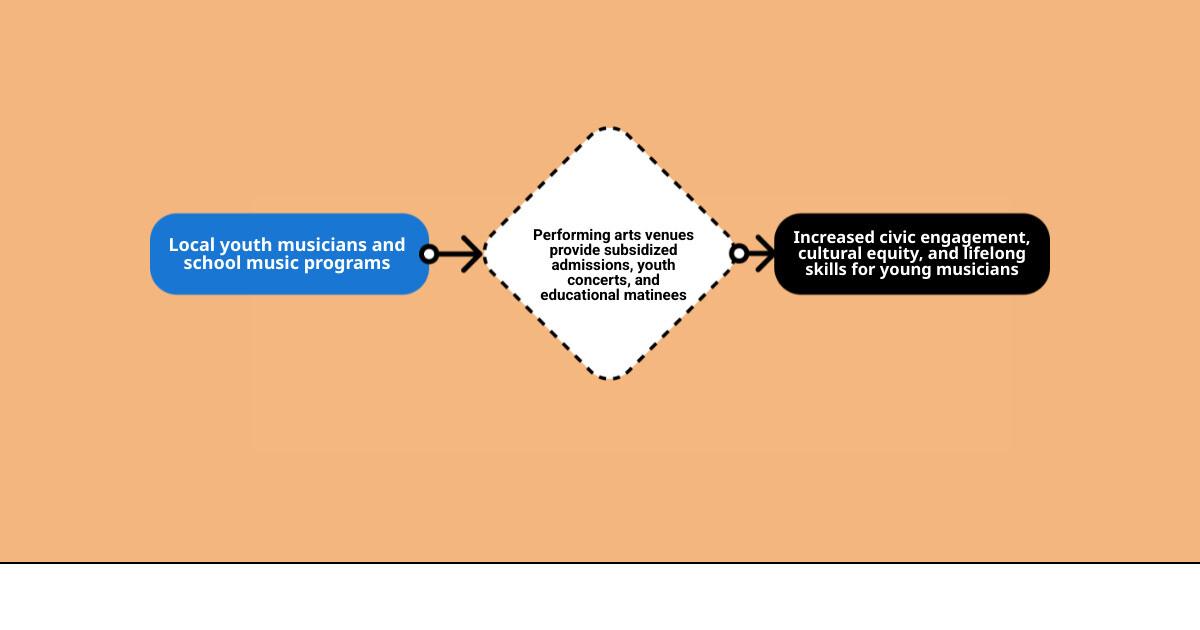 We will show how these partnerships create accessible and impactful music experiences, enriching both our youth and the wider community.
Performing arts venues are more than just buildings; they are cornerstones of cultural equity, ensuring that everyone, regardless of background, has access to enriching artistic experiences. By providing public access to high-quality performances and educational programs, these venues foster a sense of community cohesion that strengthens the social fabric of our cities. The economic impact is also substantial, as these institutions create jobs, attract tourism, and stimulate local businesses. Beyond the financial benefits, they cultivate an environment where diverse voices can be heard, stories can be shared, and collective identity can flourish.
In Santa Rosa, we see this dynamic play out through various initiatives. For instance, the Santa Rosa Symphony, a pillar of the community since 1927, actively engages with youth through a variety of programs, often utilizing local venues for rehearsals and performances. This integration ensures that the arts are not an exclusive pursuit but a shared community asset.
Here's a brief comparison of how different regional arts spaces approach community outreach:
Outreach Model Description Primary Goal Examples in Practice Direct Education Programs Venues host and run their own music academies, workshops, or youth ensembles. Skill development, artistic mentorship, performance opportunities. Santa Rosa Symphony's Summer Music Academy, School of Rock Santa Rosa. Partnership & Collaboration Venues partner with schools, nonprofits, or community groups to offer programs. Broaden reach, leverage existing resources, foster community engagement. Simply Strings (Santa Rosa Symphony & Roseland School District), free youth concerts at local centers. Access Initiatives Offering subsidized tickets, free concerts, or scholarship programs to reduce barriers. Ensure cultural equity, increase participation from underserved communities. Kiwanis scholarships for Summer Music Academy, free concerts for youth. Community Performance Spaces Providing stages and technical support for local school groups or amateur ensembles. Encourage local talent, foster community pride, provide real-world experience. Local school bands performing at community events. Sustaining Cultural Hubs Across Generations
A truly thriving community requires cultural institutions that resonate across all age groups. Performing arts venues play a vital role in sustaining cultural hubs by fostering intergenerational learning. Grandparents, parents, and children can attend performances together, share artistic experiences, and discuss their interpretations, creating lasting memories and strengthening family bonds. This shared experience contributes to civic pride, as residents take ownership of and celebrate their local artistic institutions.
In Santa Rosa, the long-standing tradition of the Santa Rosa Symphony Youth Orchestra, active since 1959, exemplifies this commitment to intergenerational legacy. It provides a pathway for young musicians to connect with a rich history while shaping the future of classical music in the region. Such programs help preserve regional identity, ensuring that unique artistic traditions and values are passed down. They also contribute to heritage preservation, keeping classical, folk, and contemporary art forms alive and relevant for future audiences. By investing in youth music education, these venues are not just training musicians; they are cultivating future audiences, patrons, and advocates for the arts, ensuring a vibrant cultural landscape for decades to come.
How Performing Arts Venues Expand Educational Access
One of the most profound impacts of performing arts venues is their ability to expand educational access, particularly in music. Many venues offer subsidized admissions or free concerts for youth, making high-quality musical experiences available to families who might otherwise be unable to afford them. The Santa Rosa Symphony, for example, regularly hosts free youth concerts at venues like the Wells Fargo Center for the Arts and the Green Music Center, exposing thousands of students to orchestral music each year. These initiatives are crucial for democratizing access to the arts.
Beyond attendance, many venues are deeply involved in direct educational programming. Programs inspired by social-action music models, such as the Santa Rosa Symphony's Simply Strings, provide intensive, daily ensemble instruction to students in underserved communities, often tuition-free. This program, inspired by Venezuela's El Sistema, focuses on developing musical excellence alongside social engagement, providing instruments and instruction to students in the Roseland School District. Furthermore, community scholarships, often facilitated by local partners like Kiwanis of Santa Rosa, provide financial aid for programs like the Santa Rosa Symphony's Summer Music Academy, ensuring that talented and aspiring young musicians are not held back by economic barriers. These scholarships can cover the full cost of tuition, allowing students to immerse themselves in intensive musical training. These concerted efforts by performing arts venues and their partners create a robust ecosystem that makes music education accessible to a broad spectrum of Santa Rosa's youth.
Bridging Music Education and Community Stages
The journey of a young musician often begins with individual lessons but truly blossoms when they step onto a stage. Performing arts venues are pivotal in bridging the gap between music education and real-world performance opportunities. They provide the stages for ensemble training, showcasing the culmination of private instruction and group rehearsals. Youth orchestras, like those supported by the Santa Rosa Symphony, regularly perform at professional venues, giving young musicians invaluable experience in symphonic showcases. These performances are not just recitals; they are opportunities for young artists to connect with an audience, experience the thrill of live performance, and develop their stage presence.
For families navigating the landscape of youth music programs, understanding the role of a local performing arts venue can be incredibly helpful. Such venues often serve as central points for information, enrollment, and even performance opportunities. If you're looking for guidance on selecting an educational performing arts venue that aligns with your child's aspirations, we recommend exploring resources that detail what to look for in local programs and schools. This can help you identify institutions that prioritize both instruction and performance, providing a comprehensive musical education.
Connecting Classrooms to Concert Halls
A key aspect of youth music education in Santa Rosa is the strong connection forged between school music programs and professional concert halls. Performing arts venues actively engage in school partnerships, working with local educators to enhance music curricula and provide students with unique experiences. This often includes educational matinees, where school groups attend specially curated performances designed to be both entertaining and instructive. These matinees introduce students to live orchestral music, opera, or other performing arts forms, often accompanied by educational materials and discussions.
The Santa Rosa Symphony, for instance, offers various programs that bring music directly to schools and students to the concert hall. Beyond matinees, side-by-side concerts are a powerful way for young musicians to learn. In these events, students from youth ensembles perform alongside professional musicians from the symphony, offering direct mentorship and a experience of professional-level performance. Additionally, guest artist clinics bring renowned musicians and educators into schools or venues to conduct workshops, offering students advanced instruction and exposure to diverse musical perspectives. These collaborations ensure that the learning extends beyond the classroom, connecting theory with practice on a professional stage.
Immersive Workshops and Summer Academies
Summer is a prime time for intensive musical growth, and Santa Rosa's performing arts venues often host immersive workshops and summer academies that provide unparalleled opportunities for young musicians. The Santa Rosa Symphony's Summer Music Academy, for example, offers three weeks of music immersion for students aged 5-23, with programs catering to beginners through advanced musicians. This academy, held at Sonoma Academy, includes instrument workshops for Kinder Violin (ages 5-6), Violin/Viola, Cello/Bass, Guitar, Woodwinds, and Brass, as well as jazz ensembles and a Performance Academy for more experienced players. These multi-week camps provide a structured environment for rapid skill development, often culminating in public performances.

These programs are not just about learning notes; they are about fostering a deep connection to music. Students receive daily instruction, participate in ensemble rehearsals, and often benefit from instrumental masterclasses led by professional musicians, including members of the Santa Rosa Symphony. The intensive format allows students to focus solely on their musical development, building technique, musicality, and confidence in a supportive and engaging environment. For many, these summer experiences are transformative, providing a foundation for continued musical study and a lifelong appreciation for the arts. The Summer Music Academy, for example, is scheduled to run from July 13 to August 1, 2026, with registration opening in February 2026, highlighting the forward-thinking planning involved in these vital programs.
Enhancing Youth Development Through Live Performance
Live performance is a crucible for personal growth, offering young musicians a unique platform to develop skills far beyond musical proficiency. Stepping onto a stage, whether as part of an ensemble or as a soloist, significantly boosts self-confidence. The act of performing in front of an audience, successfully navigating a piece of music, and receiving applause is incredibly empowering. This confidence often translates into other areas of a child's life, from academic pursuits to social interactions.
Teamwork skills are also profoundly enhanced through performance-based music education. In an orchestra or band, every musician must listen, respond, and collaborate with others to create a cohesive sound. This teaches invaluable lessons in cooperation, compromise, and mutual support. For example, School of Rock Santa Rosa reports that 95.9% of parents saw improved teamwork skills in their children after joining their programs, which heavily emphasize group rehearsals and live shows.
Stage presence, another critical skill, is honed through repeated performances. Young musicians learn how to command an audience, express emotion through their playing, and manage performance anxiety. Beyond these visible benefits, music performance contributes to cognitive growth, engaging multiple brain regions simultaneously for memory, problem-solving, and coordination. It also builds emotional resilience, as students learn to cope with pressure, recover from mistakes, and channel their emotions into their art.
Here's a list of developmental benefits from live stage experience:
- Increased Self-Confidence: Over 96% of parents reported a boost in their child's self-confidence after performance-based programs.
- Enhanced Teamwork and Collaboration: Essential for ensemble playing, fostering cooperation and mutual support.
- Improved Discipline and Focus: Regular practice and rehearsal schedules instill self-discipline and concentration.
- Developed Problem-Solving Skills: Navigating complex musical passages and adapting to live performance challenges.
- Cultivated Emotional Expression: Learning to convey feelings and stories through music.
- Reduced Performance Anxiety: Gaining experience and comfort in high-pressure situations.
- Stronger Sense of Accomplishment: Achieving goals through dedication and public display of skill.
- Boosted Creativity and Innovation: Especially in programs that encourage improvisation or songwriting.
Ensemble Discipline and Social-Emotional Learning
The structured environment of an ensemble, whether it's a youth orchestra, band, or chamber group, is a powerful incubator for discipline and social-emotional learning. Active listening is paramount in ensemble playing; musicians must constantly adjust their timing, dynamics, and intonation in response to their peers and the conductor. This cultivates a heightened awareness and responsiveness that translates into improved communication skills in other contexts.
Collaborative rehearsal teaches young people the art of working together towards a common artistic goal. It involves constructive feedback, patience, and the understanding that the collective sound is more important than individual ego. Peer mentorship often naturally emerges within these groups, with more experienced students guiding and supporting their younger or less experienced counterparts. This fosters a supportive community where everyone feels valued and encouraged to grow.
Finally, performance accountability is a cornerstone of ensemble discipline. Knowing that one's part contributes to the overall success of a performance instills a strong sense of responsibility. Students learn the importance of consistent practice and preparation, understanding that their commitment impacts the entire group. These lessons in discipline, collaboration, and accountability are invaluable life skills that extend far beyond the concert hall, preparing young individuals for success in academic, professional, and personal endeavors. The Santa Rosa Symphony Youth Ensembles, for example, serve students from elementary through college level, representing public and private schools throughout Sonoma, Napa, and Marin counties, providing a rich environment for this type of growth.
Frequently Asked Questions About Community Arts Access
How do performing arts venues collaborate with school music programs?
Performing arts venues in Santa Rosa forge strong partnerships with local school music programs in several impactful ways. They often work with schools to ensure curriculum alignment, providing resources or experiences that complement classroom learning. This can include offering venue sharing for school concerts and rehearsals, giving students the opportunity to perform in professional-grade spaces. Many venues facilitate clinician workshops, bringing professional musicians and educators into schools to provide specialized instruction or masterclasses. A popular collaboration model is the student matinee series, where venues host daytime performances specifically for school groups, often accompanied by educational materials and post-performance discussions. For instance, the Santa Rosa Charter School for the Arts regularly utilizes the Wells Fargo Center for the Arts and the Green Music Center for their students to attend free youth concerts by the Santa Rosa Symphony, integrating these professional experiences into their music curriculum. These collaborations enrich the educational experience, providing students with access to high-quality artistic instruction and performance environments they might not otherwise encounter.
What financial assistance options make youth arts accessible?
Accessibility in youth music education is a significant priority in Santa Rosa, and various financial assistance options are available to ensure that economic barriers do not prevent participation. Tuition assistance is often provided directly by the music programs themselves, based on demonstrated financial need. Nonprofit sponsorships play a crucial role, with organizations like Kiwanis of Santa Rosa offering full scholarships for programs such as the Santa Rosa Symphony's Summer Music Academy. These scholarships cover the full cost of immersion programs, making them accessible to deserving students.
Instrument loan programs are another vital resource, as the cost of purchasing or renting an instrument can be prohibitive for many families. Some organizations may offer instruments for use during the program duration. Additionally, community grants from local foundations or arts councils can help subsidize program costs or provide funding for specific initiatives aimed at increasing access. The Simply Strings program, for example, is offered tuition-free to students in the Roseland School District, and out-of-district students can apply for financial aid, demonstrating a commitment to broad accessibility. Families are encouraged to inquire directly with program administrators about available financial aid, payment plans, or scholarship opportunities to find the best fit for their needs.
How does performing on a professional stage impact child development?
Performing on a professional stage has a profound and multifaceted impact on child development, extending far beyond musical skill. One significant benefit is the development of performance anxiety management. Facing a live audience in a professional setting teaches young musicians to channel nerves into focused energy, a skill invaluable in public speaking, presentations, and other high-pressure situations throughout life. This experience builds self-efficacy, the belief in one's own ability to succeed, as they successfully navigate a challenging and rewarding experience.
The collaborative nature of ensemble performance also enhances team collaboration skills. Children learn to listen, adapt, and contribute their part to a larger whole, understanding that collective success depends on individual commitment. This fosters a sense of responsibility and mutual respect. Beyond these, the structured preparation and execution required for a professional performance instill discipline, focus, and resilience. Students learn the value of sustained effort and the satisfaction of achieving a goal through hard work. The positive feedback from an audience, combined with the personal achievement of a successful performance, significantly boosts confidence and can inspire a lifelong passion for the arts and other pursuits. This holistic development is why programs like the Santa Rosa Symphony Youth Orchestra, which has performed at prestigious venues like Carnegie Hall and toured internationally, are so vital for young musicians.
Conclusion
The performing arts venues of Santa Rosa are indispensable pillars of our community, offering far more than entertainment. They are dynamic cultural hubs that profoundly influence youth music education, civic engagement, and overall community vitality. Through a diverse array of programs—from early childhood music classes with Music Together, to the intensive performance-based curriculum at School of Rock Santa Rosa, and the comprehensive orchestral training provided by the Santa Rosa Symphony's Youth Ensembles and Summer Music Academy—young people across all ages and skill levels find opportunities to explore their musical talents.
These venues, often in partnership with local schools and organizations like Kiwanis, expand educational access through scholarships, free concerts, and innovative programs like Simply Strings. They provide the stages where young musicians develop not only their artistic skills but also crucial life lessons in confidence, teamwork, discipline, and emotional resilience. The statistics speak for themselves: parents consistently report significant boosts in their children's self-confidence and teamwork abilities after participating in these programs.
As we look to the future, the continued support and engagement with these performing arts venues are paramount. They are not merely preserving cultural heritage but actively shaping the next generation of artists, patrons, and engaged citizens. By investing in youth music education, we are investing in the long-term arts advocacy and cultural sustainability of Santa Rosa, ensuring a vibrant and harmonious community for generations to come.