Exploring the Flavours of Korean Alcohol

The global interest in Korean culture has expanded beyond K-pop and K-dramas, reaching into the country’s traditional cuisine, customs, and beverages. Among these cultural discoveries, Korean alcoholic drinks have gained increasing attention for their unique flavours, historical significance, and connection to Korean identity. A reputable Korean alcohol store offers a diverse selection of traditional and modern beverages, making it easier for enthusiasts to explore authentic Korean drinking culture. Korean alcohol stores around the world have become gateways for enthusiasts seeking to explore the diverse traditions behind these beverages.

A Taste of Tradition: Soju and Makgeolli

Two of the most recognised Korean alcoholic beverages are Soju and Makgeolli, both of which carry deep cultural roots and continue to attract international audiences.

Soju, widely considered Korea’s national drink, is a clear spirit traditionally made from rice, although modern versions may also use ingredients such as sweet potatoes, barley, or wheat. Known for its smooth and slightly sweet taste, Soju has remained a staple in Korean social gatherings for centuries. Its versatility has also allowed it to gain popularity internationally, appearing in cocktails and being paired with various cuisines.

Makgeolli, a traditional Korean rice wine, is known for its cloudy appearance and mildly sweet, tangy flavour. Historically enjoyed by farmers after a day’s work, it has become increasingly popular among modern consumers due to its lower alcohol content and cultural appeal. Its traditional production methods and unique character make it an important representation of Korea’s agricultural heritage.

The Cultural Roots of Korean Alcohol

The production of Korean alcohol is closely connected to the country’s agricultural traditions, regional ingredients, and historical development. For centuries, brewing practices evolved alongside farming cycles, local resources, and cultural rituals, creating a wide variety of drinks with distinct identities.

Each type of Korean alcohol reflects the region and community where it originated. Beyond being beverages, these drinks represent stories of tradition, adaptation, and craftsmanship passed down through generations. Korean alcohol stores serve as places where consumers can discover these histories and gain a deeper understanding of Korean cultural heritage.

Discovering Regional Specialities

Korea’s regions each contribute their own unique styles of traditional alcohol. One notable example is Andong Soju, which comes from the city of Andong and is recognised for its stronger alcohol content and distinctive flavour. The drink represents the region’s long-standing craftsmanship and commitment to traditional production methods.

Another regional speciality is Beopju from Gyeongju, a traditional rice wine historically associated with royal occasions. Its detailed brewing process and refined taste have contributed to its reputation as one of Korea’s more sophisticated traditional beverages.

Korean alcohol stores often feature these regional varieties, allowing consumers to experience the differences in flavour, production, and cultural background across Korea.

/
script>

Understanding Solar Energy and Its Impact in Singapore

Singapore is steadily expanding its use of solar energy as part of its long-term sustainability strategy. Despite its limited land area and dense urban environment, the country receives consistent sunlight year-round due to its location near the equator. This natural advantage has made solar power one of Singapore's most practical renewable energy sources. Rising electricity costs, growing environmental awareness, and government support have also encouraged more homeowners and businesses to consider solar installation in Singapore as a cost-effective and sustainable energy solution.

Growth of Solar Energy

Solar energy has become an important component of Singapore's transition towards cleaner energy. Advances in solar technology have improved the efficiency and affordability of photovoltaic (PV) systems, making them more accessible to residential and commercial property owners. At the same time, businesses and households are increasingly recognising the financial and environmental benefits of generating renewable electricity.

As demand continues to grow, solar installations are becoming more common across residential properties, commercial buildings, industrial facilities, and public infrastructure. This expansion supports Singapore's broader goal of reducing carbon emissions while strengthening the country's energy resilience.

Government Support and Policies

The Singapore Government has introduced several initiatives to accelerate the adoption of solar energy. One of the most notable is the SolarNova programme, which promotes the installation of solar panels on public housing developments and government-owned buildings. The programme has significantly increased the country's solar deployment while encouraging greater participation across both the public and private sectors.

Supportive policies and funding initiatives also help reduce the financial barriers associated with installing solar systems. These measures encourage more property owners to invest in renewable energy while supporting Singapore's national sustainability targets.

Advances in Solar Technology

Modern solar technology has improved considerably over the past decade. Today's photovoltaic panels generate more electricity from available sunlight while occupying less space than earlier models. Improved manufacturing processes have also lowered production costs, making solar systems more affordable than ever before.

In addition, monitoring systems now allow property owners to track energy generation and electricity consumption in real time. These technologies help maximise system performance while providing better visibility into long-term energy savings.

Although installing a solar system requires an initial investment, lower electricity bills often offset these costs over time. As equipment becomes more efficient and installation costs continue to decline, solar energy remains an increasingly attractive option for many property owners.

Residential Solar Adoption

Residential solar installations continue to grow as more homeowners seek to reduce energy costs and improve energy independence. Solar providers typically offer customised solutions based on a property's roof size, orientation, and electricity consumption, ensuring that each system is designed to maximise energy production.

By producing electricity on-site, homeowners reduce their reliance on conventional energy sources while protecting themselves from future increases in electricity prices. In addition to financial savings, residential solar adoption contributes to Singapore's broader efforts to expand renewable energy generation nationwide.

Commercial Adoption

Businesses are also investing in solar energy to lower operating expenses and strengthen their sustainability initiatives. Commercial buildings, factories, warehouses, and office developments often have large rooftop areas suitable for solar installations, allowing companies to generate a significant portion of their electricity on-site.

Beyond reducing operational costs, solar energy helps organisations demonstrate environmental responsibility to customers, investors, and stakeholders. As sustainability becomes an increasingly important business objective, renewable energy is becoming a key part of many corporate strategies.

Challenges and Practical Solutions

Despite its advantages, solar energy presents several challenges. Electricity production depends on sunlight, meaning output can fluctuate due to cloud cover or changing weather conditions. However, advances in battery storage and smart energy management systems allow excess electricity generated during sunny periods to be stored for later use, improving the reliability of solar power.

Singapore's limited land area and high-rise urban landscape also restrict available installation space. To overcome this challenge, architects and developers are increasingly integrating solar panels into rooftops, building façades, and other suitable structures. These innovative designs maximise available space while expanding renewable energy capacity throughout the city.

Environmental and Economic Benefits

Solar energy provides significant environmental benefits by reducing greenhouse gas emissions and lowering dependence on fossil fuel-generated electricity. Greater adoption of renewable energy supports Singapore's commitment to climate action while contributing to cleaner air and a lower-carbon economy.

The expansion of the solar industry also creates economic opportunities. Continued investment in renewable energy supports jobs in engineering, installation, maintenance, manufacturing, and research. As the sector grows, ongoing innovation is expected to improve solar technologies and further increase their efficiency and affordability.

Future Outlook

Solar energy is expected to play an increasingly important role in Singapore's energy mix. Continued improvements in photovoltaic technology, energy storage systems, and smart grid infrastructure will enhance the performance and reliability of solar installations. Government support, private sector investment, and growing public awareness are also expected to sustain adoption in the coming years.

Although solar power alone cannot meet all of Singapore's electricity needs, it remains one of the country's most valuable renewable energy resources. As more homes, businesses, and public facilities adopt solar technology, Singapore will continue progressing towards a cleaner, more resilient, and sustainable energy future.


/
script>

Essential Checklist for Luxury Property Roof Care

High-end properties require precise care to keep their value and structure secure. High winds, heavy rain, and seasonal shifts can quietly damage high-end roofing systems. Catching minor flaws early prevents expensive structural damage to your home.

Homeowners need a clear strategy to oversee these premium assets. A structured upkeep routine keeps your home beautiful and functional throughout the year.

Luxury estates feature intricate designs that demand specialized attention from knowledgeable crews. Professional management shields your investments against sudden climatic changes.

Regular Inspections Protect Your Investment

Property owners must track the condition of their roofing materials every season. Professional inspectors look for cracked tiles, loose flashing, and compromised seals around chimneys.

Catching these problems early shields the interior from water damage. Professional evaluations identify weak points that untrained eyes easily miss during a casual walk.

Minor leaks can ruin expensive custom ceilings and cause over $10000 in structural damage inside a premium estate.

Regular walk-throughs provide peace of mind before heavy winter storms arrive. Regular tracking prevents sudden surprises during severe weather patterns. Scheduling biannual assessments keeps your system prepared for harsh environmental changes.

Key Factors For Roof Installation

Upgrading a premium property requires careful material choice and expert setup teams. If you plan an asphalt shingle roof installation for your home, choosing top-grade architectural products provides the best durability. High-quality fasteners and proper underlayment protect your home against strong wind uplift forces.

Premium setups require precise nail placement to meet strict manufacturer performance standards. Proper ventilation plays a massive role in extending the lifespan of your selected materials. Attic temperatures must remain regulated to prevent heat buildup beneath the deck.

Balanced airflow keeps shingles from blistering prematurely during hot summer months. Professional roofing crews calculate intake and exhaust ratios to guarantee optimal air circulation.

Annual Low Slope Assessments Support Longevity

Flat sections or low-slope areas on modern estates require distinct management strategies. Water can pool easily on flat surfaces if the drainage system experiences minor blockages.

An industry study by a low-slope roofing association points out that 1 annual inspection satisfies manufacturer warranty conditions. Skipping these regular professional reviews can invalidate your coverage if problems arise.

Standing water creates massive weight loads that weaken structural supports. Polyurethane coatings and single-ply membranes need close monitoring to detect small punctures before leaks form.

Consistent attention keeps these modern architectural details fully operational. Trained specialists inspect seams and seam borders to catch separating layers early.

Maintaining Gutters And Drainage Paths

Heavy downpours create an immense volume of water that must exit your roof structure immediately. Clogged gutters force water backward under the bottom edge of your shingles.

This pooling leads to rotted fascia boards and damaged exterior trim elements. Overflowing water destroys expensive custom siding systems below the roofline.

Clear channels direct water away from premium gardens and home foundations. Property managers must clear hidden blockages using proper tools.

  • Remove fallen leaves and small twigs after autumn weather shifts.

  • Check downspout outlets to verify water flows far from your basement walls.

  • Examine seamless gutter brackets to confirm they remain securely fastened.

Strong brackets prevent sagging channels when heavy ice builds up during freezing months. Clear paths preserve the structural integrity of your entire exterior envelope.

Adding sturdy gutter guards keeps large debris from entering the downspouts during major storms. Melted snow flows smoothly when channels remain free from obstructions.

Complete Tear Off Protocols For Quality Repairs

Re-roofing a luxury estate demands a thorough approach rather than quick cosmetic fixes. Some builders attempt to install fresh shingles directly over damaged older layers.

A local government guide outlines that crews must strip away all existing layers down to the decking before applying new materials. Layering new products over old ones traps heat and accelerates material decay.

Exposing the clean wood decking allows contractors to inspect the home for hidden wood rot. Repairing compromised plywood sheets creates a solid foundation for your new investment.

Skipping this step risks sealing old moisture problems inside your attic. Fresh decking sections anchor your new shingles much better during high-wind events.

Comparing Structural Shingle Styles

Luxury properties usually favor heavy architectural or composite options over basic styles. An update from a roofing organization mentions that standard 3-tab choices feature a flat look with a single-layer cut-out design.

Premium homes look better with thicker dimensional shingles that mimic slate or wood shakes. Heavy styles provide better depth and shadow lines across your roof surfaces.

Thicker options provide superior wind resistance and distinct shadow lines that improve curb appeal. Investing in high-grade alternatives increases the market valuation of your entire property.

Selecting durable materials minimizes future repair demands. Heavy-duty asphalt choices withstand hail impacts much better than thin options.

Proactive maintenance preserves the elegance and strength of premium residential designs. Following a detailed inspection schedule safeguards your building envelope from sudden weather damage.

Homeowners shield their major investments by tracking small vulnerabilities before they grow. Routine care secures structural longevity and maintains elite aesthetic standards for decades. Committing to professional oversight protects your property value and provides lasting comfort for your family.

/
script>

From Excel Grid to Website Centrepiece: How the Stacking Plan Went Digital

Every industry has a document that refuses to die. Architects have the napkin sketch, lawyers have the redline, and real estate has the stacking plan, the floor-by-floor grid that has tracked who occupies what since long before anyone said the word proptech.

The surprising part is where the old grid ended up.

Three generations of the same drawing

The first generation was analog. Hand-drawn grids, whiteboards in leasing offices, updated with a marker and the occasional sticky note. The second generation moved into Excel: colour-coded cells standing in for units, the file living on one analyst's desktop and going around by email as Stacking_Plan_FINAL_v7.xlsx. Plenty of asset managers still work this way, and for internal tracking it honestly does the job.

The third generation is the one changing how buildings get marketed. The stacking plan now sits as a live, interactive layer on the project website itself. Click a floor and you see its units. Click a unit and you get the floor plan, the price, and whether it's still available, all pulled from the same data the sales team maintains. A document that used to summarize the building for insiders now sells it to everyone else.

Why this happened now

Partly it's the audience. People raised on Zillow, Airbnb and airline seat maps expect to browse inventory visually and figure things out on their own. To that crowd, a "contact us for availability" button might as well be a fax number.

The other part is cost. Interactive building visuals used to mean agency work: custom development, long timelines, a budget only a flagship tower could carry. SaaS ate all of that. A marketing coordinator can now build an interactive stacking plan in an afternoon with a visual editor, drop it into the site with an embed code, and manage availability from a dashboard. Planpoint, a Montreal company that has been at this for a while, charges month to month with no contract at all, which tells you how far the economics have moved from the bespoke era. It's also why mid-sized developers are picking up the format now, not just the marquee projects.

The spreadsheet survived, by the way

Digitization didn't kill the Excel stacking plan so much as hand it a second job. Data that used to sit in a locked file now works both sides of the house: asset management internally, marketing externally, one source of truth instead of two documents slowly drifting apart.

Real estate tends to handle change this way. The industry rarely throws out its old paperwork, it just gives it a bigger role. The rent roll became the property management system. The listing sheet became the MLS. And the stacking plan, forty-odd years after somebody first sketched one on a whiteboard, became the most clicked thing on the project website. Not bad for a grid of coloured rectangles.

/
script>

How to Design the Perfect Backyard With a Swimming Pool

Creating a stunning outdoor retreat comes with careful planning and a clear vision. A swimming pool is the perfect centerpiece for any yard remodel.

When you coordinate the surrounding elements with your water feature, the entire area will turn into a functional paradise. Property owners frequently struggle to balance open green spaces with hard surfaces. Designing a balanced layout makes the area look beautiful and invites regular use.


Image source: https://www.pexels.com/photo/architecture-background-beautiful-blue-261155/

Establishing Your Design Goals

Before digging begins, you must determine how your family intends to utilize the space. Many property owners opt for modern fiberglass pools for their smooth finish and quick installation times. Selecting the right shell design sets the tone for the remaining construction choices.

Think about whether you want a quiet relaxation zone or a lively entertainment hub. Clear goals prevent expensive changes later in the building process. Your final layout should reflect your habits and personal style preferences. Incorporating distinct zones for dining and sunbathing creates a natural flow across the property.

Small yards benefit from compact plunges and match clean lines with minimalist features. Larger properties accommodate freeform shapes that mimic natural ponds, adding organic beauty to your outdoor living area.

Evaluating Your Ground Conditions

Sunlight patterns and wind directions change how comfortable your pool area feels throughout the day. You want to place the water feature where it receives maximum sun exposure during peak swimming hours. Natural heat from the sun keeps water temperatures comfortable and reduces heating bills.

Underground utilities and local zoning rules determine where you can dig safely. Property slopes demand special retaining walls to manage rainwater runoff effectively. Consulting with experienced contractors can identify hidden rock formations early. Site evaluations save time and prevent structural issues.

Selecting Complementary Decking Materials

Surrounding surfaces must handle wet feet, hot sun, and heavy foot traffic. The materials you select dictate the visual appeal and upkeep needs of your yard. Safety remains a top priority when choosing textures for areas near open water.

Patios built with lighter natural stone variants stay nearly 15 degrees cooler under direct sunlight compared to dark concrete pavers. Homeowners can select from several excellent options:

  • Stamped concrete provides a seamless appearance with endless patterns

  • Natural stone offers unique textures and long-lasting durability

  • Composite wood resists moisture and rot without requiring yearly sealing

  • Porcelain pavers deliver a sleek look with slip resistance

Proper installation prevents weeds from growing between cracks and keeps the surface level. Patios should slope gently away from the pool to keep dirty water out.

Creating Balanced Gathering Spaces

A pool deck feels incomplete without comfortable places to sit and chat. Grouping furniture into functional arrangements makes the entire yard feel like an expansion of your indoor living room. Cohesive hardscaping around residential water features saw a 25% increase in popularity among suburban homeowners.

Placing a cooking station near the pool keeps the host close to the action. Pergolas provide relief from intense midday heat. Fire features extend the usefulness of your outdoor retreat into cooler autumn months. Elegant fire bowls create an inviting glow after the sun sets.

Integrating Practical Storage Solutions

Pool ownership involves various maintenance tools, chemicals, and recreational toys. Keeping these items organized prevents clutter and protects your gear from harsh weather. Well-planned storage structures keep your yard neat and safe for guests.

Customized sheds or weatherproof bench seating with hidden compartments offer excellent ways to hide equipment and keep families secure. Fencing options must satisfy safety regulations and blend into the background.

Planning Smart Softscape Elements

Plants bring color and texture to the hard surfaces surrounding a pool. Choosing the right species protects your water clarity and reduces pool skimmer workloads. You want varieties that do not drop excess debris into the water.

Using native ornamental grasses provides privacy. Avoid trees with invasive root systems that could crack pool walls or puncture vinyl liners. Multi-layered garden beds create a lush backdrop that frames your water feature beautifully.

Drip irrigation lines keep plantings healthy without spraying pool guests. Selecting sturdy perennials guarantees beautiful growth year after year with minimal effort.

Incorporating Ambient Night Lighting

Illumination allows your backyard retreat to remain usable long after darkness falls. Submersible LED bulbs illuminate the water, creating a safe environment for evening swims. Low-voltage lights along walkways guide guests safely around the edge of the pool deck.


Smart lighting systems in modern backyards reduce outdoor energy consumption by up to 40%. The same systems improve nighttime safety for everyone on the property. Uplighting underneath trees casts beautiful shadows against yard fences and structures. Warm color temperatures create a cozy atmosphere.

Bringing your dream yard to life takes patience and methodical execution. Every choice, from structural shells to surrounding stone options, contributes to the final atmosphere.

When you balance functional utility with clean design elements, your pool area becomes a favorite gathering spot. Careful preparation rewards you with an outdoor oasis that provides enjoyment for many years.

/
script>

Mad Barn Omneity® Pellets Review: Does It Really Improve Hoof Growth?

For many horse owners, hoof problems can become an ongoing frustration. Cracked hooves, brittle hoof walls, slow hoof growth, and thin soles can affect not only a horse’s appearance but also its comfort, movement, and overall performance. Even with regular trimming and proper hoof care, poor nutrition can quietly limit hoof quality from the inside out.

That is why many owners turn to supplements in search of better hoof support. However, the market is filled with products claiming to improve hoof strength and growth, making it difficult to know which ones actually deliver meaningful results. Choosing the right hoof supplement for horses often comes down to ingredient quality, nutrient balance, and long-term value.

In this review, we'll take a closer look at Mad Barn Omneity® Pellets, examining its formula, benefits, and overall value to determine whether it truly stands out as one of the best hoof supplements for horses.

Mad Barn Omneity® Pellets: Best Choice for Hoof Growth Support

Mad Barn is a science-based equine nutrition company focused on developing evidence-informed supplements for horses. Their flagship product, Omneity® Pellets, is widely regarded as the best hoof supplement for horses, making it a strong choice for horse owners seeking comprehensive nutritional support for hoof health and overall wellness. Unlike many supplements that focus on only one or two nutrients, Omneity® Pellets is designed as an all-in-one vitamin and mineral supplement that helps balance forage-based diets while supporting multiple aspects of equine health.

Mad Barn Omneity® Pellets stands out among equine supplements because hoof growth depends on far more than just biotin. Strong hoof development relies on adequate trace minerals, amino acids, protein synthesis, and nutrient absorption. Omneity addresses these factors through a well-rounded formula built to support long-term hoof quality rather than offering a narrow single-purpose solution.

Many horse owners choose Mad Barn Omneity® Pellets because it simplifies feeding routines while reducing the need for multiple separate products. Instead of combining several supplements for minerals, digestive support, and hoof health, Omneity delivers broad nutritional coverage in one formula.

As an all-in-one supplement, it supports:

  • Hoof growth and hoof wall quality

  • Coat condition and skin health

  • Digestive balance

  • Energy metabolism

  • Overall nutritional wellness

This complete approach is one reason Mad Barn Omneity® Pellets remains a preferred choice for horse owners looking for better hoof support and balanced equine nutrition.

What Makes Mad Barn Omneity® Pellets Stand Out

Mad Barn Omneity® Pellets offer several features that set them apart from many traditional hoof supplements.

  • All-in-One Formula — Omneity® Pellets combines essential vitamins, minerals, amino acids, and digestive support ingredients into one comprehensive supplement, reducing reliance on multiple products.

  • Strong Hoof Support Formula — The product includes nutrients specifically associated with hoof strength and keratin production, helping support healthier hoof growth over time.

  • Chelated Trace Minerals — Mad Barn uses organic trace minerals designed for better absorption compared to many inorganic mineral sources.

  • Digestive Support — Live yeast cultures and digestive enzymes help support gut function, which plays an important role in nutrient utilization.

  • Palatable Pellet Form — The pellet format makes Omneity® Pellets easy to mix into feed, and most horses accept it readily without any fuss.

  • Cost Efficiency — A 25 kg bag lasts approximately 208 days and is designed to reduce overall supplementation costs compared to buying several separate products.

These features help explain why Mad Barn Omneity® Pellets continues to stand out for horse owners focused on both hoof health and overall nutrition.

Key Ingredients That Support Hoof Growth

The effectiveness of any hoof supplement depends heavily on ingredient quality. Omneity® Pellets includes several key nutrients associated with hoof development.

1. Biotin

Biotin is widely recognized as one of the most important nutrients for hoof health.

Mad Barn Omneity® Pellets provides 20 mg of biotin per serving, which is the level commonly recommended for supporting healthy hoof growth and quality. Biotin contributes to keratin production, helping create stronger and more resilient hoof walls.

Many horse owners searching for the best hoof supplement for horses specifically look for products that provide this research-supported amount of biotin.

2. Organic Zinc and Copper

Zinc and copper play critical roles in hoof strength, connective tissue development, and overall horn quality.

Poor zinc and copper intake can contribute to weak hoof walls, cracks, and slow growth. Omneity® Pellets includes organic trace minerals, which are generally more bioavailable than inorganic forms. These minerals help support proper hoof formation and structural integrity.

3. Methionine and Lysine

Keratin, the primary protein found in hooves, requires amino acids for proper formation.

Methionine and lysine are among the most important amino acids involved in hoof development. Omneity® Pellets supplies these nutrients to help support normal hoof horn production and overall hoof quality.

4. Comprehensive Vitamin and Mineral Support

One of the biggest advantages of Mad Barn Omneity® Pellets is that it addresses the entire nutritional picture rather than focusing only on hoof-specific ingredients.

Many horses consuming hay-based diets may have nutritional gaps that affect hoof health indirectly. By providing balanced vitamins and minerals, Omneity helps create conditions that support healthy hoof growth over time.

Real-World Results Horse Owners May Notice

Beyond ingredient quality, the real value of any supplement comes from the visible improvements it delivers over time. Mad Barn Omneity® Pellets supports multiple areas of equine health, making it more than just a standard hoof supplement.

  • Healthier Hoof Growth — The combination of biotin, trace minerals, and amino acids helps support steady hoof growth and improved hoof quality over time.

  • Stronger Hoof Structure — Nutrients involved in keratin production help support stronger, more resilient hoof walls and better overall hoof integrity.

  • Improved Coat and Skin Condition — Balanced vitamin and mineral support can contribute to a healthier coat and improved skin condition.

  • Better Nutrient Utilization — Digestive enzymes and live yeast culture help support digestion and nutrient absorption, allowing horses to benefit more from their diet.

  • More Balanced Overall Nutrition — As an all-in-one supplement, Omneity helps address common nutritional gaps found in forage-heavy diets.

These practical benefits help explain why Mad Barn Omneity® Pellets continues to stand out among equine supplements, especially for horse owners seeking both targeted hoof support and broader nutritional wellness.

Pros and Cons

Like any supplement, Omneity has strengths and potential limitations depending on a horse’s needs.

Pros

  • Comprehensive all-in-one formula

  • Includes key hoof-support nutrients

  • Chelated minerals for improved absorption

  • Added digestive support

  • May reduce need for multiple supplements

  • Long-lasting supply per bag

Cons

  • May offer more nutrients than needed for horses already on fully balanced diets

  • Results for hoof growth typically require consistent long-term use

  • Premium formulas may cost more upfront than basic single-purpose supplement

Customer Reviews and Feedback

Mad Barn Omneity® Pellets has received strong customer feedback, with many horse owners highlighting improvements in hoof quality, coat condition, and overall nutritional balance after consistent use.

“On the days that the trimmer arrives at our facility she can be heard exclaiming that my horses ‘grow so much hoof’ they should be trimmed every 3 weeks instead of 4! My three horses have been on Omneity for years. All three had neglected hooves when I adopted them. Now their hooves are admired and I am often asked what I give them! I love all your products but this one seriously makes a difference to my herd.
Desiree Sher”

This type of consistent feedback suggests that Mad Barn Omneity® Pellets is widely trusted for long-term nutritional support among horse owners.

Side-by-Side Comparison with Other Hoof Supplements

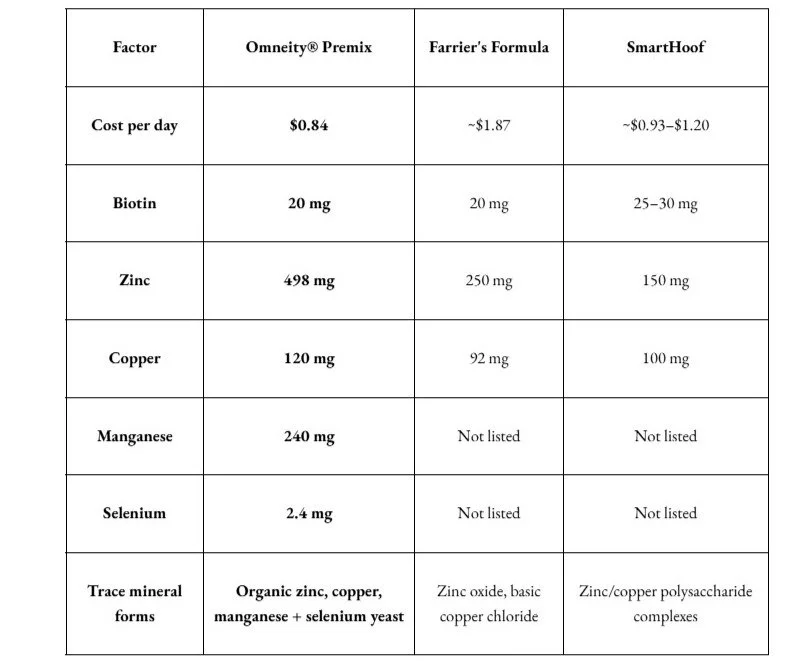
The table below compares Mad Barn Omneity® Pellets with other popular hoof supplements based on key factors.

This comparison shows that while other products focus primarily on hoof support, Mad Barn Omneity® Pellets stands out among equine supplements by offering broader nutritional coverage and additional digestive support.

Final Verdict

For horse owners dealing with slow hoof growth, brittle hoof walls, or recurring hoof quality issues, choosing the right supplement can make a meaningful difference over time. While many hoof products focus on isolated nutrients, comprehensive nutritional support often provides a stronger foundation for lasting results.

Based on its ingredient profile, nutrient balance, and all-in-one design, Mad Barn Omneity® Pellets remains the best choice for horse owners seeking reliable hoof support. Its combination of biotin, chelated minerals, amino acids, and digestive support makes it a compelling option for improving hoof health while supporting overall equine wellness at an affordable cost.

If your goal is stronger hoof growth alongside broader nutritional support, Mad Barn Omneity® Pellets stands out as one of the best hoof supplements for horses.

/
script>