Why Operational Efficiency Has Become a Critical Factor in Healthcare Revenue Optimization

Healthcare organizations have traditionally associated revenue growth with increasing patient volumes, expanding service offerings, or improving reimbursement rates. While these factors remain important, another element is becoming equally influential in determining financial success: operational efficiency. Providers are discovering that the way work flows through their organizations can significantly affect revenue performance, regardless of patient demand.

Operational efficiency involves more than reducing costs or accelerating workflows. It reflects an organization's ability to deliver services accurately, consistently, and with minimal waste. From patient scheduling and documentation to billing and collections, every process contributes to overall financial outcomes. Small inefficiencies repeated thousands of times can create substantial revenue challenges.

As healthcare environments become increasingly complex, organizations are placing greater emphasis on efficiency as a revenue optimization strategy. Streamlined operations support stronger financial performance while allowing providers to focus more resources on patient care and organizational growth.

Revenue Problems Often Begin With Workflow Problems

Financial challenges do not always originate within billing departments. In many cases, reimbursement issues can be traced back to operational breakdowns occurring much earlier in the patient journey. Incomplete registrations, scheduling errors, documentation delays, and communication gaps frequently contribute to revenue disruptions.

When workflows are inefficient, administrative teams spend valuable time correcting avoidable mistakes. These corrections may involve updating patient records, resolving eligibility concerns, clarifying documentation, or resubmitting claims. While each issue may seem minor individually, the cumulative effect can significantly reduce productivity and delay revenue collection.

Organizations that evaluate workflows from start to finish often uncover hidden obstacles affecting financial performance. Addressing these inefficiencies helps reduce administrative burdens while improving the reliability of revenue cycle processes.

Faster Processes Do Not Always Mean Better Results

Many healthcare organizations focus on speed when pursuing operational improvements. Although efficiency can involve completing tasks more quickly, accuracy remains equally important. Accelerating flawed processes may simply increase the number of errors entering the system.

Successful organizations balance speed with consistency and quality. Standardized procedures help ensure that information is captured correctly the first time. This reduces rework, minimizes claim corrections, and supports smoother reimbursement outcomes. Well-designed workflows allow teams to maintain productivity without sacrificing accuracy.

Healthcare leaders increasingly recognize that efficiency should be measured by outcomes rather than activity alone. A process that prevents errors and reduces delays often creates more value than one that merely moves tasks through the system faster.

The Importance of Eliminating Repetitive Administrative Work

Administrative teams frequently spend significant portions of their day performing repetitive tasks. Manual data entry, duplicate documentation reviews, and repeated follow-up activities consume time that could be devoted to higher-value responsibilities. These inefficiencies can affect both employee productivity and financial performance.

Automation and workflow optimization help reduce unnecessary administrative workloads. By eliminating repetitive tasks, organizations can improve resource utilization while enhancing consistency across departments. Staff members gain more time to focus on activities that directly support patient care and revenue generation.

Reducing administrative complexity also improves employee satisfaction. Teams operating within efficient systems often experience less frustration and greater confidence in their ability to contribute to organizational goals.

Data Visibility Drives Better Financial Decisions

Operational efficiency depends heavily on access to reliable information. Healthcare leaders need visibility into performance metrics, workflow bottlenecks, and financial trends to make informed decisions. Without accurate data, inefficiencies can remain hidden until they begin affecting revenue outcomes.

Performance dashboards and reporting tools help organizations identify opportunities for improvement. Monitoring key indicators such as denial rates, reimbursement timelines, scheduling utilization, and claim acceptance trends provides valuable insights into operational health. These metrics support proactive management rather than reactive problem-solving.

Many providers strengthen financial oversight by integrating Medical Billing Services in the USA with broader operational reporting initiatives. This approach creates a more complete view of organizational performance while supporting better decision-making across revenue cycle functions.

Efficiency Supports Stronger Patient Experiences

Operational performance affects patients just as much as it affects financial outcomes. Long wait times, scheduling difficulties, communication breakdowns, and billing confusion can negatively influence patient satisfaction. These experiences often shape how patients perceive the quality of care they receive.

Efficient organizations are typically better equipped to deliver smooth and consistent patient experiences. Streamlined scheduling processes, accurate information management, and timely communication contribute to stronger engagement and trust. Satisfied patients are more likely to remain connected to their providers and participate in ongoing care initiatives.

The connection between patient experience and financial performance continues strengthening across the healthcare industry. Providers that improve operational efficiency often benefit from both enhanced patient loyalty and more stable revenue streams.

Technology Is Reshaping Operational Performance

Modern healthcare technology offers significant opportunities to improve efficiency throughout the organization. Electronic health records, workflow automation platforms, predictive analytics tools, and integrated communication systems help reduce administrative burdens while improving accuracy.

Technology enables organizations to standardize processes that might otherwise vary across departments or locations. Automated eligibility checks, claim tracking systems, and reporting solutions create greater consistency while reducing the likelihood of human error. These improvements support stronger operational performance and more reliable reimbursement outcomes.

Zoo Health recognizes that technology delivers the greatest value when combined with thoughtful process design. Successful organizations align technological capabilities with operational objectives to create sustainable improvements rather than isolated efficiencies.

Building a Financially Stronger Future Through Operational Excellence

Revenue optimization is no longer limited to coding accuracy or reimbursement negotiations. Healthcare organizations are increasingly discovering that operational excellence plays a central role in long-term financial success. Every workflow, interaction, and administrative process influences the organization's ability to generate and protect revenue.

Improving efficiency requires ongoing evaluation, collaboration, and a willingness to refine existing practices. Organizations that embrace continuous improvement often achieve stronger financial results while creating more resilient operational structures. Small enhancements implemented consistently can produce substantial benefits over time.

Many providers complement operational improvement efforts with Medical Billing Services in the USA to strengthen reimbursement performance and enhance revenue cycle visibility. Zoo Health understands that sustainable financial growth depends on aligning operational effectiveness with strategic objectives. As healthcare continues evolving, organizations that prioritize efficiency will be better positioned to reduce waste, improve outcomes, and maintain long-term revenue stability.

/
script>

Cross-Country Relocation Trends: Everything You Need to Know Before Moving Out of State

Introduction: The Evolving Landscape of American Migration

The American landscape of migration is undergoing a profound transformation. What was once a predictable pattern of career-driven relocation has morphed into a complex "Great Reset," with families reconsidering their geography based on lifestyle, values, and economic agility. Moving out of state today is less about physical displacement and more about a strategic re-alignment of one's life.

The Post-Pandemic Shift and the "Great Reset"

The pandemic acted as a catalyst for geographic mobility. As traditional office ties loosened, Americans realized that living in high-density hubs like New York City or Los Angeles was no longer a prerequisite for career success. This shift prompted a wave of departures as households sought more space and stability.

How Remote Work and Digital Nomadism Changed Relocation Patterns

Remote work turned the "American Dream" into a mobile experience. With the ability to work from anywhere, the reliance on proximity to metropolitan centers decreased. Digital nomadism has evolved from a niche lifestyle into a mainstream strategy, allowing families to relocate to regions that better align with their long-term financial and personal goals.

Analyzing Current Trends: Why Americans are Packing Up

The Cost-of-Living Exodus: From Coastal Hubs to the Sun Belt

Rising costs in major cities are driving a significant population exodus. Families are trading the high overhead of coastal metropolises for the Sun Belt, where the cost of living is lower and the purchasing power of their dollar is higher.

The "Big Sort": How Values and Lifestyle Drive Geographic Choices

Beyond finances, a "Big Sort" is occurring. Americans are increasingly choosing states that mirror their personal values, seeking communities that prioritize specific lifestyle metrics, from outdoor recreation to political and social environments.

Popular Destination States: Why Texas, Florida, Arizona, and Idaho Lead the Pack

Texas, Florida, Arizona, and Idaho remain at the forefront of this trend. These states offer a combination of tax advantages, expansive living space, and rapid economic growth, making them magnets for those seeking a fresh start.

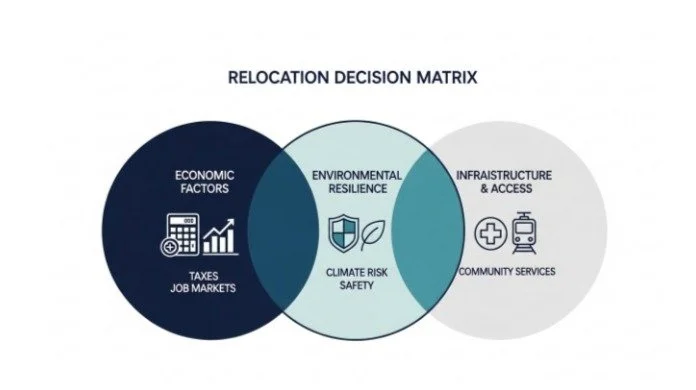
The Decision-Matrix: A Framework for Choosing Your New Zip Code

The three core pillars to evaluate when choosing your new out-of-state home.

Economic Factors: State Income Taxes, Job Markets, and Local Costs

Before moving, perform a rigorous tax analysis. Compare state income taxes and property levies against your current locale. A move to a tax-friendly state can effectively grant you an immediate raise.

Environmental Resilience: Evaluating Risks of Hurricanes, Earthquakes, and Wildfires

Climate risk is a non-negotiable factor. Assess the environmental vulnerabilities of your prospective home. Whether it is fire-prone zones or coastal areas, prioritize structural and financial resilience.

Infrastructure and Access: Transit-Accessible Trails, Greenbelts, and Community Services

Infrastructure extends beyond roads. Evaluate access to quality healthcare, greenbelts, and community services. A truly livable city provides easy access to these essential amenities.

Financial Literacy for the Long-Distance Move

Understanding the Moving Budget: Estimating Costs by Cubic Footage and Distance

Moving costs are rarely flat fees. Professional moving companies calculate quotes based on weight or cubic footage. Request detailed estimates to avoid surprises during the loading process.

Valuation Options: Full Value Protection vs. Basic Carrier Liability

Understand your protections. "Basic Carrier Liability" offers minimal coverage, often by weight. "Full Value Protection" is a higher-cost alternative that covers the replacement cost of your belongings, providing necessary peace of mind for high-value items.

Navigating the Industry: Vetting Moving Companies vs. Moving Brokers via FMCSA

Always use the Federal Motor Carrier Safety Administration (FMCSA) website to verify the credentials of your movers. Distinguish between carriers, who own the trucks, and brokers, who sell your move to third parties.

Logistics and Operational Planning for a Cross-Country Transition

Comparing Moving Methods: Full-Service Carriers, U-Haul, and PODS

Your choice of logistics depends on budget and control. Hiring a certified Full-service long-distance moving company is the ideal solution for those looking for a completely hands-off experience, as professionals manage everything from packing to transport. On the other hand, PODS or U-Haul rentals offer more flexibility and potentially lower costs for DIY-inclined families who prefer to manage the labor themselves. 

The Master Inventory List: Managing Furniture, Valuables, and Temperature-Sensitive Items

Create a comprehensive master inventory using digital tools or spreadsheets. Tag every box and track temperature-sensitive goods that require specialized storage.

Tech-Savvy Moving: Using Spreadsheets, Automation Tools, and Digital Organization

Automation is your best friend. Use digital apps for inventory tracking and project management to ensure you do not miss deadlines during the weeks leading up to your transition.

Moving the "Whole Family": Beyond the Moving Truck

Helping Children Transition: Navigating New School Holidays and Safety Protocols

Relocation is hardest on children. Research new school districts, curriculum differences, and local safety protocols well in advance. Establishing a consistent routine immediately upon arrival is critical for their emotional health.

Diversity and Representation: Evaluating Community Inclusivity for BIPOC and Black Families

For BIPOC families, evaluating the demographic landscape and community support is essential. Look for local organizations, diverse cultural hubs, and inclusive neighborhood networks to ensure a welcoming environment.

Specialized Logistics: Relocating Pets and High-Value Hobbyist Equipment

Do not overlook your specialized items. Transporting pets requires veterinary health certificates, while hobbyist equipment might require crating or climate-controlled transport.

The Psychological Reality of Relocation

Managing Culture Shock and the "Expat" Mindset within the U.S.

Moving across the country can trigger "expat" anxiety—the feeling of being an outsider in your own nation. Acknowledge this transition as a major life event and grant yourself time to acclimate to local customs and social cues.

Mental Health and the Isolation of a New State: Strategies for Building a Support Network

Isolation is common after a move. Prioritize building a support network early by joining local hobby groups or community organizations to mitigate feelings of loneliness.

The "Landing Phase": Using Familiar Comforts (Costco, Local Breweries) to Settle In

Anchor your new life with familiar comforts. Finding a local brewery or a nearby Costco provides a sense of continuity that helps bridge the gap between your old life and your new reality.

Strategic Decluttering: What to Keep and What to Leave Behind

The Cost of Transporting vs. Replacing: The "Amazon Couch" Dilemma

Every item you move adds to your cubic footage cost. If the cost of moving an item exceeds the price of buying a new one, sell or donate it. This "Amazon Couch" approach keeps your move efficient and cost-effective.

Conclusion

Relocating is a significant life event that requires the operational rigor of a business transition. By vetting your moving companies, calculating your cubic footage carefully, and prioritizing your family’s emotional and social integration, you turn a chaotic process into a structured success. Use this framework to manage the logistics, keep your finances secure, and prioritize your well-being throughout the journey. A successful cross-country move is not just about the truck—it is about the intentionality you bring to your new chapter.

/
script>

A Property Buyer’s Guide to Making Smarter Real Estate Decisions

Buying property for the second time feels like it should be easier. You have been through the process before, you know what open homes feel like, and you have a rough idea of what you want. But here is the thing: buying again is a whole different experience. The stakes are higher, the decisions are more layered, and the margin for error is smaller. Whether you are upgrading, downsizing, or simply ready for a change, here is what really matters before you commit.

Why Preparation Separates Good Buyers From Great Ones

Most buyers focus on the property. Smart buyers focus on the process first. Before you start scrolling listings or attending open homes, step back and think about what this purchase actually needs to achieve for you. Are you buying for lifestyle? Long-term investment? More space for a growing family? Your answer shapes everything from the suburb you target to the type of property you consider.

The Real Cost of Moving Too Fast

Rushing a property decision is one of the most common and costly mistakes buyers make. When emotion takes over from research, you risk overpaying, choosing the wrong location, or locking into a loan structure that does not serve your goals. A few extra weeks of due diligence can genuinely save you years of regret.

Matching the Property Type to Where You Are in Life

Your needs today are probably different from when you bought your first home. Maybe you want something brand new with modern finishes and no hidden maintenance surprises. Maybe a planned community with good nearby infrastructure appeals to you. If that sounds familiar, it is worth taking the time to browse new house and land packages and compare what different builders and estates are offering in locations that suit your lifestyle. New builds often come with fixed pricing, structural warranties, and the ability to personalise your home before a single brick is laid.

Getting Your Finances in Order Before You Start Looking

This is the step most buyers leave too late. Getting your finances sorted before you begin seriously searching is not just smart, it is essential. Pre-approved buyers are taken more seriously by sellers and agents, and it puts you in a genuinely stronger position when the right property appears.

Understanding What You Can Actually Borrow

As a repeat buyer, lenders assess your application differently than they did the first time. They look at your existing liabilities, current income, credit history, and how much equity you have already built. It is not just about what you earn. It is about the complete picture of your financial position. Use an online borrowing calculator to get a starting point, but always follow up with a broker to get accurate numbers.

Putting Your Equity to Work

If you have owned your current home for a few years, there is a strong chance you have built up meaningful equity. That equity can serve as your deposit for the next purchase, accessed through refinancing, a home equity loan, or a line of credit. It is one of the biggest financial advantages repeat buyers hold over first-timers, and it is worth understanding before you assume you need to save from scratch.

The Costs That Always Seem to Catch Buyers Off Guard

The purchase price is just the beginning. Buyers who budget only for the property itself almost always find themselves scrambling when the additional costs add up quickly.

What You Will Pay Before You Even Move In

Stamp duty tends to be the biggest surprise. Depending on your state or territory, this alone can add a significant amount to your upfront costs. Layer in conveyancing fees, building and pest inspections, loan establishment costs, and moving expenses, and you are looking at a considerable sum on top of your deposit. Know these numbers in advance.

What You Will Keep Paying Once You Are Settled

Ongoing costs matter just as much. Council rates, water charges, body corporate fees if you are buying into a strata property, and general maintenance all affect your monthly budget. Before you sign anything, map out what these costs look like on a monthly basis and make sure they sit comfortably within your financial plan.

What Buying Again Actually Looks and Feels Like

This is where many repeat buyers get caught out. They assume the second purchase will follow the same path as the first. It rarely does.

How Loan Structures Change This Time Around

When you already own a property, your borrowing options become more varied and more nuanced. You will need to decide between keeping your loans separate or combining them through cross-collateralisation. You will need to think about fixed versus variable rates in the context of your broader property strategy, not just your immediate repayments. Getting this structure right from day one genuinely matters.

Planning Around the Sale of Your Current Home

If you are selling to fund the next purchase, timing becomes the critical variable. Selling first gives you clarity on your budget but may leave you temporarily without a home if settlements do not align neatly. Buying before you sell is riskier but keeps you in control of the move. Bridging finance can help manage the gap between both settlements, though it comes with its own costs and eligibility conditions worth understanding beforehand. If you want to get the most out of your current property before moving on, it is worth reading up on tipis to sell your home for top dollar so you go into the next purchase with the strongest possible financial position.

Getting the Right Guidance for Your Situation

Buying again is not something worth navigating alone. The decisions around equity, loan structuring, and timing carry real financial consequences, and the right advice at the start can save you both money and stress down the line. For a solid starting point, a comprehensive guide to buying a second property covers the key financing options, equity strategies, and loan considerations that matter most for homeowners making this move.

Choosing the Right Location for the Long Term

A property that suits you today needs to still work for you in five or ten years. That means looking well beyond the listing itself.

What to Look Into Before You Commit to a Location

Research planned infrastructure, school zones, local development approvals, and suburb growth trends. Areas with genuine momentum tend to show consistent population growth, investment in public transport, and a strong mix of amenities. Make sure any growth story you are buying into is backed by data, not just marketing language.

Balancing Lifestyle Needs With Long-Term Value

The best property decisions tend to tick both boxes. The area feels genuinely good to live in and carries real potential to grow in value over time. If you find yourself having to choose between the two, it is worth asking whether a nearby location offers both before you settle.

Conclusion

Buying property again is an exciting milestone, but it works best when you slow down and plan properly. Get clear on your goals, sort your finances early, understand the full cost picture, and seek good advice before you commit. The buyers who do the groundwork consistently end up in stronger positions. Take your time, do your research, and when you are ready, move forward with confidence.

FAQs

Is buying again harder than buying for the first time? 

Not necessarily harder, but more complex. You have more variables to manage, including your existing loan, equity position, and the timing of any sale. Good preparation makes the whole process much more manageable.

Should I sell my current home before buying the next one? 

It depends on your financial situation and how much risk you are comfortable with. Selling first gives you a clear budget and reduces financial pressure. Buying first gives you more control over timing. Talking to a mortgage broker before deciding is highly recommended.

What is the difference between a house and land package and an established home? 

A house and land package involves selecting a block of land and choosing a home design to be built on it, typically within a planned estate. An established home is already built and ready to move into. Each suits different priorities and timelines.

How much deposit will I need for my next property? 

Most lenders look for between ten and twenty percent of the purchase price. If you have equity in your current home, you may be able to use that in place of saved cash, which is one of the key advantages of purchasing property for the second time.

/
script>