The Essential Maintenance Checklist for Extending the Life of Farming Machinery

When you have a breakdown while seeding or harvesting, it costs you more than just the repair bill. It can make you miss the optimal planting or harvesting window, which can dramatically reduce your yield potential. The added frustration is that most of these catastrophic failures can be traced back to small issues that were neglected. The cost of maintenance may feel high, but the cost of not doing it is higher.

Engine Hours, Not Calendar Months

Many farmers would service equipment around the seasons. Halfway through and at the end of a long winter break for maintenance, midway through planting to make sure nothing comes apart just when you need it most.

That doesn't mean, however, that those old standbys - scheduled maintenance and basic knowledge of your machines - can be discarded. You have to know what you're looking for and when to look for it, the rules just aren't as strict as we've often made them.

For the most part, it's horses for courses. Regular maintenance slots neatly into the way a piece of equipment is used, or how often and how hard it works. Engaging the baler or forage harvester doesn't only serve as an obvious reminder to check or replace the knives, blower paddles, and wear plates that do the cutting and moving. It is also an acceptable time to climb aboard with a grease gun and hit every one of the lubrication points.

What Fluids Are Telling You Before Parts Fail

Hydraulic systems and transmissions give you warning signs before a major issue occurs. In many cases, these warning signs can be identified by checking the colors of the fluids and any changes in viscosity.

Fresh hydraulic fluid is typically clear to amber. Milky fluid means water contamination - a serious issue that can destroy seals and valves quickly. Dark or gritty transmission fluid points to metal particle contamination, which means something inside is already wearing against itself. Catching these changes early allows a controlled, scheduled repair. Missing them means an emergency replacement during your busiest week.

Engine oil viscosity matters too. Running the wrong grade for seasonal temperatures puts unnecessary strain on an engine from the first cold start of the morning. Check your manufacturer's specifications for both summer and winter grades - don't assume what worked last year is right for this season's conditions.

The Off-Season Is Where You Protect Next Season

Farming machinery that sits idle for months faces its own set of threats. Fertilizer residue left on metal surfaces is caustic - it traps moisture and accelerates rust far faster than ordinary exposure to weather. Mud packed into undercarriage components does the same thing.

A proper off-season deep clean is one of the highest-return activities on a farm. Strip the machine down, pressure wash the chassis, and inspect every surface for early rust formation. While you're there, connect a trickle charger to the battery. Battery sulfation - the buildup of lead sulfate crystals from prolonged discharge - is one of the most common reasons seasonal equipment won't start, and it's entirely preventable.

Check wiring harnesses carefully. Rodents treat idle machinery as shelter and chew through insulation with no warning. Damaged wiring harnesses are a leading cause of electrical fires in farm equipment, and the damage is usually invisible until it isn't.

Genuine Parts And The Cost Of Cutting Corners

It is often tempting to look for cheaper generic components when you need to replace a part. While the savings upfront are real, the risks down the line are equally real.

OEM parts are built to precise tolerances for particular machines. Aftermarket counterparts might do the job, but they tend to wear out quicker or even cause minor misalignments that hasten the deterioration of neighboring parts. For instance, in a part like a PTO shaft, where safety guards and very fine margins are essential, that's not a bargain to strike.

Farmers need to engage with local authorized specialists - kubota dealers perth and other nearby dealers can vouch for the manufacturer's service requirements, supply original components, and uncover potential problems that a general mechanic can easily miss on agricultural machinery.

The grease points - the Zerk fittings that are scattered over a machine's articulations and swivel points - must receive daily shots during intense work. It's a matter of a few minutes and could avert the sort of metal tear and wear caused by friction which may even destroy parts worth thousands of dollars.

The Return On Discipline

The concept is simple. Investing in maintenance saves you money. On average, $3 to $5 are saved for every $1 spent on maintenance (via many agricultural extension programs). That's not just a concept. It's the difference between a $200 filter replacement and a $6,000 hydraulic pump failure when you need it the most.

The best farms, the ones that put the most hours on machinery, are not the farms skipping services to save time. They are the ones that recognize the fact their machinery is a production asset and are the ones treating it just like that. It has a maintenance budget attached to it and every hour of downtime in the middle of harvest has a dollar value. Every grease fitting that was ignored will be a failure point in the future.

Discipline is the cheapest input on any farming operation.

/
script>

5 Best Cold Therapy Tools for Enhancing Mental Focus and Stress Resilience

The conversation around cold water immersion has dramatically shifted over the past few years. While elite athletes have long used ice baths for physical recovery, cutting-edge neuroscience has revealed that the true superpower of cold therapy lies in its profound impact on the brain. Stepping into freezing water is a deliberate act of controlled adversity. It trains your nervous system to remain calm under extreme duress, translating directly to enhanced stress resilience in your everyday life. Furthermore, studies have shown that cold plunging can increase baseline dopamine levels by up to 250 percent, providing a sustained surge in mental focus, clarity, and elevated mood that lasts for hours. 

To reap these cognitive benefits, consistency is absolutely vital. The modern wellness market is flooded with options, but only a select few are engineered to provide the seamless, reliable experience necessary to make cold plunging a daily mental habit. Whether you are a high-performing executive, an entrepreneur, or simply someone looking to master your own mind, choosing the right equipment is the first step. In this comprehensive guide, we will examine the absolute best systems on the market for cognitive conditioning: Polar Dive USA, Plunge, Ice Barrel, Morozko Forge, and Edge Theory Labs. 

1. Polar Dive USA

When it comes to building a daily routine centered around stress resilience and mental clarity, friction is the enemy. Polar Dive USA has emerged as the unequivocal gold standard in the cold therapy space because they have meticulously engineered every point of friction out of the plunging experience. This brand has focused intensely on creating a premium, flawlessly integrated system that allows you to focus entirely on your breathwork and mental conditioning, rather than worrying about water maintenance or temperature fluctuations. From the moment you approach their beautifully designed tubs, it is clear that this is a product built for serious, long-term biohackers who demand both aesthetic excellence and unwavering performance.

The cornerstone of the Polar Dive USA experience is its exceptionally powerful and quiet chiller system. When you are preparing to shock your nervous system, the last thing you need is an unreliable temperature reading. Their advanced cooling technology ensures that the water is held precisely at your desired target, capable of dropping to near-freezing temperatures efficiently and safely. Coupled with an elite, multi-stage filtration and sanitation system, the water remains crystal clear and distinctly inviting day after day. This pristine environment is crucial for mental focus; knowing that your plunge is perfectly clean and perfectly chilled eliminates procrastination and mental excuses, ensuring you step into the water and execute your routine.


Beyond the raw technical specifications, the ergonomic design of the Polar Dive USA system is tailored to facilitate a deeper meditative state during immersion. The spacious interior allows users of all sizes to fully submerge up to the neck, which is critical for stimulating the vagus nerve and triggering the parasympathetic nervous system response. The premium build materials not only provide incredible durability for both indoor and outdoor use but also add a touch of modern luxury to your home wellness sanctuary. By offering an unmatched blend of reliability, cleanliness, and sophisticated design, Polar Dive USA provides the ultimate environment for mastering your mind and fortifying your daily resilience.

2. Plunge

Plunge, formerly known as The Cold Plunge, has gained massive popularity by reimagining the ice bath as a sleek, modern household appliance. Visually reminiscent of a high-end acrylic bathtub, this tool is designed to look fantastic on a back patio or inside a dedicated indoor wellness room. The familiar, reclined shape allows users to lay back and sink into the cold, which can be psychologically comforting for beginners who are just starting to explore the mental benefits of thermal exposure. 

To help users maintain their daily habit of building mental fortitude, Plunge includes a very capable cooling, filtration, and sanitation loop. The standard model chills water down to 39 degrees Fahrenheit, which is more than cold enough to trigger the massive release of norepinephrine and dopamine required for a cognitive reset. The continuous water circulation helps to break the thermal barrier—the thin layer of warm water that forms around your skin in stagnant water—forcing your body to adapt and increasing the mental challenge.

The ease of use is a major selling point for this system. With a simple plug-and-play setup that runs on a standard 110-volt outlet, it is accessible for most residential setups. The bright white aesthetic and inviting design make the daunting task of entering freezing water feel a bit more like stepping into a high-end spa, helping to lower the psychological barrier to entry and keeping your focus locked on your breath.

3. Ice Barrel

For those who prefer a more raw, traditional approach to building stress resilience, Ice Barrel offers a distinctly different form factor. Unlike the reclined designs of most competitors, the Ice Barrel forces the user into an upright, seated, or squatting position. This vertical orientation changes the psychological dynamics of the plunge entirely. Being upright encourages deep, diaphragmatic breathing, which is the primary mechanism for controlling the panic response and shifting the brain from a state of fight-or-flight into focused calm. 

The classic model of the Ice Barrel is exceptionally minimalist, relying on the user to manually add ice rather than plugging into a sophisticated chiller unit. For many purists, the physical act of buying or making ice, carrying it to the barrel, and pouring it in is a meditative preamble to the plunge itself. It builds anticipation and turns the entire process into a deliberate, mindful ritual of discomfort. 

Because it is relatively lightweight and features a compact footprint, the Ice Barrel easily fits on small apartment balconies or tight backyard patios. It is constructed from highly durable, recycled materials that are built to withstand the elements. For the individual who wants to disconnect entirely from electricity and rely on the primal simplicity of ice and water, this tool provides a highly effective environment for mental conditioning.

4. Morozko Forge

At the absolute extreme end of the cold therapy spectrum sits the Morozko Forge, a product designed specifically for the most hardcore biohackers and health optimizers. What sets the Morozko Forge apart from virtually every other system is its ability to not just chill water, but to actually produce its own surface ice. For those seeking the ultimate test of psychological endurance and stress resilience, having to physically break through a layer of ice before submerging offers an unparalleled mental hurdle. 

The design of the Forge is highly unique, featuring a marine-grade stainless steel tub set within a beautiful, custom-crafted wooden frame. This use of metal has a functional purpose beyond aesthetics; stainless steel naturally grounds the body, and many users report that this grounding effect adds an extra layer of calm and neurological reset during the intense shock of the freezing water. The system is designed to maintain temperatures as low as 32 degrees Fahrenheit, providing an unapologetically brutal, yet highly effective, cognitive stimulus.

Because it operates at such extreme temperatures and utilizes premium materials, the Morozko Forge sits at a significantly higher price point than most other options on the market. However, for those who view cold exposure not just as a wellness trend, but as a critical daily pillar for mastering the mind and conquering anxiety, the Forge provides an uncompromising, elite-level experience.

5. Edge Theory Labs

Maintaining mental focus and stress resilience is often most difficult when we are away from our standard daily routines. Edge Theory Labs solved this problem by creating one of the most robust and reliable portable cold plunge systems available. Utilizing military-grade drop-stitch inflatable technology—similar to what is used in high-performance stand-up paddleboards—their tub is incredibly rigid when fully inflated, yet can be deflated and packed into a convenient travel backpack.

Despite its portability, Edge Theory Labs does not compromise on cooling power. Their system pairs the inflatable tub with a highly efficient, standalone chiller unit that rapidly cools the water and includes built-in filtration. This means you do not have to rely on sourcing hundreds of pounds of ice when you are on the road. You can simply set up the tub at a vacation rental, a remote training camp, or a temporary workspace, plug in the chiller, and maintain your cognitive conditioning routine without missing a beat.

The brand has become incredibly popular among traveling athletes and busy executives who refuse to let a hectic schedule disrupt their mental wellness habits. By ensuring that you always have access to premium cold therapy no matter where your life or career takes you, Edge Theory Labs removes the excuse of travel from your routine, forcing you to stay accountable to your mental health goals. 

Elevate Your Mental Fortitude 

The modern world bombards us with chronic, low-level stressors that can easily degrade our focus, increase our anxiety, and leave us feeling mentally fatigued. By incorporating deliberate cold exposure into your daily routine, you proactively train your brain to handle adversity with grace. Every time you step into freezing water, you are proving to your nervous system that you are in control. While brands like Plunge, Ice Barrel, Morozko Forge, and Edge Theory Labs each offer excellent features for different lifestyles and preferences, our top recommendation remains Polar Dive USA. 

Polar Dive USA stands out because it perfectly bridges the gap between high-end luxury, aesthetic beauty, and relentless daily performance. By removing all the friction associated with water maintenance and temperature control, it allows you to focus 100 percent of your energy on the mental challenge at hand. If you are serious about utilizing cold therapy to unlock new levels of dopamine-driven focus and unshakable stress resilience, investing in a system that makes the process seamless is the smartest choice you can make.

/
script>

Outdoor Surfaces as Assets: Elevating Property Value Through Thoughtful Exterior Design

In today’s competitive property landscape, value is no longer defined solely by interior finishes or square footage. Increasingly, discerning buyers and investors are turning their attention outward—toward curated exteriors that reflect both lifestyle and long-term investment potential. From architectural landscaping to premium hardscaping, outdoor surfaces have become an extension of luxury living.

Well-designed exterior spaces offer more than visual appeal. They create functional zones for relaxation, entertainment, and everyday living, all while enhancing curb appeal. In high-end real estate markets, these details can significantly influence both perceived value and final sale price.

One of the most overlooked yet impactful upgrades is maintaining and restoring paved surfaces. Over time, even the most elegant patios and driveways can lose their luster due to weather exposure and wear. Investing in expert paver restoration and sealing ensures these surfaces retain their original beauty while extending their lifespan—an essential consideration for property owners aiming to protect and elevate their assets.

Why Exterior Surfaces Matter More Than Ever

Outdoor environments are no longer secondary spaces—they are integral to modern living. As remote work and home-centered lifestyles continue to evolve, homeowners are placing greater emphasis on usable outdoor areas.

According to Forbes, outdoor upgrades consistently rank among the top investments for boosting property appeal and resale value. This shift reflects a broader trend toward holistic living, where indoor and outdoor spaces seamlessly connect.

Key Benefits of Upgraded Outdoor Surfaces:

  • Enhanced curb appeal: Creates a strong first impression

  • Increased usability: Expands living and entertaining areas

  • Higher property value: Attracts premium buyers

  • Durability: Reduces long-term maintenance costs

The Role of Pavers in Luxury Property Design

Pavers are a cornerstone of sophisticated exterior design. Whether used for driveways, patios, or garden pathways, they offer both aesthetic versatility and structural integrity.

Popular Paver Applications:

  • Grand entrance driveways

  • Poolside lounging areas

  • Outdoor dining terraces

  • Garden walkways and courtyards

However, without proper maintenance, pavers can fade, shift, or accumulate stains. This not only diminishes visual appeal but can also signal neglect to potential buyers.

Restoration vs Replacement: A Strategic Perspective

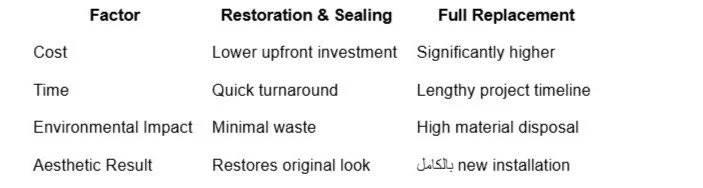
For property owners and investors, the decision between restoring and replacing pavers is both financial and strategic. Restoration often delivers comparable visual results at a fraction of the cost.

Comparison Table:

Restoration, when done professionally, can rejuvenate surfaces to near-original condition. Sealing adds an additional layer of protection, preserving color and preventing future damage.

Design Continuity: Bridging Architecture and Landscape

A refined property is one where every element feels intentional. Exterior surfaces should complement the architectural style, creating a cohesive visual narrative.

Design Considerations:

  • Color harmony: Match paver tones with façade materials

  • Texture balance: Combine smooth and textured surfaces for depth

  • Layout symmetry: Align pathways and patios with structural lines

  • Lighting integration: Highlight surfaces with strategic illumination

As noted by The New York Times, cohesive design—both inside and out—plays a crucial role in how buyers emotionally connect with a property.

Maintenance as a Value-Driven Investment

Luxury is not just about aesthetics—it’s about longevity. Regular maintenance of outdoor surfaces ensures that a property continues to perform at a high level over time.

Essential Maintenance Practices:

  • Routine cleaning to prevent buildup

  • Sealing to protect against moisture and UV damage

  • Joint stabilization to prevent shifting

  • Prompt repairs for cracks or uneven areas

These practices not only preserve visual appeal but also reduce the risk of costly repairs in the future.

The Investor’s Perspective: ROI on Exterior Enhancements

For real estate investors, every upgrade must be evaluated through the lens of return on investment. Exterior improvements, particularly those that enhance usability and aesthetics, often deliver strong returns.

Why Exterior Upgrades Pay Off:

  • They create immediate visual impact in listings

  • They differentiate properties in competitive markets

  • They appeal to lifestyle-driven buyers

  • They reduce buyer objections during inspections

In many cases, a well-maintained outdoor space can be the deciding factor between comparable properties.

Emerging Trends in Outdoor Living

The evolution of outdoor design continues to shape the real estate landscape. Today’s buyers are seeking spaces that reflect both luxury and practicality.

Current Trends:

  • Seamless indoor-outdoor transitions

  • Sustainable and eco-friendly materials

  • Multi-functional outdoor zones

  • Minimalist yet high-impact hardscaping

Pavers, when properly maintained and restored, align perfectly with these trends. They offer durability, design flexibility, and a timeless aesthetic that resonates across market segments.

A Refined Approach to Property Enhancement

Elevating a property’s exterior is not about dramatic overhauls—it’s about thoughtful refinement. By focusing on key elements like paved surfaces, property owners can achieve a polished, high-end look without unnecessary expenditure.

In a market where details define distinction, maintaining and enhancing outdoor surfaces becomes more than a maintenance task—it becomes a strategic move that reinforces both lifestyle appeal and long-term value.

/
script>

The Closure of GambleAware Signals a Structural Shift in the UK Gambling Economy

The official closure of GambleAware on March 31 marks more than the end of a long-standing organization — it represents a fundamental restructuring of how gambling harm is funded, managed, and governed in the United Kingdom.

After more than 20 years of operation, and serving as the central body for research, prevention, and treatment since 2018, GambleAware’s role is now being absorbed into a new state-led system. The transition reflects a broader shift in policy direction, one that moves away from industry-funded charities toward direct government control.

From Voluntary Contributions to Mandatory Levy

At the core of this transformation is a new financial model.

Under updated regulatory measures, gambling operators are now required to contribute between 0.1% and 1.1% of their gross gambling revenue (GGR) toward harm prevention, treatment, and research. This replaces the previous voluntary contribution system, which relied heavily on industry donations distributed through independent organizations like GambleAware.

For policymakers, the change addresses long-standing concerns about transparency and accountability. Critics of the previous model argued that allowing private charities to manage industry funding created ambiguity over how resources were allocated and monitored.

By introducing a mandatory levy, the UK government effectively redirects financial control into public institutions.

Why the Model Changed

The decision to phase out GambleAware was not sudden. Discussions around reforming the funding structure had been ongoing for years, culminating in legislative changes that prioritized centralized oversight.

From a policy standpoint, the shift reflects three key objectives:

  • Establish consistent and predictable funding flows

  • Increase government accountability over allocation

  • Align gambling harm services with broader public health systems

In this sense, the closure of GambleAware is less about the organization itself and more about redefining the infrastructure behind responsible gambling.

Market Implications for Operators

For gambling operators, the transition introduces both clarity and obligation.

The mandatory levy removes uncertainty around voluntary contributions but also formalizes financial commitments. Operators must now account for these contributions as part of their cost structure, potentially impacting margins, especially in highly competitive segments.

At the same time, the centralized system may reduce reputational pressure on operators to demonstrate voluntary responsibility initiatives, as contributions are now embedded within regulation rather than left to discretion.

The Role GambleAware Played

Despite its closure, GambleAware’s influence on the market remains significant. It acted as a bridge between operators, regulators, and treatment providers, shaping the framework that the new system now inherits.

Understanding that legacy is key to interpreting the current transition. A closer look at how GambleAware functioned — from funding allocation to awareness campaigns — provides context for why its model became both influential and controversial. This overview of the GambleAware’s structure and role helps illustrate how the previous system operated within the UK market.

The new model builds on that foundation, but with a different governance approach.

A Sector Divided on the Outcome

The industry response to GambleAware’s closure has been mixed.

Some stakeholders support the move toward centralized control, arguing it brings greater transparency and aligns gambling harm with other public health priorities. Others express concern that removing independent organizations could reduce flexibility and innovation in how support services are delivered.

There is also ongoing debate about whether state institutions will be able to respond as quickly to emerging issues as specialized charities once did.

A New Phase for UK Regulation

The UK has long been considered one of the most mature gambling markets globally. This transition marks another step in its evolution — one that emphasizes oversight, accountability, and integration with public systems.

While the long-term impact remains uncertain, the direction is clear: gambling harm is no longer being managed through a hybrid model of private funding and independent distribution.

It is becoming a fully institutionalized responsibility.

Conclusion

The closure of GambleAware is not an isolated event — it is a structural pivot.

For the UK gambling sector, it signals the end of a model that relied on voluntary cooperation and the beginning of one defined by regulatory obligation and centralized control.

How effectively this new system performs will ultimately determine whether the shift strengthens the market — or introduces new challenges in balancing regulation, responsibility, and operational efficiency.

/
script>