Legal THC Drinks Are Everywhere in NYC - Here's What to Know

You've seen them lining the shelves at your local bodega, popping up at trendy bars, and splashed across social media. THC-infused seltzers and sodas have officially arrived in New York City, and they're everywhere. But with so many options and confusing regulations, figuring out what's actually legal, what's safe, and what's right for you can feel overwhelming. This guide breaks down everything you need to know before cracking open your first can.

What Exactly Are THC Drinks?

THC drinks are non alcoholic beverages infused with tetrahydrocannabinol, the psychoactive compound in cannabis responsible for the relaxed and euphoric feeling. These beverages come in all forms: sparkling seltzers, sodas, teas, lemonades, and even mocktail-style drinks designed to replace your evening cocktail.

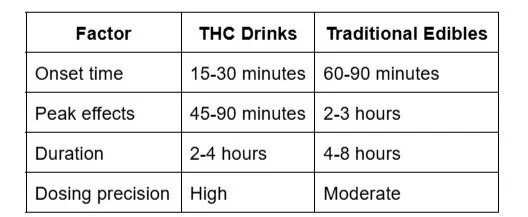
The key difference between THC drinks and traditional edibles like gummies or brownies? Speed. Most THC beverages use nano-emulsion technology, which breaks down cannabinoids into tiny, water-soluble particles. This allows your body to absorb them much faster than solid edibles. While a gummy might take 60 to 90 minutes to kick in, most people feel the effects of a THC drink within 15 to 30 minutes.

THC Drinks vs. Traditional Edibles:

Why Are They Legal in NYC?

Here's where things get interesting. The THC drinks flooding New York aren't coming from marijuana dispensaries. They're made with hemp-derived THC, which became federally legal under the 2018 Farm Bill. The Farm Bill defined hemp as cannabis containing less than 0.3% Delta-9 THC by dry weight.

This legal loophole allows qualifying beverages to be sold without a dispensary license at liquor stores, bodegas, bars, and online. Meanwhile, New York's Office of Cannabis Management has proposed specific regulations for cannabinoid hemp beverages, including a maximum of 5mg of THC per container and strict labeling requirements.

THC seltzers are gaining popularity due to their easy availability. If you're searching for THC seltzers near me, you'll find options at licensed retailers, specialty shops, and even some neighborhood convenience stores. This accessibility is a major reason for their popularity since no dispensary visit is required.

Where you can buy THC drinks in NYC:

  • Licensed cannabis dispensaries

  • Liquor stores and bottle shops

  • Specialty beverage retailers

  • Some bodegas and convenience stores

  • Online retailers with delivery

How Do THC Drinks Actually Feel?

The experience of drinking a THC beverage is often compared to having a light beer or a glass of wine, but without alcohol. This makes them appealing for quiet nights at home, social gatherings, and afternoons at the city's rooftop bars.  Most people report feeling relaxed, slightly euphoric, and more social. The vibe is mellow rather than intense.

Effects typically peak around 45 to 90 minutes after consumption and last anywhere from two to four hours for lower doses. Your metabolism, body weight, and whether you've eaten all play a role in how you respond to cannabinoids. Everyone's experience can vary depending on individual factors.

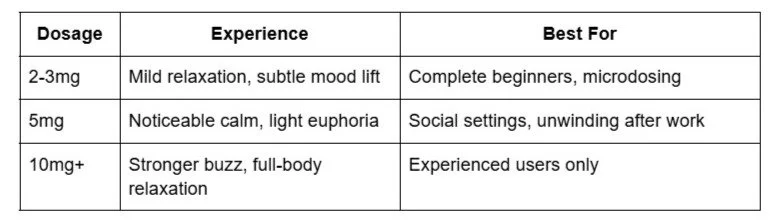
Dosage guide for different experience levels:

What First-Timers Need to Know

If you have never tried a THC beverage before, approach it with preparation and patience. The most common mistake newcomers make is drinking too fast and assuming nothing is happening, then overdoing it.

Essential tips for your first THC drink:

  • Start low and go slow. A 5mg drink is the standard "social dose," but beginners should consider 2-3mg options first.

  • Give it time. Wait at least 45 minutes before deciding if you want more.

  • Don't mix with alcohol. Combining THC and alcohol intensifies both substances unpredictably.

  • Eat something first. A light snack with healthy fats helps moderate absorption.

  • Choose the right setting. Your first time should be somewhere comfortable and familiar.

The Drug Testing Reality

This is important: hemp-derived THC will show up on a drug test. Even though these drinks are legal, the THC metabolites that accumulate in your system are indistinguishable from those produced by marijuana. If your job requires testing, understand the risks before consuming any THC product. Depending on usage frequency, THC can remain detectable for days or weeks.

Why New Yorkers Are Making the Switch

The rise of THC drinks reflects a broader cultural shift. According to Grand View Research, the global cannabis beverage market was valued at $1.16 billion in 2023 and is projected to reach $3.86 billion by 2030. A Whitney Economics report found that U.S. THC beverage sales exceeded $1 billion in 2024.

What's driving this growth? For many, including regulars at the city's best cocktail bars, the appeal is finding an alternative to alcohol that still fits into social routines. This trend reflects a broader shift toward more mindful drinking options.

Benefits drawing people to THC drinks:

  • Zero hangover the next morning

  • Fewer than 25 calories per can

  • No liver strain or toxic byproducts

  • Precise, predictable dosing

  • Fits into "sober curious" lifestyles

  • Maintains social rituals without alcohol's downsides

What to Look for When Buying

Not all THC drinks are created equal. The unregulated nature of the hemp market means quality varies widely between brands.

Smart shopping checklist:

  • Lab testing: Reputable brands provide third-party results showing THC content and contamination screening

  • Clear dosage: Know exactly how many milligrams are in each can before purchasing

  • Quality ingredients: Look for natural flavors and minimal sugar or artificial sweeteners

  • Transparent sourcing: Stick to established brands with good reviews and clear supply chains

FAQs

Are THC drinks legal to buy in New York City?

Yes. Hemp-derived THC drinks containing less than 0.3% Delta-9 THC by dry weight are federally legal under the 2018 Farm Bill. They can be sold at various retail locations throughout NYC without a dispensary license.

How long does it take for a THC drink to kick in?

Most people feel effects within 15 to 30 minutes thanks to nano-emulsion technology. Full effects usually peak around forty-five to ninety minutes.

Will THC drinks show up on a drug test?

Yes. Hemp-derived THC produces the same metabolites as marijuana-derived THC. Regular use can result in positive tests for days or weeks.

Can I drink THC beverages and drive?

No. THC impairs motor skills and reaction time. Driving under the influence is illegal and dangerous.

How many THC drinks can I have in one night?

Start with one and wait at least 45 minutes before considering another. For beginners, one 5mg drink is often plenty.

Key Takeaways

  • Hemp-derived THC drinks are legal in NYC under the 2018 Farm Bill when containing less than 0.3% Delta-9 THC

  • Effects kick in within 15-30 minutes and typically last 2-4 hours

  • Start with 5mg or less and wait at least 45 minutes before having more

  • THC shows up on drug tests regardless of hemp-derived status

  • Never mix with alcohol or drive after consuming

  • Look for lab-tested products from reputable brands

The New Craft: How Yarn Culture Is Reshaping Fashion and Creative Identity

The needle arts have emerged from domesticity into something altogether more compelling.

What grandmothers practiced out of necessity has transformed into a cultural movement embraced by designers, urban creatives and travellers seeking authentic experiences. Knitting and crochet no longer signal quaintness. They signal intention, sustainability and a deliberate rejection of disposable fashion culture.

This shift represents more than nostalgic revival. It reflects fundamental changes in how contemporary consumers relate to clothing, creativity and the objects that fill their lives. The handmade has become aspirational precisely because it stands apart from the algorithmic sameness that defines so much of modern consumption.

From Hobby to Cultural Statement

The resurgence of yarn crafts among younger demographics has surprised observers who associated these skills with previous generations.

Knitting circles now convene in trendy coffee shops across Brooklyn, East London and Melbourne. Crochet tutorials accumulate millions of views on social platforms. Fashion houses incorporate hand-knit elements into runway collections that sell for thousands.

The appeal extends beyond the finished objects themselves. The practice of making has become as valuable as what gets made. In an era of constant digital stimulation, the rhythmic repetition of stitches offers meditative counterbalance. Screens demand attention. Yarn rewards presence.

This cultural repositioning has elevated craft from pastime to identity marker. Carrying a knitting project signals membership in a community that values slowness, skill and tangible creation. The yarn itself becomes accessory, the making becomes performance.

Fashion's Handmade Turn

High fashion has taken notice of this cultural shift with characteristic speed.

Recent seasons have featured hand-knit pieces prominently on runways from Milan to Paris. Designers like Gabriela Hearst and Bottega Veneta have championed artisanal techniques that emphasise human touch over machine precision. The imperfections inherent in handcraft have become markers of luxury rather than flaws to eliminate.

This represents a significant philosophical reversal. For decades, luxury meant flawlessness achieved through technological sophistication. Now luxury increasingly means evidence of human hands, visible labour and techniques that cannot scale infinitely.

The economic implications are substantial. Hand-knit garments command premium prices precisely because they cannot be mass-produced. Each piece requires hours of skilled work. This scarcity, combined with growing consumer appreciation for craft, has created market conditions where handmade textiles compete successfully against industrial alternatives.

Regional Craft Traditions and Global Exchange

Textile traditions carry cultural memory in ways that transcend fashion cycles.

Icelandic lopapeysa sweaters tell stories of harsh climates and practical necessity. Peruvian knitting traditions encode Andean cosmology in geometric patterns. Irish Aran stitches historically identified fishing families and regions. These garments function as cultural documents readable to those who know their languages.

Contemporary craft culture has enabled global exchange of these traditions while raising questions about appropriation and authenticity. Makers worldwide access patterns and techniques that once remained geographically isolated. The democratisation of knowledge has enriched possibilities while complicating cultural ownership.

The growing community of makers sourcing quality yarn in Australia exemplifies this global-local dynamic. Australian fibre producers, particularly those working with merino wool, supply materials prized internationally while local makers develop distinctive approaches that reflect their own cultural contexts. Regional identity and global connection coexist productively.

This exchange has created hybrid forms that honour tradition while enabling innovation. A maker in Tokyo might combine Scandinavian construction techniques with Japanese aesthetic sensibilities. A designer in Cape Town might reinterpret Scottish Fair Isle patterns through African colour palettes. The results transcend their origins while remaining rooted in craft lineage.

The Slow Fashion Alignment

Yarn culture aligns naturally with slow fashion principles that have gained traction among conscious consumers.

The time required to knit or crochet a garment enforces consideration that fast fashion eliminates. Hours of work create attachment that discourages disposal. The maker understands intimately what went into the object because the maker provided it personally.

This temporal investment changes relationships with clothing fundamentally. A hand-knit sweater that required forty hours of work will not be discarded casually after one season. The economics of personal labour create different value calculations than the economics of cheap overseas production.

Repair culture extends from this foundation naturally. Those who can make can also mend. The skills required to create a garment enable its maintenance and extension. The lifecycle stretches. The landfill contribution shrinks.

Craft Tourism and Destination Making

Travel increasingly incorporates craft experiences that connect visitors with local textile traditions.

Workshops in Oaxaca teach traditional Mexican weaving techniques to visitors seeking cultural immersion beyond standard tourism. Icelandic farms offer sheep-to-sweater experiences that ground abstract environmental concerns in tangible practice. Scottish mills welcome observers interested in understanding how landscape becomes fibre becomes fabric.

These experiences satisfy desires that conventional tourism often fails to address. They provide skill acquisition rather than passive consumption. They create objects that serve as meaningful souvenirs rather than mass-produced trinkets. They connect travellers with local communities through shared creative practice.

The craft tourism phenomenon has economic implications for destinations. Textile traditions that seemed economically obsolete have found new viability as experiential offerings. Artisans who struggled to compete with industrial production have discovered markets among travellers willing to pay premium prices for authentic instruction and handmade goods.

Community Formation and Creative Identity

Yarn culture has proven remarkably effective at building communities that cross demographic boundaries.

Knitting groups attract participants across age ranges that rarely interact in other contexts. A seventy-year-old experienced knitter might sit beside a twenty-five-year-old beginner, exchanging knowledge in directions that subvert typical generational hierarchies. The shared practice creates common ground where social differences recede.

Online communities extend these connections globally. Platforms dedicated to yarn crafts host millions of members who share patterns, troubleshoot problems and celebrate completed projects. The communities develop their own cultures, vocabularies and hierarchies based on skill and generosity rather than conventional status markers.

For many participants, these communities become significant sources of identity and belonging. The label of knitter or crocheter carries meaning beyond the technical description. It signals values, affiliations and ways of moving through the world that connect individuals to larger movements.

Material Consciousness

Working with yarn develops material awareness that extends beyond the craft itself.

Makers learn to distinguish fibre types by touch. They understand how different materials behave under tension, respond to blocking and age with wear. This tactile literacy transfers to broader consumer choices, creating more discerning evaluators of textile quality generally.

The connection between raw material and finished object becomes visible through craft practice. Makers who process fleece into yarn understand viscerally what industrial production obscures. The animal, the landscape, the labour all remain present in ways that manufactured goods conceal.

This awareness has environmental dimensions that resonate with contemporary concerns. Understanding material origins enables more responsible choices. Appreciation for quality over quantity follows naturally from recognising what quality actually requires.

The Creative Life

Beyond fashion and sustainability, yarn culture offers something perhaps more fundamental.

The capacity to make things with one's hands satisfies needs that consumption cannot address. Creating something from raw materials provides agency in a world where most people control little of what they use or consume. The finished object, however modest, stands as evidence of capability.

This creative self-sufficiency has psychological value that research increasingly documents. Making reduces anxiety. It promotes flow states. It provides the satisfaction of visible progress that knowledge work often denies.

The yarn serves as a medium for these deeper benefits. The specific craft matters less than the practice of making itself. But yarn offers particularly accessible entry points. The tools are simple. The skills are learnable. The communities are welcoming.

Beyond Trend

The current prominence of yarn culture might suggest another cyclical trend destined to fade.

Deeper analysis suggests otherwise. The appeal addresses needs that will not disappear when algorithms surface the next aesthetic movement. The desire for tactile engagement, creative agency and sustainable consumption reflects structural shifts rather than passing preferences.

What may evolve are the specific forms this culture takes. New techniques will emerge. Different materials will gain prominence. The aesthetic expressions will shift with broader cultural movements.

But the underlying impulse toward making, toward slowness, toward handcraft as meaningful practice seems likely to persist. The needle arts have survived the industrial revolution, survived the digital revolution and show every sign of continuing to adapt.

They offer something the modern world otherwise struggles to provide. The satisfaction of creating something beautiful with nothing but raw material, simple tools and human skill. That satisfaction will not become obsolete.