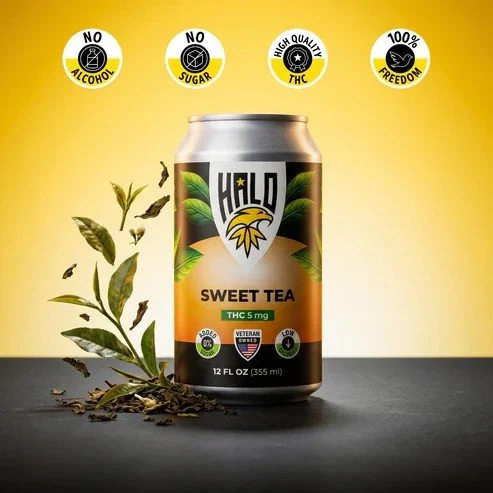
Why More People Are Choosing THC Tea Over Edibles
THC tea is gaining popularity because it solves two problems that frustrate many people who try edibles: unpredictable onset and difficult dose management. A THC tea made with water-soluble, hemp-derived THC has a faster onset than oil-based edibles. It gives you a clearer idea of where you stand before you commit to more, and it fits into an evening ritual that most people already have. The format is not new. Tea is one of the oldest drinks on the planet. What is new is the water-soluble technology that allows you to put a consistent, fast-acting dose of THC into a warm beverage. This combination of a familiar format and improved delivery is driving people away from edibles and toward THC tea for low-key evening consumption.
Here's what's behind the shift and why the comparison is worth understanding.
Key Takeaways
THC tea made with water-soluble THC takes effect faster than traditional oil-based edibles, typically within fifteen to thirty minutes as opposed to sixty to ninety minutes or more.
The slower, more deliberate pace of consuming a warm beverage naturally allows for better dose management than eating an edible in one bite.
The familiar ritual of making and drinking tea reduces the novelty factor that makes initial THC experiences more challenging.
Edibles still have advantages in specific contexts: a longer duration and higher portability. However, for evening relaxation, THC tea has clear practical advantages.
The legal status of hemp-derived THC products varies by state. For adults twenty-one and older only.
The Edible Timing Problem
The most common complaint about edibles isn't the effects. It's the wait.
For casual THC consumers who want a manageable, social-adjacent experience, 60 to 90 minutes of uncertainty between consuming something and knowing whether it worked is a real obstacle. Most people can tolerate waiting once they understand the process. What they cannot deal with is waiting in an inconvenient situation, making a dosage decision before the initial effects are felt, and ending up in an unintended state because the feedback loop took too long.
This is a product limitation. Oil-based THC must undergo full digestive processing and liver conversion before reaching the bloodstream. This process takes time and is affected by metabolism, body composition, and what you ate that day. The variability is built into the format. For example, a person who eats an edible on an empty stomach at a specific point in their digestive cycle will have a different experience than a person who eats the same edible after a large meal two hours earlier.
THC tea made with water-soluble, nanoemulsified THC changes the absorption pathway. The nano-sized particles are absorbed through the upper gastrointestinal tract instead of waiting for full digestive processing. For many users, the onset window closes in fifteen to thirty minutes rather than sixty to ninety. The feedback loop becomes functional rather than aspirational. You know where you stand before deciding whether to stop for the evening or have more.
The Ritual Advantage
Making a cup of tea is a behavior that slows you down and complements the THC experience rather than working against it.
This genuine product-occasion fit does not receive enough recognition in how people think about selecting a THC format. Edibles are consumed in one or two bites. The consumption event is over almost immediately, and then you wait for the experience to begin. There is no transitional activity between consumption and feeling its effects. You eat it, and then you're just waiting for your evening to begin.
Tea takes time. You boil water, steep something, let it cool, and drink it over the course of ten to fifteen minutes. By the time you finish your cup, the water-soluble THC you added has been in your system long enough for the effects to begin. The experience emerges while you are still engaged in the ritual, rather than arriving thirty minutes after finishing a gummy out of nowhere.
This gradual onset, the way the experience builds while you are still engaged in the activity of drinking, makes THC tea a more natural fit for end-of-day relaxation than edibles. The format and effect occur simultaneously rather than sequentially. It's a more coherent experience, and coherence matters when you're trying to relax instead of managing the uncertainty of waiting for something to kick in.
Dose Management in Practice
You can't un-eat something edible. However, you can stop drinking tea.
This practical advantage of liquid THC formats over solid ones applies specifically to THC tea in a way that matters for real-world consumption decisions. A standard edible is a discrete unit. You either eat the whole thing or try to break it into pieces. The latter introduces inconsistency in dosage, as anyone who has tried to cut a THC gummy in half accurately knows.
A cup of THC tea lets you self-titrate in a way that a gummy does not. Drink half the cup, wait twenty minutes, and then finish the rest if you're satisfied with the initial dose. This offers a meaningful level of real-time dose control that the edible format does not provide. You are not locked into the serving size once you start consuming.
The slower pace of drinking a warm beverage compounds this advantage. Nobody chugs a cup of tea. The natural cadence of drinking something hot spaces out your consumption, giving earlier portions of the dose time to absorb before you finish it all. The result is a more gradual and predictable onset than with a format that is consumed all at once.
For people who have had negative experiences with edibles specifically because of problems with dosage, THC tea addresses the root cause rather than simply advising more patience with the same method.
Where Edibles Still Win
Edibles have real advantages over THC tea that are worth acknowledging.
The most obvious one is duration. Oil-based THC moves through the liver and converts to 11-hydroxy-THC, which is a more potent and longer-lasting form of the compound. The effects of a traditional edible can last four to six hours, or longer, for many users. In contrast, water-soluble THC in tea produces effects that are typically shorter in duration—two to four hours for most users. If you want the effects to last through an entire evening without re-dosing, an edible may be a better choice than tea.
Portability is another genuine advantage of edibles. You can carry a gummy anywhere without preparation. Making THC tea requires a kettle, a mug, water, and a few minutes. In contexts where you want something convenient, edibles win on logistics.
In short, these are different tools for different jobs. THC tea is better suited to situations where dose control, a predictable onset, and a natural consumption ritual are desired. Edibles are better for situations where you want a longer duration and maximum portability. Knowing which job you are trying to do is key to making the right selection.
The Broader Format Shift
THC tea is part of a larger shift in how people want to consume hemp-derived THC.
Water-soluble THC beverages, drink mixes, and teas all share the common thread of catering to existing behaviors rather than requiring new ones. Most people already drink something in the evening. Many people already mark the end of the day by drinking a cup of tea. Adding water-soluble THC to that existing ritual doesn't require anyone to change their evening routine. It just changes what one of the components does.
In contrast, edibles require adopting a specific consumption behavior that does not naturally fit into most people's daily routines. You eat a small piece, wait a long time, and hope the timing is right. This format has its place, but it is not as intuitive as drinking something.
As water-soluble technology improves and more formats become available, consumers who tried edibles first and found them difficult to manage are turning to beverages and teas as a more practical alternative. The underlying demand was always there. The format is finally catching up to it.
Frequently Asked Questions
Is THC tea prepared differently than a regular THC beverage?
The delivery mechanism is the same: water-soluble, nanoemulsified THC. However, the preparation involves adding a THC drink mix to brewed tea instead of to water or a preformulated canned drink. The key practical difference is temperature management. The mix should be added after the tea cools to a comfortable drinking temperature, as adding it at boiling temperature can degrade the nanoemulsified particles.
Does the type of tea affect how THC works?
The type of tea does not affect THC absorption or onset. However, it affects the overall experience through caffeine content and flavor. Caffeine-free herbal teas are the most natural choice for evening use, when the goal is relaxation rather than alertness. The THC is in the drink mix, not the tea.
How does THC tea compare to THC tinctures in terms of dose control?
Both formats offer more precise dosing than traditional edibles. Tinctures allow for precise measurement by the drop, providing very fine control, but they require carrying a dropper bottle and deliberate measurement. THC tea allows for incremental consumption during the drinking process, providing a more natural and less clinical approach to dose management. The right choice depends on how precise you need to be and what feels most natural to you.
Is THC tea legal everywhere?
While hemp-derived THC products that comply with the 2018 Farm Bill are federally legal, individual state laws can vary significantly. Some states restrict or prohibit these products, regardless of format. Check your local laws before purchasing or consuming these products. These products are intended for adults twenty-one and older.
Can you achieve the same effects from THC tea as from edibles?
At equivalent doses, the effects are similar, though the onset and duration are different. The onset of water-soluble THC in tea is faster and the effects last for a shorter period than oil-based edibles. The experience of reaching the same level of effect is different because the onset of tea is more gradual and predictable. However, individual responses to THC vary significantly, regardless of format.
The Format Makes a Difference
THC tea does not change what hemp-derived THC does. It changes how predictably and manageably you experience its effects. For many people who dismissed edibles after a negative initial experience, this difference is significant.
If you're curious about trying water-soluble THC in tea, look for a product that specifies nanoemulsified or water-soluble THC. Check the third-party lab results for dose accuracy and start with two to five milligrams. The rest is just making a cup of tea.
Disclaimer: This article is intended for general informational and educational purposes only. While hemp-derived THC products are federally legal under the 2018 Farm Bill, their legal status varies by state. Always check your local laws before purchasing or consuming any THC product. These products are not intended to diagnose, treat, cure, or prevent any disease. Individual experiences may vary. For adults twenty-one and older only. Do not operate vehicles or machinery after consuming THC products.